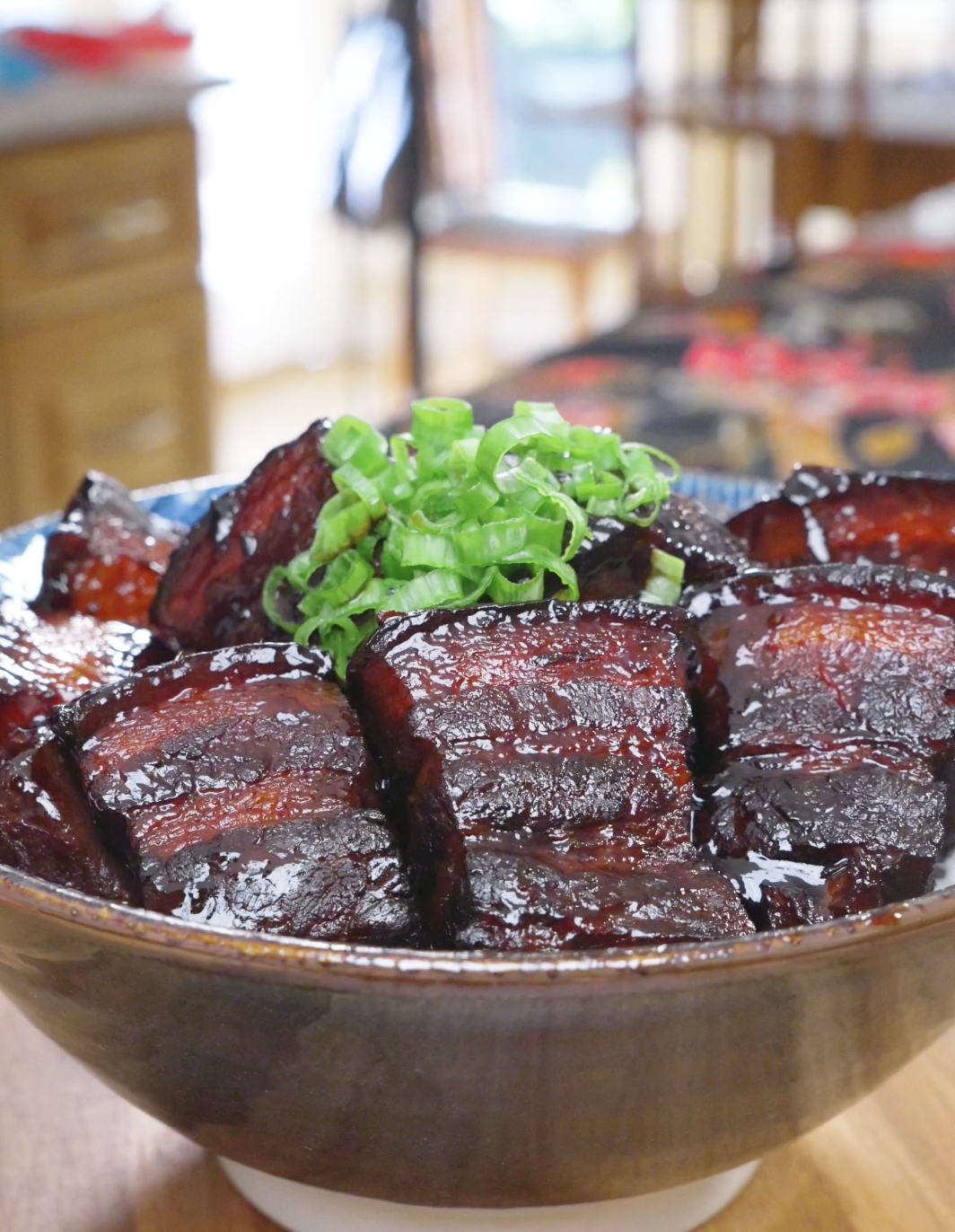
Red Braised Pork Belly Recipe
Ingredients
- 1 lb pork belly, cut into 1-inch chunks
- Neutral oil, for cooking
- 2 tbsp rock sugar or white sugar
- Water, enough to cover the pork
For the Braise
- 2 tbsp Shaoxing wine
- 2 tbsp light soy sauce
- 1 tbsp dark soy sauce
Optional Garnish
- Scallions
- Steamed rice
Instructions
- Cut the pork belly into 1-inch chunks and set aside.
- Blanch the pork for a few minutes in boiling water to get rid of the impurities, then drain.
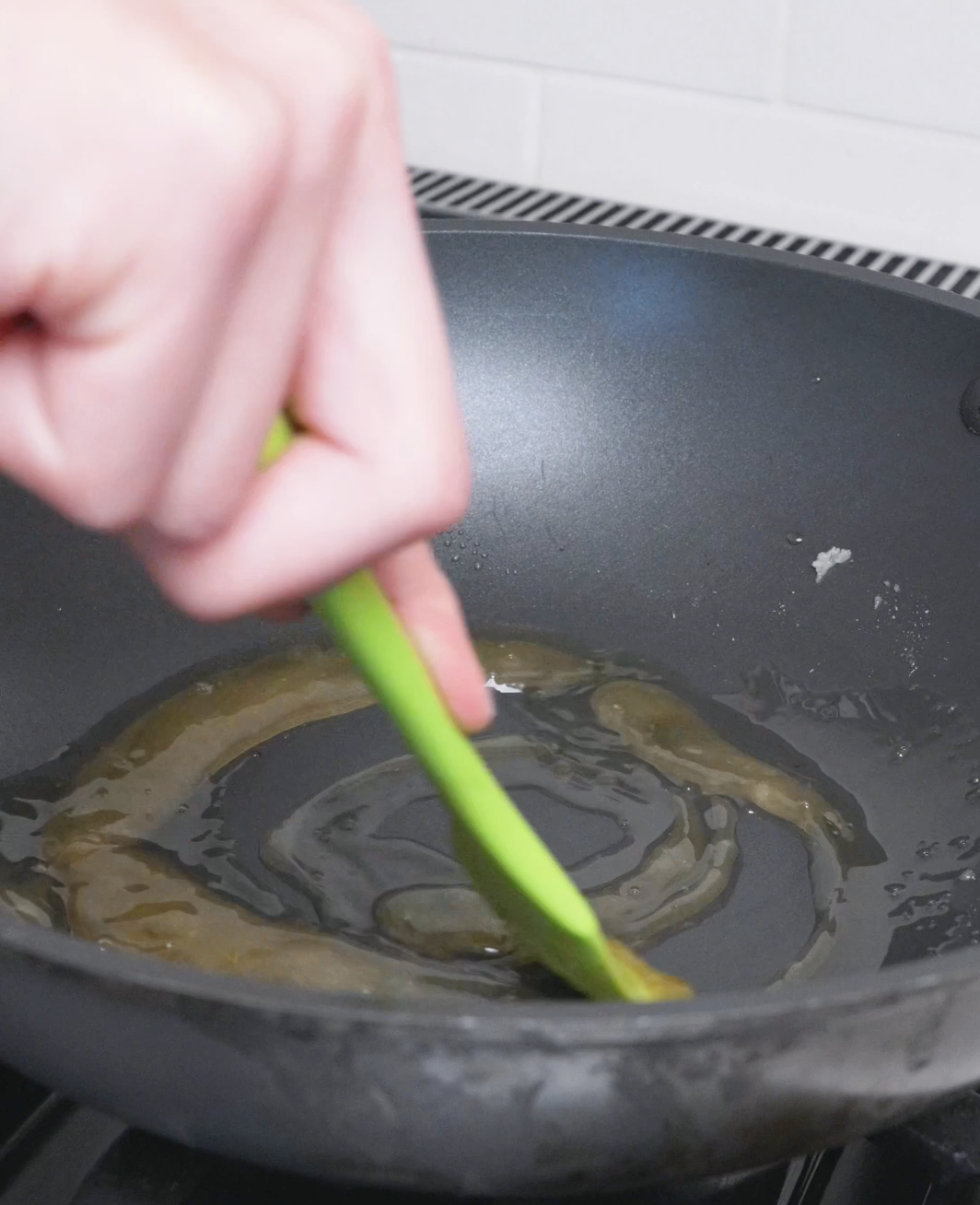
- Heat a pan over medium heat with a bit of oil. Add the rock sugar and cook until it’s liquified and golden brown.
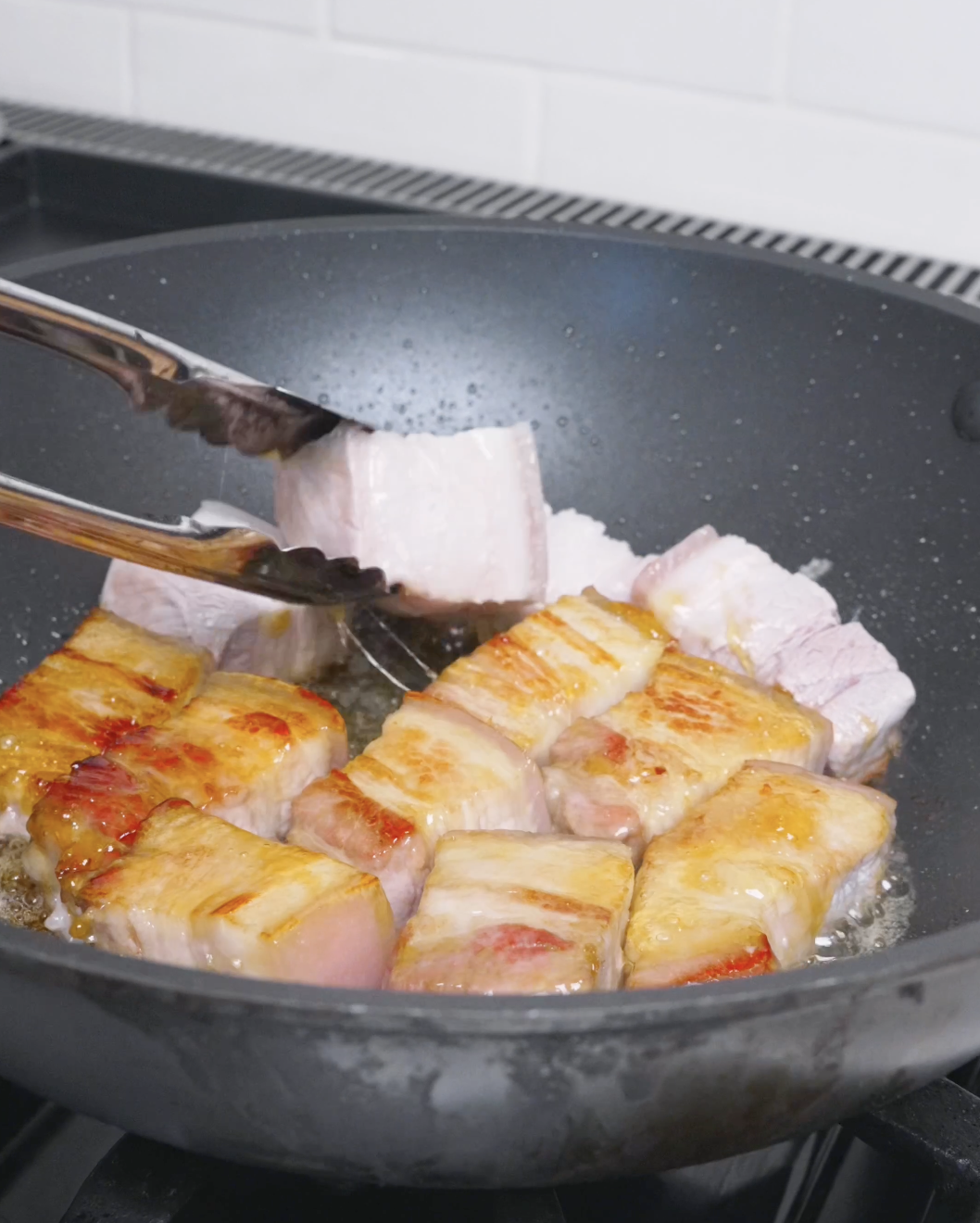
- Add the blanched pork belly and brown on all sides.
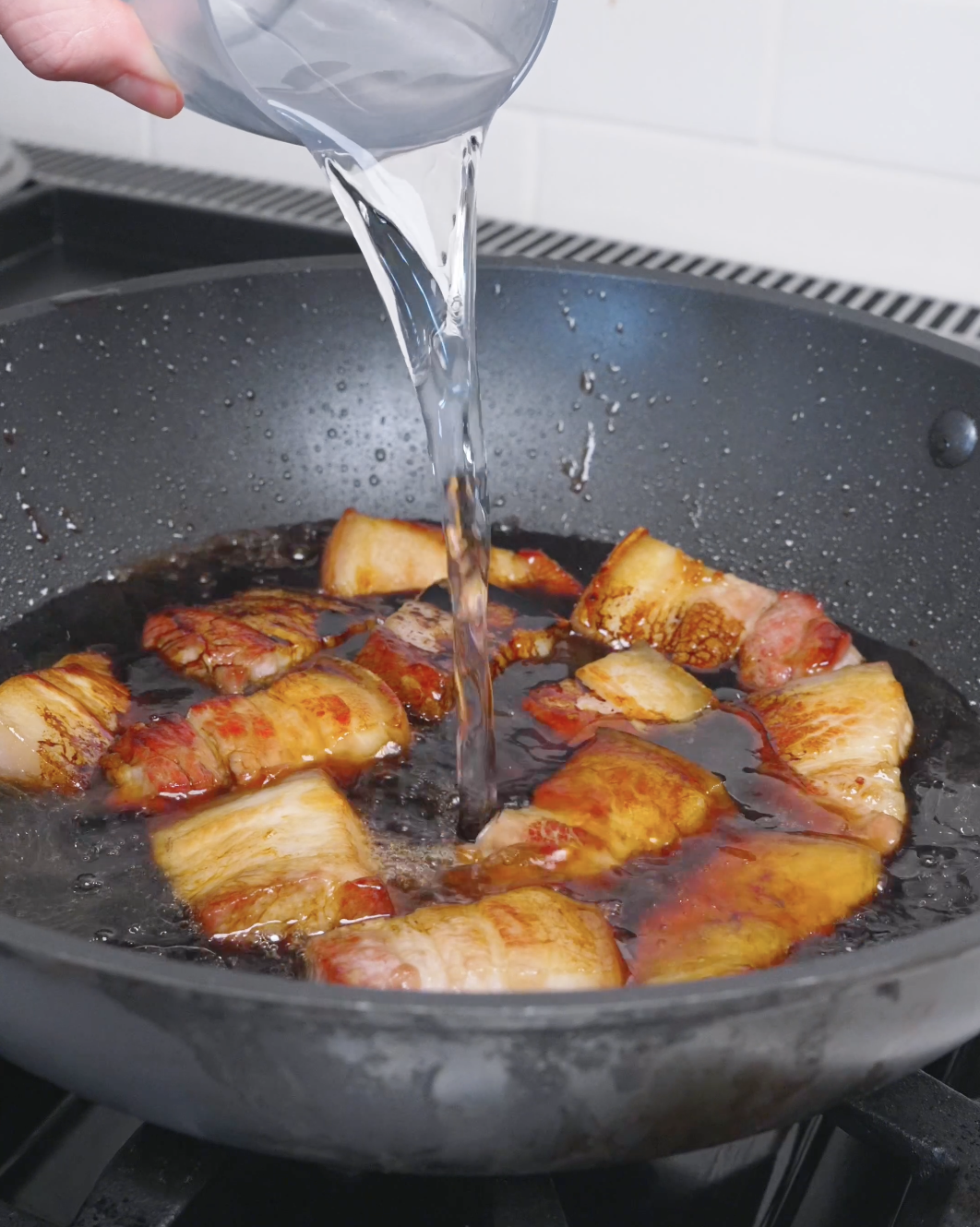
- Add the Shaoxing wine, light soy sauce, dark soy sauce, and enough water to cover the pork belly. Bring to a simmer, then cover and cook for an hour.
- Every 15 minutes or so, remove the lid and mix everything to prevent the sugars from burning.
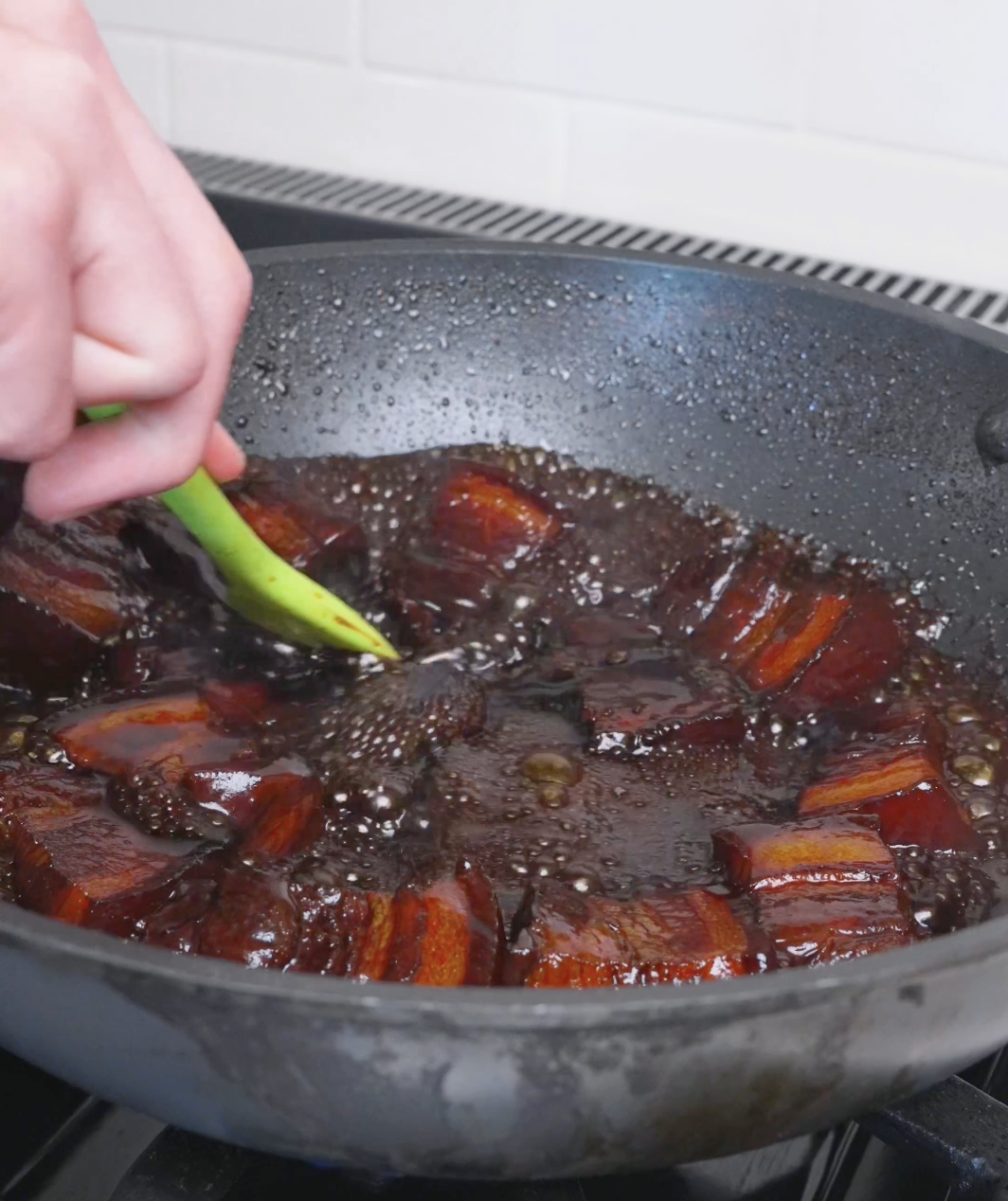
- Remove the lid, turn the heat to high, and continue cooking until the sauce thickens, then remove from the heat.
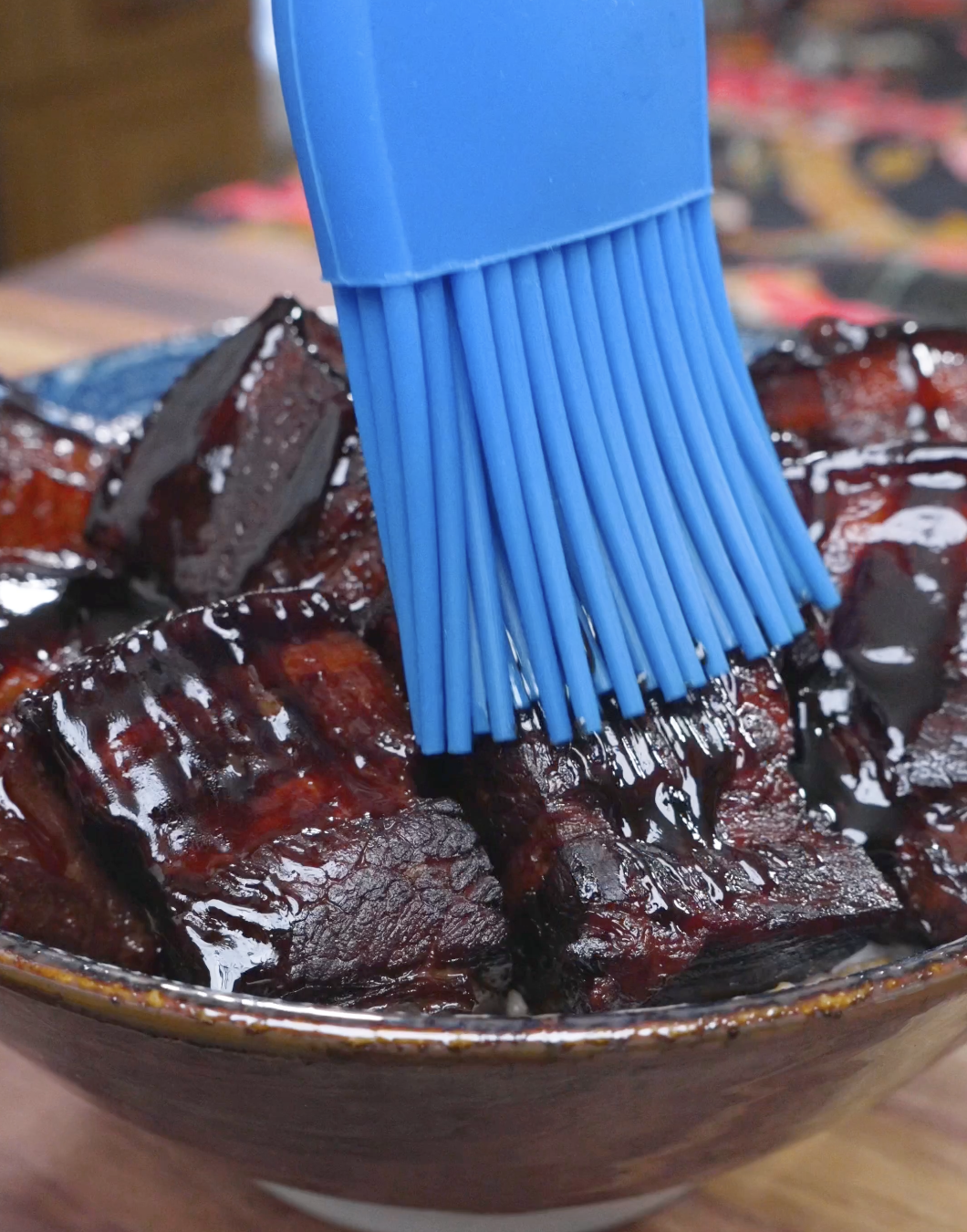
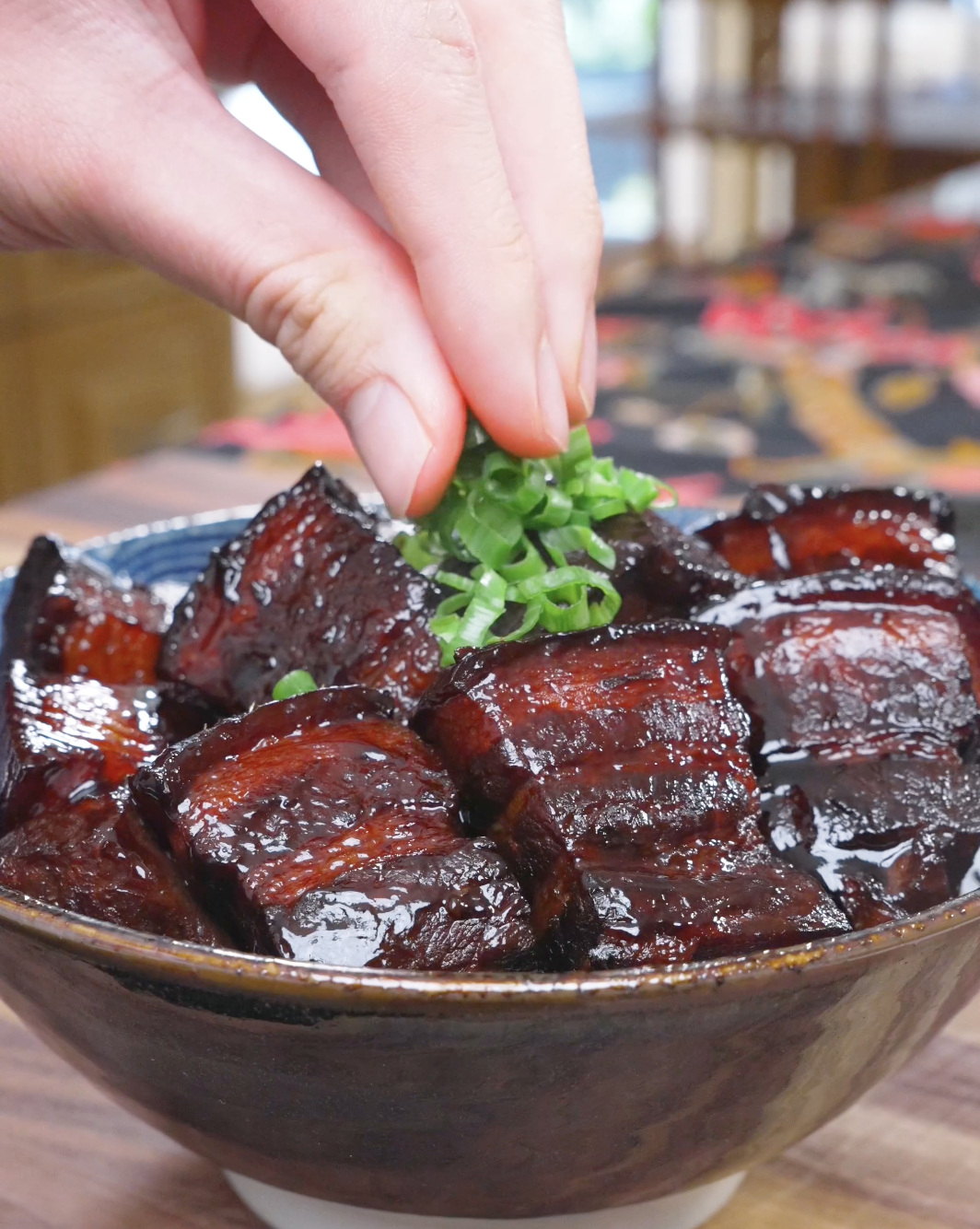
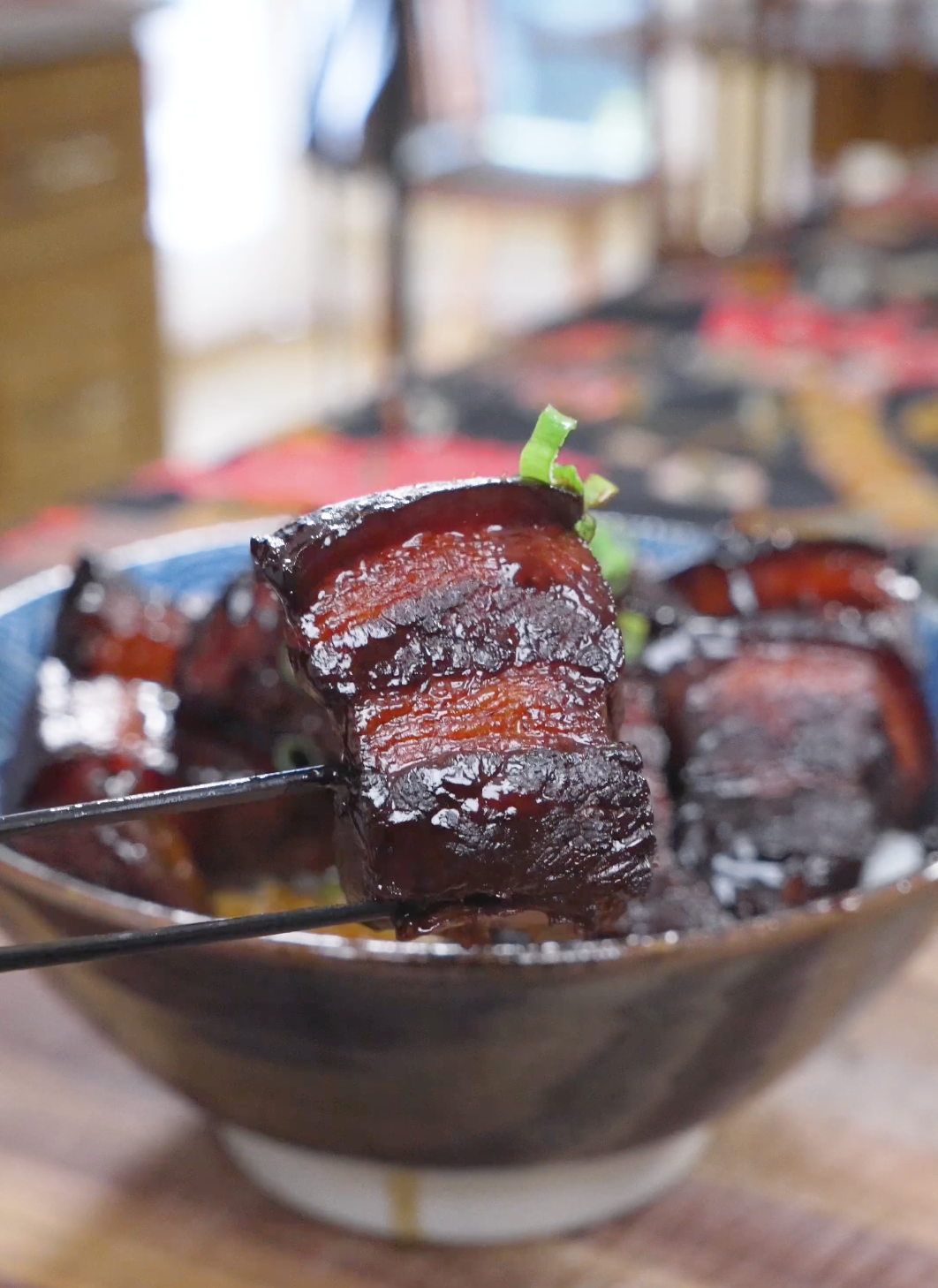
- Serve the pork over an optional bowl of rice. Pour on some more of the sauce and garnish with scallions if you like. But it’s your food, you eat it how you like.
Video
Notes
- Blanch the pork belly first — it removes impurities and gives you a cleaner, less greasy final dish.
- Watch the caramel closely. Rock sugar goes from amber to burnt in seconds, and burnt sugar turns the whole dish bitter.
- Keep it at a gentle simmer. Low and slow is what gives you that melt-in-your-mouth texture.
- Reduce the sauce uncovered at the end for that glossy, lacquered finish.
- Tastes even better the next day.
Nutrition
Nutrition information is automatically calculated, so should only be used as an approximation.
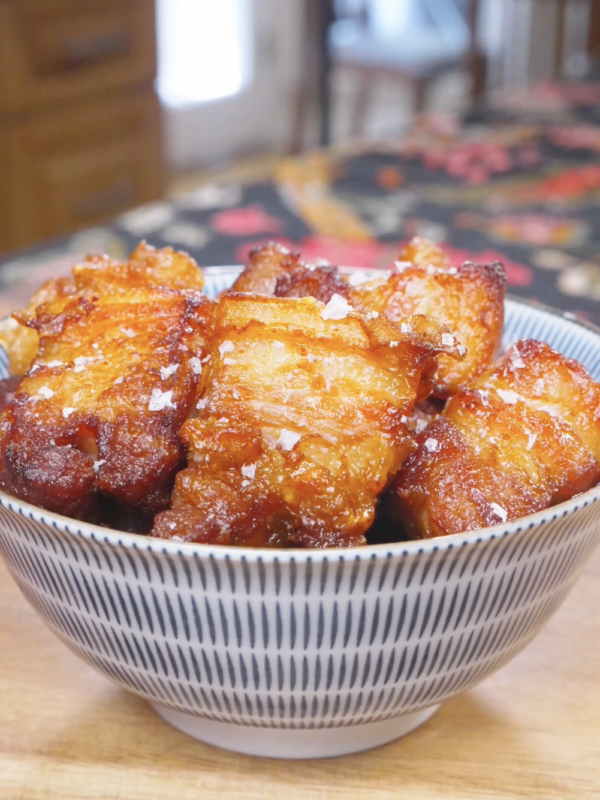
This Chinese Red Braised Pork Belly, also known as hong shao rou, is the kind of dish that turns an ordinary dinner into something downright crave-worthy. Picture tender, melt-in-your-mouth cubes of pork belly simmered low and slow in a glossy, deeply savory-sweet sauce built from rock sugar, Shaoxing wine, and a combination of light and dark soy sauce, until each piece turns a rich, lacquered mahogany color that’s as gorgeous to look at as it is irresistible to eat. This isn’t just any braise—hong shao rou is one of China’s most beloved comfort foods, with roots stretching back centuries and a reputation for being one of those dishes that practically defines home cooking in Chinese households. Friends, the balance of fatty, tender meat and that sticky caramelized glaze is nothing short of addictive. The beauty of this dish lies in its simplicity despite the depth of flavor it achieves, since just a handful of pantry staples transform into something so layered and complex that it feels like it took way more effort than it actually did. Whether you’re familiar with Chinese dishes or trying your hand at one for the first time, my recipe walks you through every step to get that perfect balance of sweet and savory, resulting in pork belly so tender it practically dissolves on your tongue. Served over a bowl of steamed rice and topped with a scatter of fresh scallions, it’s the kind of dish you’ll find yourself craving on repeat.
Can’t get enough pork belly? I feel you. Make sure you give my Vietnamese crispy pork belly, garlic pork belly fried rice and char siu braised pork belly a try next!
Table of Contents
- Red Braised Pork Belly Recipe
- Why You’ll Crave This Chinese Braised Pork Belly Recipe
- Ingredients & Substitutions
- A Quick Note On Pork Belly & Bacon
- How to Make Red Braised Pork Belly
- Optional Variations & Dietary Adaptations
- Expert Tips & Tricks
- Serving Suggestions
- Storage & Reheating
- FAQs
- More Chinese Recipes
Why You’ll Crave This Chinese Braised Pork Belly Recipe
This hong shao rou recipe is proof that a few humble ingredients and a little patience can produce something restaurant-quality right in your own kitchen. The real magic happens when you caramelize the rock sugar into a deep golden syrup before the pork even hits the braise—that step alone is what gives red braised pork belly its signature glossy, mahogany color and an irresistible touch of sweetness that balances out all the savory depth. And while it might sound fancy, this is genuinely a low-maintenance dish once it’s simmering away; you’re looking at about fifteen minutes of hands-on prep, then just over an hour of mostly hands-off braising where all you have to do is stir occasionally so nothing burns on the bottom of the pot. A slow simmer is non-negotiable, though, because it’s what transforms tough, fatty pork belly into something so tender it practically falls apart with a nudge of your chopsticks, all while that sauce reduces down into a thick, sticky glaze that clings to every piece. Honestly, the smell alone wafting through your kitchen as it braises is reason enough to put this one on your menu!
Ingredients & Substitutions
- Pork Belly – The star of the show! You’ll want a good mix of fat and meat here since that’s what gives the dish its melt-in-your-mouth texture, so don’t be tempted to trim away the fat. It renders down and adds so much flavor and richness to the braise.
- Neutral Oil – Just a bit is needed to help caramelize the sugar and brown the pork, so something like vegetable, canola, or avocado oil works perfectly. Nothing fancy required here.
- Rock Sugar – This is traditional and gives the sauce a beautiful glossy finish with a more subtle, rounded sweetness, but if you don’t have any on hand, regular white sugar is a totally fine 1:1 substitute.
- Water – Just enough to cover the pork belly while it braises, helping everything simmer low and slow until tender. If possible, start with filtered water for the cleanest flavor.
For the Braise
- Shaoxing Wine – This Chinese cooking wine adds a depth of flavor you really can’t replicate, so I’d encourage you to seek it out if you can (most Asian grocery stores carry it). In a pinch, dry sherry is the closest substitute.
- Light Soy Sauce – This is your regular, everyday soy sauce, perfect for adding salty, umami depth.
- Dark Soy Sauce – This one’s a little different from light soy sauce—it’s thicker, slightly sweeter, and more about adding color than saltiness, which is key for getting that deep mahogany color in the final dish. It’s worth picking up a bottle since there isn’t a great substitute, but it’ll last a long time in the pantry.
Optional Garnish
- Scallions – A sprinkle of fresh, chopped scallions adds a nice pop of color and freshness to balance out the richness of the pork, but feel free to skip it if you don’t have any on hand.
- Steamed Rice – This Asian braised pork belly practically begs to be served over a warm bowl of rice so you can soak up every last bit of yummy sauce, but it’s totally optional if you’d rather enjoy it on its own.
This is just a short review of the ingredients; for the complete recipe, including quantities, scroll down to the recipe card 👇
A Quick Note On Pork Belly & Bacon
If you’ve never cooked with pork belly before, it’s worth knowing exactly what you’re working with and how it differs from its more familiar cousin, bacon. Pork belly is the raw, uncured cut of meat taken from the belly of the pig, featuring gorgeous alternating layers of fat and meat.
Bacon, on the other hand, starts out as that very same cut of pork belly, but it’s then cured, smoked, and sliced thin, which completely transforms its flavor, texture, and how it’s meant to be used in cooking. So while bacon is fantastic for crisping up in a skillet, you wouldn’t want to use it here.
For hong shao rou, you need the raw, uncured pork belly, typically sold in a block, so it can slowly braise and soak up all that rich, savory-sweet sauce while becoming irresistibly tender. Look for it at your local grocery store (it’s often tucked near the other fresh cuts of pork) or an Asian grocery store, where you’ll usually find it in larger slabs, perfect for cutting into chunks.
How to Make Red Braised Pork Belly
Cut the pork belly into 1-inch chunks and set aside.
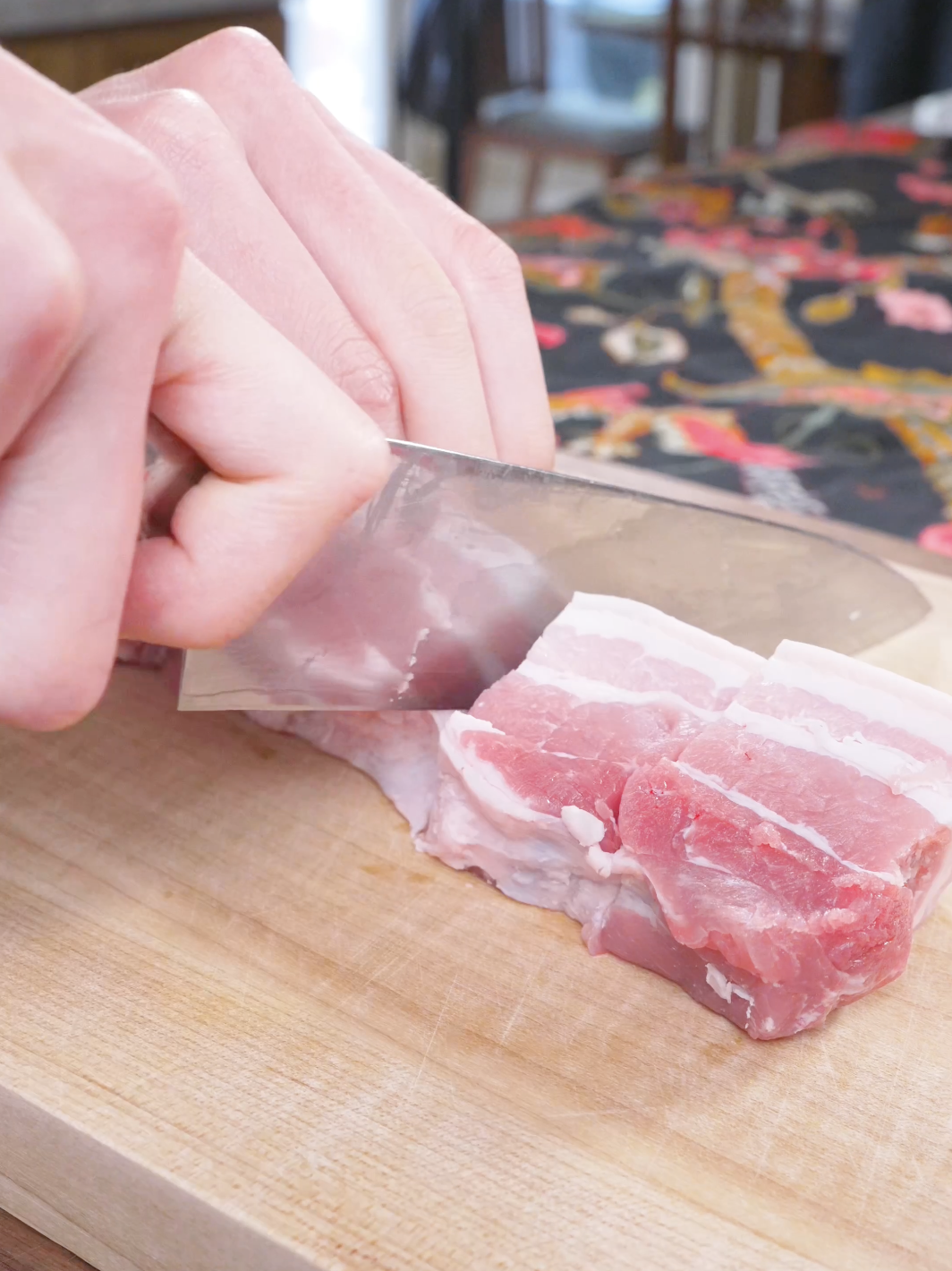
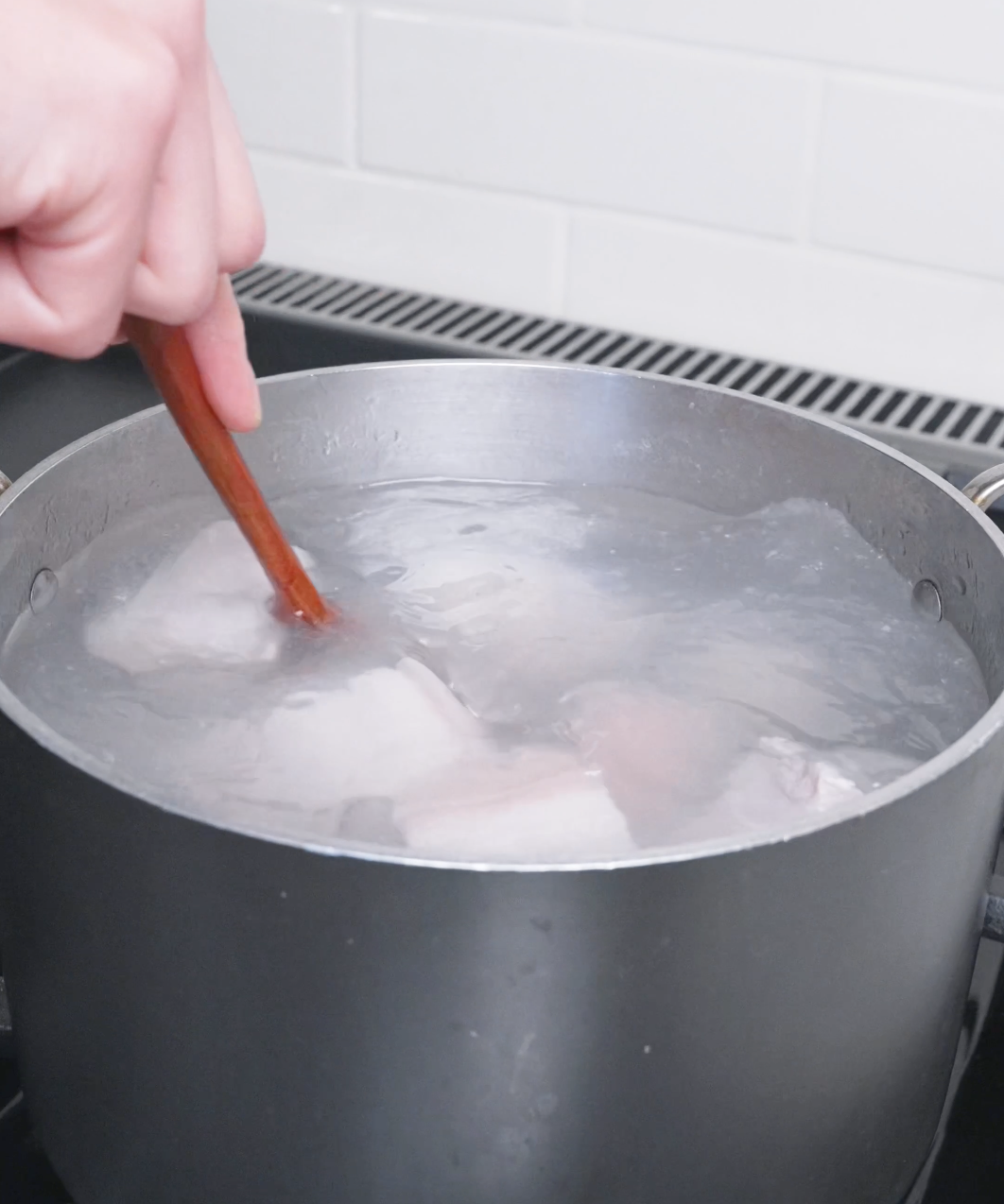
Blanch the pork for a few minutes in boiling water to get rid of the impurities, then drain.
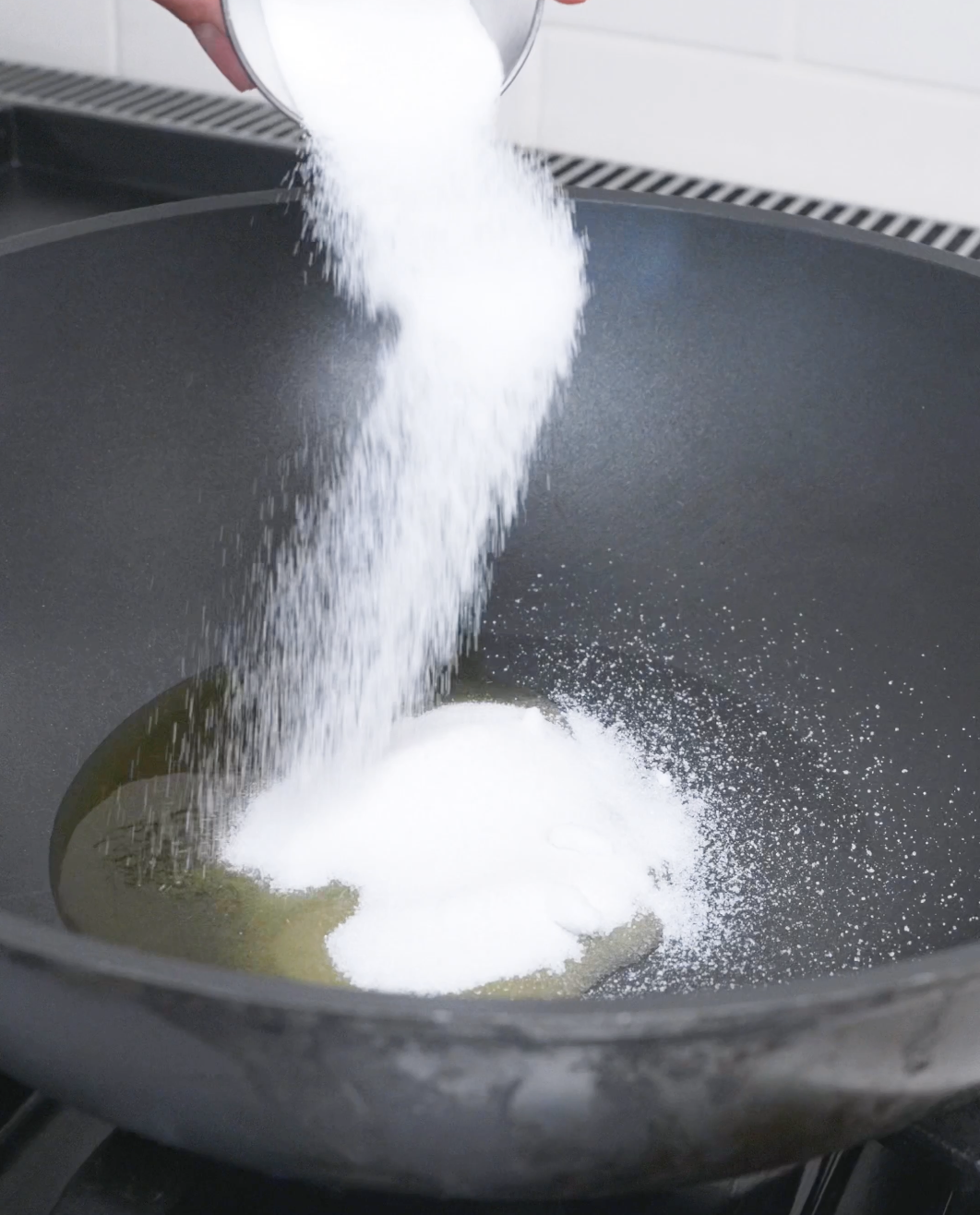
Heat a pan over medium heat with a bit of oil. Add the rock sugar and cook until it’s liquified and golden brown.
Add the blanched pork belly and brown on all sides.
Add the Shaoxing wine, light soy sauce, dark soy sauce, and enough water to cover the pork belly. Bring to a simmer, then cover and cook for an hour.
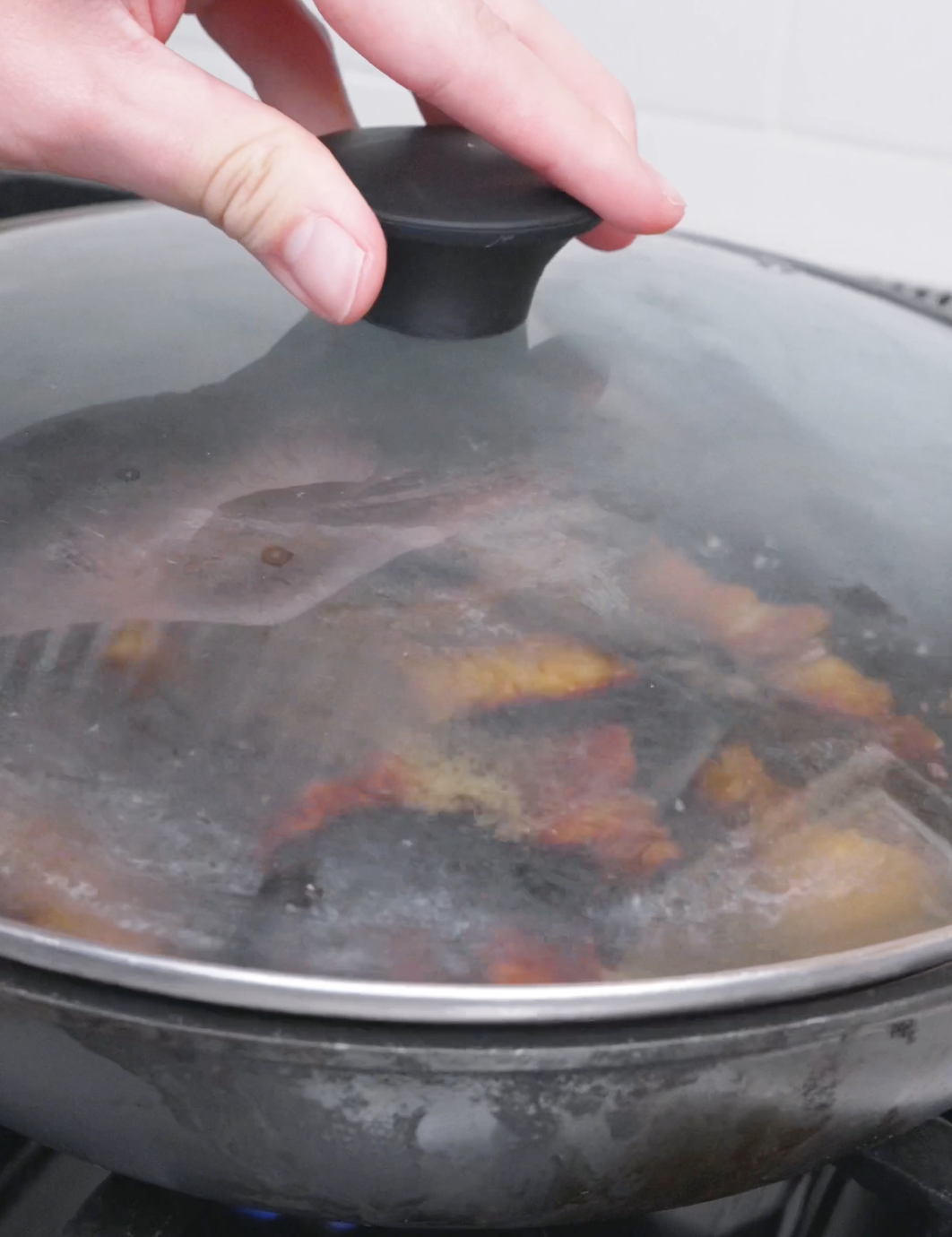
Every 15 minutes or so, remove the lid and mix everything to prevent the sugars from burning.
Remove the lid, turn the heat to high, and continue cooking until the sauce thickens, then remove from the heat.
Serve the pork over an optional bowl of rice. Pour on some more of the sauce and garnish with scallions if you like. But it’s your food, you eat it how you like.
More of a visual learner? Check out my video recipe below. 👇
Optional Variations & Dietary Adaptations
- Add Hard-Boiled Eggs – A classic addition in many Chinese households! Simply toss peeled hard-boiled eggs into the pot during the last 20-30 minutes of braising so they can soak up all that incredible sauce, turning a deep, glossy brown and adding a wonderful textural contrast to the tender pork.
- Add Vegetables – Blanched baby bok choy, steamed broccoli, or even some sautéed napa cabbage make a great addition alongside the finished pork, adding a pop of color and a bit of freshness to help balance out the richness of the dish.
- Spicy Pork Belly – If you like a little heat, try stirring in a sliced fresh chili or a spoonful of chili oil at the end of cooking for a nice kick that won’t overpower the other flavors.
- Make it gluten-free – Swap in tamari or another gluten-free soy sauce alternative like coconut aminos for both the light and dark soy sauce, and double-check your Shaoxing wine, as some brands may contain gluten. Dry sherry is a safe substitute if you’re ever unsure.
Expert Tips & Tricks
- Blanch the pork belly first. Don’t skip this step! Briefly boiling the pork belly in water (sometimes with a bit of ginger and scallion) before braising helps remove impurities and excess scum, resulting in a cleaner-tasting, less greasy final dish.
- Don’t rush the caramel. When melting the rock sugar to create the deep, glossy color we’re after, keep the heat at medium and watch it closely. It can go from perfectly amber to burnt in a matter of seconds. If it does burn, it’s best to start over, as burnt sugar will turn bitter and throw off the whole dish.
- Sear the pork belly well. Give the pork a good sear in the caramelized sugar before adding your braising liquid. This step renders some of the fat and adds another layer of flavor and color that makes a big difference in the final dish.
- Low and slow is the way to go. Resist the urge to crank up the heat to speed things along. A gentle simmer over low heat for an extended period is what breaks down the connective tissue and fat, giving you that signature melt-in-your-mouth texture.
- Reduce the sauce at the end. Once the pork is tender, remove the lid and let the sauce simmer uncovered to reduce and thicken slightly. This concentrates the flavor and gives the dish that glossy, lacquered finish it’s known for.
- Make it ahead of time. Like a lot of braised dishes, Chinese braised belly pork tends to taste even better the next day, once the flavors have had time to meld. Don’t hesitate to make this a day or two in advance and simply reheat gently before serving.
Serving Suggestions
Hong shao rou is rich and deeply savory, so it really shines when paired with something simple that can soak up all that incredible sauce. A bowl of fluffy steamed white rice is the classic, no-fuss choice, but if you want to take things up a notch, try serving it alongside my garlic butter fried rice or egg fried rice instead—both are easy to whip up while the pork finishes braising. It’s also delicious over a simple bowl of congee.
If you’re looking to switch things up from rice, red braised pork belly is equally delicious served over noodles. My garlic sesame noodles are a fantastic option, bringing a nutty, garlicky flavor that complements the sweet and savory pork perfectly. To round out the meal and add a little freshness and crunch to balance all the richness, I’d also recommend serving some simple blanched or stir-fried greens on the side, like bok choy, gai lan, or spinach.
Storage & Reheating
- Refrigerate: Store leftovers in an airtight container in the fridge for up to 4-5 days. The flavor actually gets better after a day or two!
- Freeze: For longer storage, freeze in an airtight, freezer-safe container for up to 2-3 months. Thaw overnight in the fridge before reheating.
- Reheat on the stovetop: Warm the pork and sauce in a small pot over medium-low heat, covered, stirring occasionally and adding a splash of water if the sauce has thickened too much.
- Reheat in the microwave: In a pinch, heat in 30-second intervals, stirring in between, until warmed through.
FAQs
What makes red braised pork belly so flavorful?
The magic of hong shao rou really comes down to that deep, layered braising process! The caramelized rock sugar gives it a gorgeous amber color and subtle sweetness, while a trio of light and dark soy sauce and Shaoxing wine build up a rich, savory-sweet flavor as everything simmers low and slow. The pork belly itself also plays a big role. As the fat renders down during the long braise, it bastes the meat from the inside out, making every bite incredibly tender and packed with flavor.
How long does it take to make red braised pork belly?
All in, you’re looking at about 1.5 to 2 hours from start to finish, though most of that time is hands-off simmering. After a quick blanch and sear, the pork needs to braise gently for at least an hour (sometimes longer) to get that melt-in-your-mouth texture, so it’s a great dish to start on a lazy afternoon while you go about other things!
What are the differences between dong po rou and hong shao rou?
These two dishes are definitely cousins, but with a few key differences! Dong po rou is typically made with larger, thick-cut squares of pork belly that are often tied with string to hold their shape, and it’s usually steamed or braised very gently for a softer, almost custardy texture. Hong shao rou, on the other hand, uses smaller bite-sized pieces and relies more on stovetop braising with caramelized sugar for a glossier sauce and slightly firmer bite. Flavor-wise they’re similar, but dong po rou tends to be a touch more delicate and wine-forward, while hong shao rou leans into bolder, savory-sweet notes.
Is hong shao rou healthy?
Like a lot of great comfort food, this red braised pork belly is best enjoyed in moderation! Pork belly is high in fat, which is exactly what gives this dish its signature richness and tenderness, so it’s definitely more of a special-occasion treat than an everyday staple. That said, it’s also packed with protein and pairs wonderfully with lighter sides like steamed greens or rice to help balance out the meal.
More Chinese Recipes
Craving more Chinese food? Try my Crispy Pork Belly, Garlic Pork Belly Fried Rice, or Claypot Rice!