Carbonara Rice Cakes Recipe
Ingredients
- 12 oz rice cakes (tteok)
- 4 oz guanciale or pancetta, diced
- 3 cloves garlic, minced
- 1 tsp grated ginger
For the Sauce
- ¾ cup half and half
- 1 tbsp gochujang
- 1 tbsp light soy sauce
- ⅓ cup grated Parmesan
- 1 tsp sugar
Optional Garnish
- Parmesan
- More guanciale
- Chives
Instructions
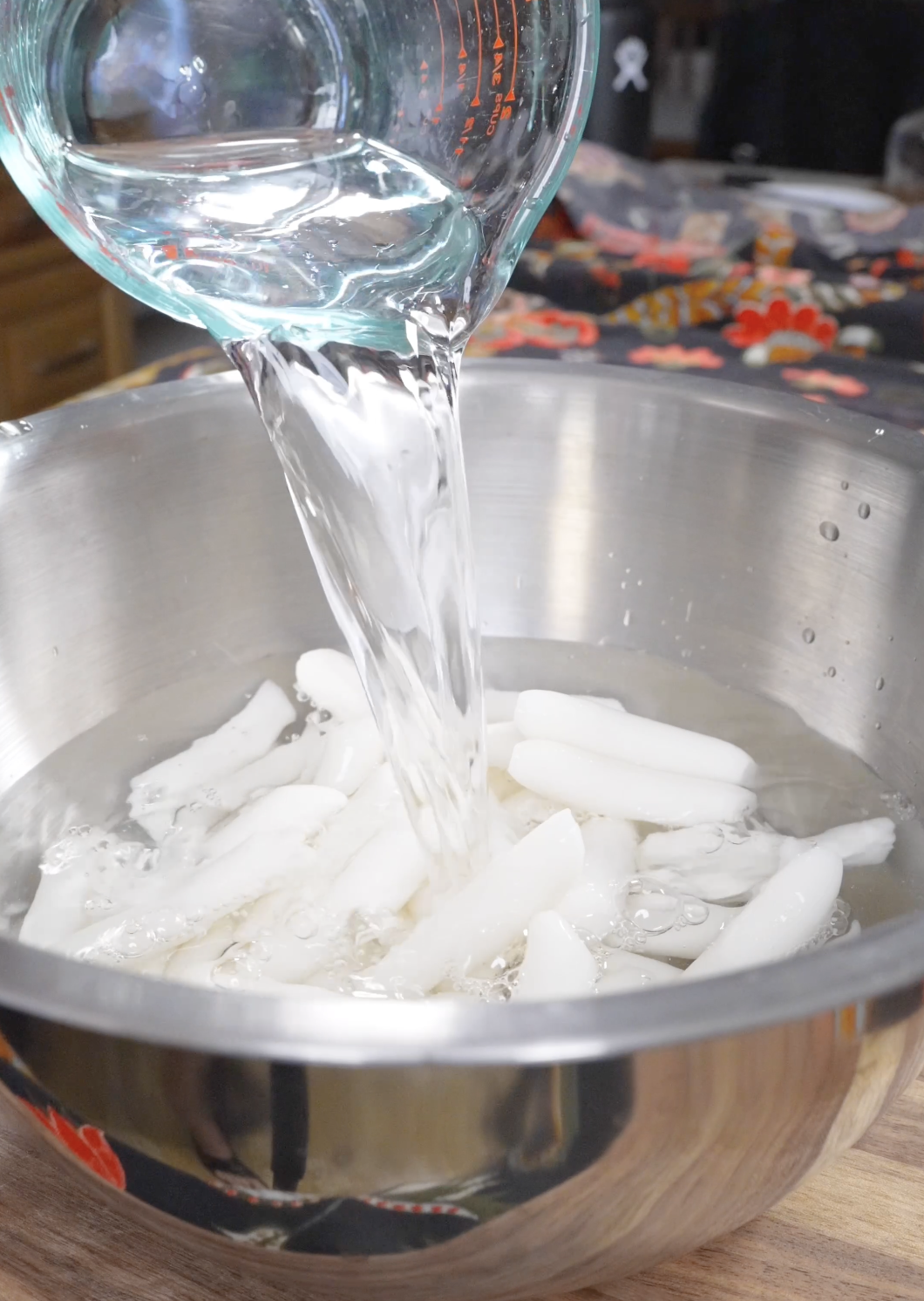
- Soak the rice cakes in warm water for at least 10 minutes.
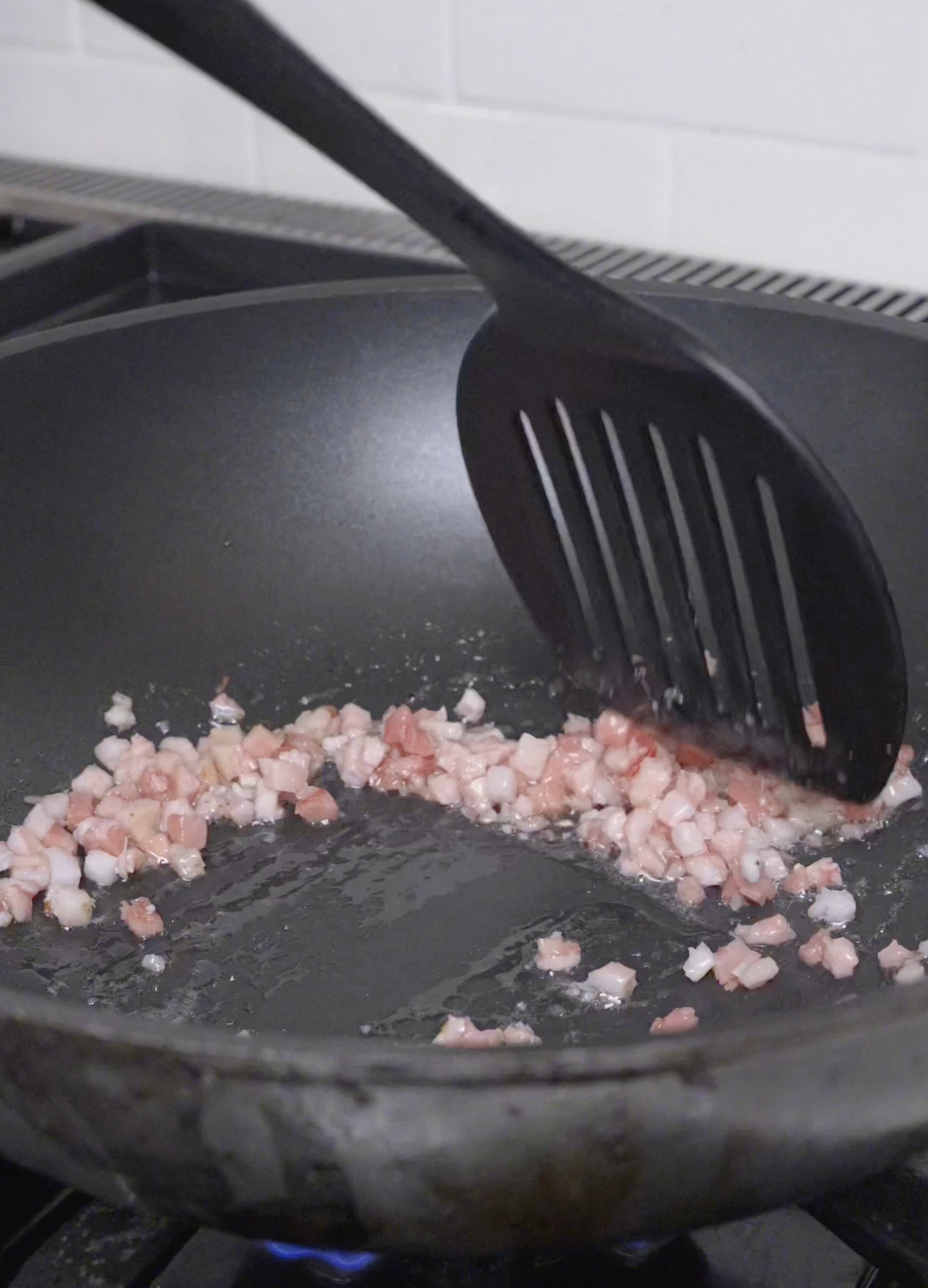
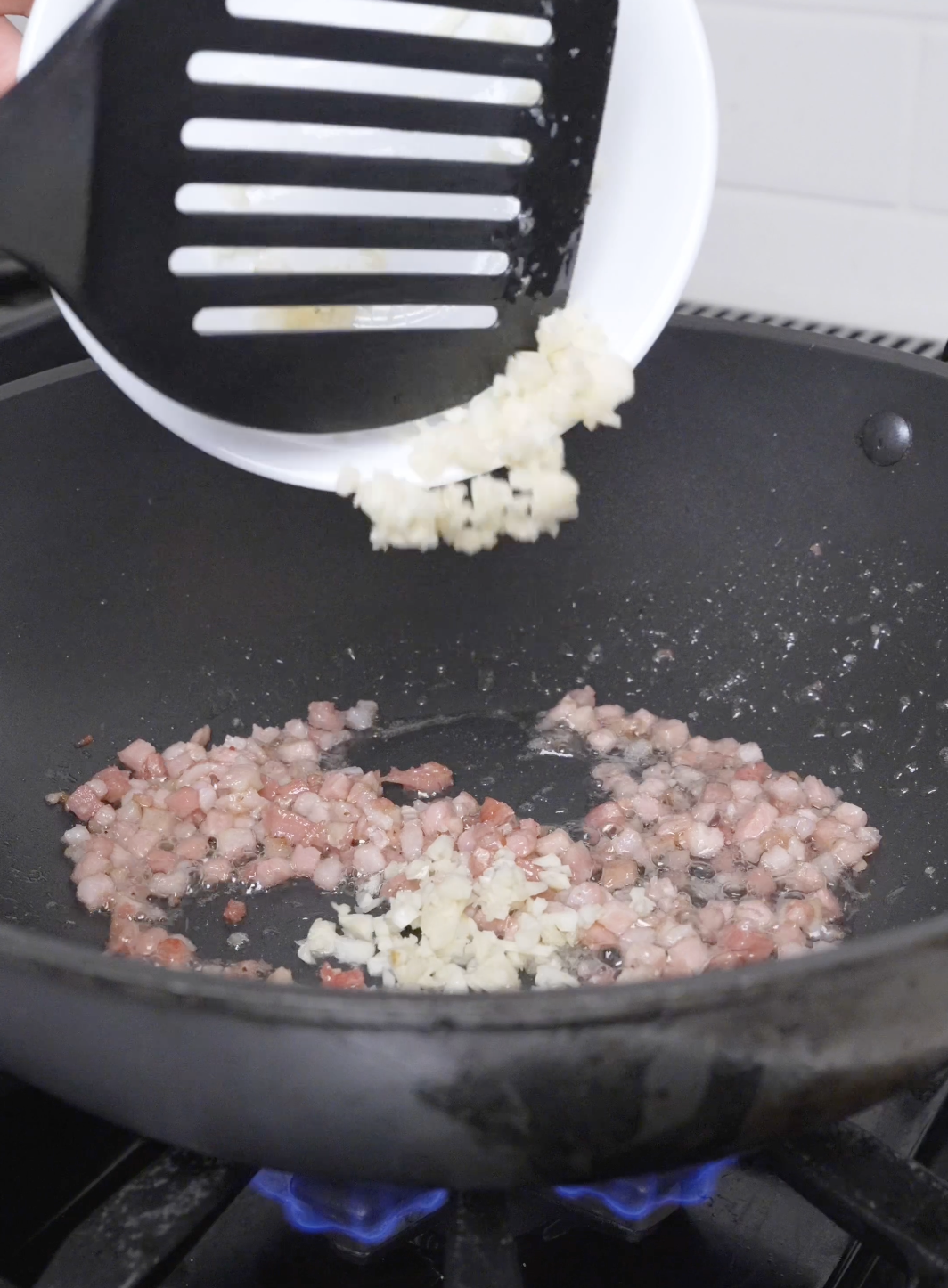
- While the rice cakes soak, add the guanciale to a cold pan and render over medium-low heat until lightly browned. Add the minced garlic and ginger and cook until fragrant.
- Add the half and half, gochujang, light soy sauce, Parmesan, and sugar, and bring to a simmer.
- Drain the soaked rice cakes and add them to the pan. Cook until the rice cakes are tender and the sauce has thickened.
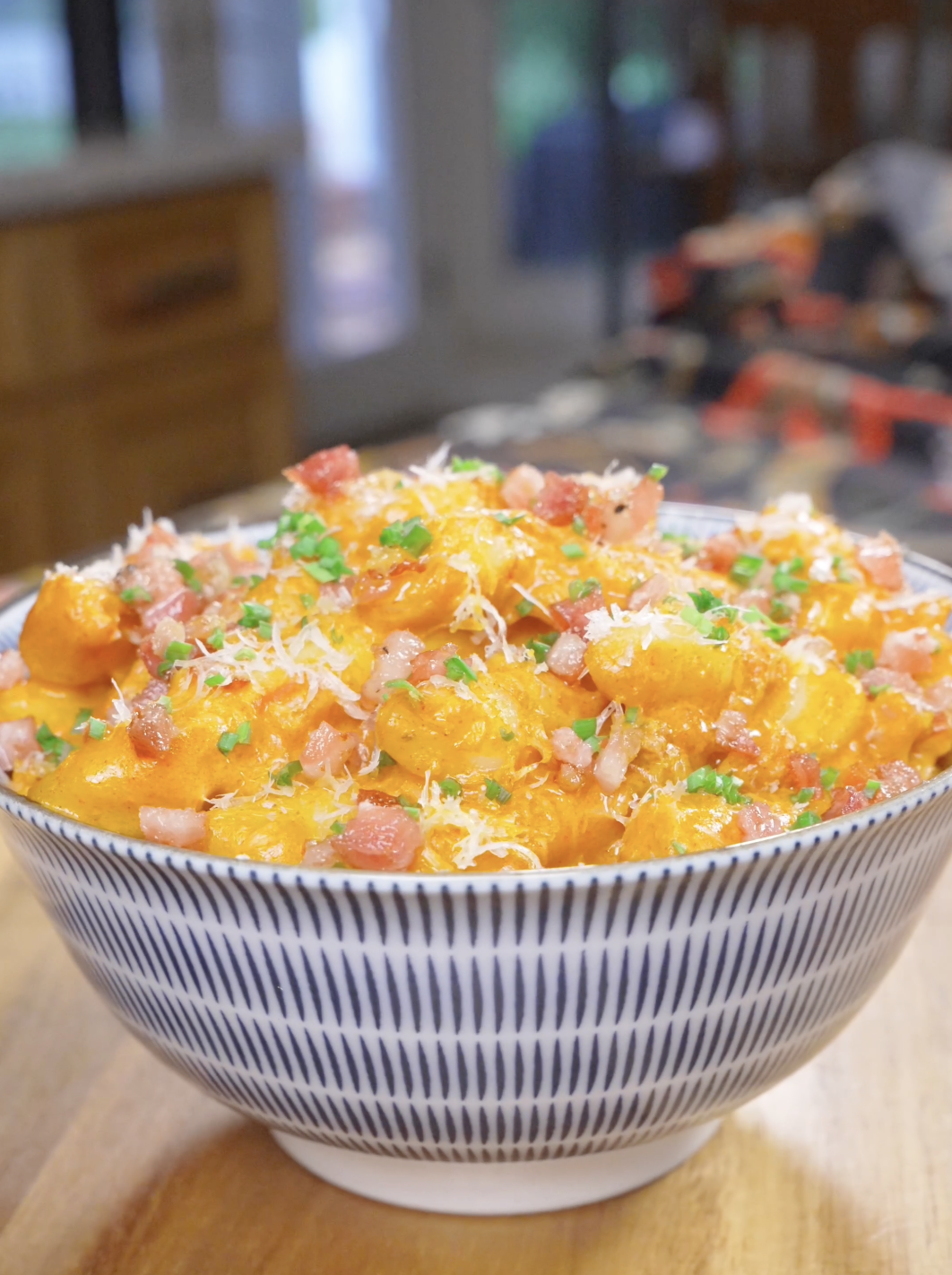
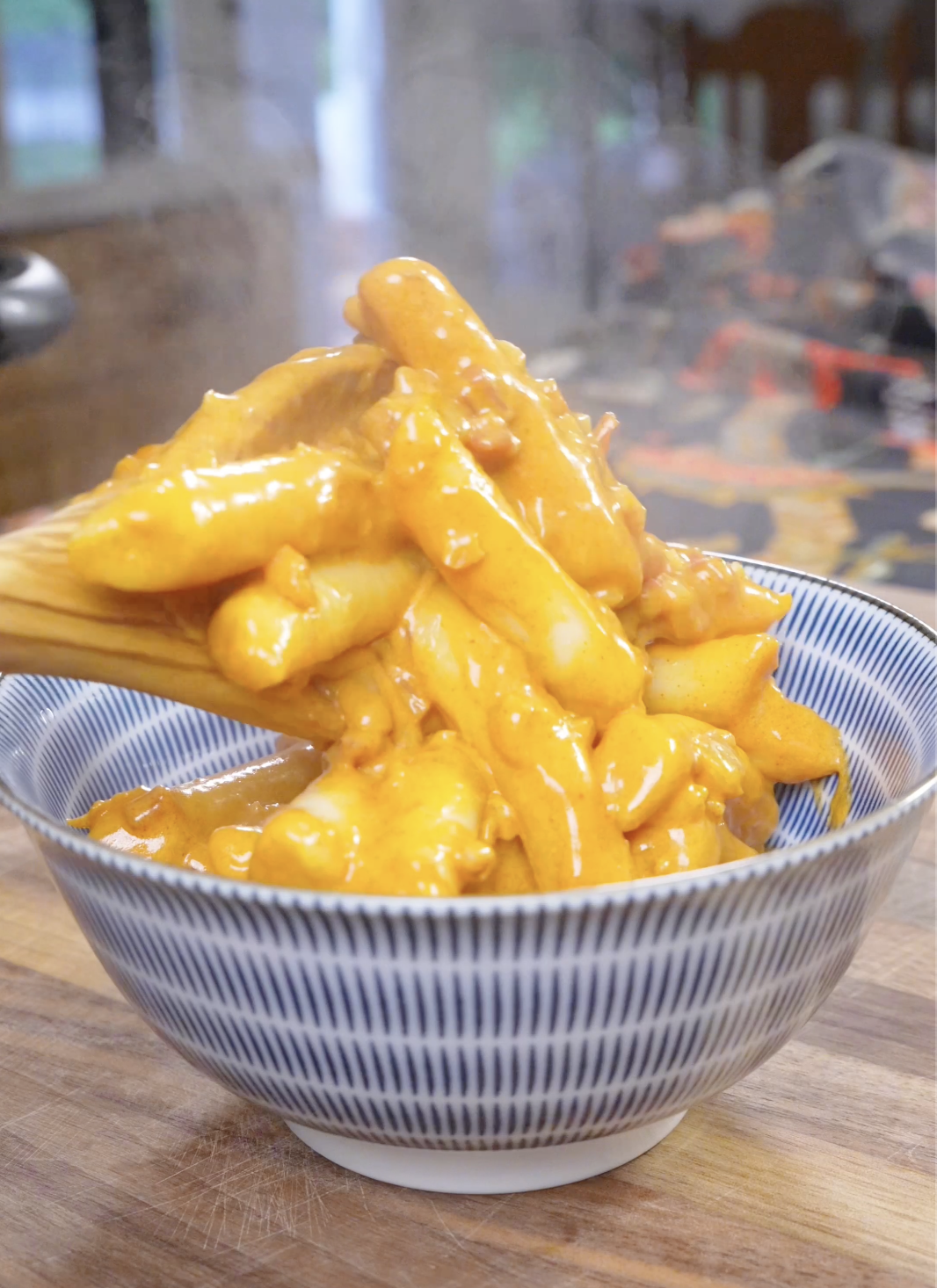
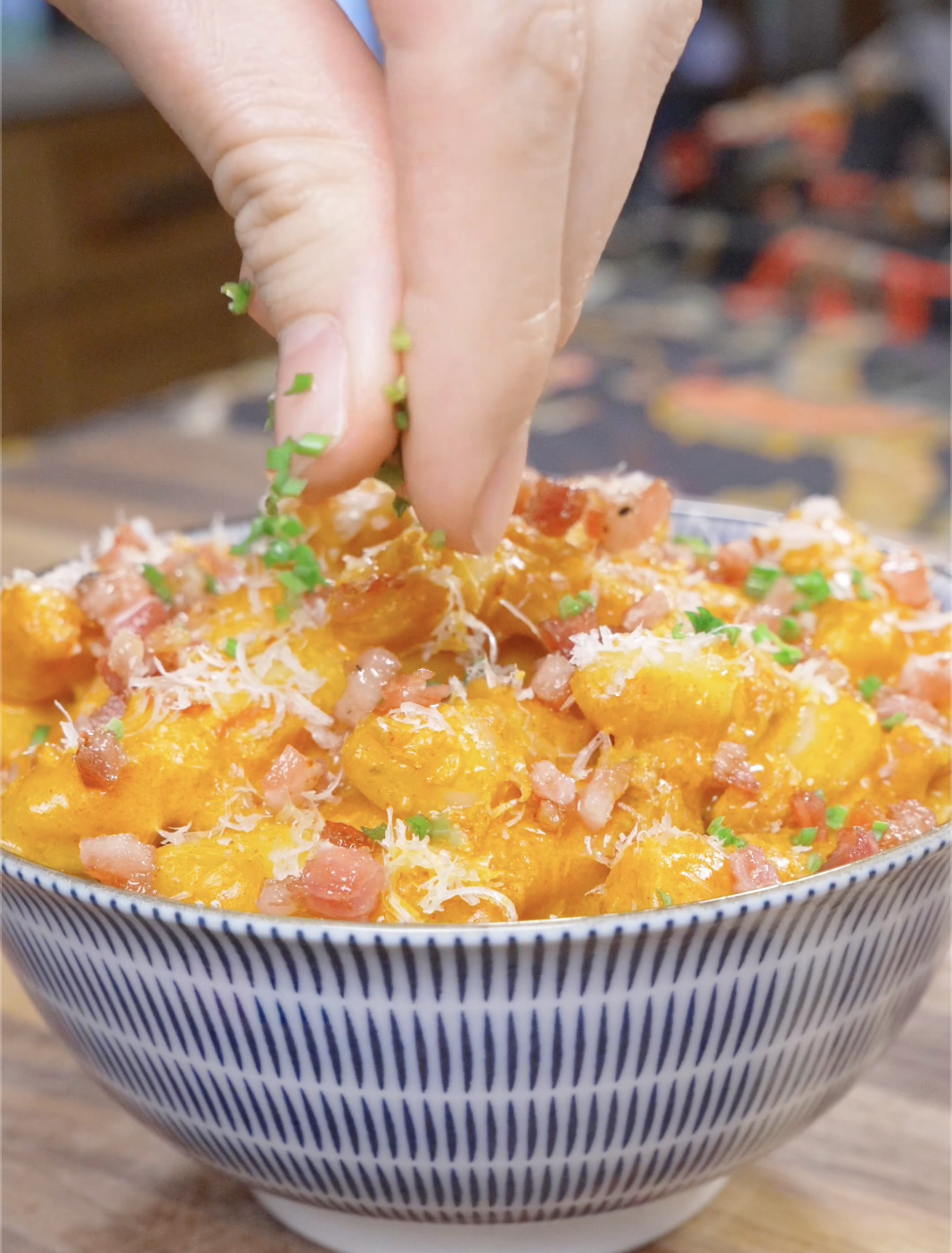
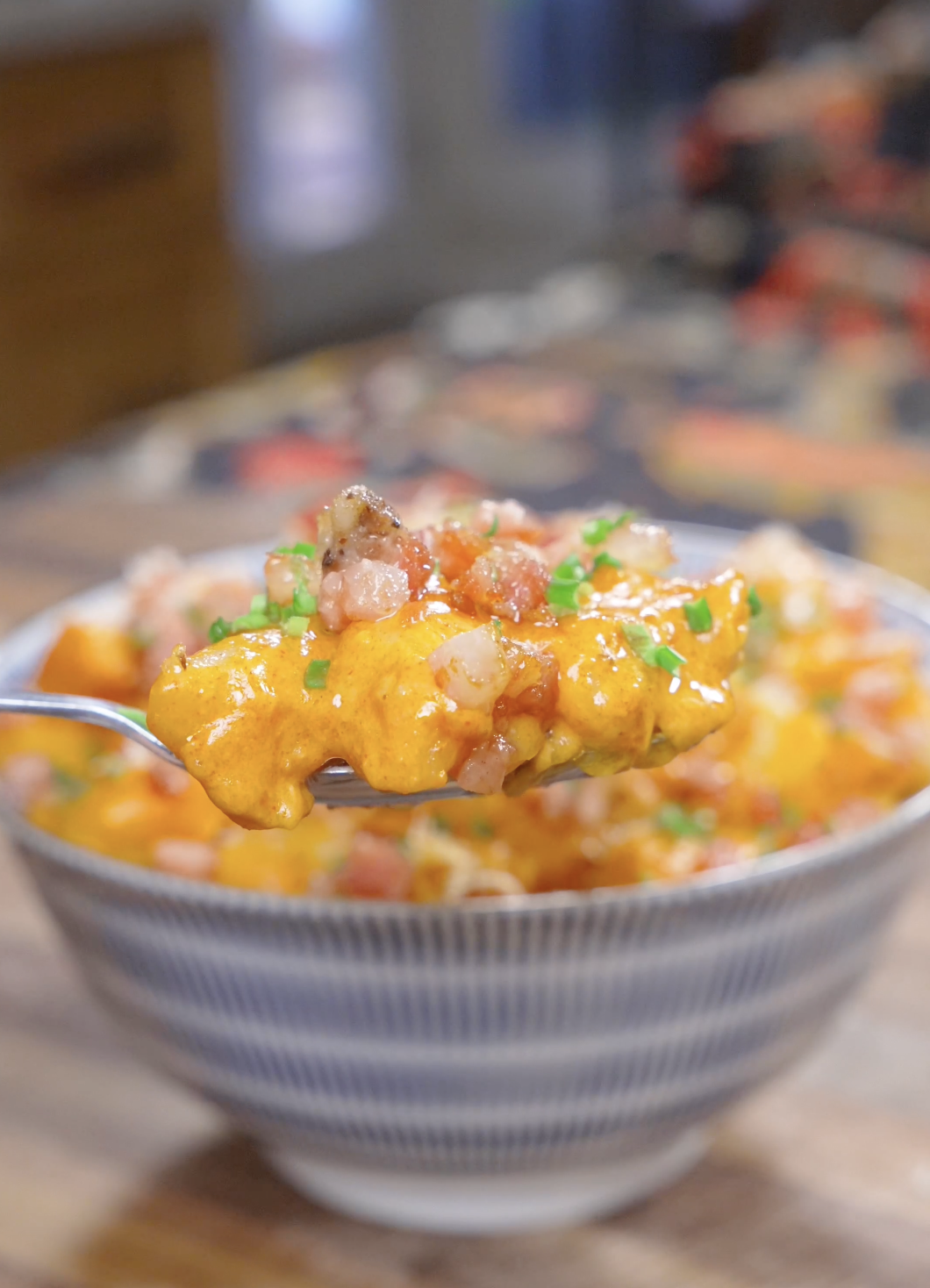
- Transfer to a bowl and optionally garnish with Parmesan, more guanciale, and chives. But it’s your food, you eat it how you like.
Video
Notes
- Soak the tteok first so they cook evenly instead of staying tough in the middle.
- Render the guanciale low and slow from a cold pan — rushing it burns the edges before the fat renders.
- Add the half and half gradually over lower heat so the sauce stays silky instead of curdling.
- Save a splash of the starchy soaking water to help the sauce cling.
- Taste before salting — the soy sauce, Parmesan and gochujang already bring plenty.
- Serve immediately; tteok firm up as they sit.
If you’ve ever had the cult classic Samyang Bulkdak Carbonara Tteokbokki Korean Rice Cakes, you’re going to flip for my homemade, from-scratch recipe. Instead of ripping open a paper bowl and adding boiling water, we’re building that same irresistible combo of spicy, creamy, cheesy, and chewy completely from scratch. It’s even better than the packaged version! Chewy Korean rice cakes get bathed in a rich, velvety sauce that blends gochujang’s signature heat and funk with the nutty, salty depth of Parmesan and the silky body of half and half, all brought together with crispy, rendered guanciale for that unmistakable carbonara-style richness. It’s spicy, savory, creamy, and wildly crave-worthy. Best of all, it comes together in one pan in just 35 minutes (including soaking time), so you can get that instant-noodle craving satisfied with way more flavor and zero mystery ingredients!
If you love this cheesy-pork combo as much as I do, check out my Japanese carbonara udon, gochujang carbonara pasta and carbonara instant ramen recipes next!
Table of Contents
- Carbonara Rice Cakes Recipe
- Why You’ll Crave These Cheesy Rice Cakes
- Ingredients & Substitutions
- Guanciale vs. Pancetta vs. Bacon: What’s the Difference?
- How to Make Carbonara Tteokbokki Korean Rice Cakes
- Optional Variations & Dietary Adaptations
- Expert Tips & Tricks
- Serving Suggestions
- Storage & Reheating
- FAQs
- More Korean Recipes
Why You’ll Crave These Cheesy Rice Cakes
There’s something almost hypnotic about the texture of tteok (Asian rice cakes). They’re soft, stretchy, and satisfyingly chewy in a way that regular pasta or noodles just can’t replicate, and it’s the perfect vehicle for soaking up a sauce this good. Every bite delivers an irresistible push-and-pull between heat and comfort: the gochujang brings a deep, slow-building spice that never overwhelms, while the Parmesan and half and half mellow it out into a cozy, slightly spicy bowl. Then there’s the guanciale, rendered low and slow until it’s golden and crisp, scattering little pockets of savory, porky richness throughout the sauce. It hits every craving at once—spicy, cheesy, rich, and a little chewy—which makes it dangerously easy to go back for seconds. (Or, just eat it straight out of the pan!)
Ingredients & Substitutions
- Korean Rice Cakes (Tteok) – These are the chewy little cylinders that make this dish so fun to eat. You’ll find them in the refrigerated or frozen section of any Korean grocery store (and plenty of regular grocery stores these days too). If yours are on the firmer side, a quick soak in warm water softens them up so they cook evenly and get that perfect chewy-but-tender bite.
- Guanciale or Pancetta – Guanciale is the classic choice if you want that deep, rich, slightly funky pork flavor that makes real carbonara so good, but don’t stress if you can’t find it. Pancetta is a totally solid substitute and way easier to track down. In a pinch, even thick-cut bacon will get you most of the way there! Just know it’ll bring a slightly smokier flavor to the party.
- Garlic – Freshly minced is always best here since it mellows and sweetens as it cooks alongside the guanciale fat. Jarred minced garlic also works if that’s what you’ve got on hand!
- Grated Ginger – This adds a subtle warmth and brightness that cuts through the richness of the sauce. Fresh is ideal, but if you only have ground ginger, use about ¼ – ⅓ of the amount since it’s more concentrated.
For the Sauce
- Half and Half – This is what gives the sauce its luxurious, creamy body. Note that half and half is just a 50/50 blend of whole milk and cream, so it’s easy to make your own! You’re also welcome to swap in all cream for a richer, more decadent dinner.
- Gochujang – The heart and soul of the sauce. This fermented Korean chili paste brings heat, sweetness, and a deep umami funk all in one. There’s really no substitute that replicates it exactly, but if you’re in a bind, a mix of sriracha and a touch of miso paste can get you in the ballpark.
- Light Soy Sauce – Adds the salty, savory backbone the dish needs.
- Grated Parmesan – This is where the carbonara magic happens, giving the sauce a nutty, salty depth. Pecorino Romano is a great substitute if you want something a touch sharper and saltier.
- Granulated Sugar – Just a small amount to balance out the heat and salt so the sauce doesn’t taste one-note. Honey or brown sugar can stand in if that’s what’s in your pantry.
Optional Garnish
- Extra Parmesan, Guanciale & Chives – These are all about making your bowl extra special. A little more cheese, a few more crispy guanciale bits, and a sprinkle of chives for freshness and color. They’re totally optional, but highly recommended if you’re feeling fancy.
This is just a short review of the ingredients; for the complete recipe, including quantities, scroll down to the recipe card 👇
Guanciale vs. Pancetta vs. Bacon: What’s the Difference?
If you’ve ever stood in the grocery store wondering why a recipe insists on one cured pork product over another, you’re not alone. Here’s a quick breakdown:
- Guanciale is made from pork jowl (a.k.a. the cheek), cured with salt and spices but never smoked. It has a higher fat content than either pancetta or bacon, which means it renders into a silky, almost melt-in-your-mouth texture with a deep, rich pork flavor that’s noticeably more intense. This is the traditional choice for Italian carbonara.
- Pancetta comes from pork belly—the same cut as bacon—but it’s cured with salt and spices and then rolled, rather than being smoked. It has a cleaner, more straightforward porky flavor than guanciale, without quite as much funk or richness. That said, it still renders beautifully and crisps up nicely, making it the most common substitute when guanciale isn’t available.
- Bacon, also made from pork belly, goes through a smoking process that the other two don’t, which gives it an unmistakable smoky flavor. It’s widely available and will absolutely work in a pinch, but keep in mind it’ll nudge the overall flavor of the dish in a smokier direction.
So while all three can technically get the job done, guanciale gives you the most authentic, rich result, pancetta is the easiest swap without much flavor compromise, and bacon is the backup plan when you just need to get dinner on the table.
How to Make Carbonara Tteokbokki Korean Rice Cakes
Soak the rice cakes in warm water for at least 10 minutes.
While the rice cakes soak, add the guanciale to a cold pan and render over medium-low heat until lightly browned. Add the minced garlic and ginger and cook until fragrant.
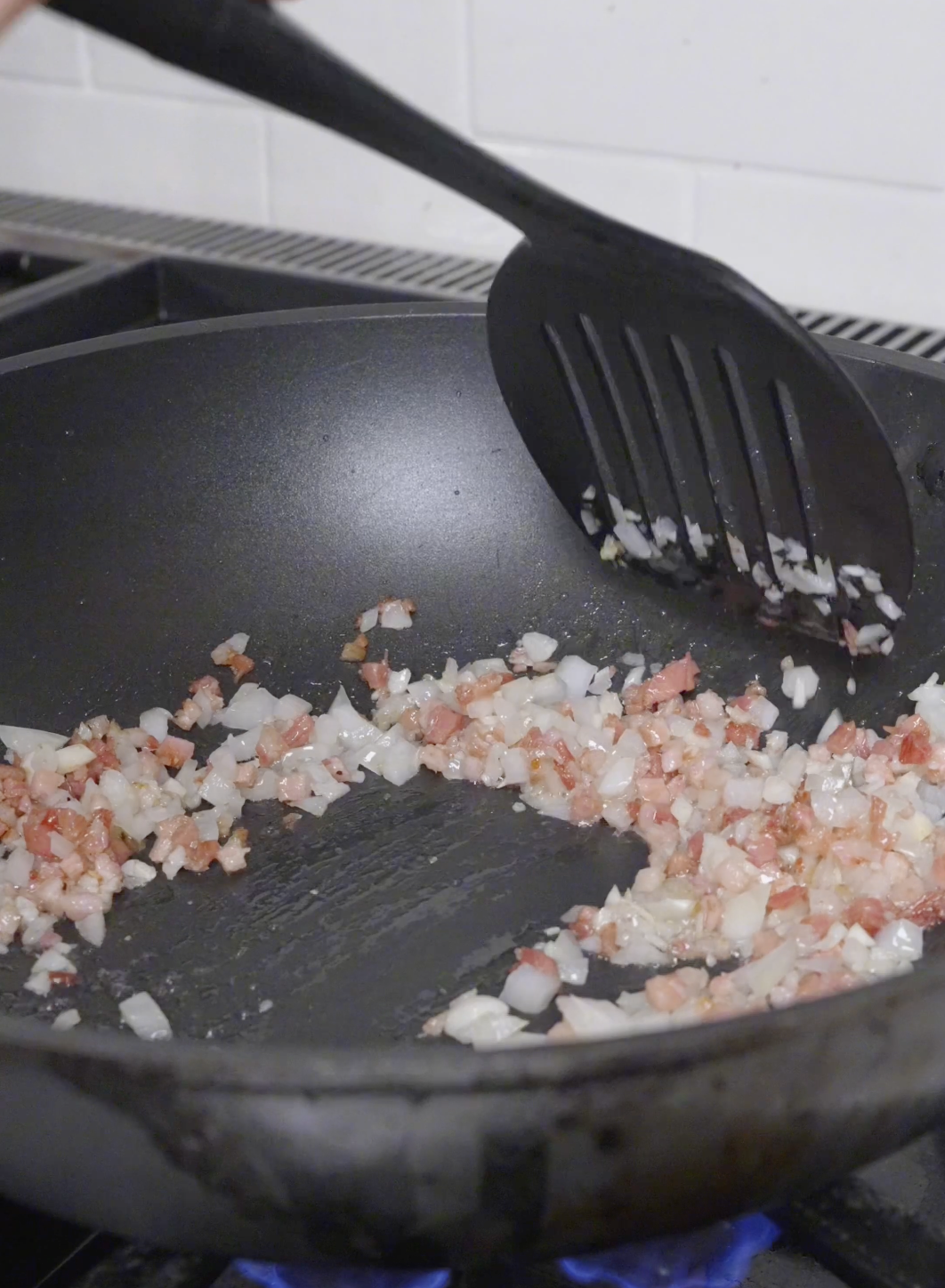
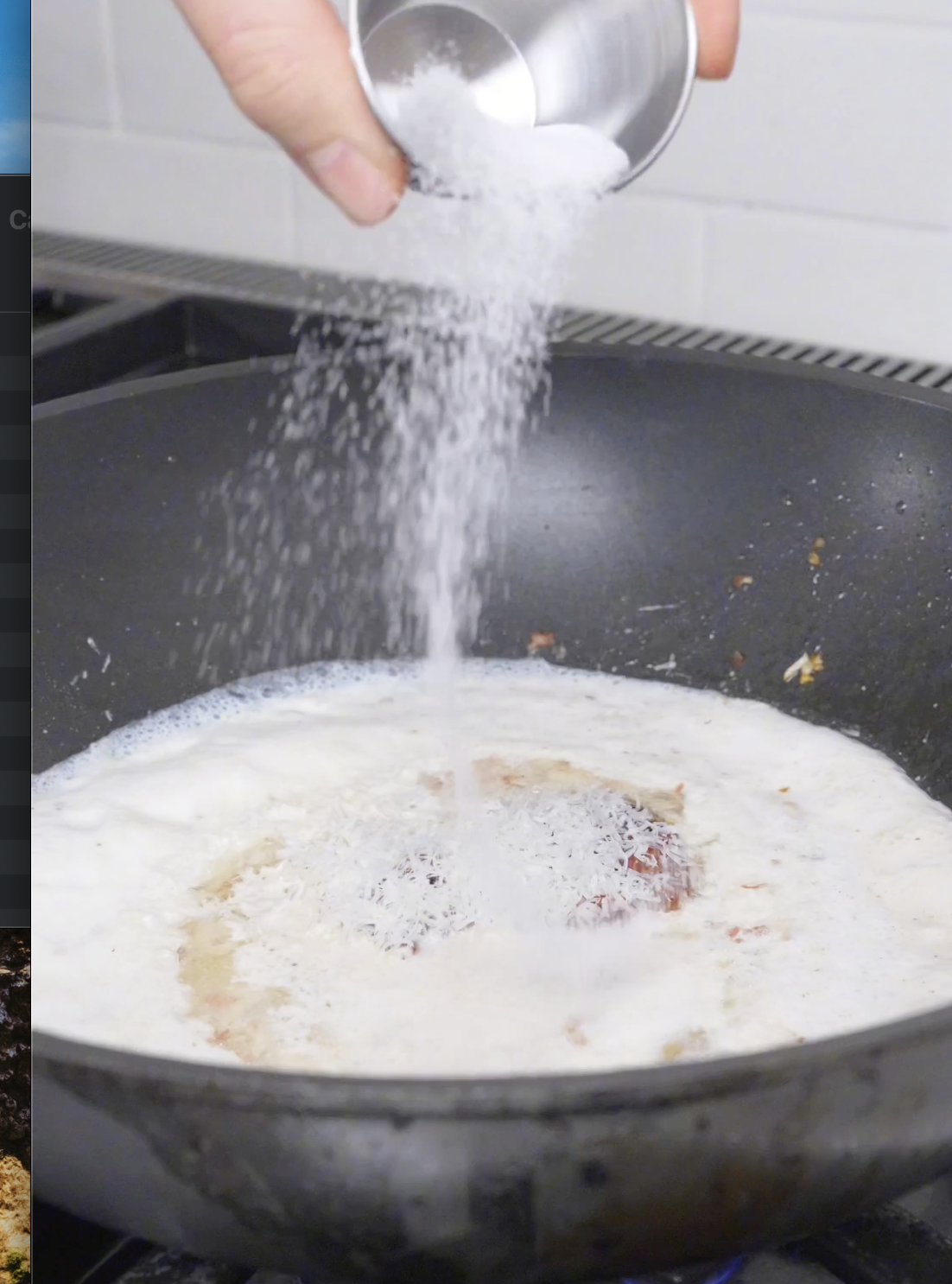
Add the half and half, gochujang, light soy sauce, Parmesan, and sugar, and bring to a simmer.
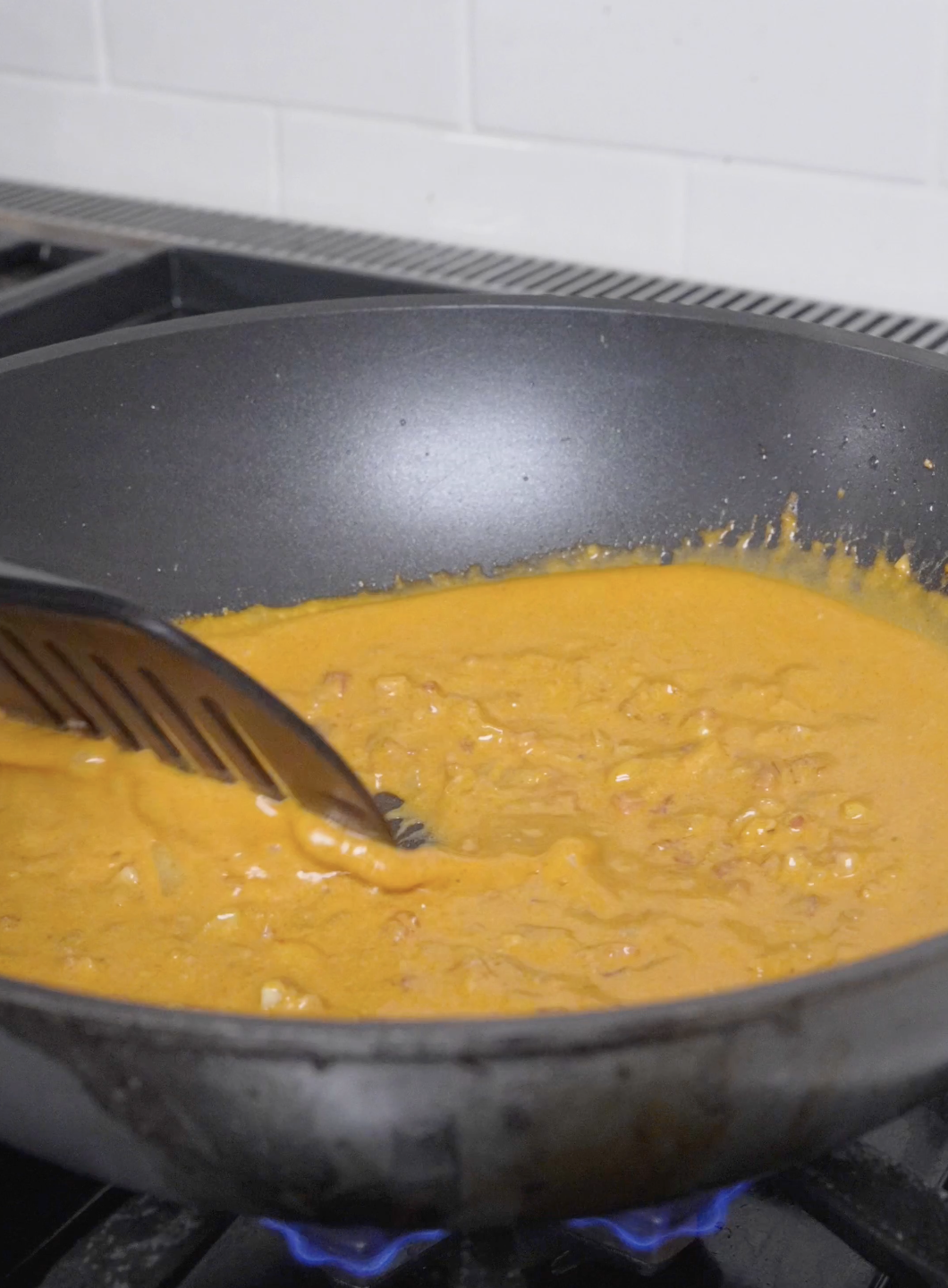
Drain the soaked rice cakes and add them to the pan. Cook until the rice cakes are tender and the sauce has thickened.
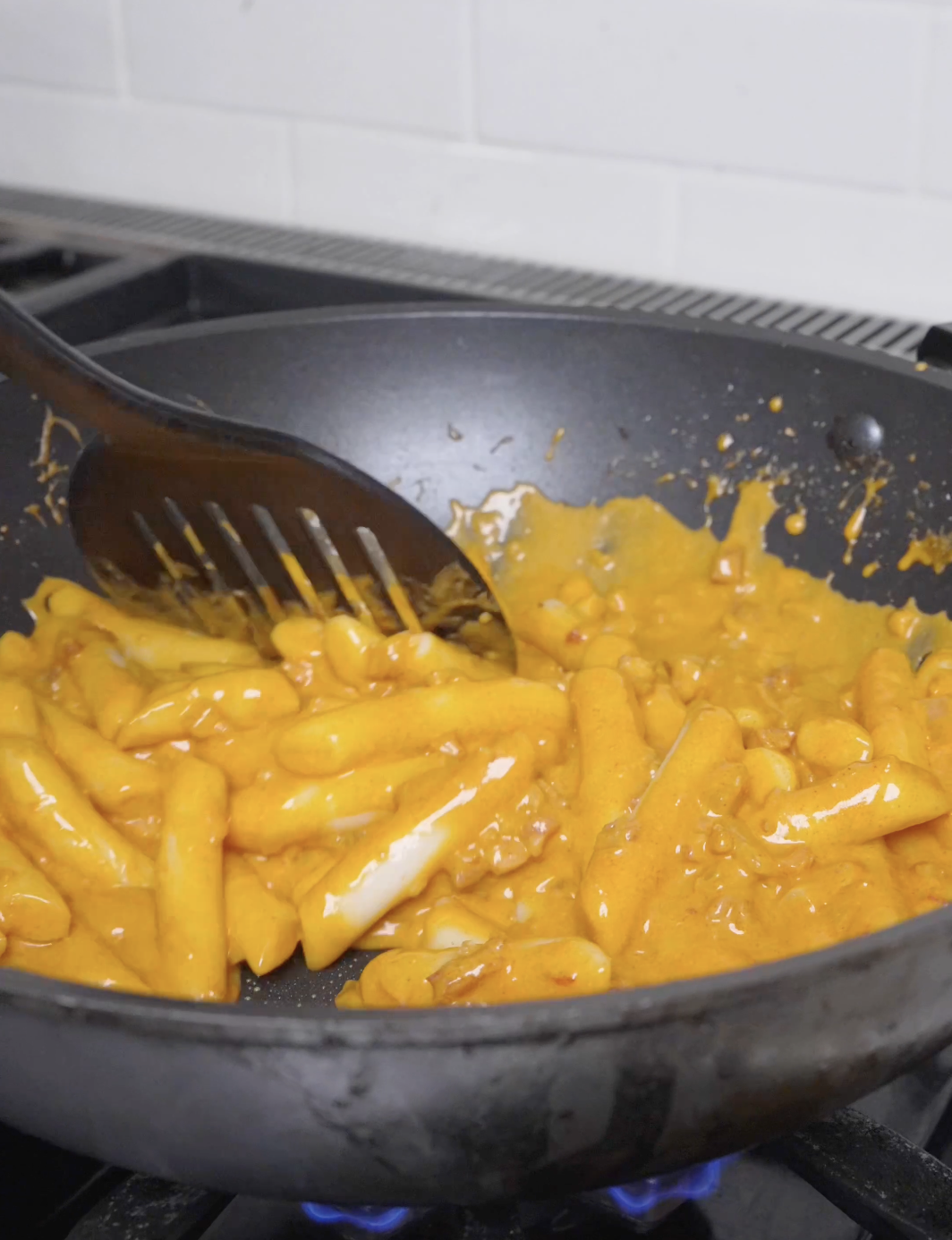
Transfer to a bowl and optionally garnish with Parmesan, more guanciale, and chives. But it’s your food, you eat it how you like.
More of a visual learner? Check out my video recipe below. 👇
Optional Variations & Dietary Adaptations
One of the best things about this Italian-Korean rice cake recipe is how easily it bends to fit whatever you’re craving or whatever dietary needs you’re working around. Here are some simple ways to make it your own:
- Gluten-Free – Double check your tteok, as some brands can contain wheat flour, and opt for a certified gluten-free rice cake if needed. Swap the light soy sauce for a gluten-free tamari or coconut aminos, and you’re good to go.
- Lower Sodium – Cut back on the soy sauce and use a low-sodium version if you have one, then taste as you go before adding any extra salt. You can also dial back the Parmesan slightly, since it brings a good amount of saltiness on its own.
- Extra Spicy – If you like things fiery, add an extra spoonful of gochujang or stir in a few dashes of your favorite hot sauce or chili crisp right before serving. A sprinkle of red pepper flakes on top never hurts either.
- Egg-Fried Rice Twist – For a heartier, more filling version, scramble an egg or two in the pan after the guanciale is crispy, then fold everything together with the sauce. Alternatively, top with a runny fried egg. Either way, the egg adds a silky richness that plays beautifully with the creamy gochujang base.
Expert Tips & Tricks
- Soak your tteok first. If your rice cakes are on the firmer or chewier side, give them a 15–20 minute soak in warm water before cooking. This softens them just enough so they cook evenly and don’t turn out tough or rubbery in the final dish.
- Render the guanciale low and slow. Don’t rush this step! Cooking it over medium-low heat gives the fat time to render out fully, leaving you with crispy, golden bits and a flavorful fat base for the rest of the dish. Cranking the heat too high will burn the edges before the fat has a chance to render.
- Temper your dairy. Since this sauce leans on the creamy, carbonara-style technique, adding half and half gradually (rather than dumping it all in at once) over lower heat helps keep the sauce silky instead of risking a curdled, grainy texture.
- Save a splash of starchy water. If you boiled or soaked your tteok at any point, reserve a little of that starchy water before draining. A splash stirred into the sauce at the end helps it cling to the rice cakes and gives it that glossy, restaurant-style finish.
- Taste before you salt. Between the soy sauce, Parmesan, and gochujang, this dish already has a lot of built-in saltiness. Taste the sauce before adding any extra salt so you don’t end up over-seasoning.
- Serve immediately. Tteok are at their chewy, tender best right after cooking. The longer they sit, the more they firm up, so this is one dish that’s best enjoyed fresh from the pan rather than reheated later.
Serving Suggestions
These cheesy rice cakes are hearty enough to stand on their own as a main dish, but they also play well with a few simple sides that round out the meal. For a fresh, crisp contrast to the rich, creamy sauce, try pairing them with a light cucumber salad or a simple side of quick-pickled vegetables for a hit of acidity to cut through the richness.
If you’re looking for something a little heartier, a side of Korean-style stir-fried vegetables or spicy kimchi adds great texture and a pop of tangy, fermented flavor that complements the gochujang beautifully.
For a more complete spread, consider serving these rice cakes alongside other Korean-inspired favorites, like ground beef bulgogi or Korean fried chicken, for a mini feast that covers all your cravings in one sitting. If you want to keep things lighter, a simple bowl of steamed rice or miso soup on the side makes for a comforting, well-rounded meal without much extra effort.
Storage & Reheating
- Refrigeration: Tteok are best enjoyed fresh, but leftovers of these cheesy Korean rice cakes can still be delicious with a little extra care. Let everything cool to room temperature, then transfer to an airtight container and refrigerate for up to 3 days. Because the sauce contains dairy, it’s best to avoid leaving it out at room temperature for more than an hour or two.
- Freezing: This dish doesn’t freeze particularly well, since the dairy-based sauce tends to separate once thawed and the rice cakes can turn unpleasantly dense or gummy. If you want to plan ahead, it’s better to freeze uncooked tteok on their own and make the sauce fresh when you’re ready to eat.
- Reheating: Skip the microwave if you can—it tends to make the rice cakes tough and can cause the creamy sauce to separate or turn grainy. Instead, reheat gently on the stovetop over low heat, adding a small splash of water, milk, or half and half to loosen the sauce back up as it warms. Stir frequently and keep the heat low and slow; this helps the tteok soften back to their chewy texture without overcooking, and keeps the sauce smooth and glossy rather than oily or clumpy.
FAQs
Where to buy Korean rice cakes?
Korean rice cakes, or tteok, are easiest to find at Korean or Asian grocery stores, where they’re typically sold fresh or frozen in the refrigerated section. Look for the cylindrical, finger-shaped ones labeled “tteokbokki tteok” or “garae-tteok,” since those are the kind used in this recipe. Many larger Asian supermarkets (like H Mart or similar regional chains) carry several brands, often near the refrigerated noodles or dumpling wrappers. When buying, keep an eye on texture and freshness: fresh, vacuum-sealed tteok tends to cook up the softest and chewiest, while frozen varieties work great too as long as you thaw or soak them briefly before cooking.
Why are my rice cakes hard or chewy?
This usually comes down to either undercooking or using rice cakes that were frozen and not properly softened before cooking. Rice cakes need enough time simmering in liquid to fully soften; if they’re pulled too early or the liquid isn’t hot enough, they can stay stiff or gummy in the middle rather than turning pleasantly chewy-soft throughout.
Do I need to soak frozen rice cakes before cooking?
It’s not strictly required, but it’s highly recommended. Soaking frozen rice cakes in warm water for 10–20 minutes before cooking helps separate them and ensures they cook through evenly, rather than staying hard in the center while the outside softens. If you skip this step, just know they may need extra time in the sauce to reach a tender texture.
How spicy is this compared to regular tteokbokki?
It’s a hybrid—still noticeably milder than classic tteokbokki, since the gochujang here is balanced out by the cream and cheese rather than standing on its own. You get a gentle warmth and depth of flavor in the background, but the dairy mellows the heat considerably. It’s more a subtle kick than the bold, sinus-clearing spice of traditional tteokbokki.
More Korean Recipes
Craving more Korean food? Try my Korean Popcorn Chicken, Ground Beef Bulgogi, or Korean Garlic Cheese Bread!