Korean Popcorn Chicken Recipe
Ingredients
- 16 oz chicken thighs, cubed
- Neutral oil, for deep frying
For the Batter
- ½ cup potato starch
- ½ cup all-purpose flour
- 1 tsp salt
- ½ tsp black pepper
- ¾ cup water
For the Sauce
- 2 tbsp gochujang
- 1 tbsp light soy sauce
- 3 tbsp honey
- 1 tbsp rice vinegar
- 2 tbsp water
- 3 cloves garlic, minced
Optional Garnish
- Sesame seeds
- Scallions
- Steamed rice
Instructions
- Combine the potato starch, flour, salt, black pepper, and water in a bowl and mix into a batter.
- Add the cubed chicken thighs and coat in the batter thoroughly.
- Heat a pot of oil to 375°F. Drop the chicken in and cook until golden brown and crispy, then remove from the heat and set aside to drain.
- For the sauce, combine the gochujang, light soy sauce, honey, rice vinegar, water, and garlic in a pan and bring everything to a simmer.
- Add the fried chicken and toss until well coated.
- Serve over a fresh bowl of rice. Optionally garnish with sesame seeds and scallions. But it’s your food, you eat it how you like.
Video
Notes
- Double-fry for the signature crunch: once at a lower temperature to cook through, rest 5 minutes, then again at 375°F.
- Rest on a wire rack between fries, not paper towels, so steam doesn’t soften the crust.
- Fry in batches so the oil temperature holds.
- Toss gently in the sauce rather than pouring it over a pile.
- Prep the sauce while the chicken rests so it’s ready the moment the chicken comes out.
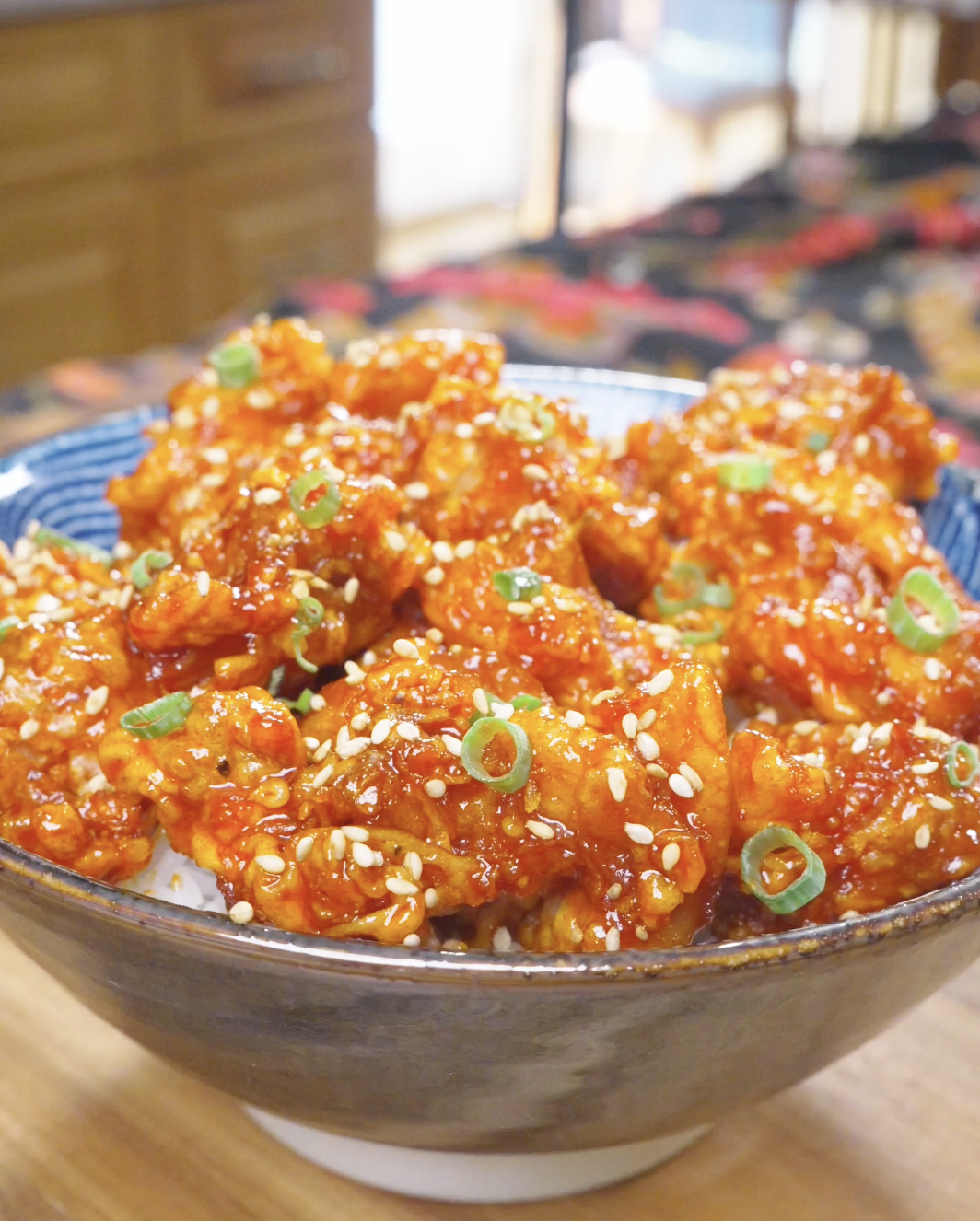
This Korean Popcorn Chicken recipe is the perfect way to satisfy a craving for something crispy, sweet, and endlessly poppable. Picture bite-sized pieces of chicken, deep-fried to golden perfection so every piece shatters with a delightful crunch, then tossed in a sticky-sweet, garlicky sauce with just enough heat to keep things interesting. It’s the kind of snack that disappears from the bowl the moment you set it down—equal parts nostalgic street food and irresistible party appetizer. Whether you’ve had the real deal dakgangjeong from a Korean fried chicken joint or you’re trying it for the first time, this homemade version captures all the glossy, finger-licking goodness from your own kitchen. Best of all, it comes together with simple pantry staples and a straightforward frying process, so you can enjoy that crave-worthy combination of crispy chicken and bold flavor right from your own kitchen, any night the mood strikes.
If you love Korean fried chicken as much as I do, you’ll want to check out my spicy Korean fried chicken, Korean fried chicken tenders and Korean fried chicken sandwich recipes next!
Why You’ll Crave Homemade Popcorn Chicken
There’s a reason Korean popcorn chicken has such a devoted following, and once you make it yourself, you’ll understand why. In just 35 minutes total, you can make a delicious takeout fakeout at a fraction of the cost—and you don’t have to tip the driver! Juicy chicken thighs stay tender inside while the potato starch and flour coating fries up into a shatteringly crisp shell. Then there’s the sauce: a quick simmer of gochujang, honey, and garlic that turns glossy and clingy, striking a perfect balance of spicy, sweet, and savory in every bite. Making it at home also means you’re in full control. Want it spicier? Add more gochujang. Prefer it milder? Ease back and let the honey shine. It’s endlessly adaptable to your mood and your spice tolerance, which is more than you can say for the fixed menu at your local spot.
Ingredients & Substitutions
- Chicken Thighs – Boneless, skinless chicken thighs are the way to go here since they stay juicy and tender even after frying twice. If you only have chicken breast on hand, it’ll work too, just keep an eye on it so it doesn’t dry out. Thighs are way more forgiving!
- Neutral Oil – You’ll want something with a high smoke point and no strong flavor, like vegetable, canola, or peanut oil. Avoid olive oil here; it’ll smoke before you get anywhere near frying temperature.
For the Batter
- Potato Starch – This is the secret to an extra-crispy, shatteringly light crust. If you can’t find potato starch, cornstarch is a solid substitute.
- All-Purpose Flour – Just your regular flour, working alongside the starch to help the batter cling to the chicken and crisp up nicely. A gluten-free 1:1 flour blend or rice flour will work fine if you need to keep things gluten-free.
- Salt & Black Pepper – Simple seasoning to season the batter itself so the chicken has flavor even before it hits the sauce.
- Water – Just enough to bring the batter together into a thick, coatable consistency. Add it gradually; you want it thick enough to cling to the chicken, not runny.
For the Sauce
- Gochujang – This Korean fermented chili paste is the heart of the sauce, giving it a deep, spicy-sweet flavor. If you can’t find it, sriracha mixed with a touch of miso can work in a pinch, though the flavor won’t be quite the same.
- Light Soy Sauce – Adds savory, salty depth to balance out the sweetness. Tamari or a gluten-free soy sauce alternative like coconut aminos works great if needed.
- Honey – Brings the sweetness that makes the sauce so glossy and sticky. Maple syrup or brown sugar are good substitutes if that’s what you’ve got.
- Rice Vinegar – Just a splash to brighten everything up and cut through the richness. White vinegar or apple cider vinegar can stand in if needed, just use a little less since they’re more acidic.
- Garlic – Fresh is best for a punchy, aromatic kick, but garlic powder works in a pinch (start with about a ¼ of the amount and adjust to taste).
Optional Garnish
- Sesame Seeds – A simple, pretty garnish that adds a little nutty crunch. Totally optional, but a nice finishing touch if you have them—particularly if you toast them first.
- Scallions – Freshness and color, plus a mild oniony bite that cuts through the richness of the sauce. Feel free to swap in chives if that’s what’s in your fridge.
- Steamed Rice – The perfect neutral base to soak up all that extra sauce. Jasmine or short-grain rice both work beautifully, so use whatever you usually have on hand.
This is just a short review of the ingredients; for the complete recipe, including quantities, scroll down to the recipe card 👇
What is Gochujang?
Gochujang is a traditional Korean fermented chili paste made from red chili powder, glutinous rice, fermented soybeans, and salt, slow-fermented over time to develop its deep, complex flavor. It’s a staple in Korean cooking, showing up in everything from stews and marinades to the glossy, spicy-sweet sauces that coat dishes like this popcorn chicken.
What does it taste like? Gochujang is savory, slightly sweet, and spicy all at once, with a deep umami richness from the fermentation that you just can’t get from a plain hot sauce. It’s thick and sticky, almost like a cross between chili paste and miso, with a warmth that builds rather than hits you all at once.
Easy substitutes. If you can’t track down gochujang at your local grocery store (though more and more mainstream stores carry it these days), you have a few options:
- Sriracha + miso – Mix sriracha with a small spoonful of miso paste (and maybe a pinch of brown sugar) to mimic gochujang’s savory-sweet depth. It won’t be identical, but it gets you close.
- Chili garlic sauce + a touch of sugar – Adds heat and some texture, though you’ll lose a bit of fermented tang.
- Harissa paste – A different flavor profile (more North African than Korean), but it brings a similar thick, spicy intensity if that’s what you have on hand.
That said, if you have any way to grab the real thing, it’s worth it. Gochujang brings a flavor to this Asian popcorn chicken that’s hard to replicate perfectly, and once you have a tub in your fridge, you’ll find yourself reaching for it again and again.
How to Make Korean Popcorn Chicken
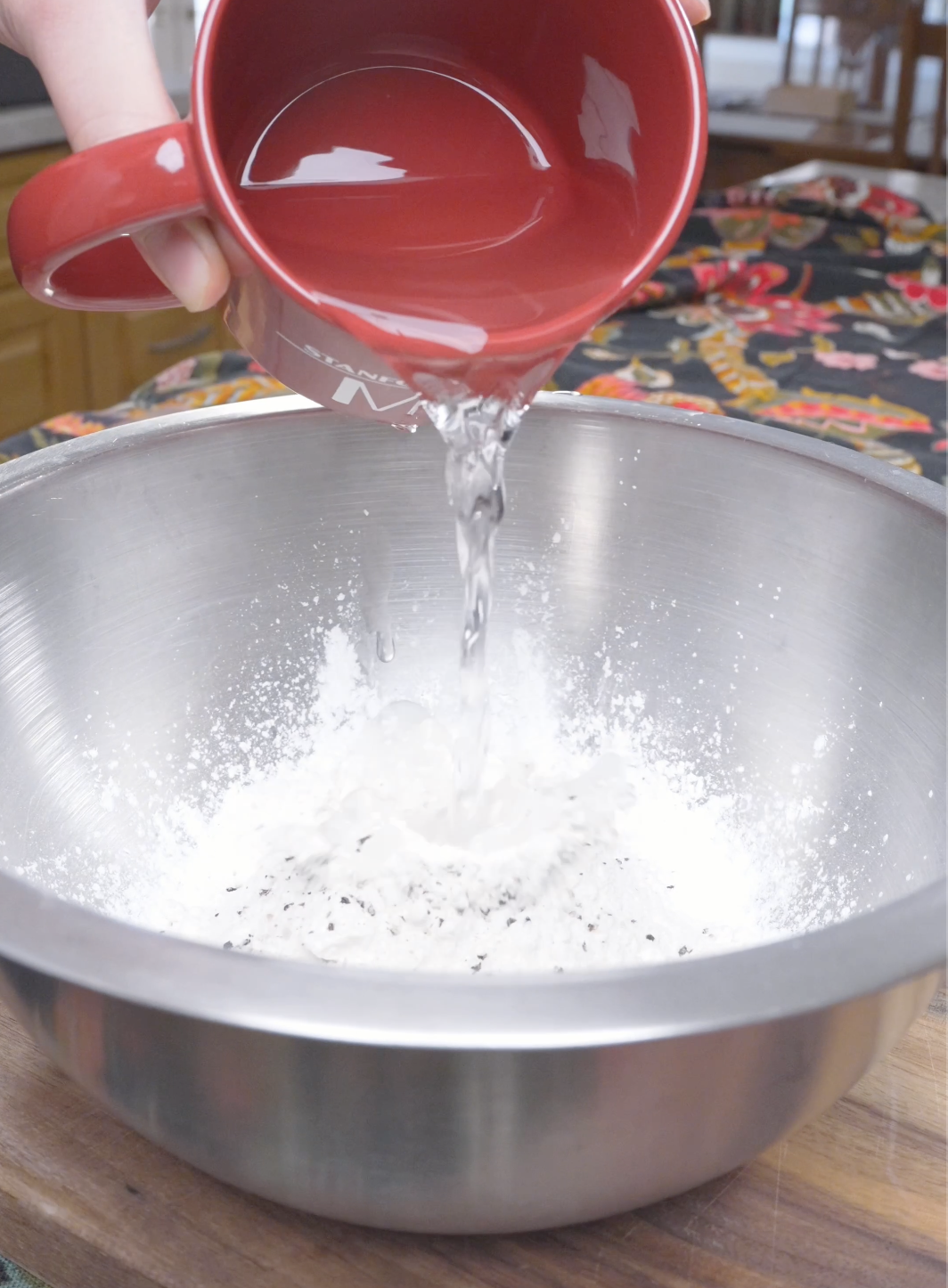
Combine the potato starch, flour, salt, black pepper, and water in a bowl and mix into a batter.
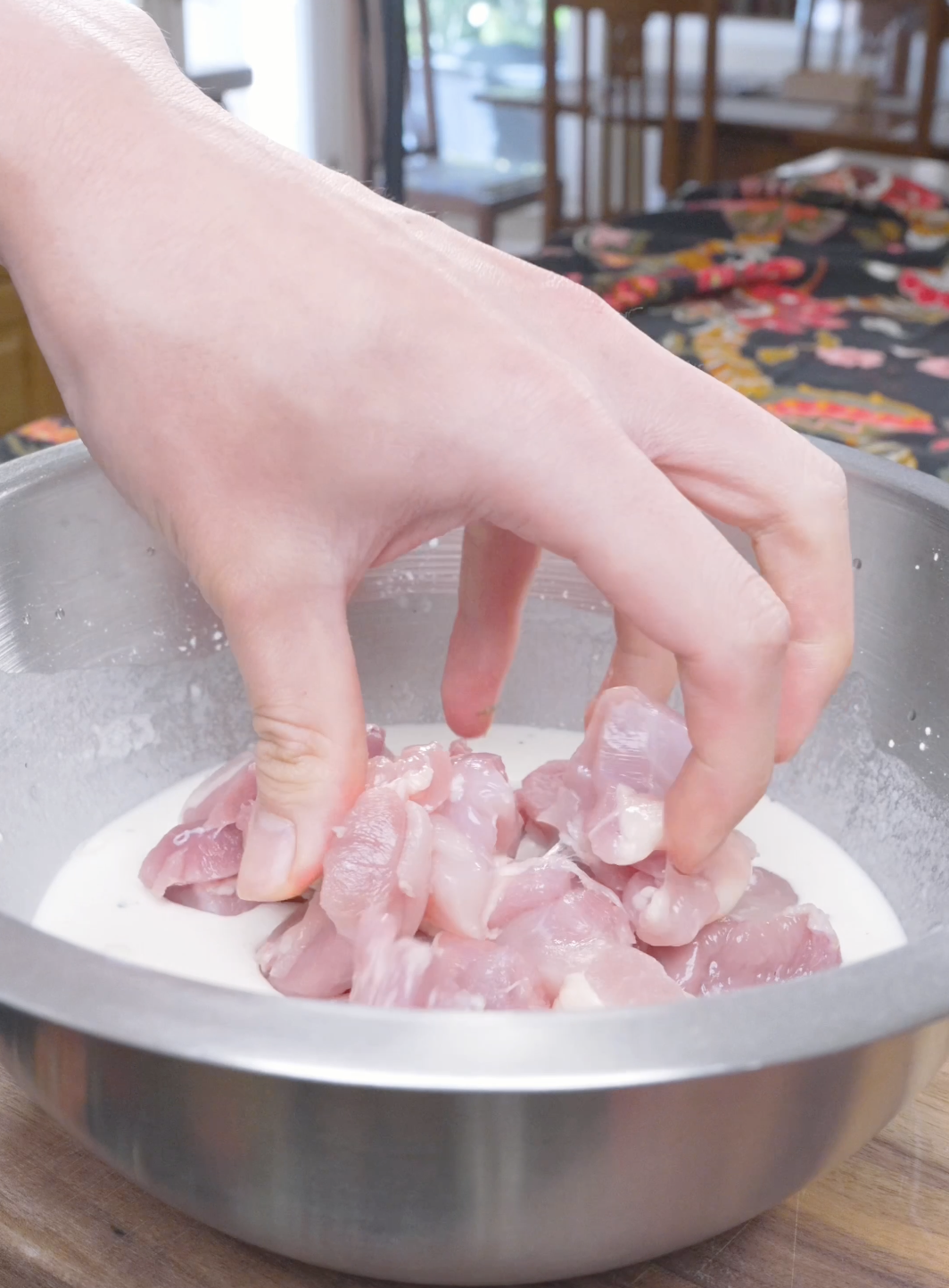
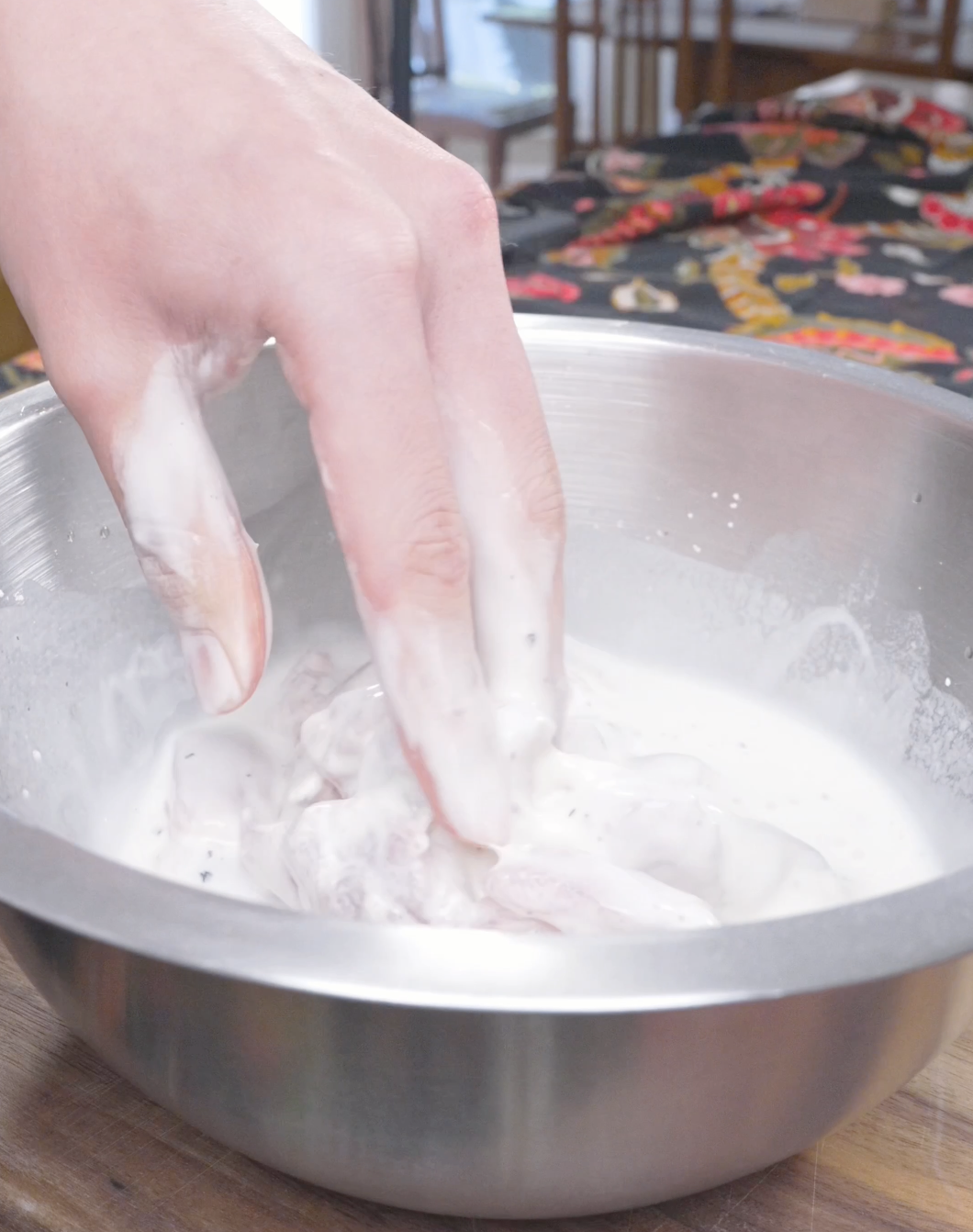
Add the cubed chicken thighs and coat in the batter thoroughly.
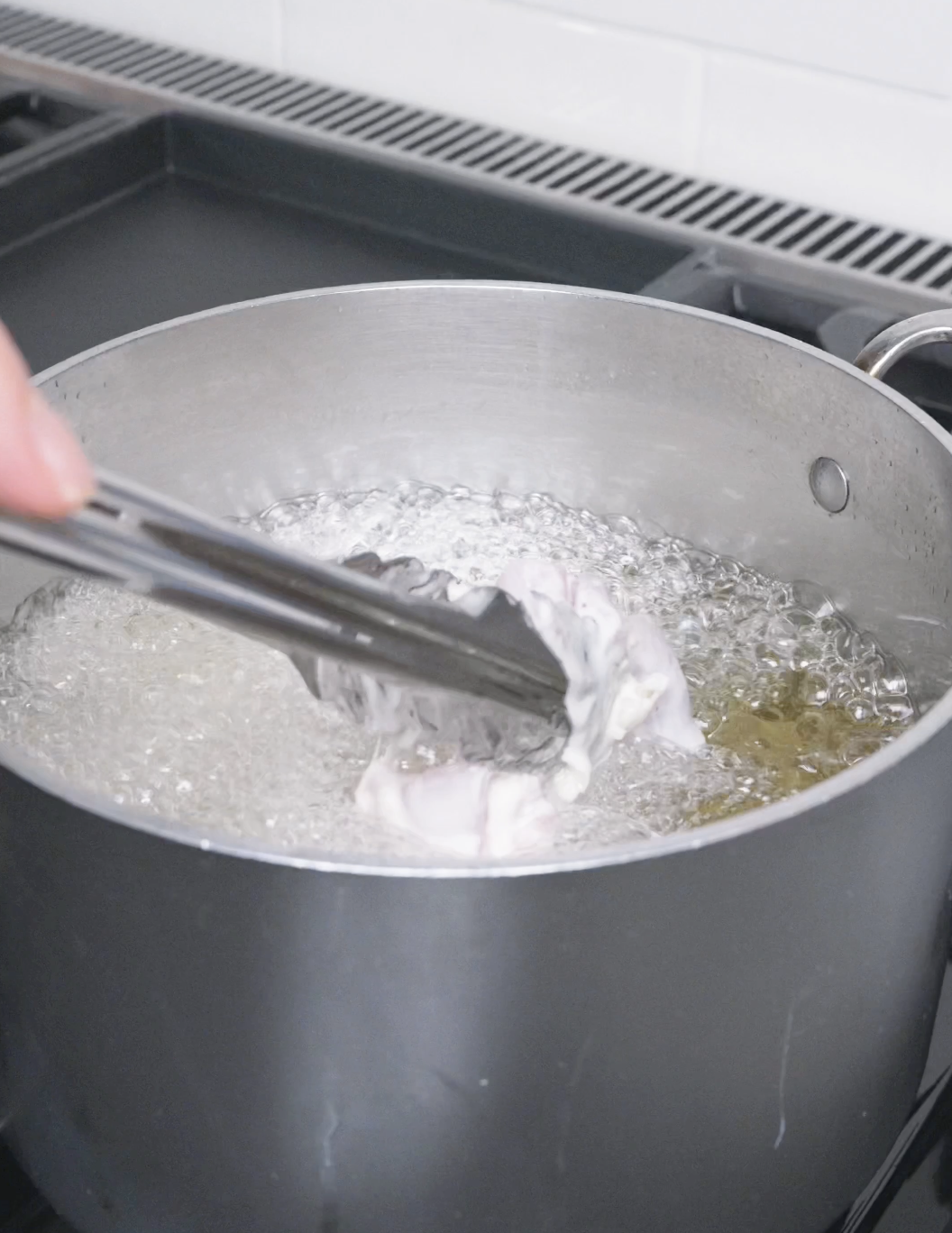
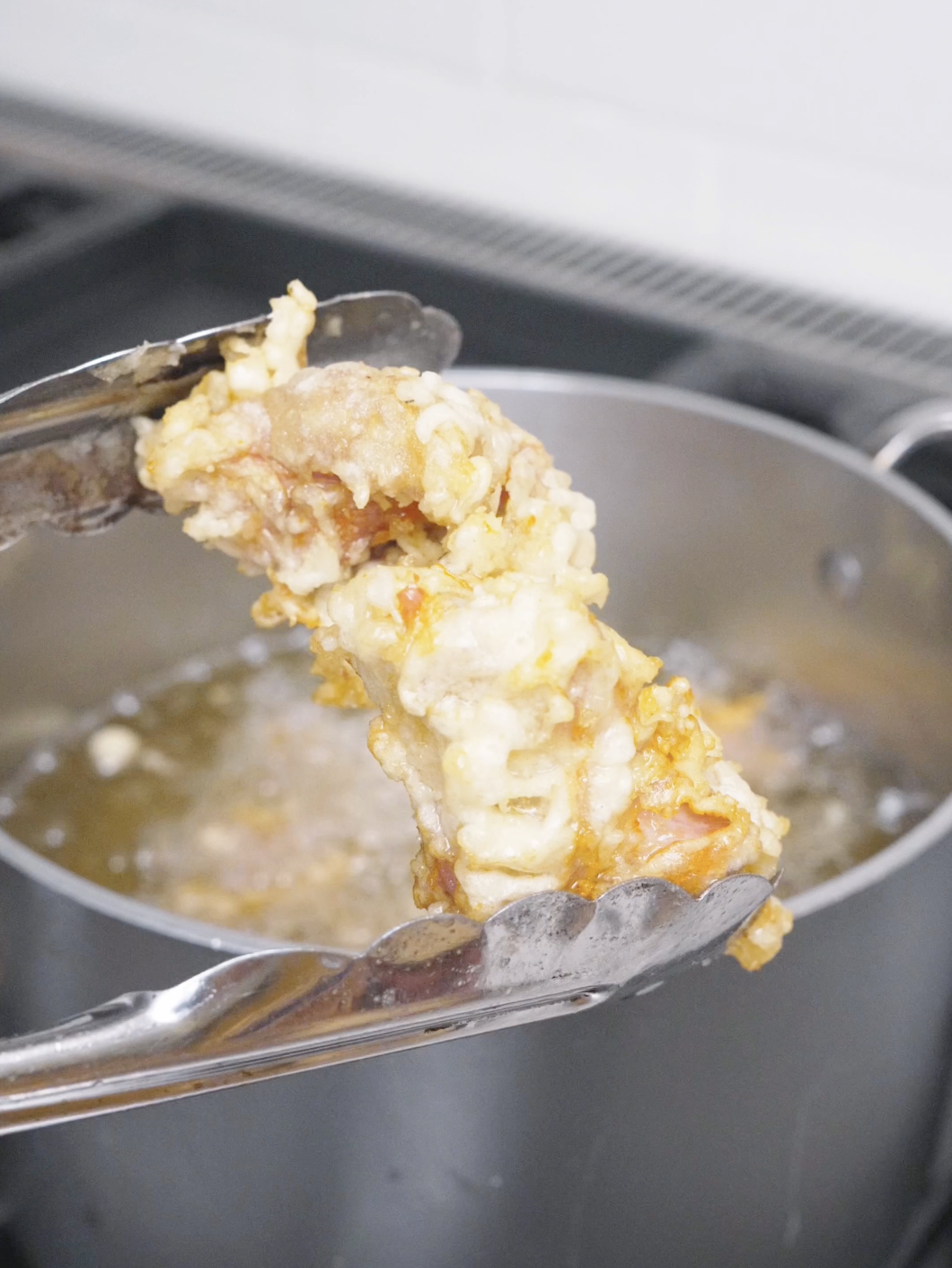
Heat a pot of oil to 375°F. Drop the chicken in and cook until golden brown and crispy, then remove from the heat and set aside to drain.
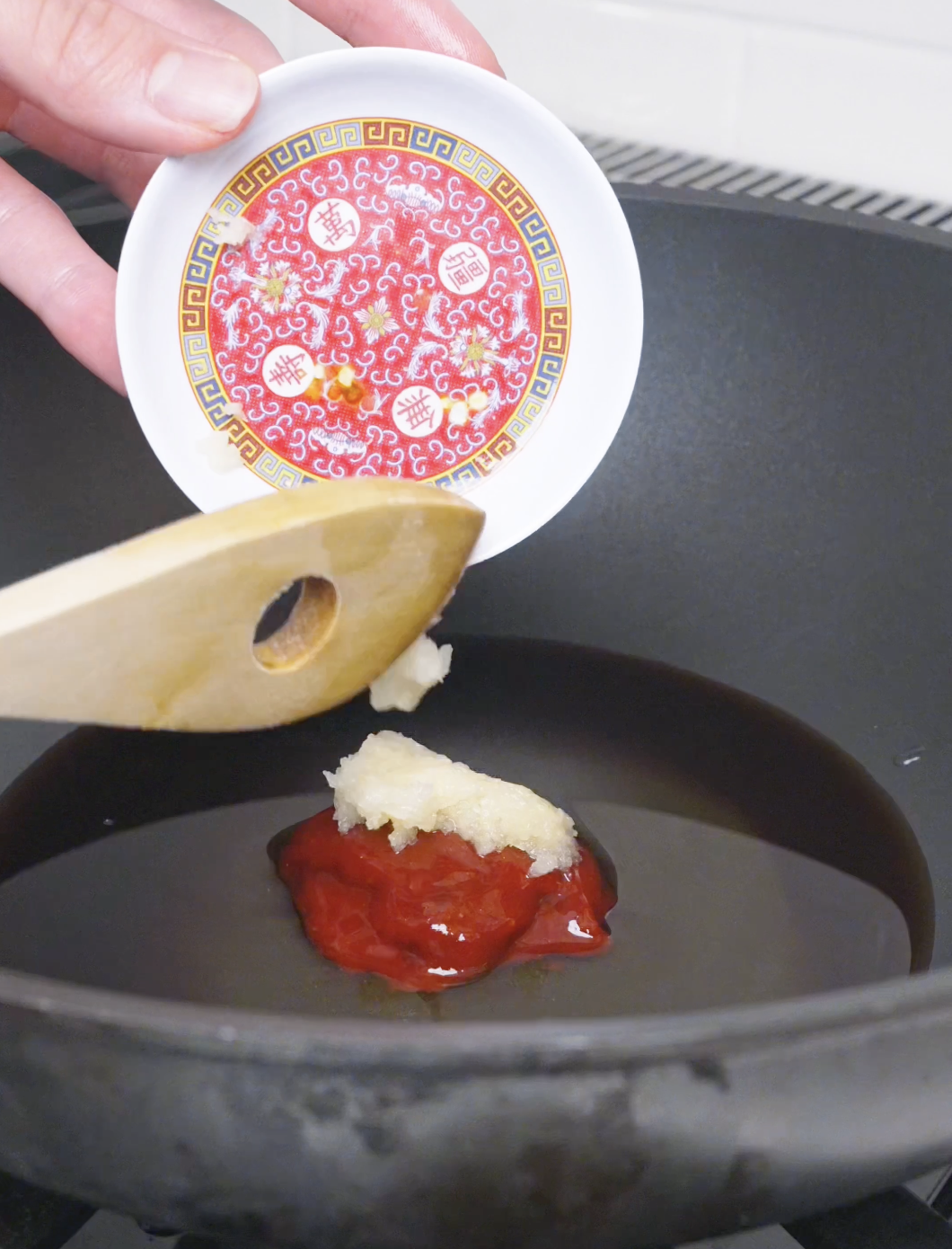
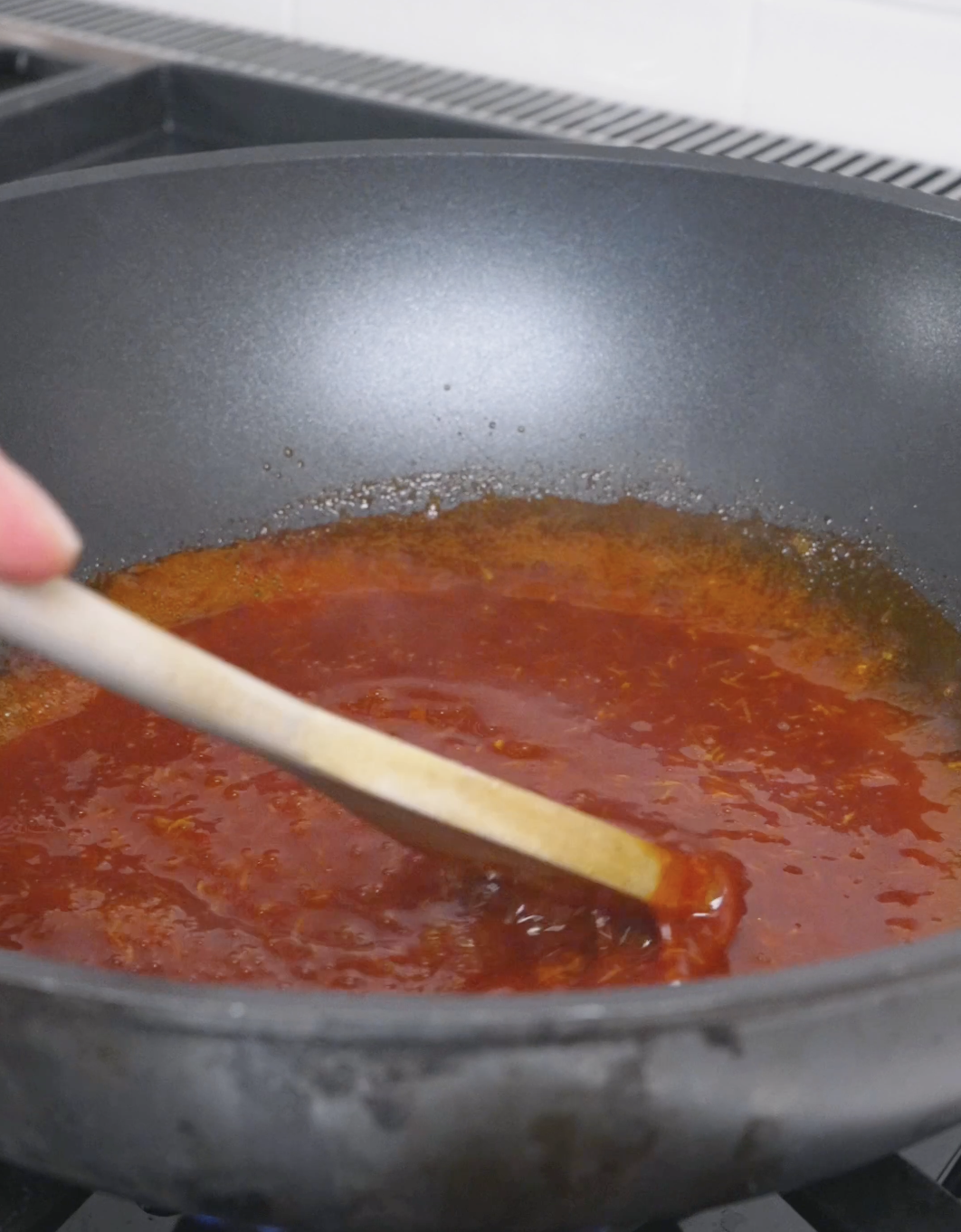
For the sauce, combine the gochujang, light soy sauce, honey, rice vinegar, water, and garlic in a pan and bring everything to a simmer.
Add the fried chicken and toss until well coated.
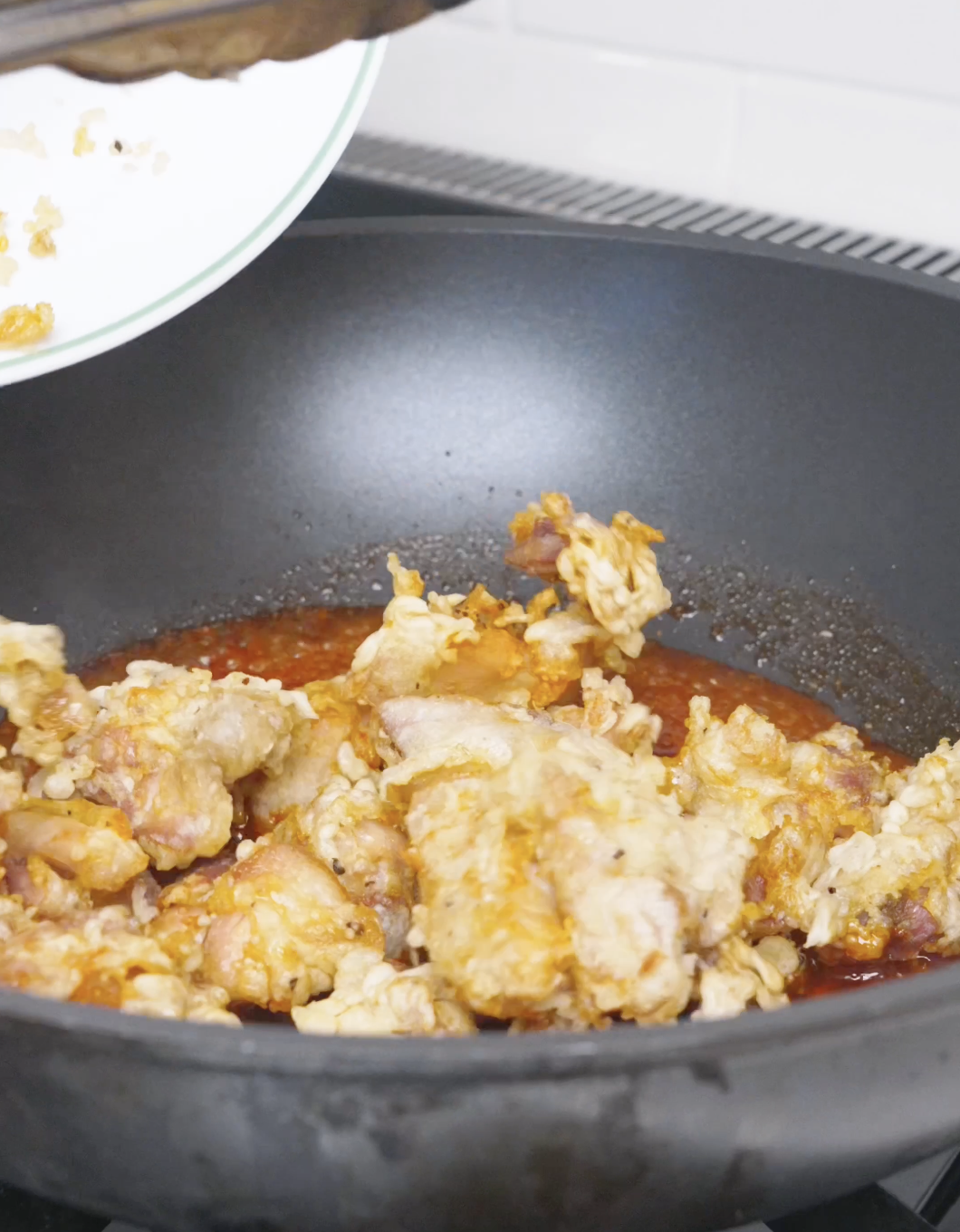
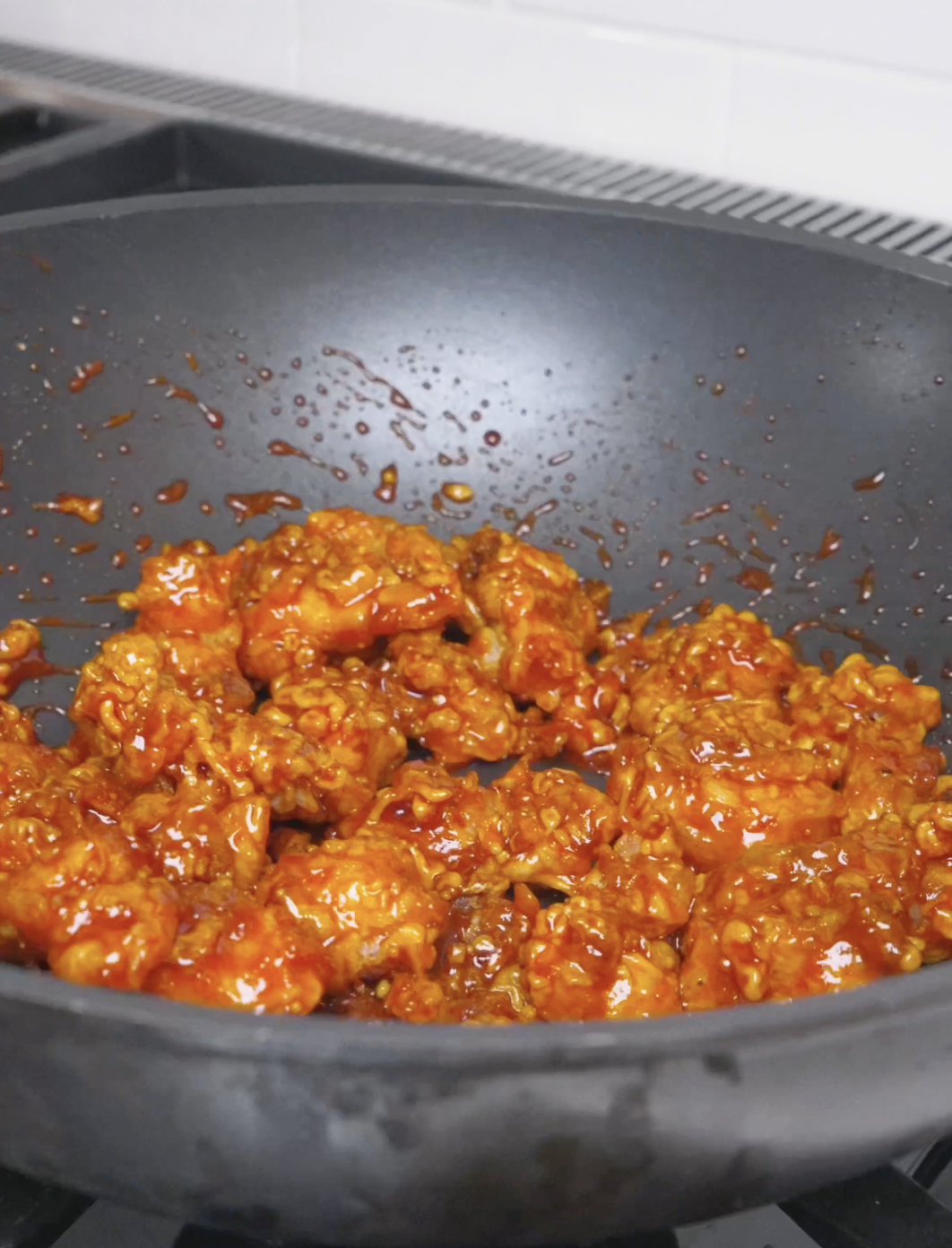
Serve over a fresh bowl of rice. Optionally garnish with sesame seeds and scallions. But it’s your food, you eat it how you like.
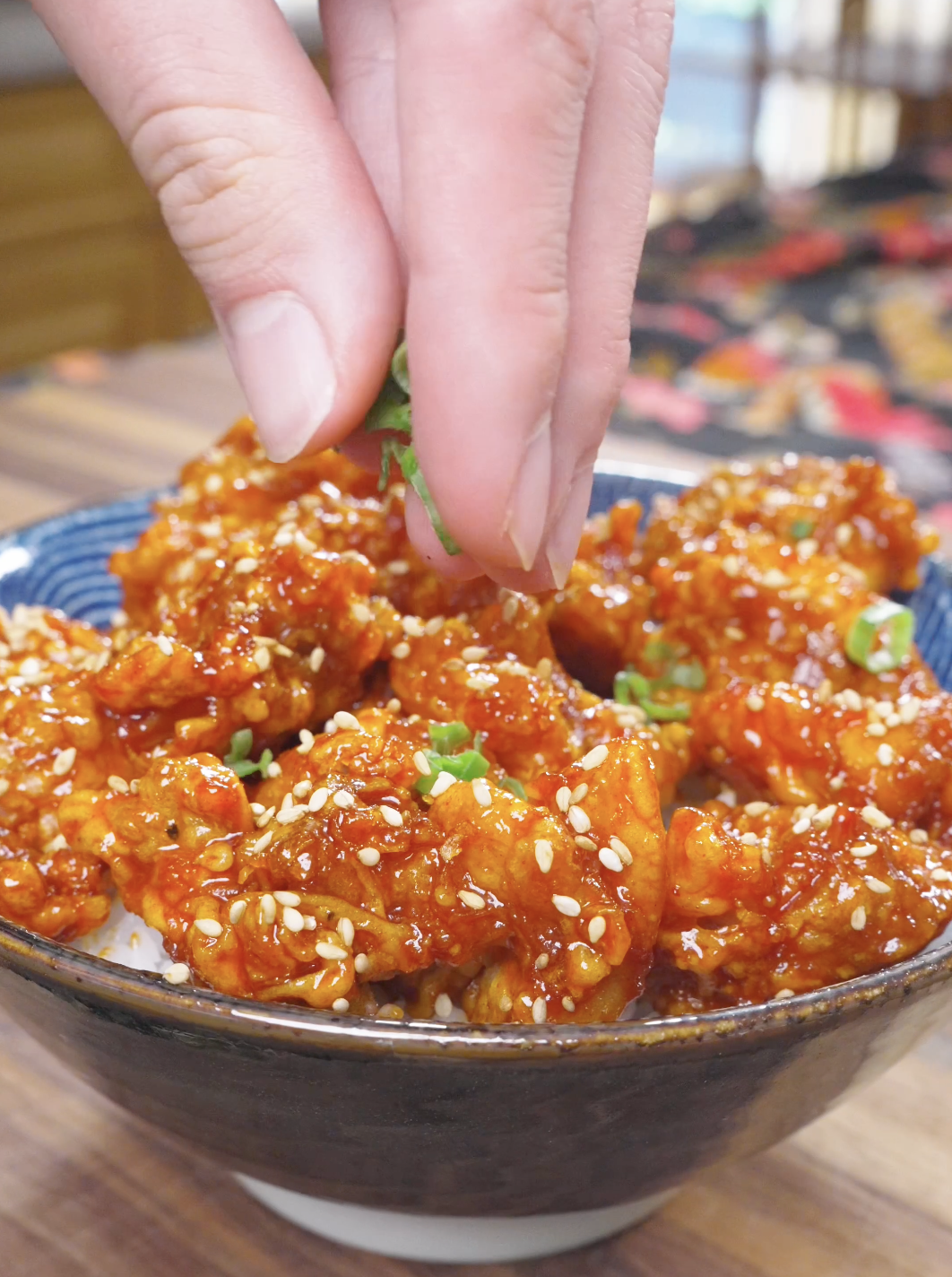
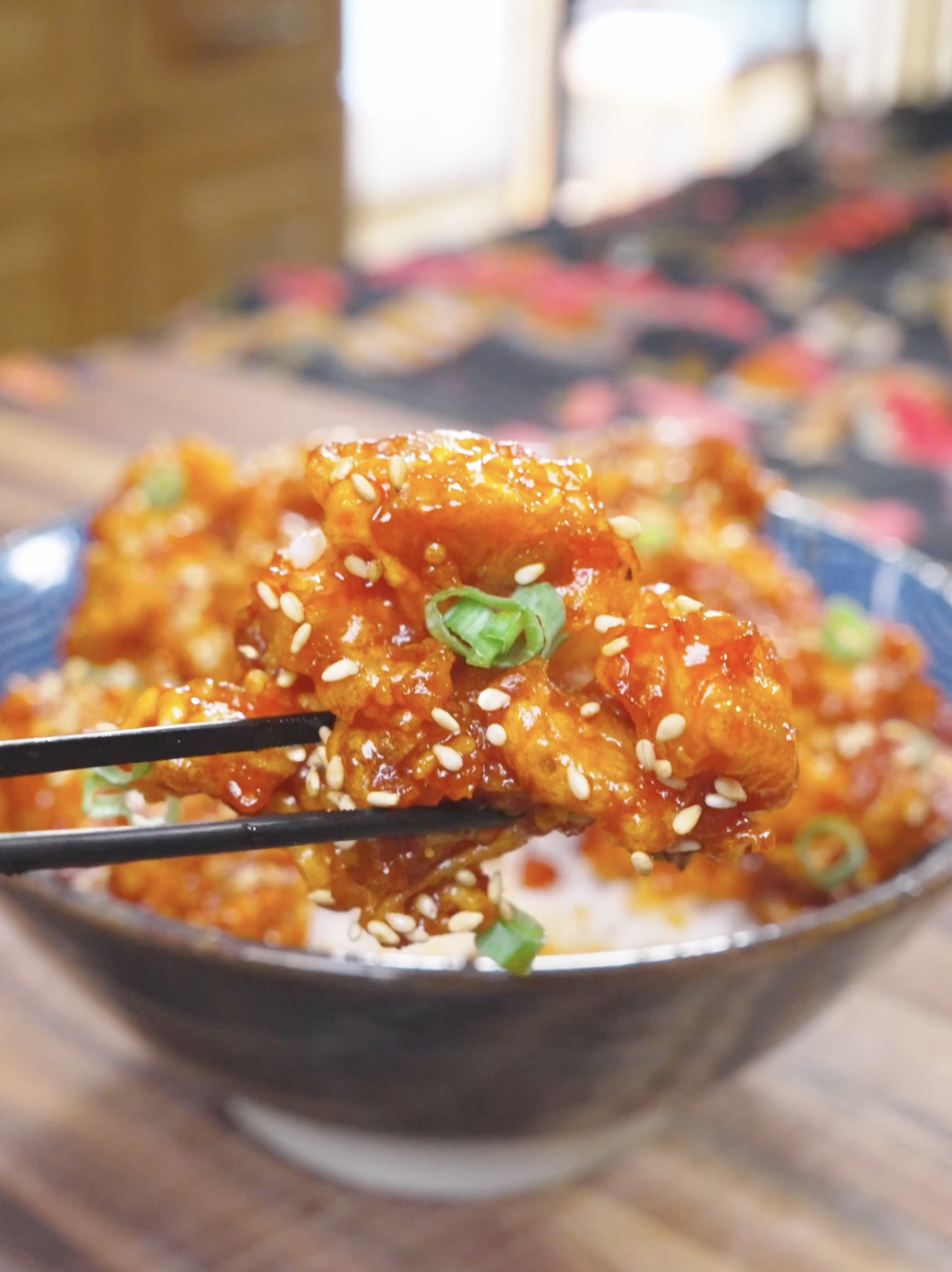
More of a visual learner? Check out my video recipe below. 👇
Optional Variations & Dietary Adaptations
- Make it less spicy. If you’re feeding spice-sensitive eaters (or just want a milder bite), cut the gochujang in half and add a touch more honey to balance things out. You can always serve extra gochujang or chili flakes on the side for anyone who wants to turn up the heat themselves.
- Make it spicier. Heat-seekers can bump up the gochujang, toss in a pinch of Korean chili flakes (gochugaru), or finish with a drizzle of chili oil right before serving for an extra kick.
- Go gluten-free. Swap the all-purpose flour for a 1:1 gluten-free flour blend or rice flour and use tamari or a certified gluten-free soy sauce in place of regular soy sauce.
- Air-fryer version. Short on time or trying to cut back on oil? Toss the battered chicken pieces in a bit of oil and air fry at 375°F, shaking the basket occasionally, until golden and crispy. It won’t be quite as crisp as the double-fried version, but it’s a lighter, speedier alternative that still delivers.
- Try a different protein. Chicken breast works fine if that’s what you have, just watch your fry time so it doesn’t overcook. For something different, cubed tofu (pressed well and lightly starched) makes a fun swap for a vegetarian take.
- Switch up the sauce. Not feeling gochujang? A sweet soy-garlic glaze (soy sauce, honey, and garlic, no gochujang) gives you a milder, kid-friendly version of crispy-chicken magic.
- Low-sugar option. Cut back on the honey and add a touch more rice vinegar for brightness, or use a sugar substitute like monk fruit sweetener if you’re watching your sugar intake.
- Serve it differently. Beyond rice, Korean popcorn chicken is great piled into lettuce wraps, tucked into a steamed bun, or served over noodles for a totally different vibe on the same crispy-sticky favorite.
Expert Tips & Tricks
- Double-fry for maximum crunch. While optional, this step is your best bet for getting the signature crispy texture we’re after. Fry the chicken once at a lower temperature to cook it through, then let it rest for a few minutes before frying again at a higher temperature. That second fry is what gives you the shatteringly crisp exterior that holds up even after it’s tossed in sauce.
- Don’t skip the resting step between fries. Letting the chicken rest on a wire rack (not paper towels, which trap steam and soften the crust) for about 5 minutes between fries helps the coating set and keeps things extra crisp.
- Fry in batches. Crowding the pot drops the oil temperature too fast, leading to soggy, greasy chicken instead of crispy bites. Give each piece room to fry evenly, even if it means working in two or three batches.
- Check your oil temperature. A thermometer is your best friend here. Aim for around 325°F for the first fry (if you’re going that route) and 375°F for the second. If you don’t have a thermometer, drop a bit of batter in; it should sizzle and rise to the surface steadily, not sink or spatter violently.
- Toss, don’t drown. When it’s time to add the sauce, toss the chicken quickly and gently in a large bowl or pan rather than pouring sauce over a pile of chicken. This keeps every piece evenly coated without going soggy from sitting in excess sauce.
- Serve immediately. Popcorn chicken is at its crispiest the moment it comes out of the fryer and gets tossed in sauce. The longer it sits, the more the crust softens. If you’re serving a crowd, time your frying so it’s ready right before you plan to eat.
- Prep your sauce ahead of time. Since the sauce comes together in minutes, whisk it up while your chicken rests between fries so it’s ready to go the second the chicken hits its final crisp.
Serving Suggestions
This crispy popcorn chicken shines as part of a full Korean-inspired spread, so don’t be afraid to go all out. Pair it with a bubbling pan of Korean corn cheese for a sweet, cheesy side that balances the spicy-sticky chicken, or serve alongside pillowy Korean garlic cheese bread for something a little more indulgent.
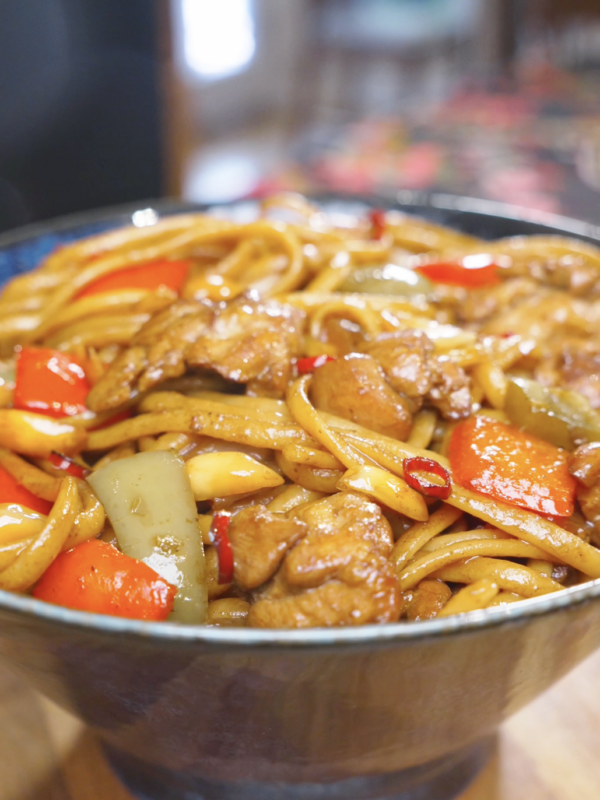
If you want to round things out with a noodle dish, Korean spicy cold noodles bring a cool, refreshing contrast that plays beautifully off the warmth of the fried chicken, while gochujang butter noodles lean into the same sweet-and-spicy flavor profile for a meal that feels cohesive from start to finish.
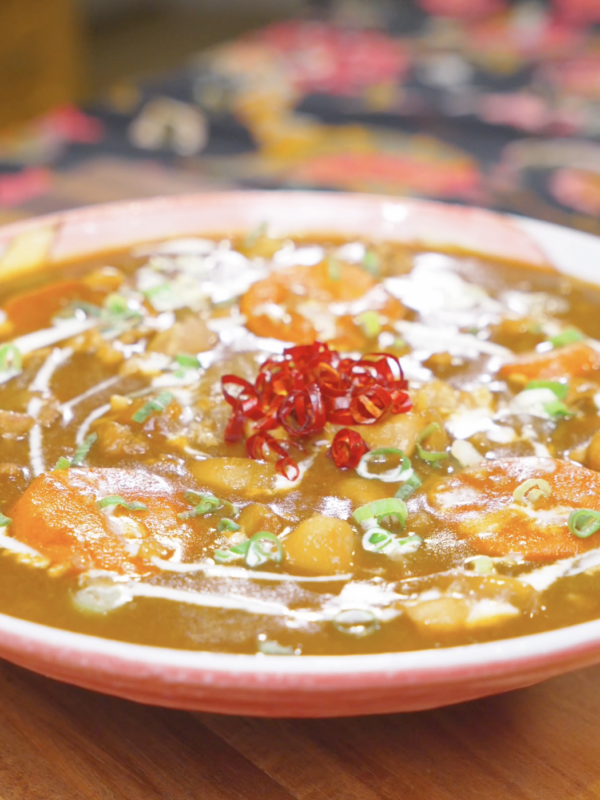
For something heartier, ladle up a pot of Korean army stew and let the popcorn chicken serve as a crispy, shareable appetizer before the main event. The stew’s deep, savory broth is the perfect way to round out the meal. And once everyone’s had their fill of crunchy, saucy bites, finish things off on a sweeter note with a cup of matcha tiramisu, whose light, creamy layers make for a refreshing palate cleanser after all that bold, spicy flavor.
Storage & Reheating
- Refrigeration: Let any leftover popcorn chicken cool completely before transferring it to an airtight container. It’ll keep in the refrigerator for up to 3 days.
- Freezing: If you’ve made a big batch, you can also freeze the fried chicken (before saucing, if possible) for up to 2 months. Just lay the pieces in a single layer on a baking sheet to freeze first, then transfer to a freezer bag once solid so they don’t clump together.
- Reheating: The microwave is not your friend here—it’ll leave the chicken soggy and limp. Instead, reheat in the oven or toaster oven at 375°F for about 8-10 minutes, flipping halfway through, until it’s hot and crisp again. An air fryer works even better: 3-5 minutes at 375°F is usually all it takes to bring back that just-fried crunch.
- A note on sauced chicken. If your chicken is already tossed in sauce, it won’t crisp back up quite as dramatically as freshly fried chicken, since the sauce keeps the surface a little sticky. It’ll still taste great, just expect a slightly softer bite. For the best texture after reheating, consider making extra sauce and tossing freshly reheated, unsauced chicken just before serving rather than reheating already-sauced leftovers.
FAQs
What is Korean style popcorn chicken?
Korean style popcorn chicken is a bite-sized fried chicken snack, typically made from small pieces of chicken breast or thigh that are fried for an extra-crispy exterior, then tossed in a sweet, spicy, and sticky sauce. It’s a popular Korean street food and bar snack, often served with toothpicks for easy sharing.
Is Korean popcorn chicken healthy?
Like most fried foods, Korean popcorn chicken isn’t exactly a health food, but it can fit into a balanced diet in moderation. The chicken itself offers a good amount of protein, and you can lighten things up by air-frying instead of deep-frying, using less sugar in the sauce, or pairing it with vegetable-based sides to round out the meal.
What is the sauce used to make Korean popcorn chicken?
The signature sauce is built around gochujang, a fermented Korean chili paste that brings a deep, slightly sweet heat. It’s usually combined with ingredients like soy sauce, garlic, ginger, honey or brown sugar, and a touch of sesame oil, creating a sweet-spicy-savory glaze.
More Chicken Recipes
Craving more crispy chicken? Try my Spicy Korean Fried Chicken, Korean Fried Chicken Tenders, or Korean Fried Chicken Sandwich!