Chicken Curry Stew Recipe
Ingredients
- 16 oz chicken thighs, cubed
- Neutral oil, for cooking
- 1 onion, thinly sliced
- 2 carrots, cut into thick rounds
- 2 medium potatoes, cubed
- 3 cloves garlic, minced
- 1 tbsp grated ginger
- 2½ cups water
- 3 cubes Japanese curry roux
For the Seasoning
- 1 tbsp light soy sauce
- 1 tbsp Worcestershire sauce
- 1 tbsp ketchup
- 1 tsp sugar
Optional Garnish
- Heavy cream
- Scallions
- Dried peppers
Instructions
- Thinly slice the onion, cut the carrots into thick rounds, and cut the potatoes into cubes, then set them to the side.
- Heat a pot over medium-high heat with a bit of oil. Add the cubed chicken thighs and brown for about 4 minutes, then remove from the heat and set aside.
- In the same pot, add the sliced onions along with the garlic and ginger, and cook until the onions are slightly softened. Add the water, potatoes, and carrots, then cover and simmer for 10 minutes.
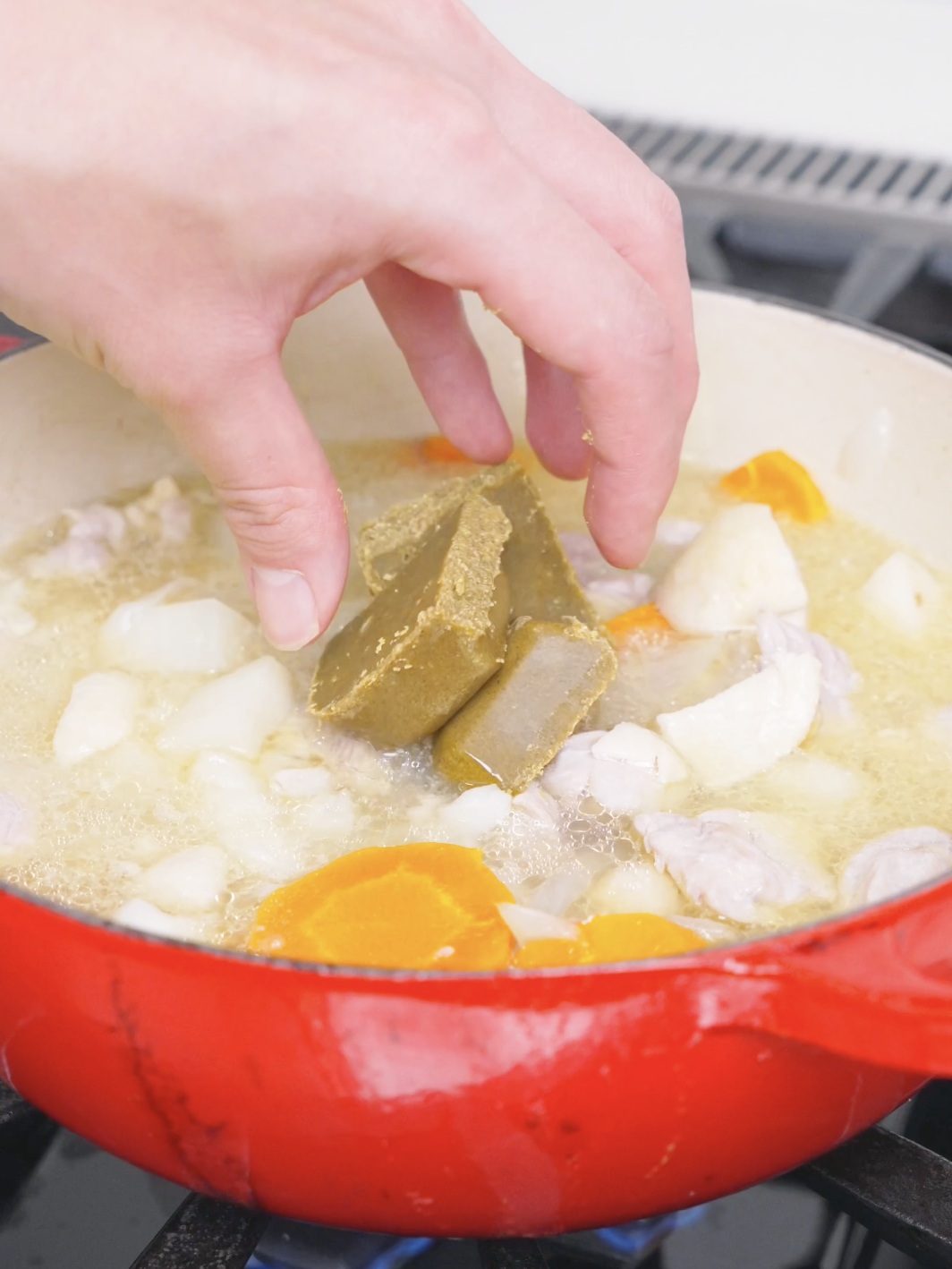
- Add the chicken back in and bring everything to a simmer. Add the curry roux cubes and mix until they’re fully dissolved.
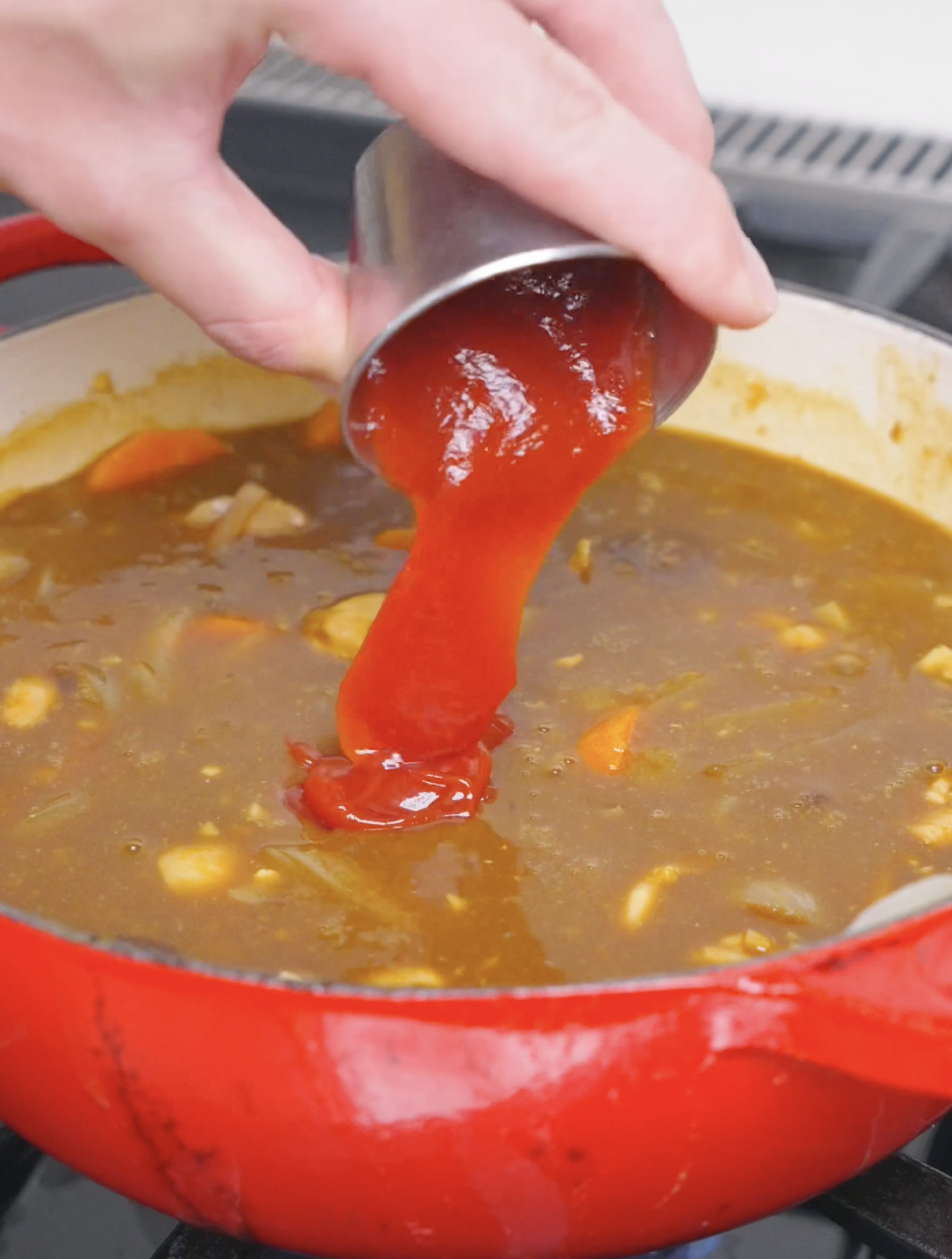
- Season the stew with the light soy sauce, Worcestershire sauce, ketchup, and sugar, and mix until the stew reaches your desired thickness.
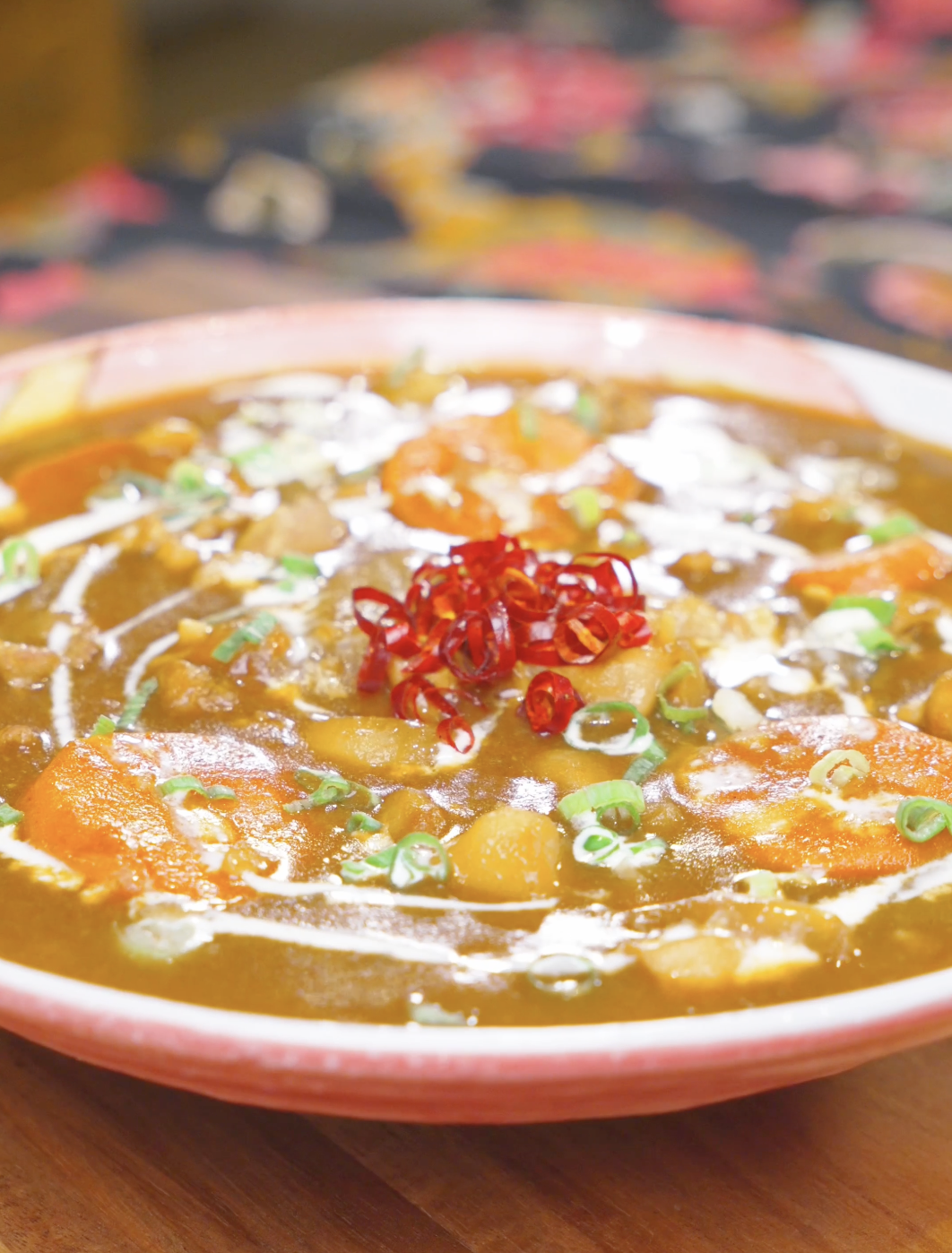
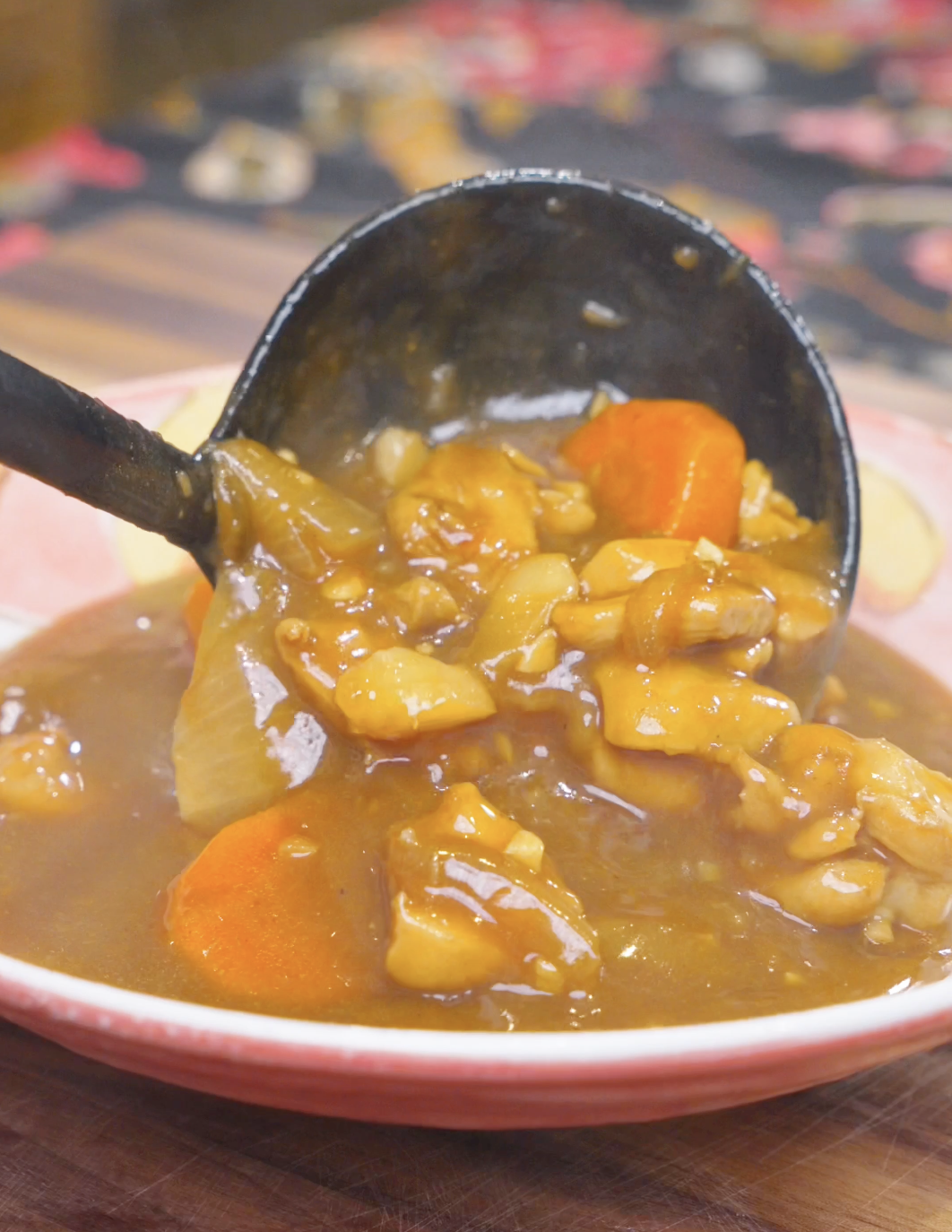
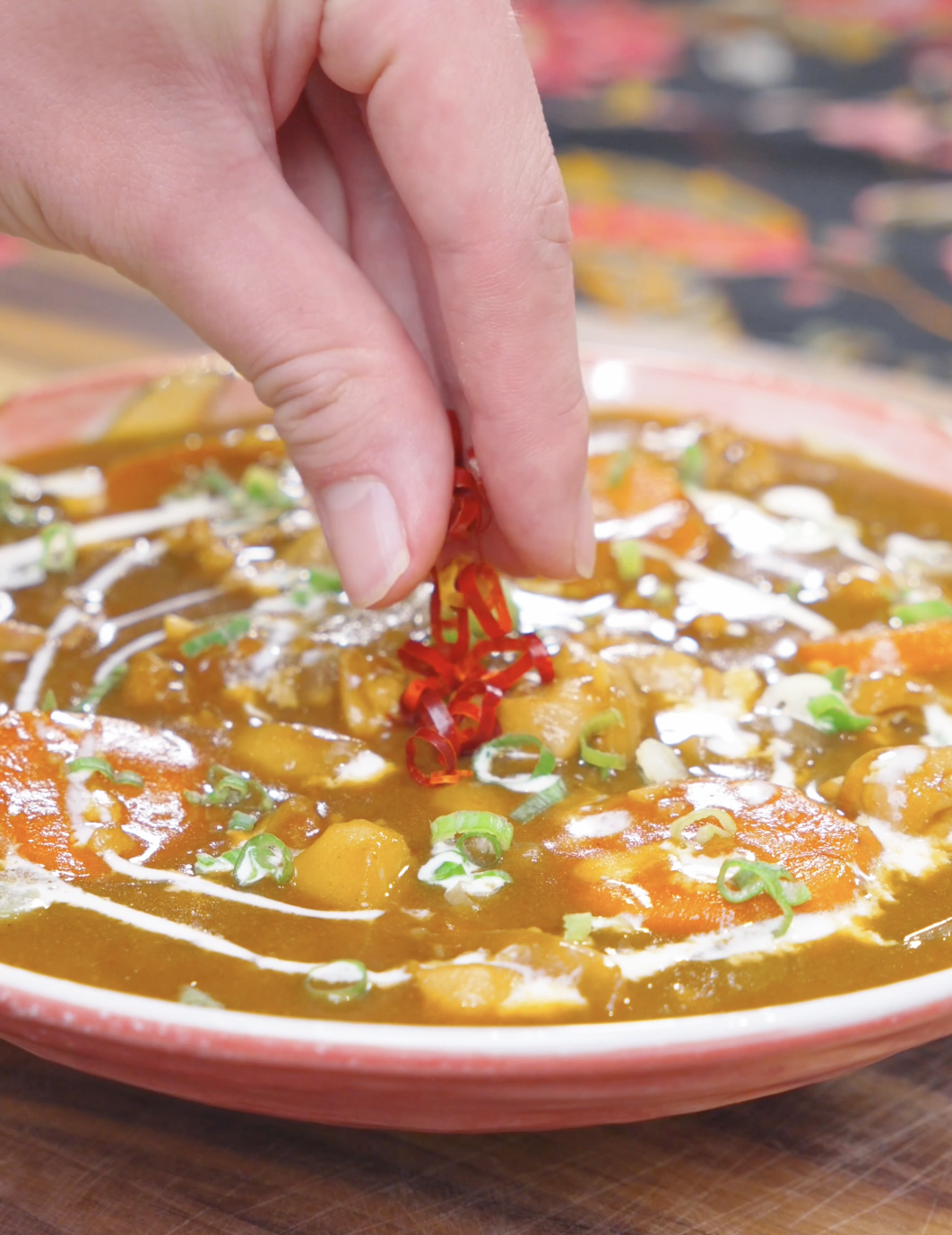
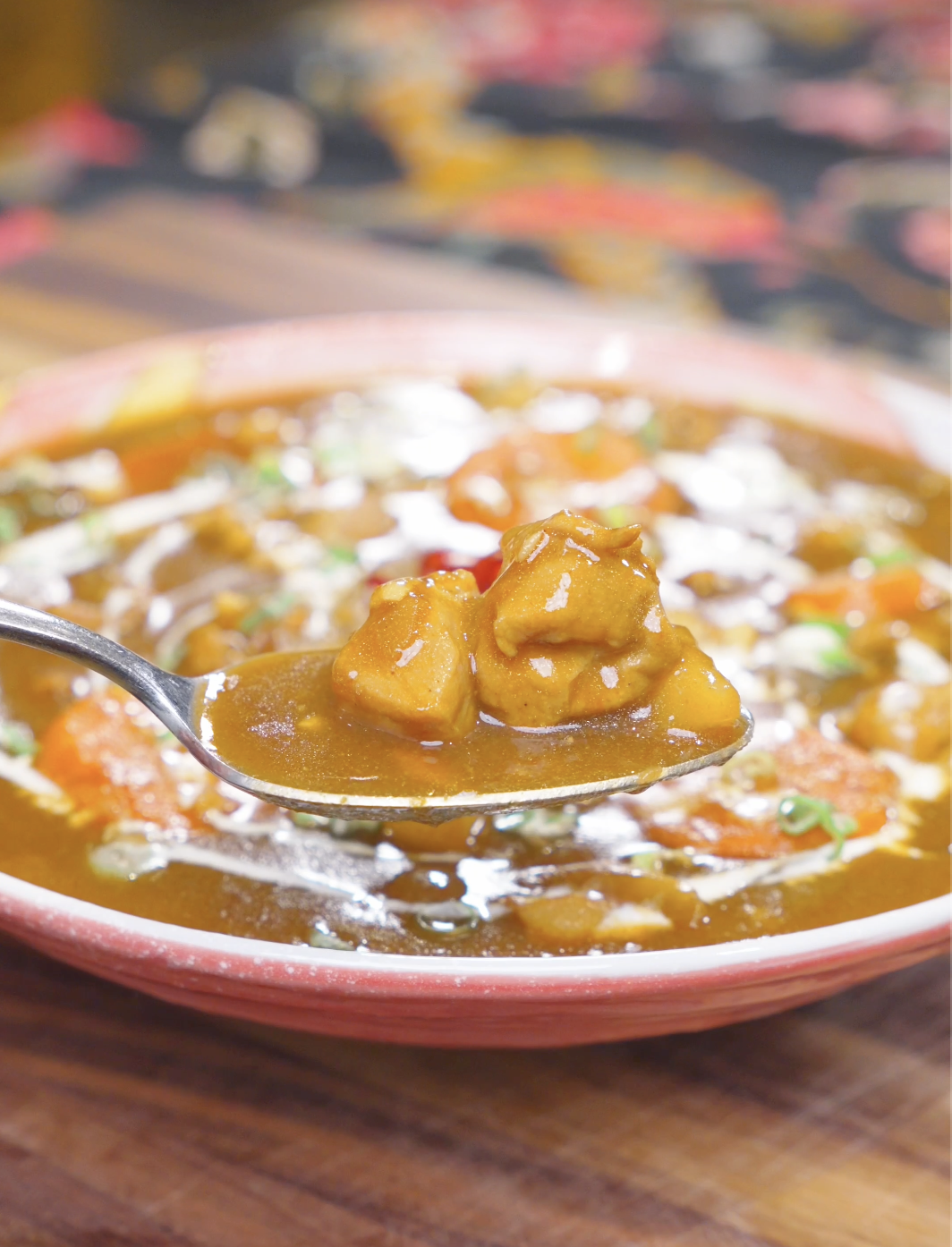
- Spoon into a bowl and optionally garnish with heavy cream, scallions, and some dried peppers. But it’s your food, you eat it how you like.
Video
Notes
- Brown the chicken first — searing before simmering adds depth you won’t get from boiling alone.
- Break the roux cubes into smaller pieces and stir them in over low heat so they melt evenly without clumping.
- Taste before adding salt. The roux is already well-seasoned.
- Japanese curry tastes even better the next day, so make it ahead if you can.
When the weather outside is frightful, a bowl of this cozy Japanese Chicken Curry Stew is delightful! Tender chunks of boneless skinless chicken thighs simmer alongside soft potatoes and carrots in a rich, velvety curry base built from Japanese curry roux cubes, garlic, and grated ginger. A splash of light soy sauce, Worcestershire sauce, and ketchup rounds out the flavor with just the right balance of savory depth and subtle sweetness, while a touch of sugar smooths everything together. It’s a meal that comes together in one pot with minimal fuss, yet tastes like it simmered all day. Best of all, it’s ready in just 45 minutes, making it an easy go-to for busy weeknights when you’re craving something warm and comforting. Once it’s ladled into a bowl, feel free to dress it up with a drizzle of heavy cream, a sprinkle of scallions, or a pinch of dried peppers for a little heat.
Table of Contents
Why You’ll Crave This Japanese Chicken Curry Recipe
Don’t you just love when a dish feels indulgent without demanding much effort? This chicken curry stew delivers exactly that. The chicken thighs stay juicy and tender as they soak up all the savory-sweet curry flavor, while the potatoes and carrots turn soft enough to melt in your mouth without falling apart. What really sets this stew apart is the layering of umami—the combination of soy sauce, Worcestershire, and ketchup might sound unconventional, but together they create a deeply savory backbone that Japanese curry is beloved for. It’s nostalgic comfort food if you grew up with it, and an instant favorite if you’re trying it for the first time. Plus, it’s endlessly adaptable: swap in your favorite vegetables, adjust the spice level with the curry roux you choose, or make a big batch since it reheats beautifully and tastes even better the next day. Whether you’re feeding a hungry family or meal-prepping for the week ahead, this is a recipe you’ll find yourself returning to again and again.
Ingredients & Substitutions
- Boneless Skinless Chicken Thighs – These stay juicy and tender even after simmering, which is why they’re the star here. If you prefer, boneless skinless chicken breasts will work too, just keep an eye on them since they can dry out a bit faster.
- Neutral Oil – Any neutral oil like vegetable, canola, or avocado oil is perfect for browning the chicken without adding extra flavor.
- Onion – Yellow onion is classic here and adds a sweet, savory base. White or red onion works fine too if that’s what you have on hand.
- Carrots – Cut into thick rounds so they hold their shape during the simmer. Feel free to swap in parsnips if you want a slightly different earthy sweetness.
- Potatoes – Yukon gold or wax potatoes both work beautifully, soaking up all that curry flavor while turning irresistibly tender. Sweet potatoes are a fun swap if you’re craving something a little different.
- Garlic – Fresh is best for that punch of flavor, but in a pinch, jarred minced garlic will do the trick.
- Grated Ginger – Fresh ginger adds warmth and brightness. If you only have ground ginger, use about a quarter of the amount, though fresh really is worth it here.
- Water – A simple base that lets the curry roux and seasonings shine. You can swap in chicken broth for an even deeper flavor if you like.
- Japanese Curry Roux Cubes – These are the magic behind the iconic curry flavor and thick, glossy texture. You’ll find them in most Asian grocery stores, and they usually come in mild, medium, or spicy varieties, so pick your favorite heat level.
For the Seasoning
- Light Soy Sauce – Adds savory depth without being overly salty.
- Worcestershire Sauce – This might seem like an unexpected addition, but it brings a rich, tangy umami note that makes the curry taste extra complex.
- Ketchup – A classic ingredient in Japanese curry that adds a subtle sweetness and tang. Trust the process, it works!
- Granulated Sugar – Balances out all the savory, tangy flavors. Brown sugar is a great substitute if you want a little extra caramel note.
Optional Garnish
- Heavy Cream – A drizzle on top adds richness and a beautiful swirl of color. Full fat canned coconut milk is a great dairy-free alternative.
- Scallions – Adds a fresh, mild onion bite and a pop of color. Chives work well too if that’s what you have.
- Dried Peppers – For those who love a little heat, a sprinkle of dried chili flakes or togarashi does the trick. Totally optional, so skip it if you prefer things mild.
This is just a short review of the ingredients; for the complete recipe, including quantities, scroll down to the recipe card 👇
All About Japanese Curry Roux
If you’ve never used Japanese curry roux before, it’s about to become your new pantry staple. These convenient little cubes are essentially a pre-made blend of flour, fat, curry spices, and seasonings that’s been solidified into a block you simply break apart and stir into your simmering stew. As they melt, they thicken the broth into the glossy, velvety texture Japanese curry is known for, while infusing it with warm, mellow spice that’s totally different from Indian or Thai curries. (Think comforting and slightly sweet rather than fiery.)
Most brands offer a range of spice levels, from mild (amakuchi) to medium (chukara) to hot (karakuchi), so you can easily customize the heat to your taste or your family’s preference. Popular brands like S&B, House Foods (Vermont Curry is a favorite), and Glico are widely available at Asian grocery stores and increasingly in the international aisle of regular supermarkets. Some varieties even come with fun flavor twists, like added fruit or extra spice blends, so it’s worth experimenting once you find your go-to base.
A little tip: the roux cubes are already seasoned, so taste your stew before adding extra salt. And if you ever run out, you can make a quick homemade version with butter, flour, curry powder, and a touch of garam masala, but keeping a box of these cubes on hand makes weeknight curry nights so easy in the first place.
How to Make Japanese Chicken Curry Stew
Thinly slice the onion, cut the carrots into thick rounds, and cut the potatoes into cubes, then set them to the side.

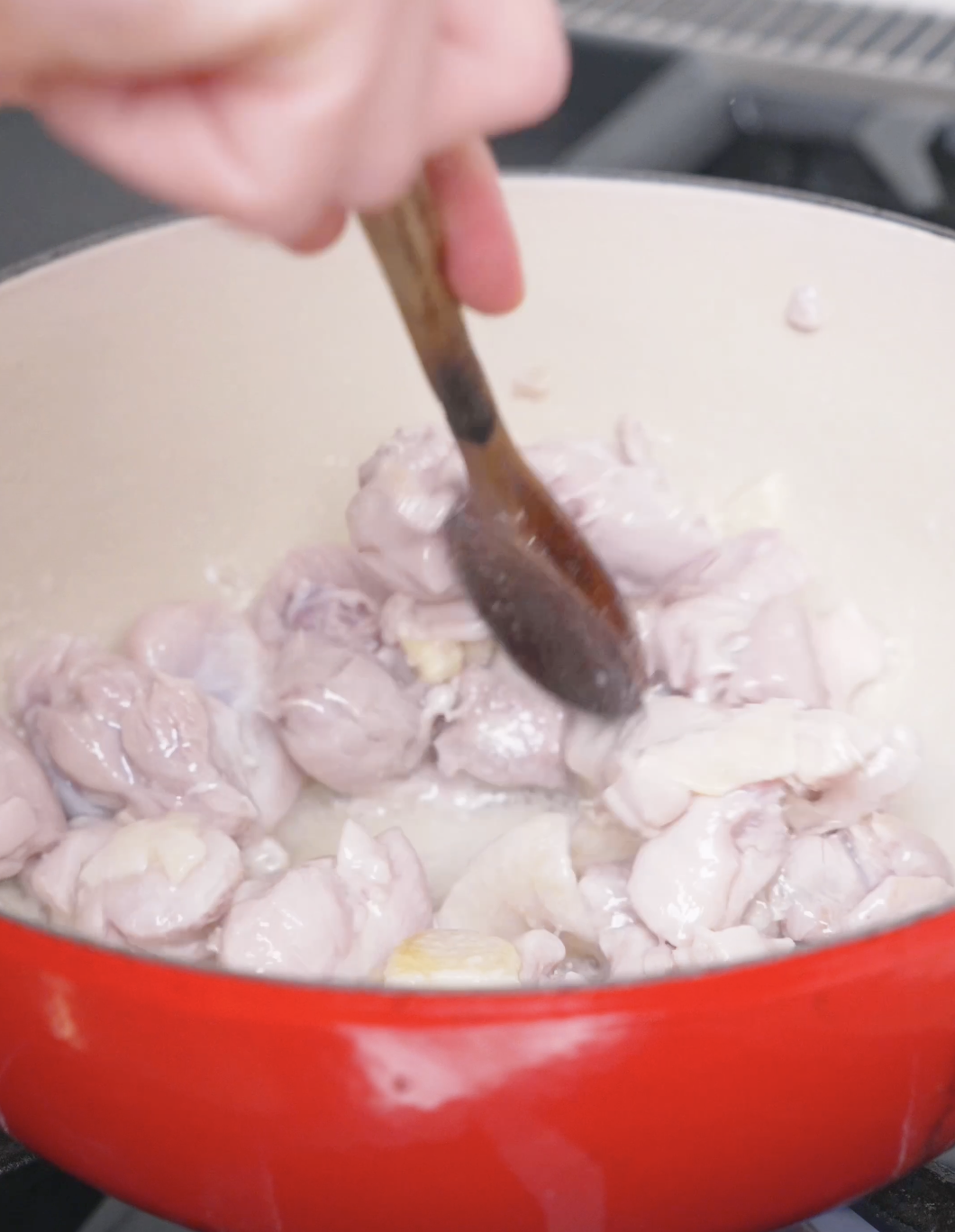
Heat a pot over medium-high heat with a bit of oil. Add the cubed chicken thighs and brown for about 4 minutes, then remove from the heat and set aside.
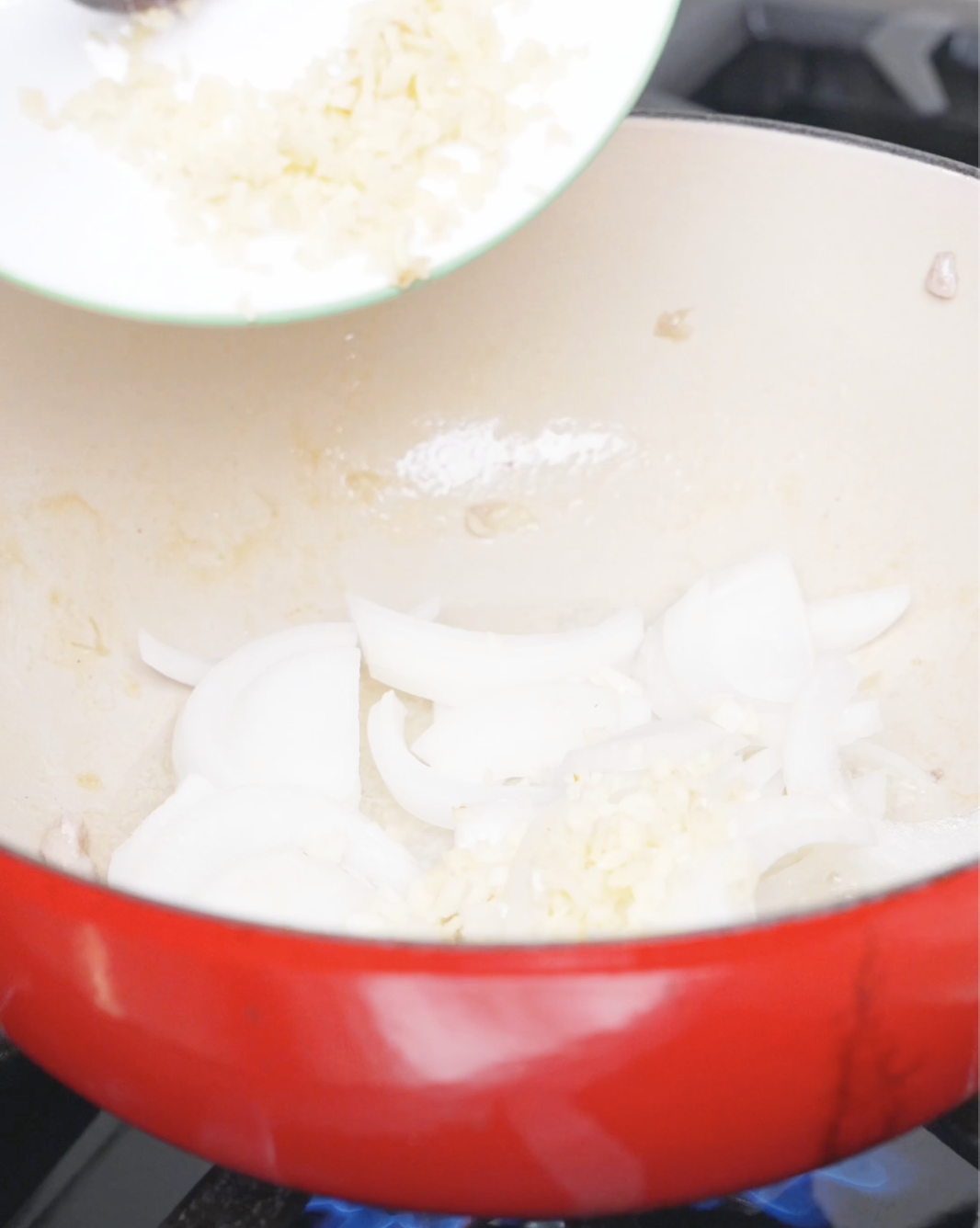
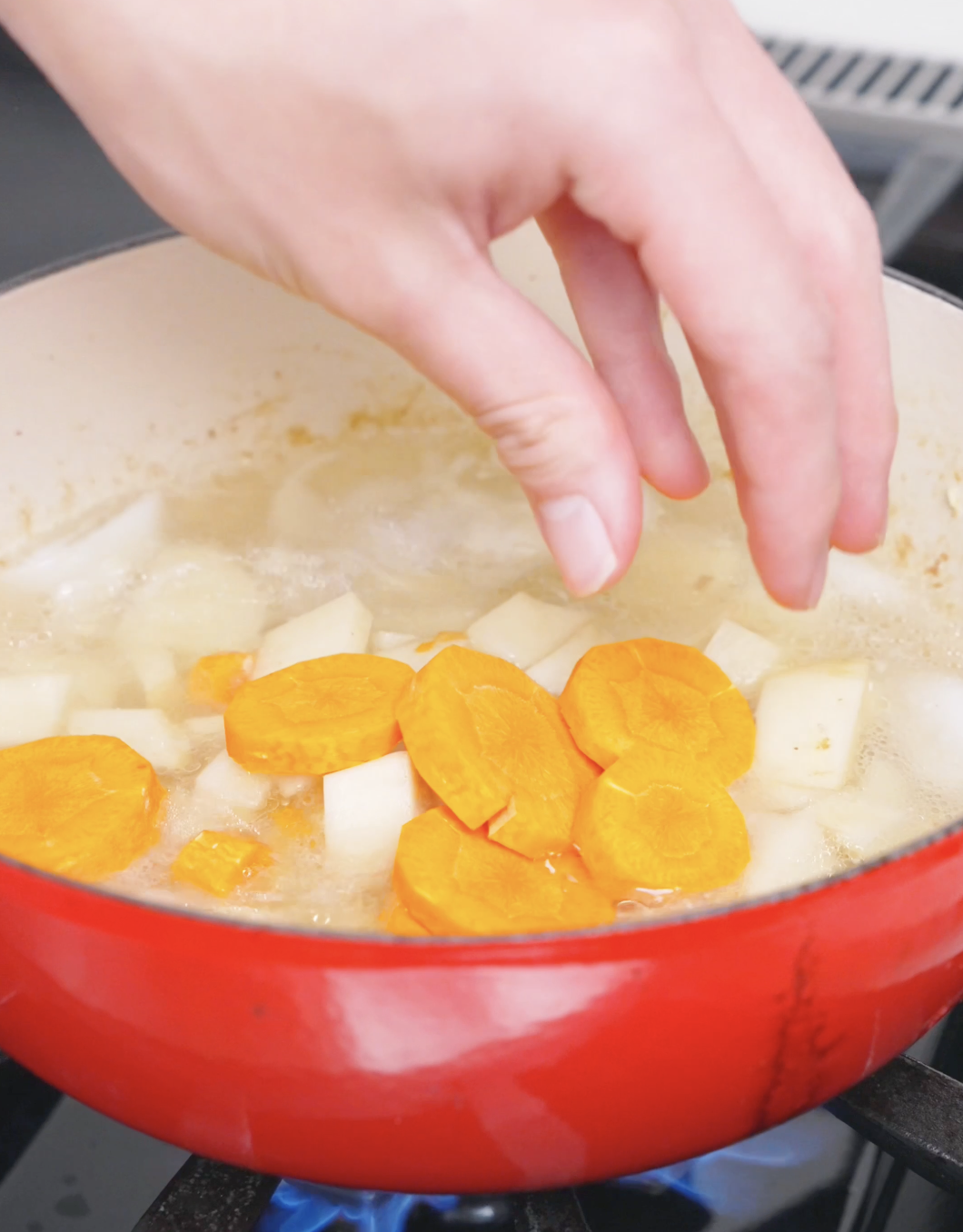
In the same pot, add the sliced onions along with the garlic and ginger, and cook until the onions are slightly softened. Add the water, potatoes, and carrots, then cover and simmer for 10 minutes.
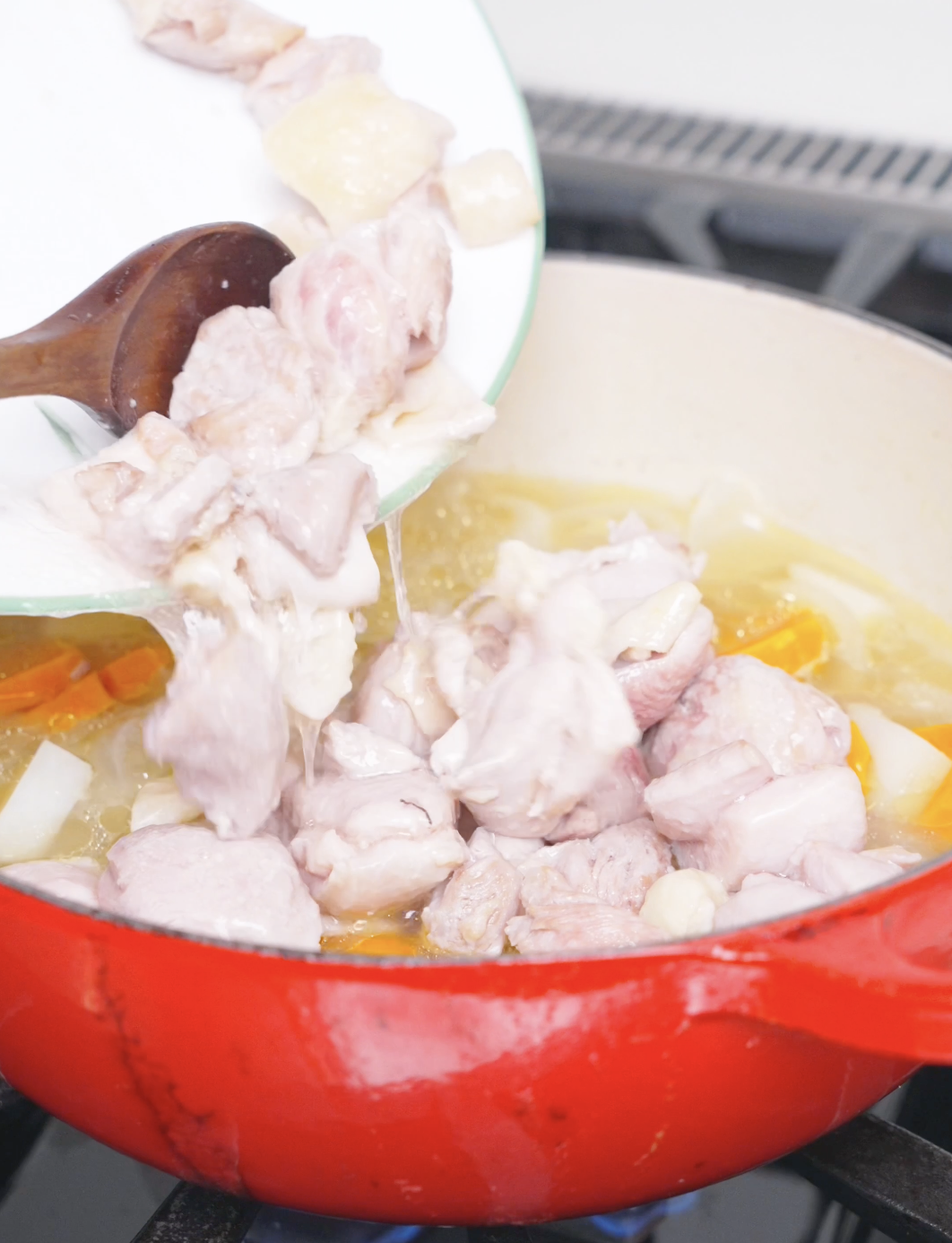
Add the chicken back in and bring everything to a simmer. Add the curry roux cubes and mix until they’re fully dissolved.
Season the stew with the light soy sauce, Worcestershire sauce, ketchup, and sugar, and mix until the stew reaches your desired thickness.
Spoon into a bowl and optionally garnish with heavy cream, scallions, and some dried peppers. But it’s your food, you eat it how you like.
More of a visual learner? Check out my video recipe below. 👇
Optional Variations & Dietary Adaptations
- Swap the Protein – Try boneless chicken breast, pork shoulder, or beef chuck instead of chicken thighs (just adjust simmer time so the meat gets fully tender).
- Vegetarian/Vegan – Skip the meat and bulk up on mushrooms, sweet potatoes, cauliflower, or chickpeas. Use vegetable broth instead of water, and double-check your curry roux brand for hidden dairy or meat extracts.
- Gluten-Free – Look for a curry roux labeled gluten-free (always double-check the label), or make a quick homemade roux with butter, a gluten-free flour blend, and curry powder.
- Cut the Carbs – Swap potatoes for cauliflower florets, or skip them altogether and add extra veggies like zucchini or bell peppers.
- Extra Spicy – Use a spicier curry roux, stir in chili paste, and/or top with dried peppers for extra kick.
- Mild – Stick with a mild roux and skip the dried peppers if you’re feeding spice-sensitive eaters.
Expert Tips & Tricks
- Brown the meat first. Searing the thighs before simmering adds deep flavor and a nicer texture to the finished curry chicken stew, rather than just boiling it in the sauce from the start.
- Sauté your aromatics well. Cooking the onions until soft and slightly caramelized before adding the other vegetables builds a natural sweetness that makes the whole dish taste richer.
- Break the roux into pieces. Cutting or breaking the curry roux cubes into smaller chunks helps them melt evenly into the stew without clumping.
- Lower the heat before adding roux. Stirring the roux in over low heat prevents it from sticking to the pot or forming lumps.
- Let it rest. Like most stews, Japanese curry famously tastes even better the next day, since the flavors deepen and meld overnight in the fridge. If you have time, make it a day ahead.
- Simmer low and slow. Keep the stew at a gentle simmer rather than a rolling boil so the potatoes and carrots cook through without falling apart.
- Adjust thickness at the end. If your curry is too thick, splash in a bit of water or broth; if it’s too thin, let it simmer uncovered a little longer or add an extra piece of roux.
- Taste before seasoning. Curry roux is already well-seasoned, so taste the stew before adding extra salt or soy sauce to avoid over-salting.
- Freeze leftovers smartly. Japanese curry freezes beautifully (just avoid Russet potatoes, which can get mealy). Freeze in portions for an easy future meal.
Serving Suggestions
Japanese curry is traditionally served over a mound of fluffy white rice, but there’s plenty of room to get creative with what you pair it with. For an extra layer of flavor, try ladling your curry over garlic butter fried rice or egg fried rice instead of plain steamed rice. The savory, buttery notes in the fried rice work beautifully with the mellow curry sauce and add a little extra richness to every bite.
If you’re looking to round out the meal or want a fun twist on the usual potato-in-the-curry situation, crispy roasted potatoes or crispy potato balls make a great side dish, adding a crunchy contrast to the soft, saucy stew. And for something a little indulgent, serve slices of warm Korean garlic cheese bread alongside the curry for dipping—the pillowy, cheesy bread is perfect for scooping up every last bit of sauce.
Storage & Reheating
- Refrigeration: Let the Japanese curry chicken stew cool to room temperature before storing, then transfer it to an airtight container and pop it in the fridge, where it will keep well for 3 to 4 days. As mentioned earlier, it actually tastes even better the next day, so leftovers are something to look forward to rather than settle for.
- Freezing: To freeze, portion the curry into freezer-safe containers or bags and freeze for up to 3 months.
- Reheating: When you’re ready to enjoy your leftovers, reheat the curry gently on the stovetop over low-medium heat, stirring occasionally, until warmed through. If the sauce has thickened up too much in the fridge or freezer, just splash in a little water or broth to loosen it back to your desired consistency. You can also microwave it in short bursts, stirring in between, though the stovetop method tends to keep the texture a bit smoother.
FAQs
What is the secret ingredient in Japanese curry?
There isn’t just one, but a few popular tricks show up again and again: a touch of ketchup or apple for natural sweetness, a splash of soy sauce or Worcestershire sauce for umami depth, and even a bit of coffee or dark chocolate to add richness and round out the flavor.
What is the difference between Indian curry and Japanese curry?
Indian curry is typically built from scratch with a wide variety of whole and ground spices, resulting in bold, complex, and often spicy flavors that vary greatly by region. Japanese curry, on the other hand, is milder, thicker, and slightly sweeter, usually made from a pre-made roux block that blends curry powder with flour and fat, giving it a smoother, more stew-like consistency.
Is Japanese curry considered a stew?
Yes, in texture and preparation, Japanese curry is very much like a stew. Meat and vegetables are simmered together in a thickened, gravy-like sauce until tender. It’s typically served ladled over rice rather than eaten on its own, but the cooking method and consistency are essentially stew-like.
Is Japanese curry considered unhealthy?
It’s not inherently unhealthy, but the roux does contain fat and calories, and it’s often served over a generous portion of white rice, which can make it a heavier meal. That said, it’s easy to lighten up by using less roux, adding extra vegetables, choosing leaner proteins, or swapping in brown rice or cauliflower rice.
More Japanese Recipes
Craving more Japanese food? Try my Japanese Steak Bowl, Japanese Carbonara Udon, or Teriyaki Stir Fried Udon!