Kung Pao Spaghetti Recipe
Equipment
Ingredients
- 16 oz chicken thighs, cubed
- 8 oz noodles of your choice
- Neutral oil, for cooking
- 1/2 onion, cut into big bite-sized chunks
- 1/2 red bell pepper, cut into big bite-sized chunks
- 1/2 green bell pepper, cut into big bite-sized chunks
- 4 cloves garlic, sliced
- 1 tbsp sliced ginger
- 6 dried red chilies
- 1/4 cup roasted peanuts
For the Sauce
- 2 tbsp light soy sauce
- 1 tbsp black vinegar
- 1 tbsp hoisin sauce
- 1 tbsp sugar
- 1 tsp sesame oil
- 1/4 cup water
Instructions
- Cut the onion and the red and green bell peppers into big bite-sized chunks and set them to the side.
- For the sauce, combine the light soy sauce, black vinegar, hoisin sauce, sugar, sesame oil, and water, and mix until the sugar dissolves.
- Boil the noodles until one minute short of al dente, then drain and set them aside.
- Heat a pan over medium-high heat with a bit of oil. Add the cubed chicken thighs and cook just until they’re white all the way through, then pull them out of the pan.
- In the same pan, add the sliced garlic, sliced ginger, onions, and dried red chilies, and cook until the onions turn translucent. Add both peppers and cook until they just start to soften.
- Add the chicken back in along with the sauce and the peanuts, and let everything bubble away until the sauce is thick and glossy.
- Add the noodles and toss until every strand is coated.
- Place your noodles in a bowl, or eat it straight out of the pan. It’s your food, you eat it how you like.
Video
Notes
- Toast the chiles first. Fry them in the oil for 30 seconds before adding garlic and ginger to bloom their flavor — just don’t let them burn.
- Cook your noodles under, not over. Pull them a full minute before al dente since they keep cooking in the sauce.
- Add peanuts last, off the heat, so they keep their crunch instead of going soggy.
- Reserve a splash of pasta water to loosen the sauce if it clings unevenly.
Nutrition
Nutrition information is automatically calculated, so should only be used as an approximation.
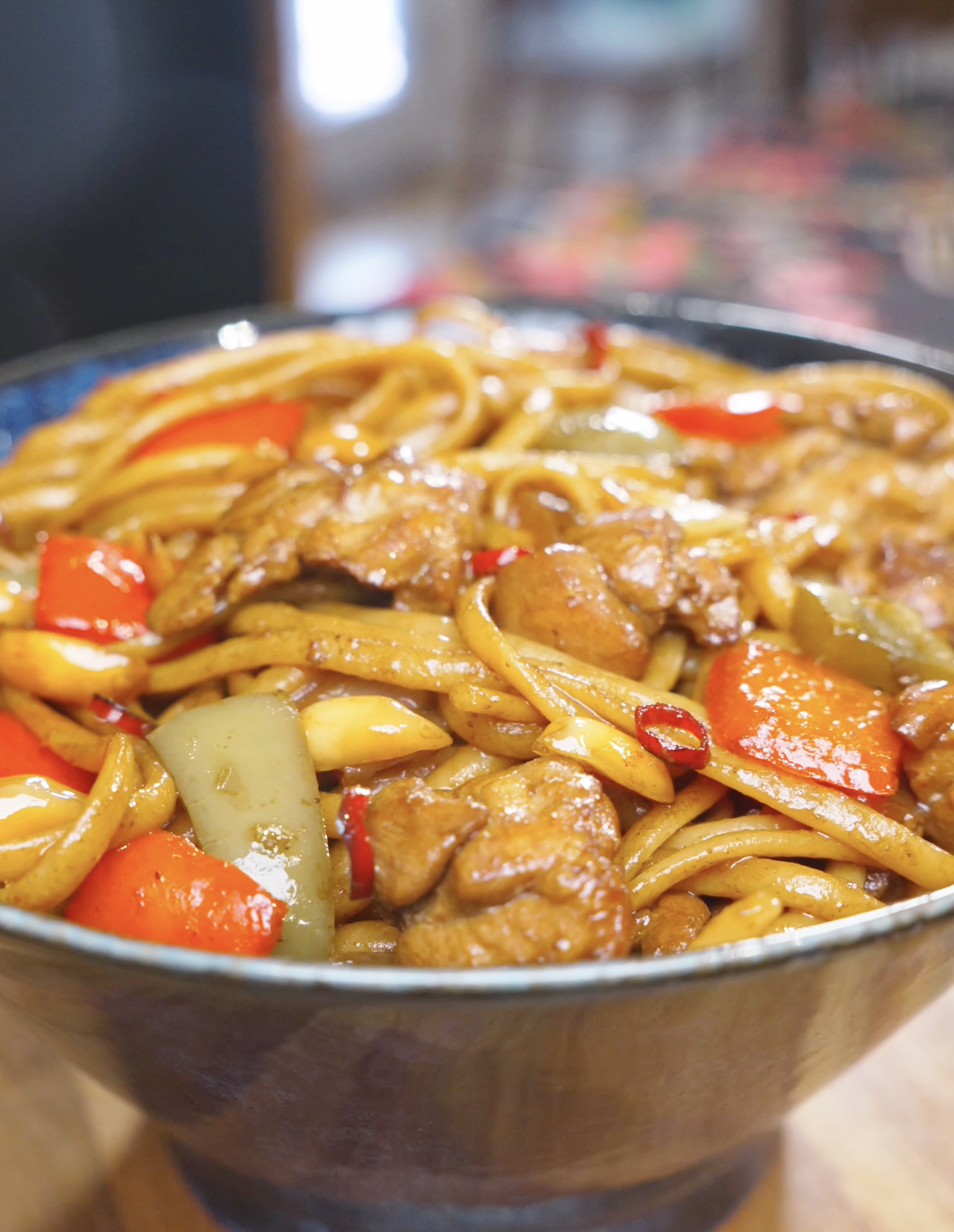
If spicy, sweet, and slurpable are three of your favorite food adjectives, this Kung Pao Spaghetti with Chicken should be on your radar! Imagine the same bold, numbing-spicy, slightly sweet flavor profile you know and love, but tossed with spaghetti instead of rice, because let’s be honest—noodles were made for sauce-soaking. Tender chicken thighs get seared until juicy, then joined by a rainbow of crisp-tender bell peppers, sharp garlic, fiery ginger, and dried red chilies for signature kung pao kick. Everything gets bathed in a glossy, umami-packed sauce, then finished with a handful of crunchy roasted peanuts for texture. Every strand of pasta gets its turn soaking up the craveworthy kung pao sauce, so no matter where your chopsticks land, you’re getting the full hit of spicy, sweet, and tangy in one bite. It comes together in one pan, in about the time it takes to boil water, which means you get all the comfort of your favorite Chinese takeout order without ever picking up the phone.
Can’t get enough tangy-spicy-sweet goodness? Me neither. Check out my authentic kung pao chicken, kung pao noodles, and kung pao beef recipes next!
Table of Contents
- Kung Pao Spaghetti Recipe
- Why You’ll Crave This Kung Pao Chicken Noodle Recipe
- Ingredients & Substitutions
- The Best Chiles for Kung Pao Sauce
- How to Make Kung Pao Spaghetti with Chicken
- Optional Variations & Dietary Adaptations
- Expert Tips & Tricks
- Serving Suggestions
- Storage & Reheating
- FAQs
- More Chicken Noodle Recipes
Why You’ll Crave This Kung Pao Chicken Noodle Recipe
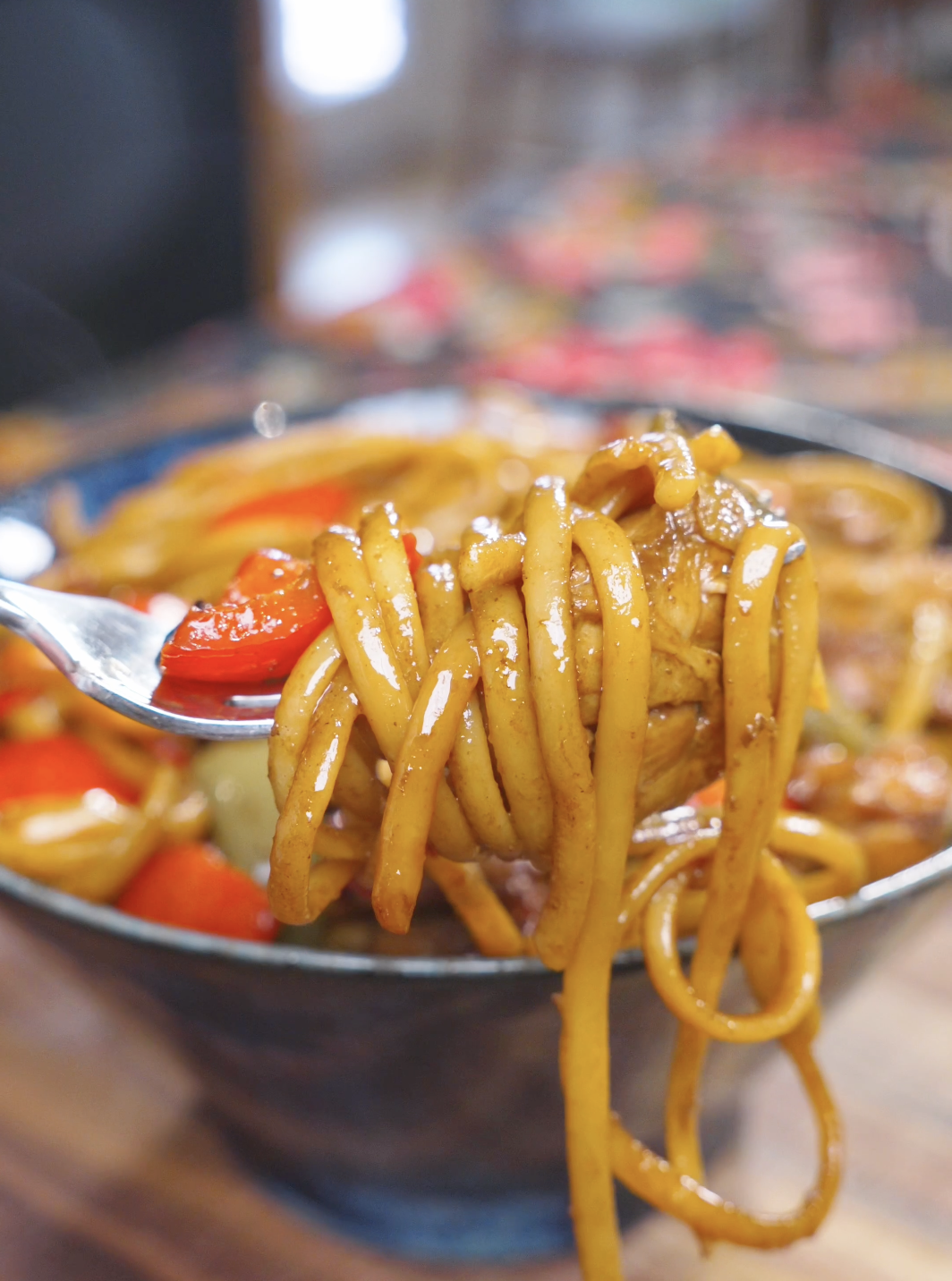
What makes this dish so addictive is how effortlessly it balances contrast: crunchy peanuts against silky noodles, sharp ginger and garlic against the mellow sweetness of hoisin, and just enough heat from the dried chilies to keep you coming back for another bite. Kung pao chicken spaghetti is the kind of meal that feels indulgent but comes together with pantry staples you probably already have on hand, no specialty grocery run required. Unlike a lot of stir-fry recipes that demand split-second timing and constant attention, this one is forgiving—the chicken stays juicy, the vegetables keep their bite, and the sauce practically thickens itself while you toss everything together. It’s fast enough for a weeknight when you’re short on patience, but flavorful enough that it never feels like a compromise dinner. Once you taste how well that sticky-savory sauce clings to spaghetti, you’ll wonder why you ever thought kung pao belonged exclusively in a rice bowl!
Ingredients & Substitutions
- Boneless Skinless Chicken Thighs — Thighs stay juicy and tender even if you overcook them slightly, which makes them pretty forgiving for a quick weeknight stir-fry. If you only have chicken breast on hand, that works too—just watch your cook time since it dries out faster.
- Noodles of Choice — Spaghetti is my pick because it mimics the texture of traditional lo mein noodles, but linguine, ramen, or even udon noodles work beautifully here too. Just cook them a minute shy of al dente since they’ll finish soaking up sauce in the pan.
- Neutral Oil — Vegetable, canola, or avocado oil all work great for high-heat searing. You want something without a strong flavor of its own so it doesn’t compete with the sauce.
- Onion — Yellow or white onion adds a subtle sweetness once it cooks down. If you’re out, shallots make a nice substitute with a slightly milder bite.
- Red Bell Pepper — Adds a pop of color and a hint of natural sweetness. Any color bell pepper works if red isn’t available.
- Green Bell Pepper — Brings a slightly more vegetal, crisp contrast to the red pepper. Feel free to use all one color if that’s what’s in your fridge.
- Garlic — Fresh is really the way to go here for that punchy, aromatic base. In a pinch, jarred minced garlic works, just use a little extra since the flavor is milder.
- Sliced Ginger — Fresh ginger gives you that warm, slightly spicy background note that’s essential to kung pao flavor. Ground ginger isn’t a great swap here since the flavor is much more muted—fresh is worth seeking out.
- Dried Red Chilies — These bring smoky heat and are pretty adjustable—use fewer if you’re spice-sensitive, or toss in extra if you like it fiery. Crushed red pepper flakes work in a pinch, though you’ll lose a bit of that toasty depth.
- Roasted Peanuts — The crunch factor is non-negotiable here! If you have a peanut allergy, roasted cashews are a great substitute with a similar texture.
For the Sauce
- Light Soy Sauce — This is your salty backbone. Feel free to swap in tamari, Bragg’s liquid aminos or coconut aminos if you need a gluten-free alternative.
- Black Vinegar — Adds a deep, slightly smoky tang that’s signature to kung pao sauce. If you can’t find it, balsamic vinegar makes a surprisingly good substitute.
- Hoisin Sauce — This brings sweetness and thickness to the sauce. Oyster sauce can work in a pinch, though it’ll shift the flavor slightly more savory than sweet.
- Granulated Sugar — Just a touch to round out all that salty, tangy, spicy flavor. Brown sugar works too and adds a hint of molasses depth.
- Sesame Oil — A little goes a long way here, adding nutty richness at the end. Toasted sesame oil specifically is what you want—not the plain, refined stuff.
- Water — Helps thin the sauce so it coats the noodles evenly instead of clumping. Chicken broth is a great swap if you want to layer in even more flavor.
This is just a short review of the ingredients; for the complete recipe, including quantities, scroll down to the recipe card 👇
The Best Chiles for Kung Pao Sauce
The right chile makes all the difference in getting the signature kung pao heat just right. It should be smoky, slightly fruity, and the heat should build gradually rather than blowing you away in one bite. Here’s what to look for:
- Dried Chinese Chiles (Facing Heaven Peppers/Tien Tsin/Tianjin) — These are the traditional choice for kung pao dishes, prized for their bright red color and moderate heat that infuses beautifully into hot oil. If you can find them at an Asian grocery store, they’re worth seeking out for the most authentic flavor and gorgeous color they lend to the sauce.
- Chile de Árbol — A great substitute if Chinese chiles aren’t available, these bring a similar clean, sharp heat and hold their shape well when fried in oil. They’re widely available at most grocery stores, making them a convenient everyday option.
- Dried Thai Chiles — Smaller and spicier than the other options, these pack a bigger punch, so use fewer if you’re heat-sensitive. They work well if you want your kung pao extra fiery.
- Crushed Red Pepper Flakes — Not traditional, but a totally reasonable pantry substitute in a pinch. You won’t get quite the same toasty, infused flavor from frying whole chiles in oil, but it’ll still deliver solid heat.
A quick tip: toast your chiles briefly in the oil before adding other aromatics—this “blooms” their flavor and infuses the oil with that smoky heat that’s essential to an authentic kung pao taste. Just don’t let them burn, or the sauce can turn bitter.
How to Make Kung Pao Spaghetti with Chicken
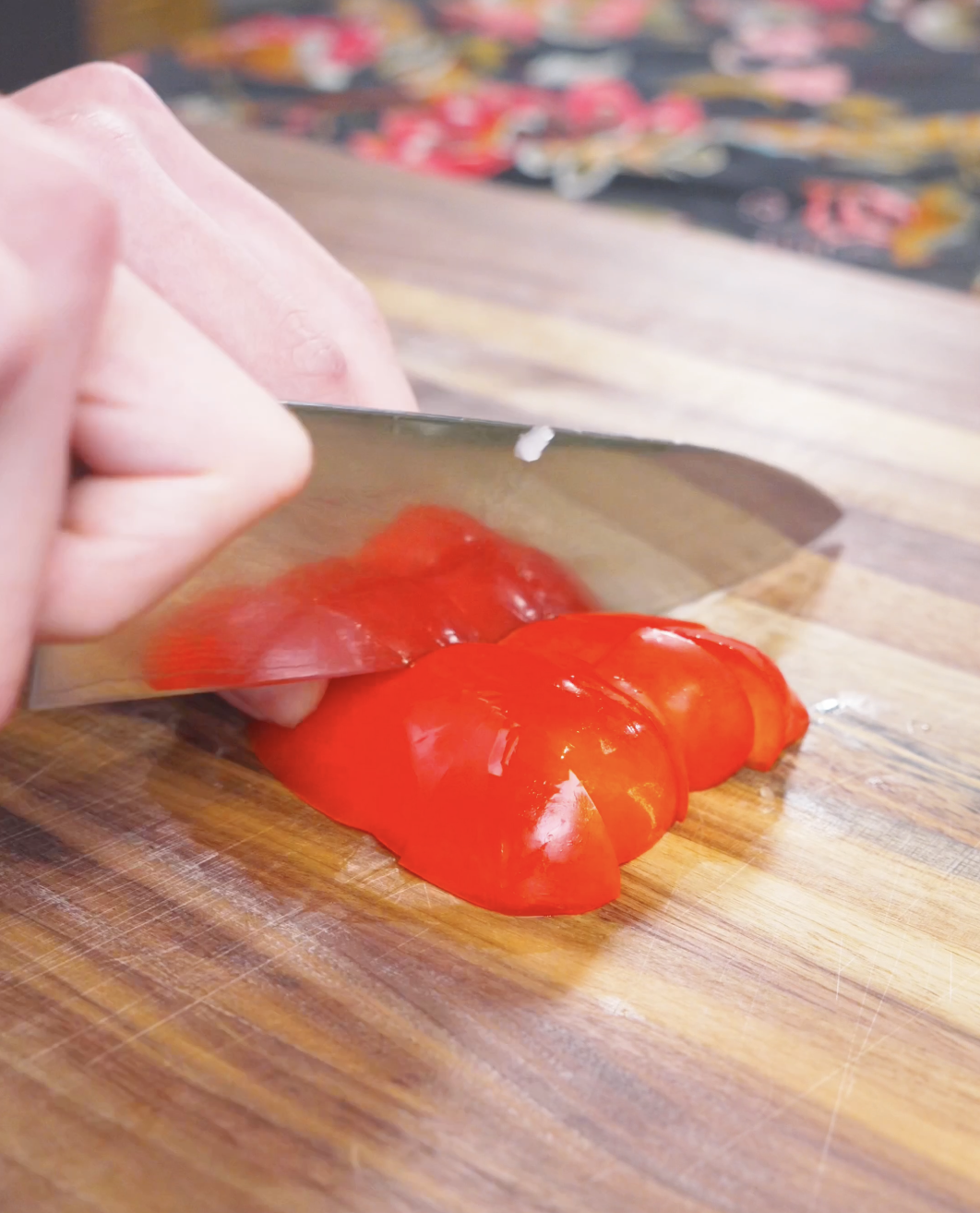
Cut the onion and the red and green bell peppers into big bite-sized chunks and set them to the side.
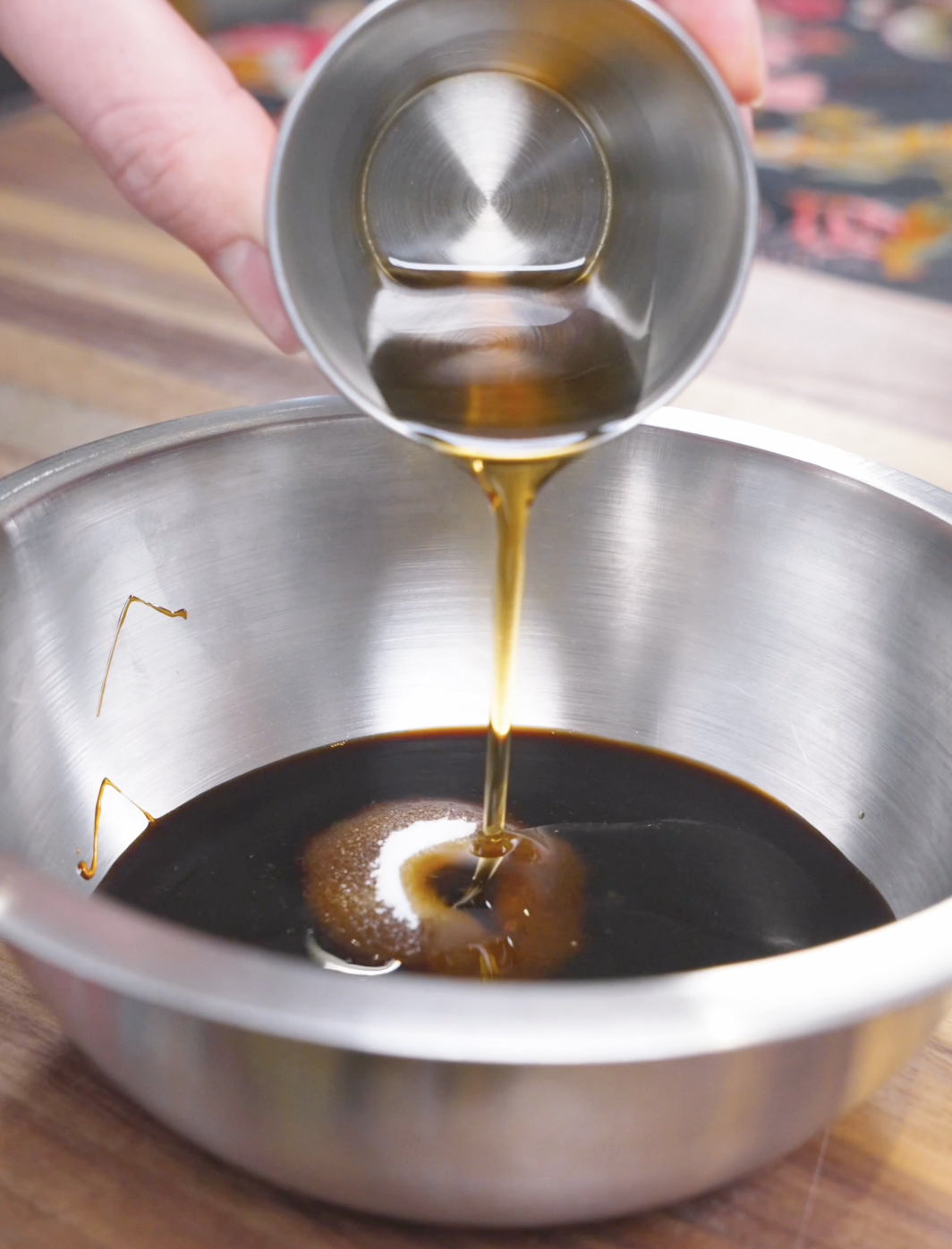
For the sauce, combine the light soy sauce, black vinegar, hoisin sauce, sugar, sesame oil, and water, and mix until the sugar dissolves.
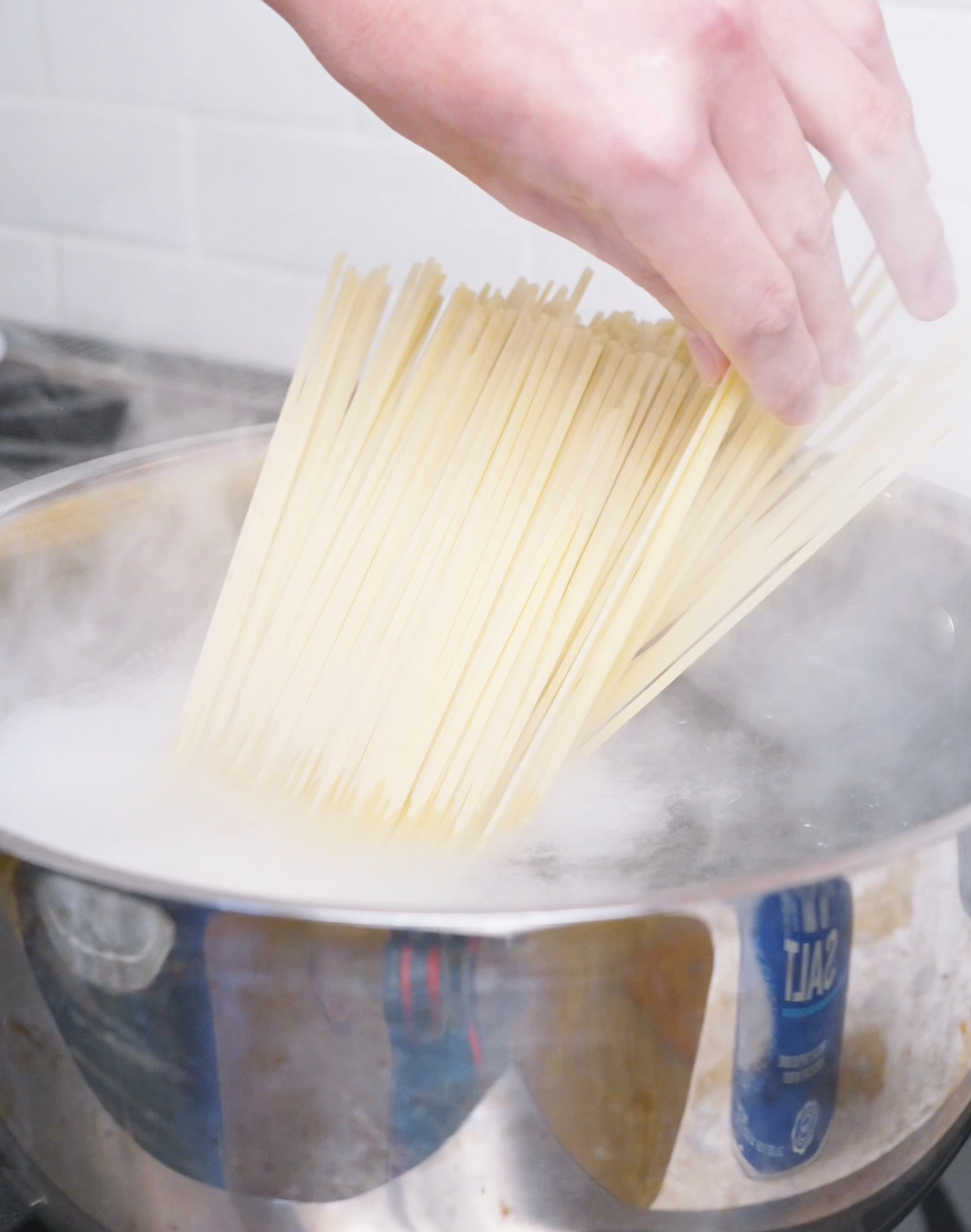
Boil the noodles until one minute short of al dente, then drain and set them aside.
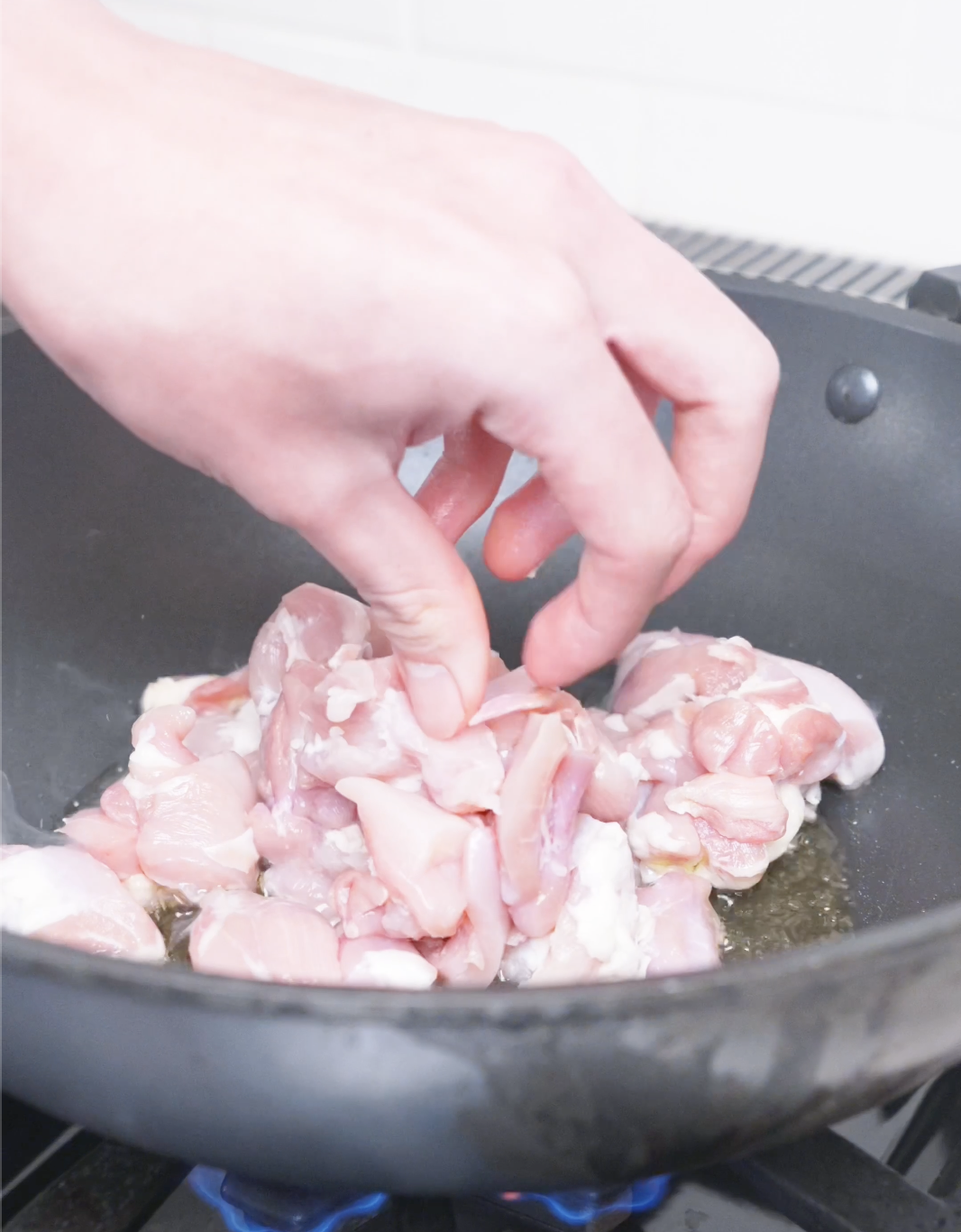
Heat a pan over medium-high heat with a bit of oil. Add the cubed chicken thighs and cook just until they’re white all the way through, then pull them out of the pan.
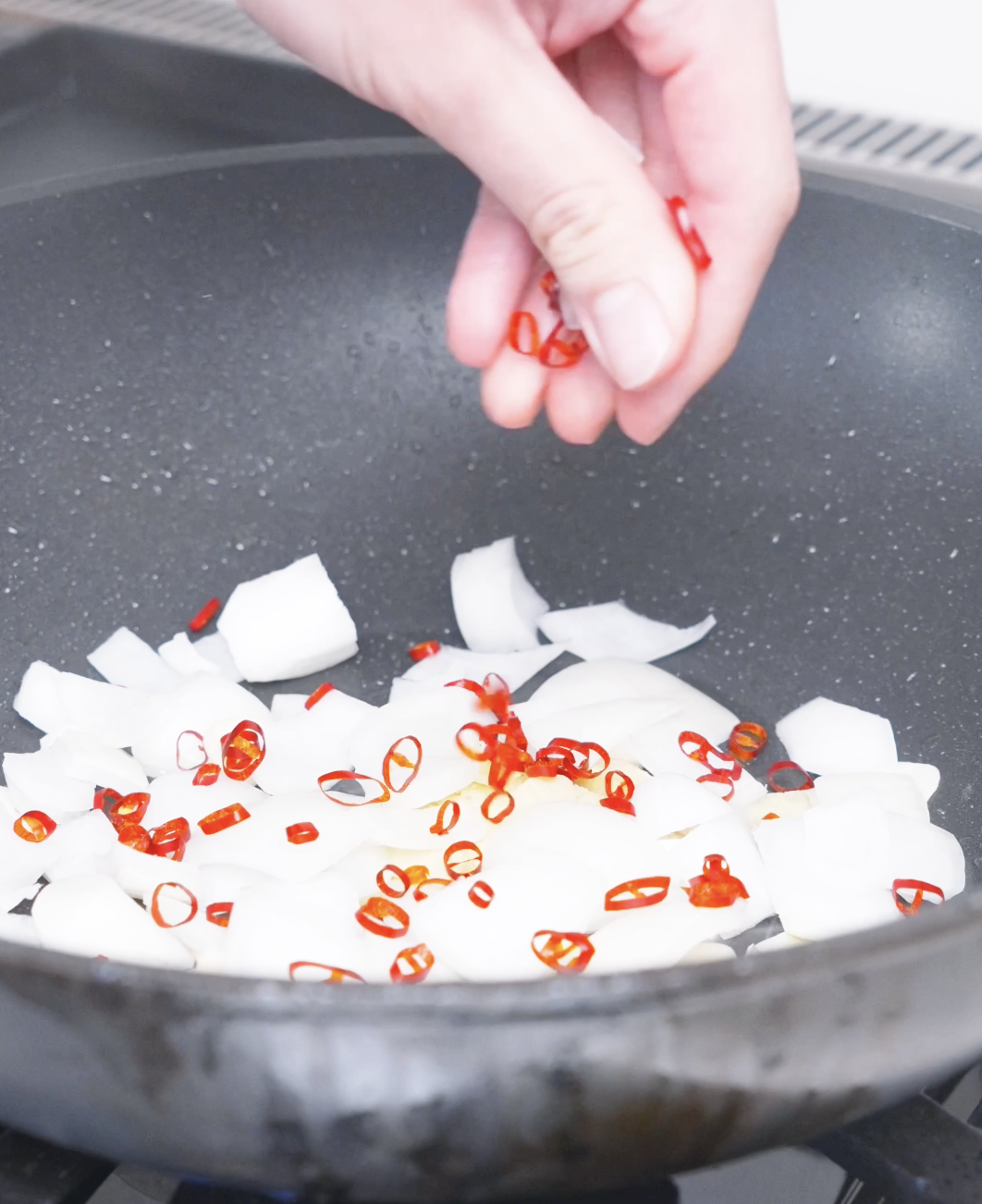
In the same pan, add the sliced garlic, sliced ginger, onions, and dried red chilies, and cook until the onions turn translucent. Add both peppers and cook until they just start to soften.
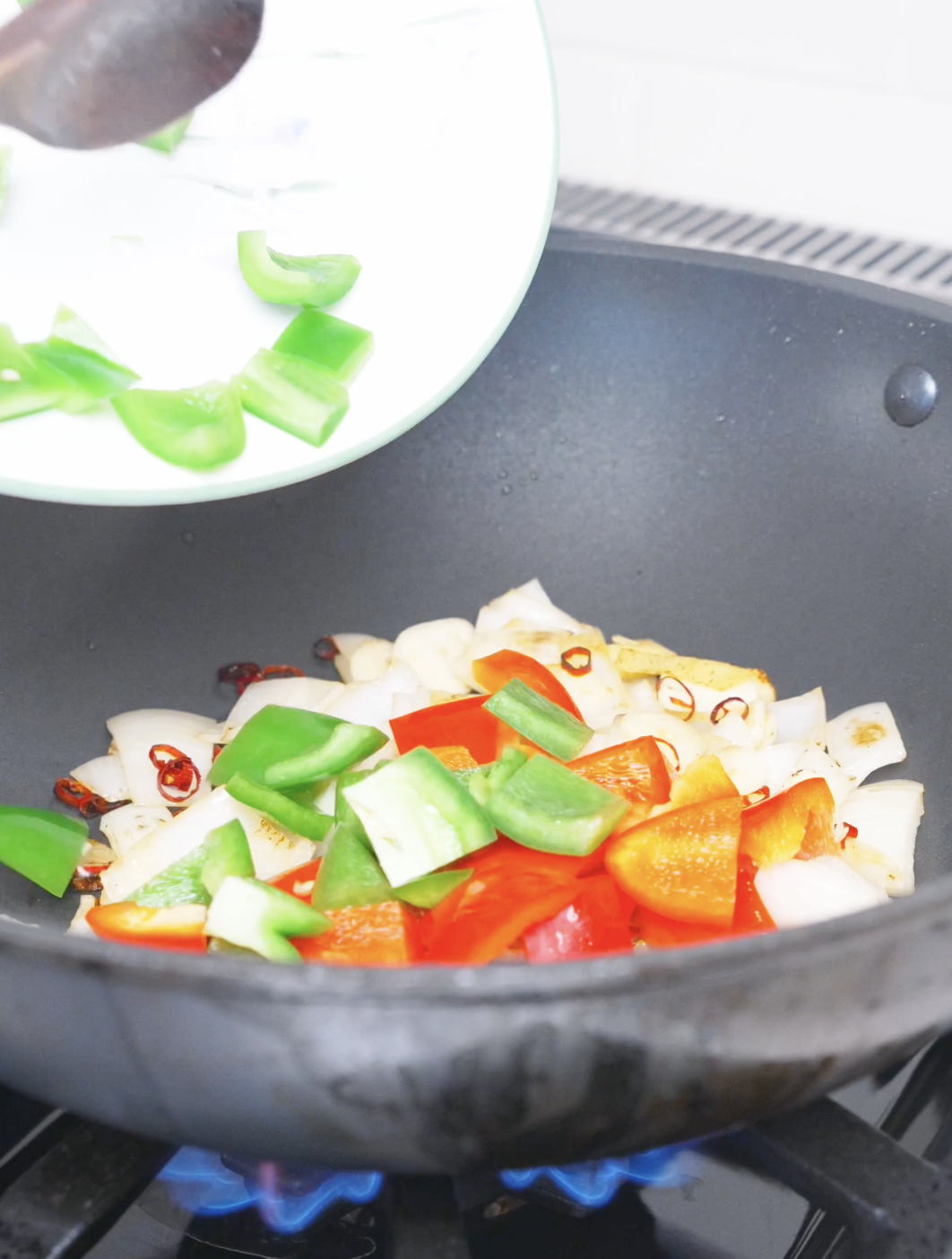
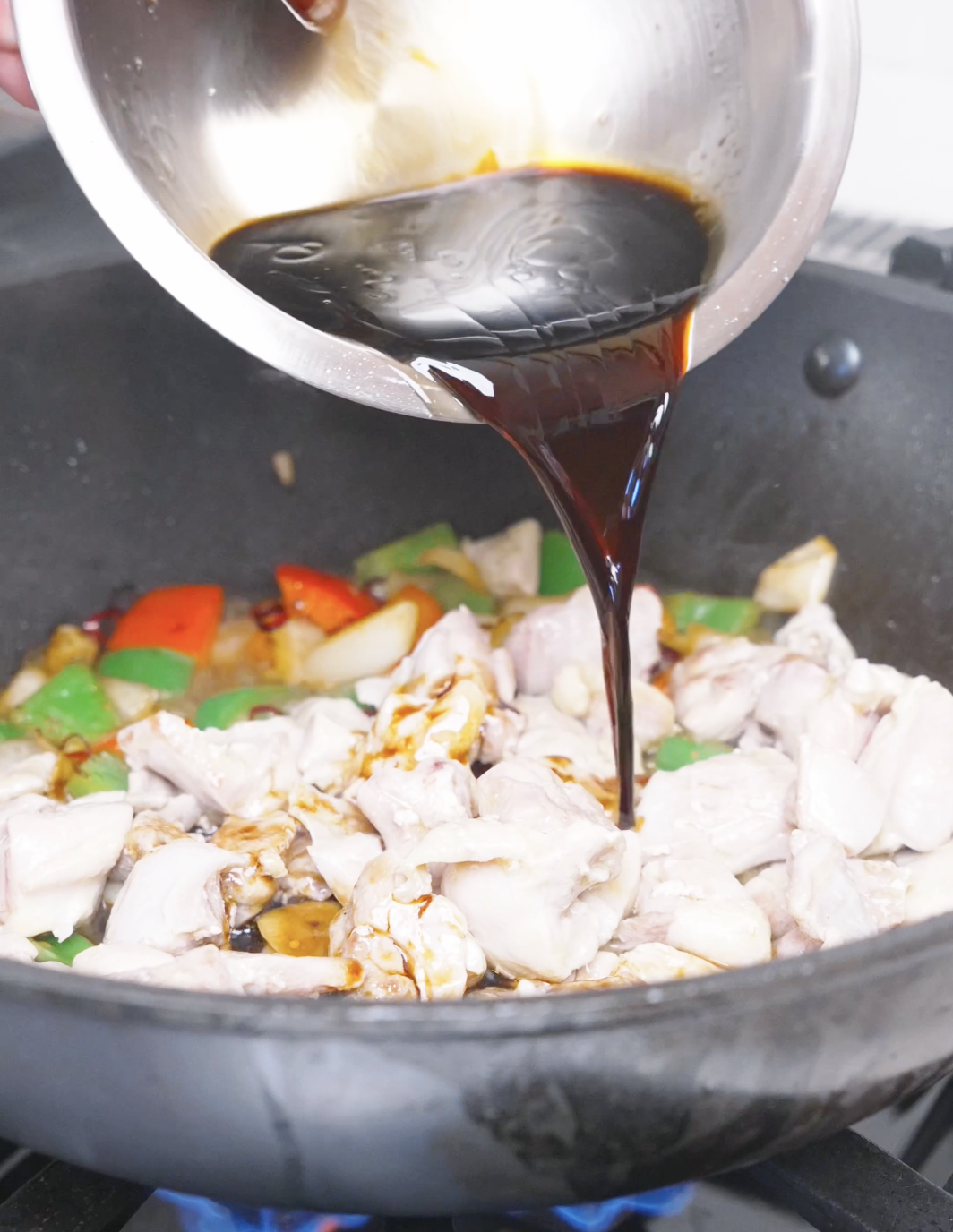
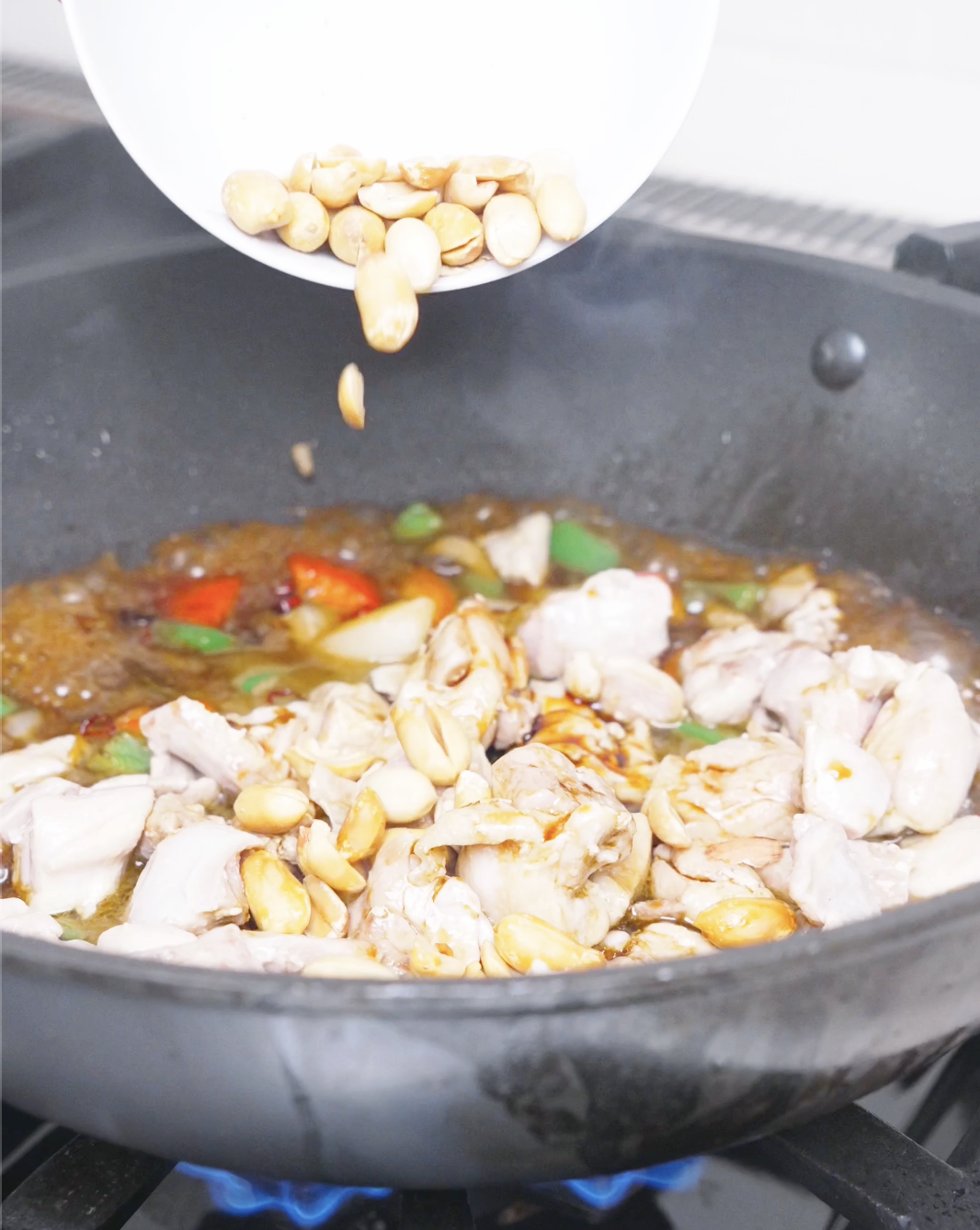
Add the chicken back in along with the sauce and the peanuts, and let everything bubble away until the sauce is thick and glossy.
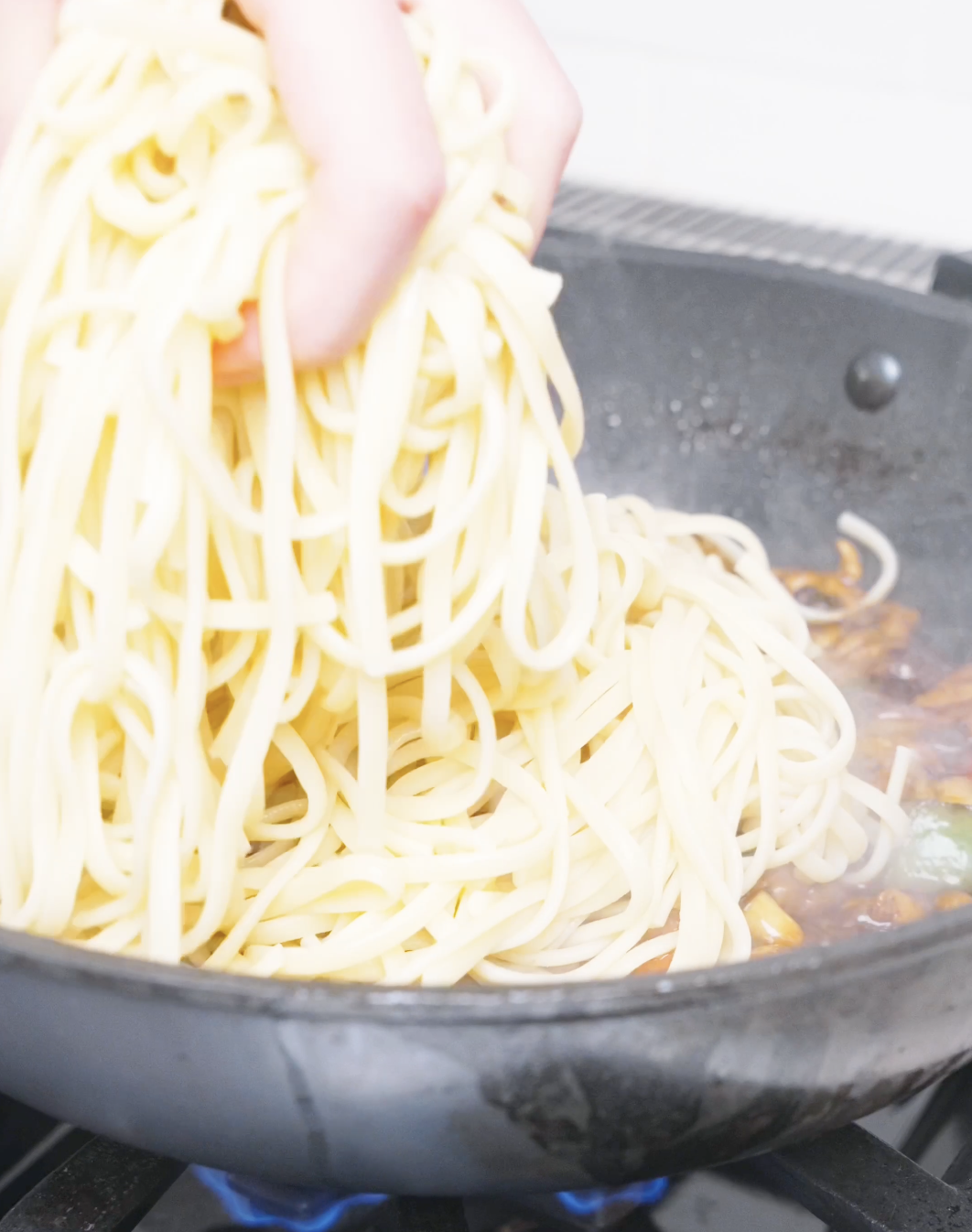
Add the noodles and toss until every strand is coated.
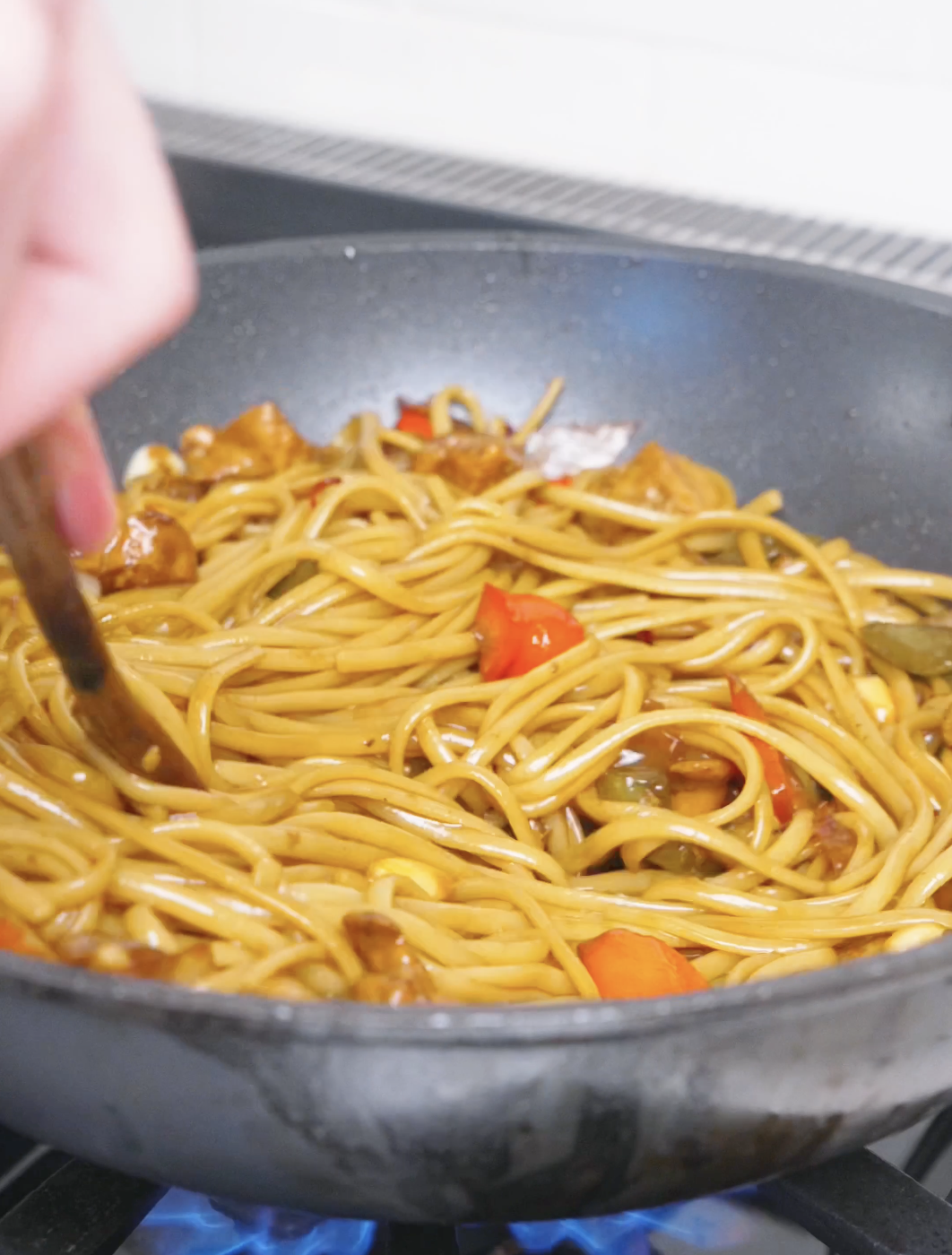
Place your noodles in a bowl, or eat it straight out of the pan. It’s your food, you eat it how you like.
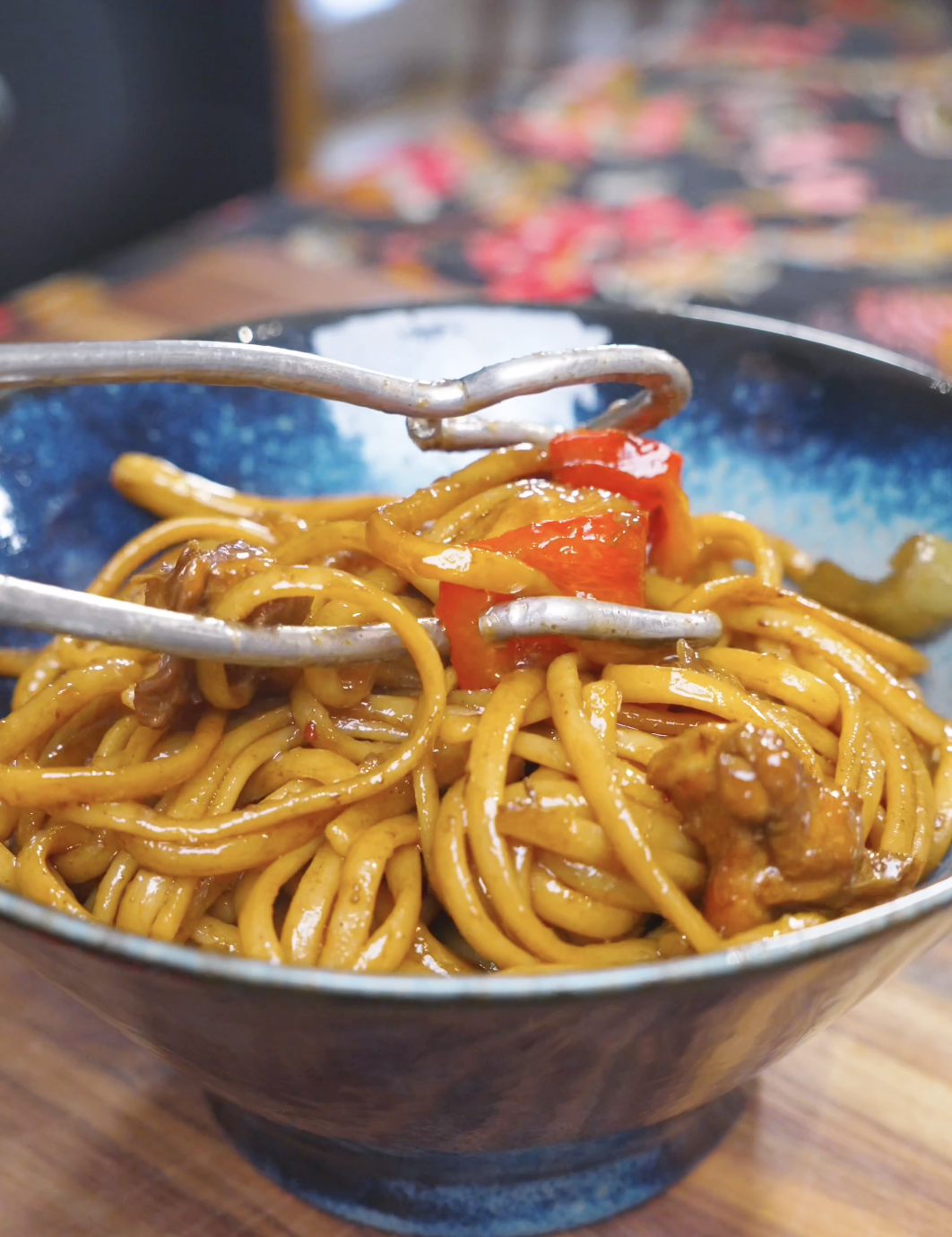
More of a visual learner? Check out my video recipe below. 👇
Optional Variations & Dietary Adaptations
My spicy kung pao chicken spaghetti recipe is easy to bend to whatever you’re craving or whatever dietary needs you’re cooking around. Here are some easy ways to switch it up:
- Gluten-Free — Swap the light soy sauce for tamari or a gluten-free soy sauce alternative, and double-check your hoisin sauce label since some brands sneak in wheat. Most noodles labeled gluten-free (rice noodles or gluten-free spaghetti) will soak up the sauce just as well.
- Vegetarian/Vegan — Skip the chicken and swap in extra-firm tofu, pressed and cubed, or a mix of mushrooms like shiitake or king oyster for a meatier bite. You can also bulk up the vegetables with snap peas, baby corn, or water chestnuts to keep it hearty and satisfying.
- Swap the Protein — Shrimp, pork tenderloin, or even thinly sliced beef all work well in place of chicken thighs if that’s what you have on hand. Just adjust cook times accordingly—shrimp cooks in just a couple of minutes, while beef benefits from a quick, hot sear.
- Dial the Heat Up or Down — If you love a fiery kick, add extra dried chiles or a spoonful of chili crisp at the end. For a milder version, reduce the chiles to one or two and skip any extra spice additions—the dish will still have plenty of flavor from the garlic, ginger, and hoisin.
- Low-Sodium Option — Use low-sodium soy sauce and cut back slightly on the added sugar, since a lot of the saltiness naturally balances the sweetness in the sauce. You can always taste and adjust at the end rather than adding it all upfront.
- Nut-Free — Simply omit the peanuts or swap in roasted sunflower seeds or crispy chickpeas for a crunchy contrast without the allergen concern.
- Low-Carb or Grain-Free — Substitute the noodles with spiralized zucchini, shirataki noodles, or even spaghetti squash. The sauce clings just as well, though you’ll want to sauté the zucchini or squash separately to avoid excess water thinning out your sauce.
- Extra Veggie Boost — Toss in broccoli florets, snow peas, or shredded carrots along with the bell peppers for more color, crunch, and nutrition without changing the core flavor profile.
Expert Tips & Tricks
- Don’t Skip the Sear — Get your pan or wok screaming hot before the chicken hits it, and resist the urge to stir right away. Letting the chicken sit undisturbed for the first minute or so gives you a slightly caramelized, restaurant-style char that makes all the difference in flavor.
- Cook Your Noodles Under, Not Over — Pull your noodles a full minute before they hit al dente since they’ll continue cooking once they’re tossed into the hot sauce and pan. Overcooked noodles will turn mushy and won’t hold up to all that stirring and tossing.
- Toast the Chiles First — Fry your dried chiles in the oil for just 30 seconds or so before adding garlic and ginger—this blooms their flavor and infuses the oil with smoky heat. Keep a close eye on them though, since they can go from perfectly toasted to burnt and bitter in seconds.
- Prep Everything Before You Start Cooking — This dish moves fast once it’s going, so have your chicken cut, vegetables sliced, garlic and ginger minced, and sauce whisked together before you turn on the heat. Stir-frying isn’t the moment to be chopping an onion mid-recipe.
- Add Peanuts Last — Stir them in right at the end, off the heat, so they keep their crunch instead of turning soft and soggy from sitting in the sauce too long.
- Taste and Adjust the Sauce Before Tossing — Give your sauce a quick taste before it goes in with the noodles—everyone’s soy sauce and hoisin brands vary in saltiness and sweetness, so a small adjustment here (a splash more vinegar, a pinch more sugar) can make the final dish taste perfectly balanced.
- Use a Wide Pan or Wok — A large surface area helps everything cook quickly and evenly without steaming, which is key to keeping that stir-fried texture instead of ending up with a soggy, overcrowded pan.
- Reserve a Splash of Pasta Water — Just like with Italian pasta dishes, a little starchy water can help loosen the sauce if it feels too thick or clings unevenly to the noodles.
Serving Suggestions
Kung pao spaghetti with chicken is hearty enough to stand on its own as a complete meal, but if you want to round things out, a few simple sides can really make the meal feel special. A light, crisp cucumber salad is the perfect contrast to the rich, spicy-sweet sauce, cooling down your palate between bites without competing with all those bold flavors.
If you’re feeding a crowd or just want to lean into the takeout-at-home vibe, serve it alongside easy, shareable appetizers like a batch of chili crunch deviled eggs or some Korean corn cheese. A side of garlicky sautéed greens, like bok choy or Chinese broccoli is another great way to add color and freshness to the plate while soaking up any extra sauce.
For drinks, these kung pao chicken noodles pair beautifully with something crisp and slightly sweet to balance out the heat—think a chilled glass of Riesling, a light lager, or even peach iced tea if you’re keeping things non-alcoholic.
Craving something sweet to finish the meal? A simple dessert like mango sticky rice, matcha tiramisu or a batch of homemade fortune cookies rounds things out with a fun, playful nod to the takeout-fakeout dinner you just pulled off completely from scratch.
Storage & Reheating
- Storage — Let the kung pao chicken pasta cool to room temperature before transferring them to an airtight container, then store them in the refrigerator for up to 4 days. If you’re meal-prepping or know you won’t finish it right away, keeping the sauce slightly looser than usual when you first make it helps prevent the noodles from drying out or clumping together as they sit.
- Freezing — While this dish is best enjoyed fresh, you can freeze it for up to 2 months if needed. Keep in mind that noodles can change texture slightly after freezing and thawing, becoming a touch softer, so this works best if you don’t mind a little less bite in your finished dish. Thaw overnight in the refrigerator before reheating rather than defrosting at room temperature.
- Reheating on the Stovetop — This is the best method for bringing back that fresh-cooked texture. Add the noodles to a pan or wok over medium heat with a splash of water or chicken broth, and stir frequently until warmed through, about 3-4 minutes. The added liquid loosens the sauce back up and helps prevent the noodles from sticking or drying out.
- Reheating in the Microwave — If you’re short on time, transfer your portion to a microwave-safe bowl, add a small splash of water, and cover loosely. Heat in 30-second intervals, stirring in between, until warmed through—this usually takes about 1-2 minutes depending on your microwave’s strength.
- A Quick Note on Peanuts — If you added peanuts before storing, know that they’ll lose their crunch after sitting in the sauce overnight. For the best texture on leftovers, consider stirring in a fresh handful of peanuts right before serving instead of relying on the ones already mixed in.
FAQs
What’s the difference between General Tso’s and Kung Pao chicken?
The main differences come down to sauce and spice style. General Tso’s chicken is battered, deep-fried, and coated in a sauce that’s predominantly sweet and tangy with only mild heat, while Kung Pao chicken is stir-fried (not fried in batter) and features a bolder, more numbing spicy-savory sauce built around dried chiles and often Sichuan peppercorns. Kung Pao also traditionally includes peanuts and a more garlicky, complex flavor profile, whereas General Tso’s is simpler and sweeter, closer to an American-Chinese takeout classic.
What is the sauce in kung pao chicken made of?
Kung pao sauce is typically a mix of soy sauce, rice vinegar (or black vinegar), a bit of sugar or hoisin for sweetness, and often some Shaoxing wine, thickened with a cornstarch slurry. The heat and aroma come from dried chiles, garlic, ginger, and sometimes Sichuan peppercorns cooked into the oil before the sauce ingredients are added.
Is kung pao very spicy?
Kung pao is typically moderately spicy rather than intensely hot. The heat comes from dried red chilies and sometimes Sichuan peppercorns, which add a numbing, tingling sensation (málà) alongside the spice. It’s spicier than something like chicken teriyaki or General Tso’s, but usually more moderate than dishes built around fresh chili heat, and the level varies a lot depending on the restaurant or recipe—some lean much hotter than others.
More Chicken Noodle Recipes
Craving more noodles? Try my Kung Pao Noodles, Garlic Chicken Noodles, or Beef Lo Mein!