Korean Braised Chicken Recipe
Equipment
Ingredients
- 16 oz chicken thighs, cut into large pieces
- 2 medium potatoes, cut into big chunks
- 2 carrots, cut into thick rounds
- 1 onion, cut into big chunks
- 3 scallions, cut into two-inch pieces
- 1 1/2 cups water
For the Sauce
- 2 tbsp gochujang
- 2 tbsp light soy sauce
- 1 tbsp mirin
- 1 tbsp gochugaru
- 1 tbsp sugar
- 1 tsp sesame oil
Optional Garnish
- Sesame seeds
- Steamed rice
Instructions
- Cut the carrots into thick rounds, the potatoes and onion into big chunks, and the scallions into two-inch pieces, then set them to the side.
- For the sauce, combine the gochujang, light soy sauce, mirin, gochugaru, sugar, and sesame oil, and mix until everything is well incorporated.
- Add the sauce to a pot along with the water and bring it up to a simmer.
- Add the potatoes, carrots, and onions, and let them cook in the broth for a few minutes.
- Add the chicken thighs, cover the pot, and let everything braise until the potatoes are tender and the chicken is cooked through, about 20 to 25 minutes.
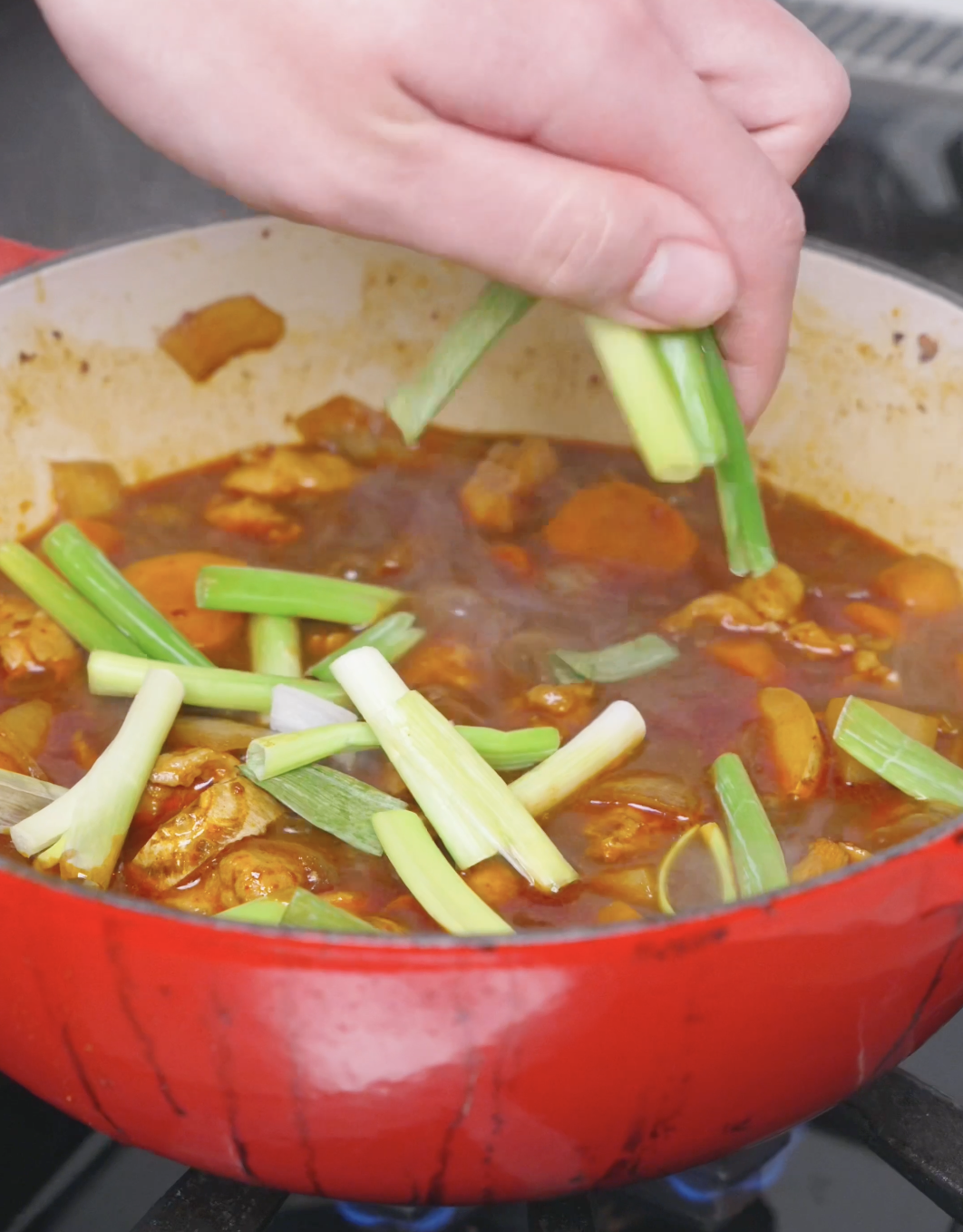
- Add the scallions and give everything one last stir while the sauce reduces slightly.
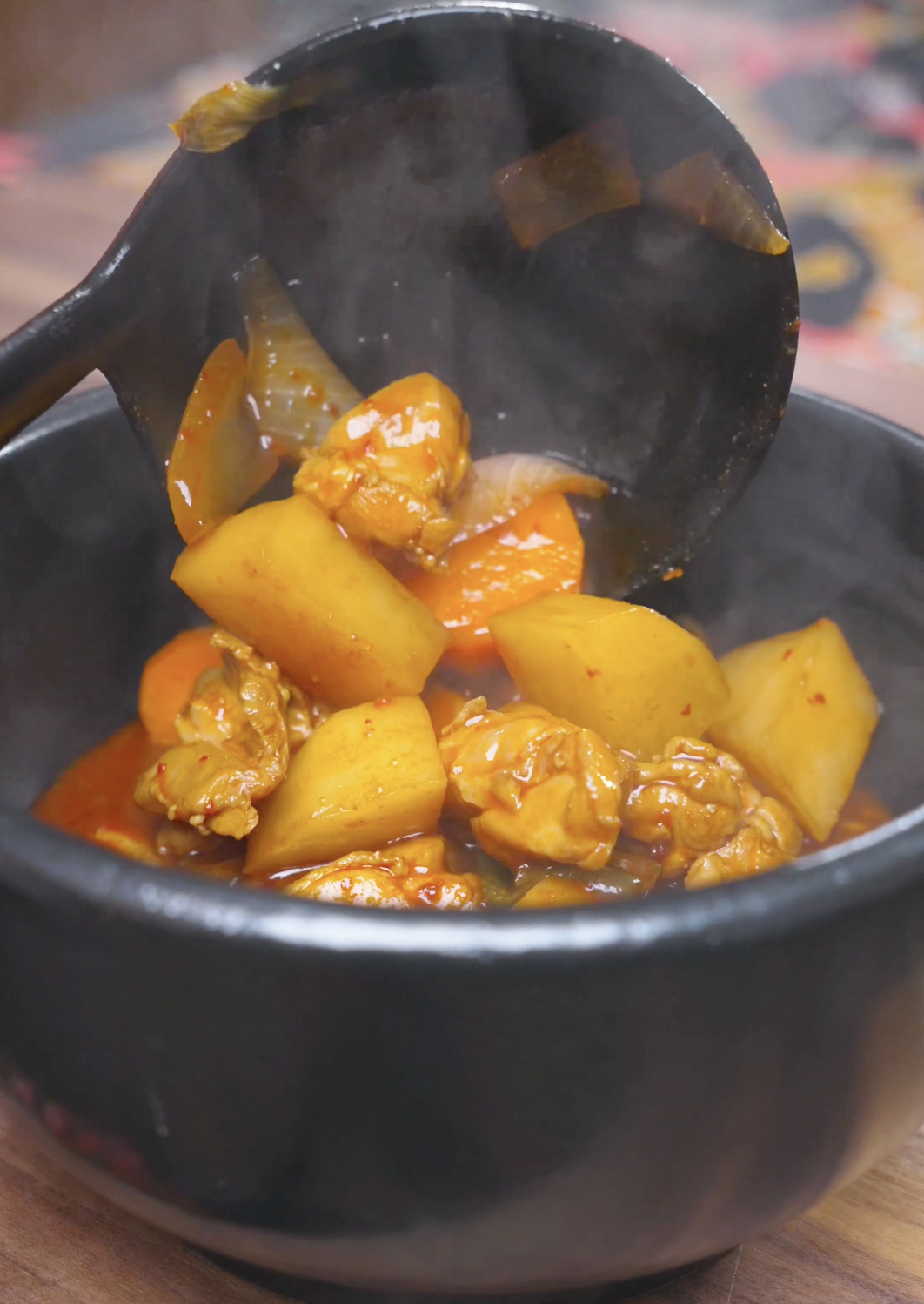
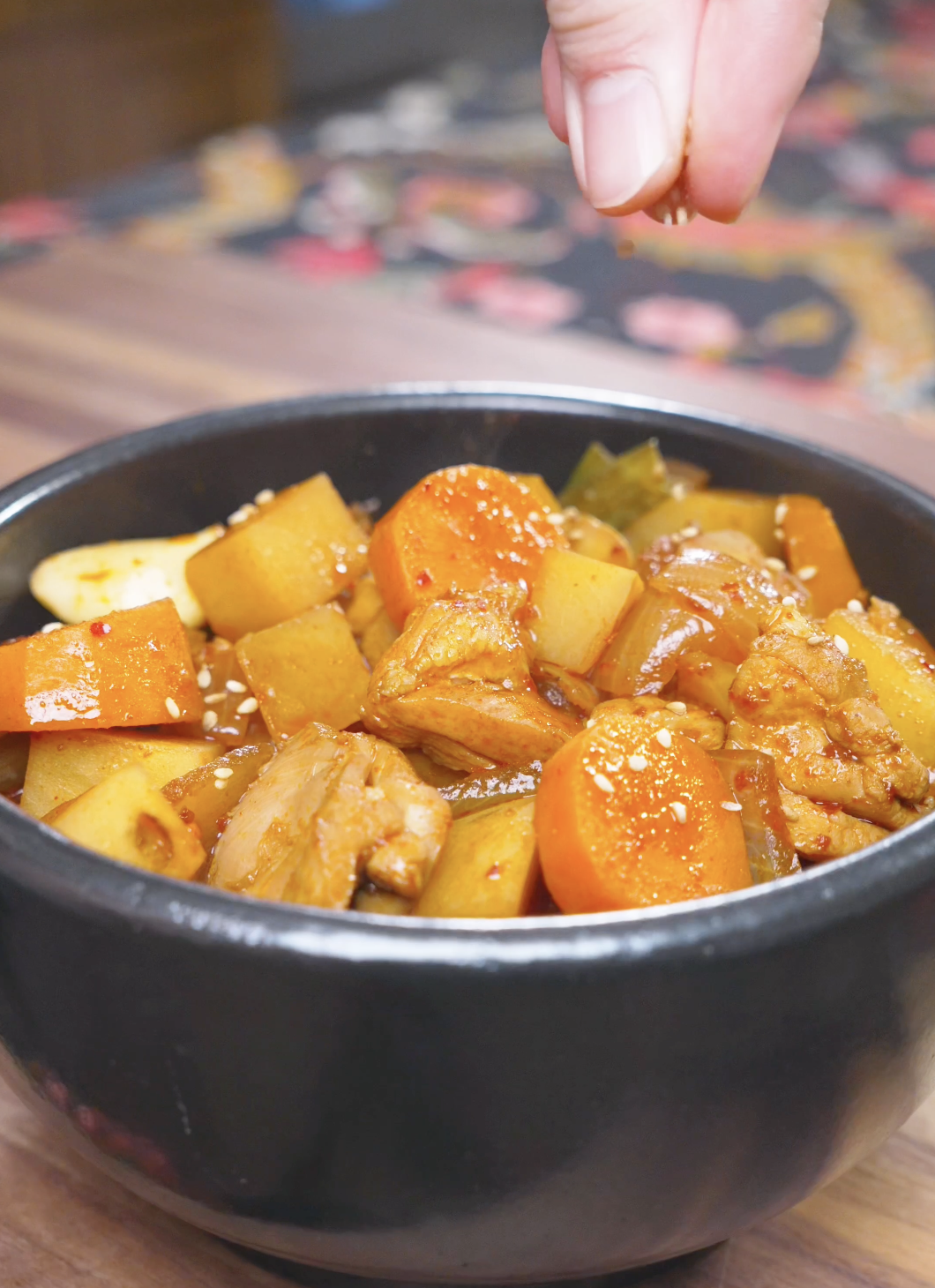
- Spoon the braise into a bowl. Optionally garnish with sesame seeds. But it’s your food, you eat it how you like.
Video
Notes
- Sear for extra flavor. Browning the chicken thighs for a minute or two before braising adds deeper complexity — optional, but worth it.
- Cut potatoes and carrots evenly so they cook at the same rate.
- Don’t rush the braise. Low and slow is what gives you that melt-in-your-mouth texture.
- Make it ahead. This tastes even better the next day once the flavors have melded.
Nutrition
Nutrition information is automatically calculated, so should only be used as an approximation.
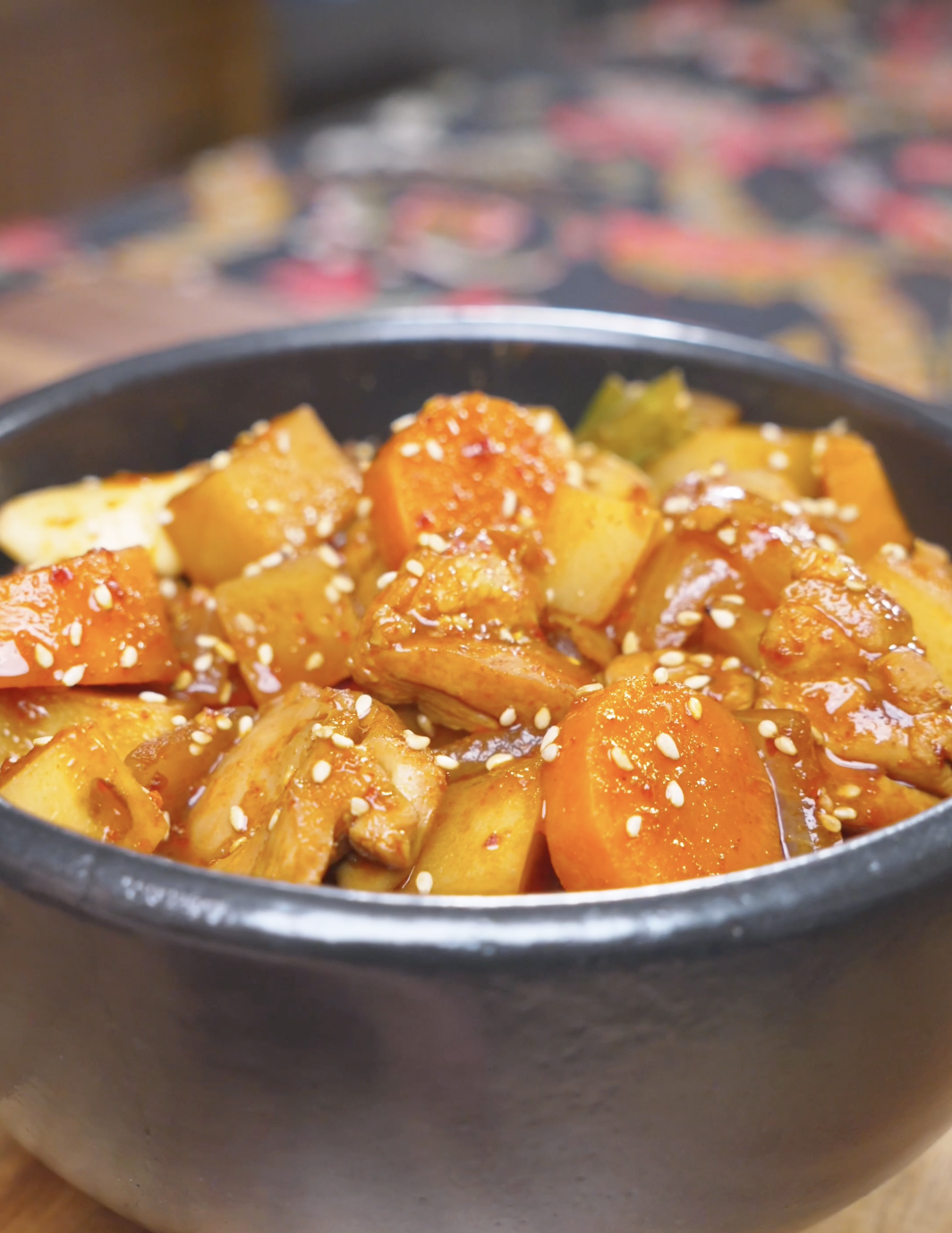
Welcome sweater weather with my Braised Korean Chicken recipe! This Asian-style stew is chock-full of juicy chicken and hearty veggies like potatoes, carrots and onions, all bathed in a spicy, sweet and savory sauce. It’s pure comfort food, perfect for chilly nights. The chicken turns fork-tender as it simmers low and slow, soaking up all the rich, gochujang-spiked flavor while the veggies get soft and silky in the same pot. It’s the kind of meal that makes the whole house smell cozy and leaves everyone asking for seconds. Better yet, it comes together with just 11 simple ingredients in one pot, so clean-up is a snap!
Can’t get enough Korean goodness on your table? I gotchu. Check out my crispy Korean chicken, Korean BBQ chicken, and Korean spicy cold noodles recipes next!
Why You’ll Crave Korean Braised Chicken Thighs
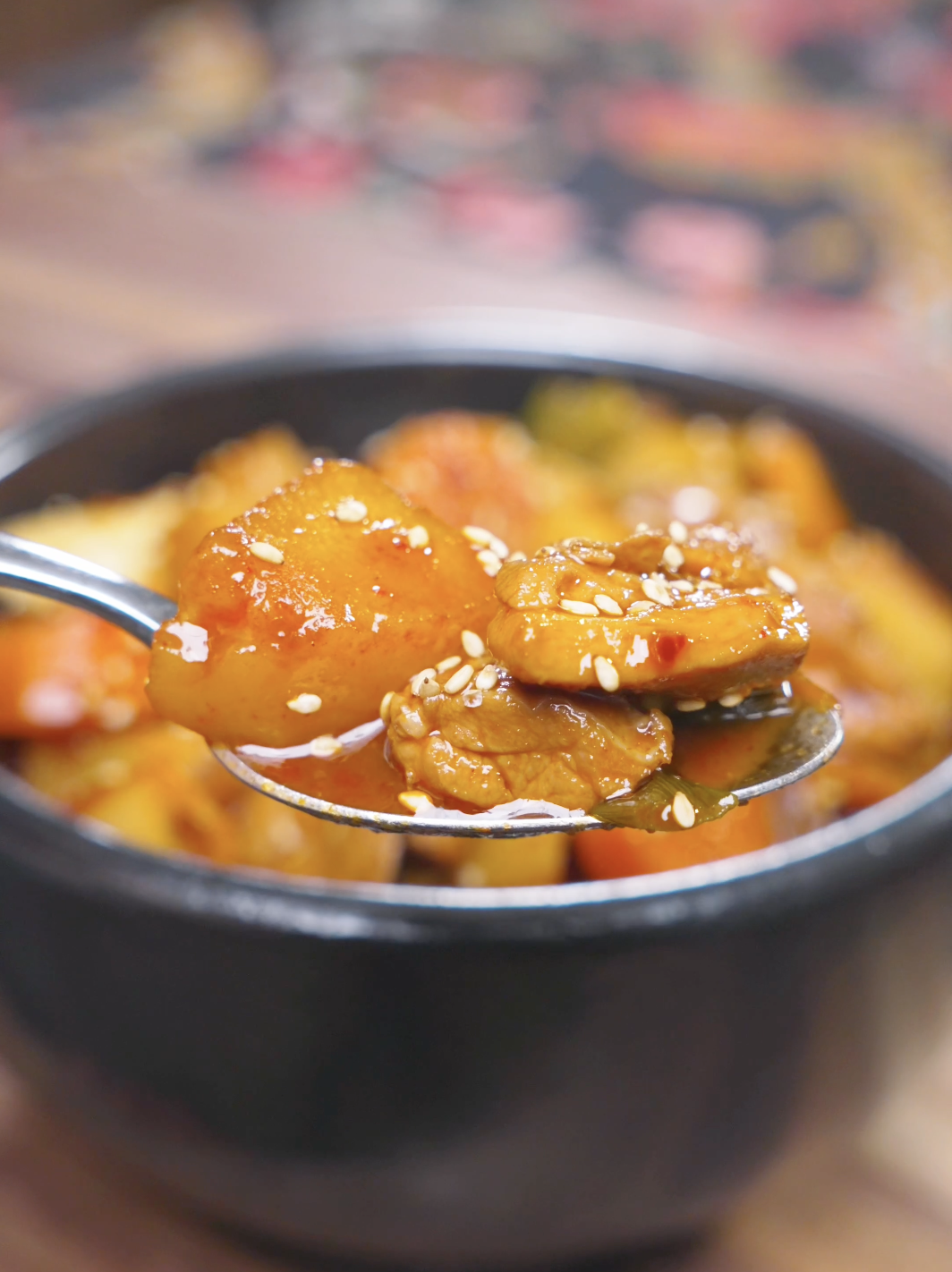
There’s something deeply satisfying about a dish that does all the work for you while delivering big, bold flavor. This braised Korean chicken checks every box. The chicken thighs stay incredibly juicy and tender thanks to a slow braise, while the veggies soak up the savory-sweet sauce until they’re practically melting in your mouth. Gochujang and gochugaru bring a warm, layered heat that’s spicy without being punishing, balanced out by the mellow sweetness of mirin and sugar and rounded out with nutty notes from toasted sesame oil. Every bite is a little different, too. One forkful might be mostly tender chicken, the next a bite of starchy potato or a sweet, softened piece of onion. And because it’s a true one-pot meal, you get serious depth of flavor without a sink full of dishes afterward. Spoon it over a steaming bowl of rice and you’ve got the kind of meal that turns a regular weeknight into something worth looking forward to!
Ingredients & Substitutions
- Boneless Skinless Chicken Thighs — These stay juicy and tender through the braise in a way chicken breast just can’t match. If you only have breasts on hand, they’ll work in a pinch, but keep a close eye on them so they don’t dry out, and expect a slightly shorter cook time.
- Potatoes — Any all-purpose or waxy potato works great here since they hold their shape while soaking up all that saucy goodness. Yukon Golds are my favorite, but red potatoes are a solid stand-in too.
- Carrots — These add a natural sweetness and a nice pop of color to the pot. Parsnips make a fun swap if you want something a little more earthy.
- Onion — Yellow onion is the classic choice for its balanced sweetness, but red or white onion works just as well if that’s what’s in your kitchen.
- Scallions — These bring a fresh, mild oniony bite—plus the dark green tops make for a pretty garnish. If you’re out, a handful of chopped chives sprinkled on top can fill in.
- Water — This forms the base of your braising liquid, so start with filtered water for the best results. Feel free to swap in vegetable stock or chicken broth for an extra layer of savory depth.
For the Sauce
- Gochujang — This fermented Korean chili paste is the heart of the spicy braised chicken sauce, giving it a spicy-sweet depth. There’s really no perfect substitute, but a mix of miso paste and sriracha can get you into the same ballpark.
- Light Soy Sauce — This adds saltiness and umami without darkening the sauce too much. Regular soy sauce works fine too, just start with a little less since it tends to be saltier.
- Mirin — This sweet rice wine rounds out the sauce and balances the heat. In a pinch, sub a bit of rice vinegar mixed with a touch of sugar.
- Gochugaru — These Korean chili flakes bring smoky heat and a beautiful red color. If you can’t find it, a mix of paprika and a pinch of cayenne is your best backup.
- Granulated Sugar — Just a touch to balance out all that spice and salt. Brown sugar or honey work nicely too if you want a slightly deeper sweetness.
- Toasted Sesame Oil — This adds a nutty, aromatic finish that ties the whole sauce together. A little goes a long way!
Optional Garnish
- Sesame Seeds — A simple sprinkle adds a little crunch and visual flair. Totally optional, but always a nice touch.
- Steamed Rice — The perfect vehicle for soaking up all that extra sauce. Feel free to swap in rice noodles or even a crusty piece of bread if that’s more your style.
This is just a short review of the ingredients; for the complete recipe, including quantities, scroll down to the recipe card 👇
The Science of Braising
Braising works its magic through a simple combination of moisture, low heat, and time. Tougher cuts of meat, like chicken thighs, are full of collagen, a connective tissue that starts out firm and chewy. When you simmer the chicken slowly in liquid, that collagen gradually breaks down and converts into gelatin, which is exactly what gives braised meat its signature fall-apart tenderness and helps thicken the sauce along the way. At the same time, the low, steady heat keeps the meat from seizing up and drying out the way it might with a quick sear or roast. The vegetables benefit too, softening gently while absorbing all the savory flavors from the broth instead of just cooking in plain water. Consider it kitchen chemistry that turns humble ingredients into something rich, deeply flavorful, and worth the wait.
Want to try your hand at more braising recipes? I don’t blame you—it’s the perfect method for cold-weather cooking. Check out my coca cola braised chicken, soy braised pork belly and ginger braised chicken next!
How to Make Braised Korean Chicken
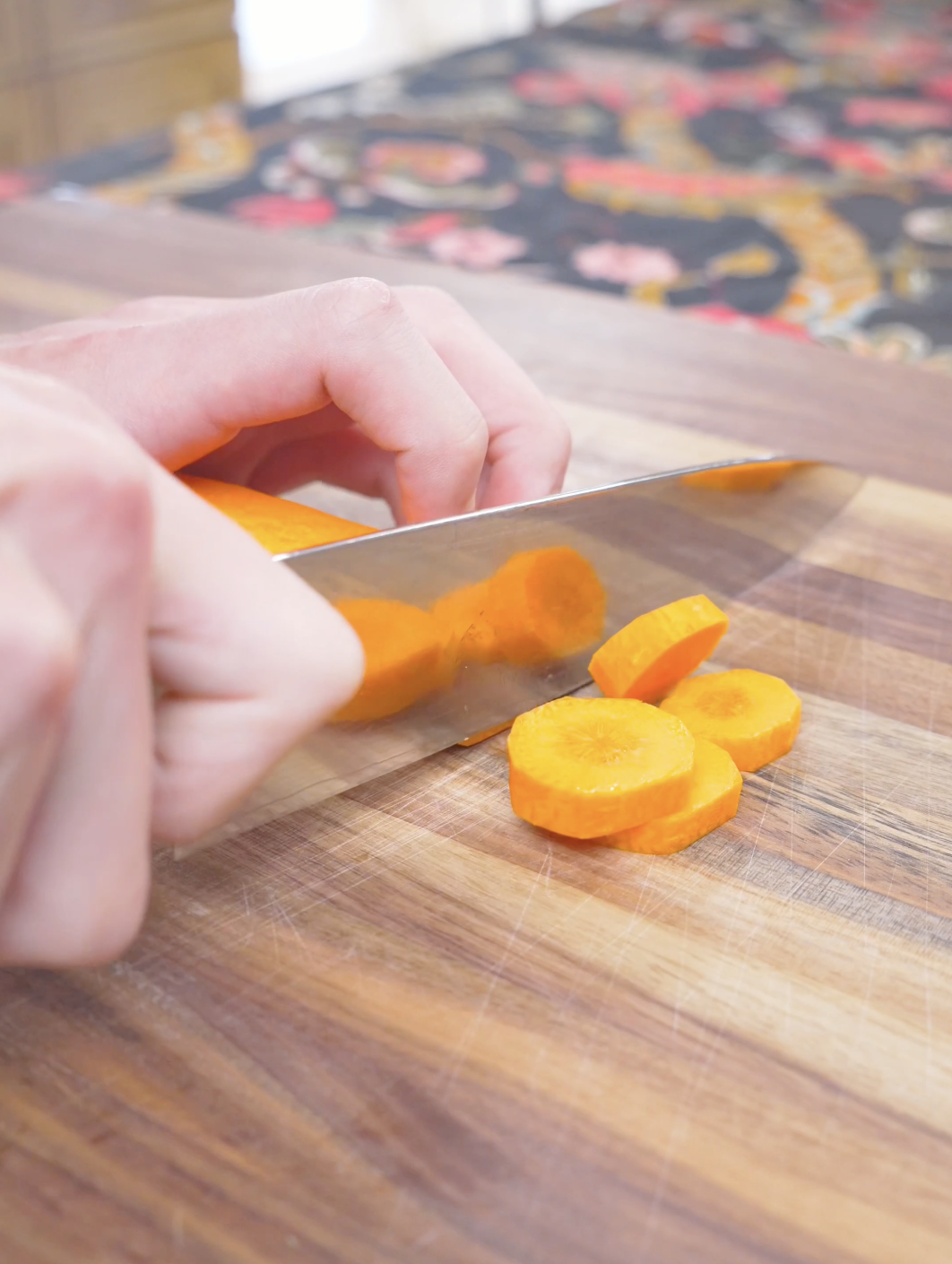
Cut the carrots into thick rounds, the potatoes and onion into big chunks, and the scallions into two-inch pieces, then set them to the side.
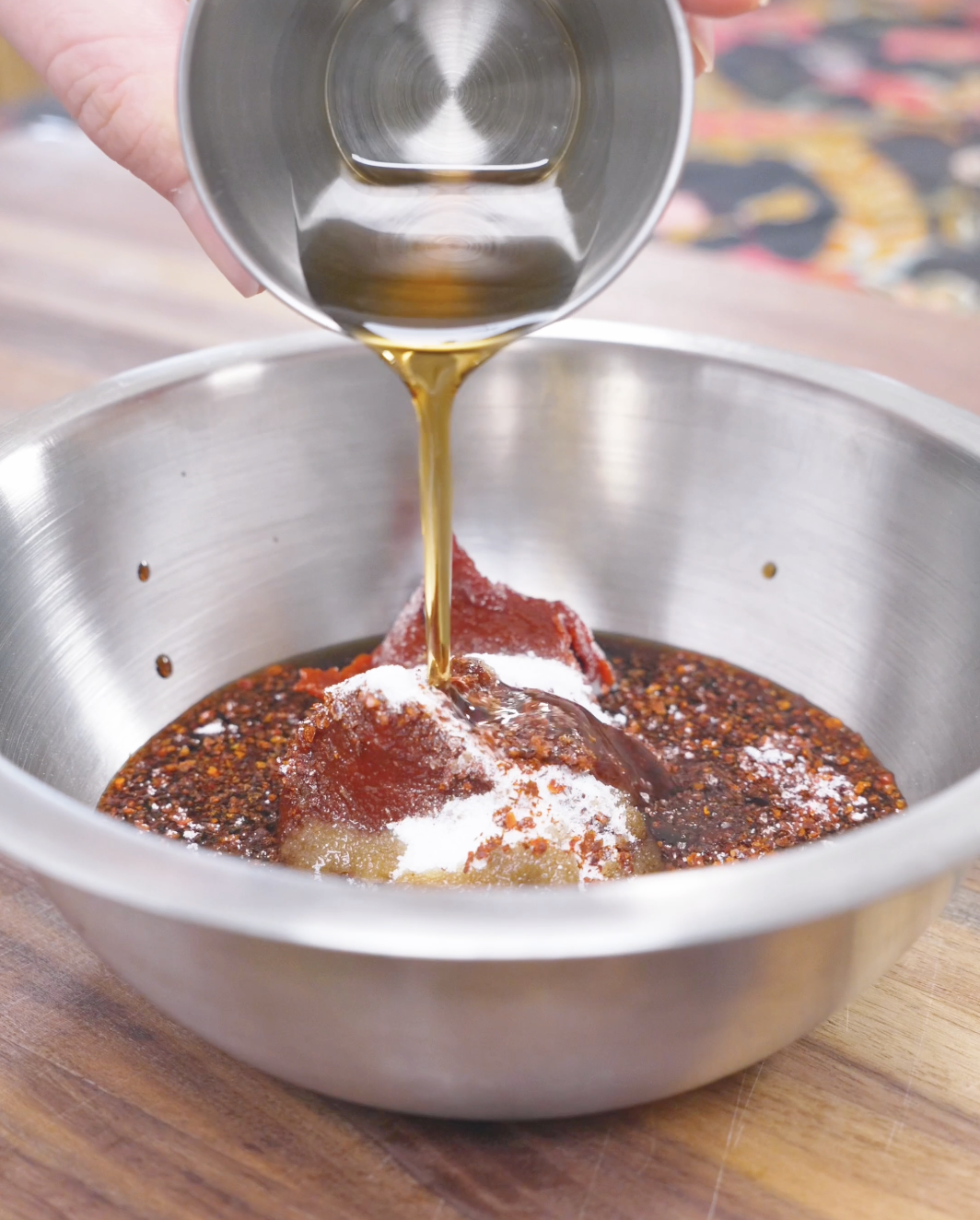
For the sauce, combine the gochujang, light soy sauce, mirin, gochugaru, sugar, and sesame oil, and mix until everything is well incorporated.
Add the sauce to a pot along with the water and bring it up to a simmer.
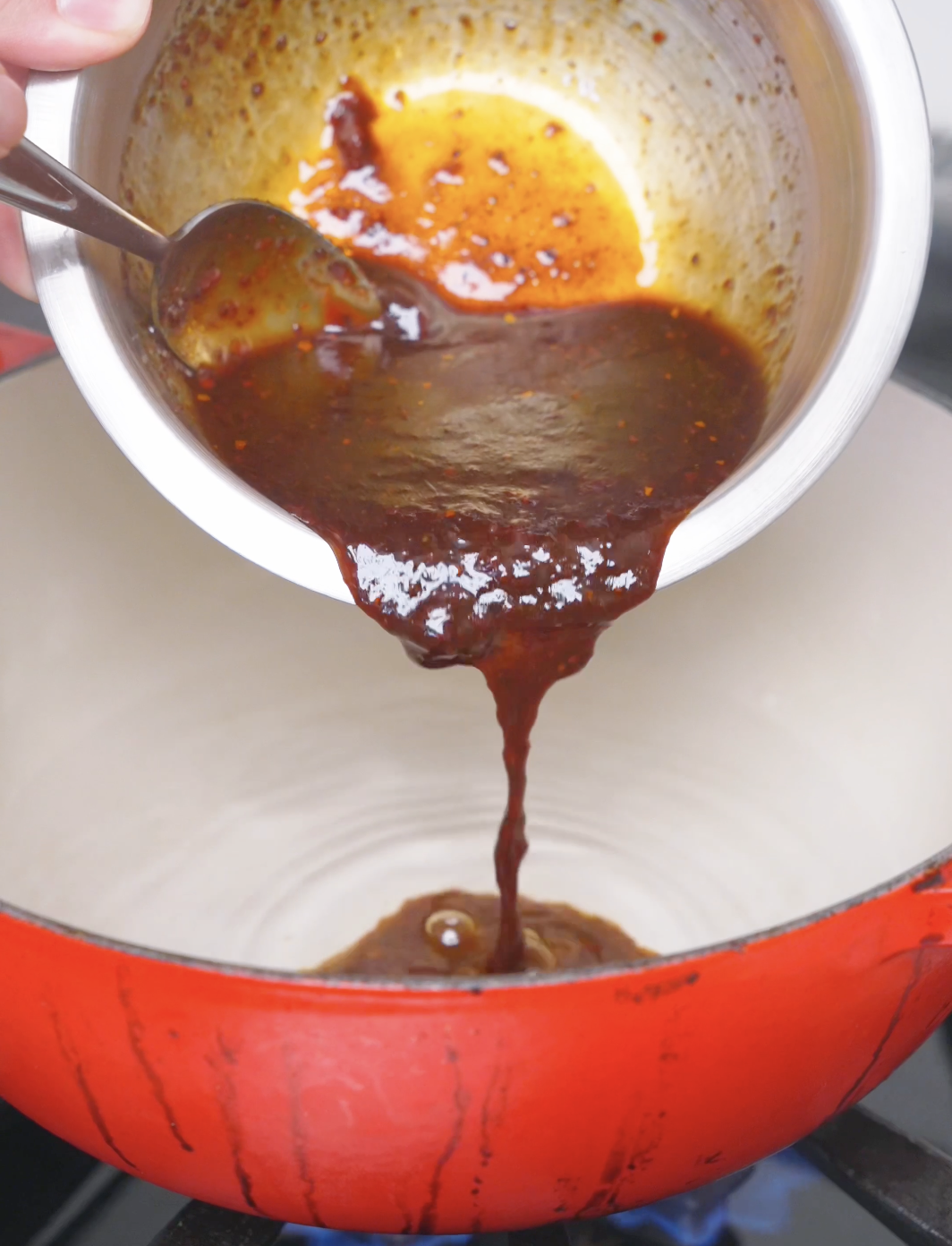
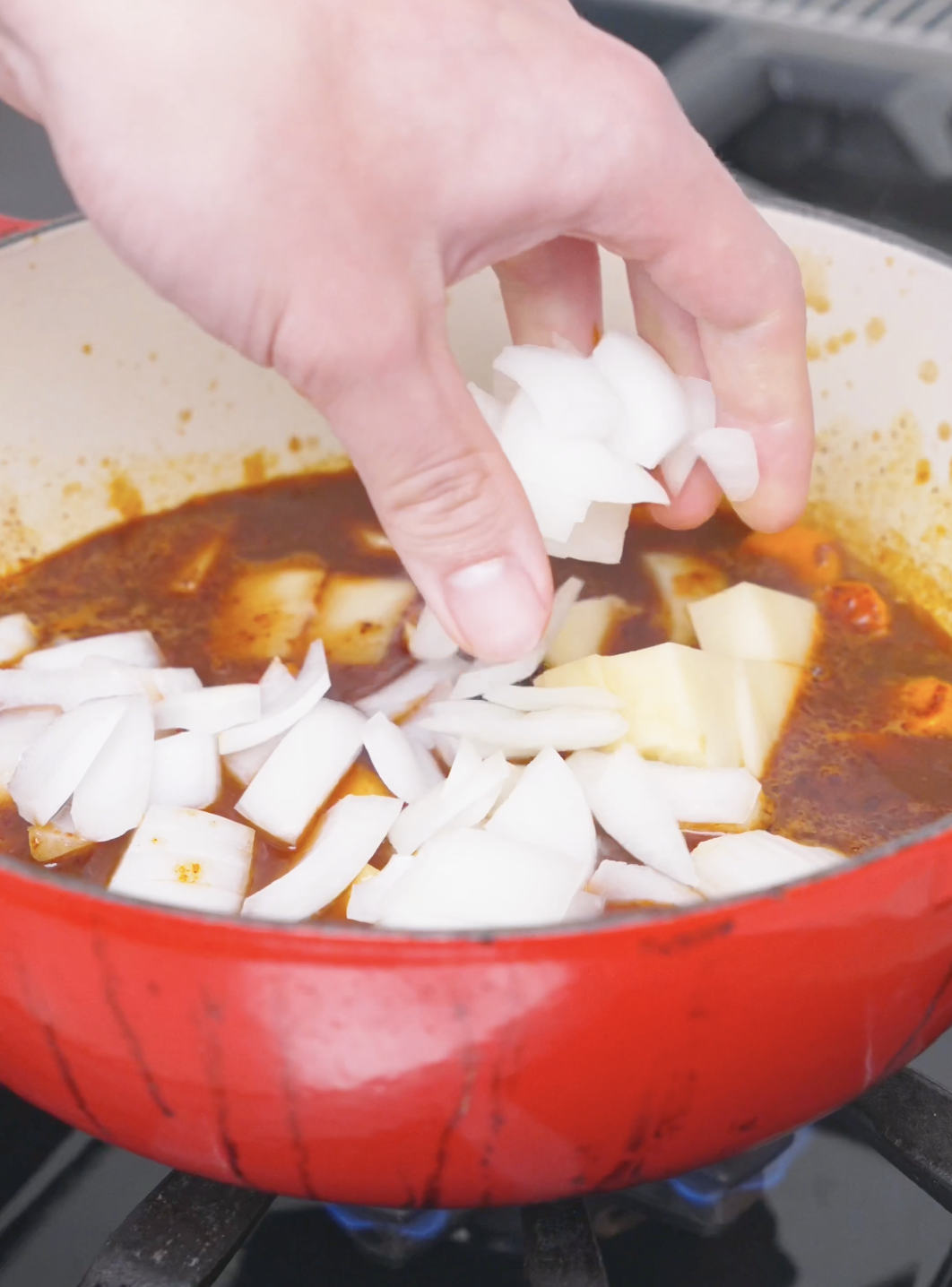
Add the potatoes, carrots, and onions, and let them cook in the broth for a few minutes.
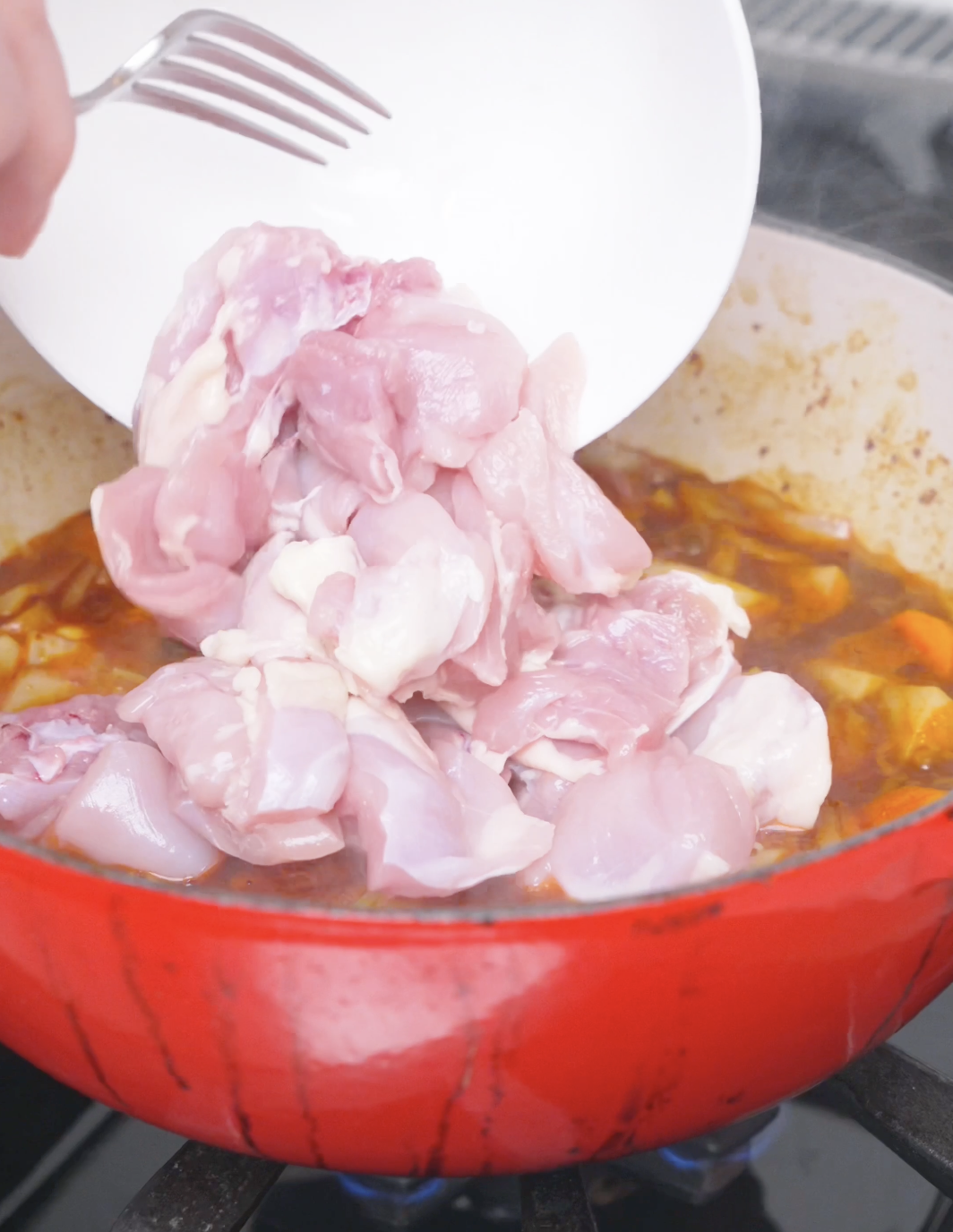
Add the chicken thighs, cover the pot, and let everything braise until the potatoes are tender and the chicken is cooked through, about 20 to 25 minutes.
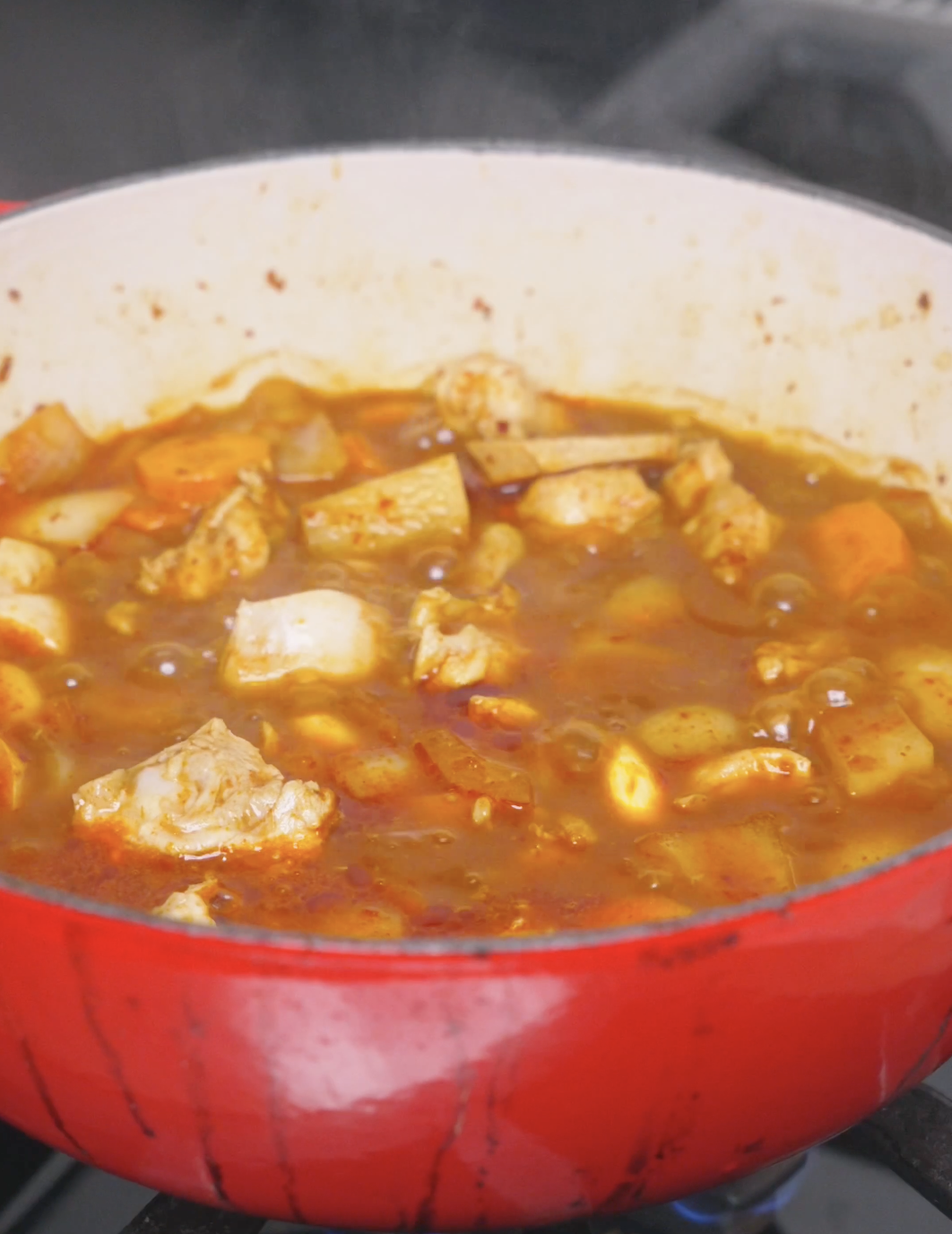
Add the scallions and give everything one last stir while the sauce reduces slightly.
Spoon the braise into a bowl. Optionally garnish with sesame seeds. But it’s your food, you eat it how you like.
More of a visual learner? Check out my video recipe below. 👇
Optional Variations & Dietary Adaptations
This Korean spicy braised chicken recipe is super adaptable depending on your dietary needs and preferences:
- Make it Gluten-Free — Simply swap the light soy sauce for tamari or a gluten-free soy sauce alternative like Bragg’s liquid aminos or coconut aminos, and double check your gochujang label since some brands sneak in wheat.
- Make it Vegetarian or Vegan — Skip the chicken thighs and make Korean braised potatoes and veggies instead, adding in mushrooms, cauliflower, and extra spuds. Swap the water for vegetable broth to keep the savory depth going.
- Add More Veggies — Feel free to bulk this up with whatever you’ve got on hand. Zucchini, bell peppers, baby bok choy or even a handful of spinach tossed in near the end would all be delicious additions.
- Dial the Spice Up or Down — If you love heat, add an extra spoonful of gochujang or a pinch more gochugaru. If you’re cooking for spice-sensitive eaters, cut back on both and lean a little more on the sugar and sesame oil for balance.
- Swap the Protein — Chicken drumsticks or bone-in thighs work beautifully here too, just plan for a slightly longer braise time. Boneless pork shoulder (also known as pork butt or Boston butt), cut into chunks, is another great option if you want to switch things up.
- Low-Sodium Option — Use low-sodium soy sauce and cut back slightly on the gochujang, which also carries a good amount of salt.
Expert Tips & Tricks
- Sear for Extra Flavor — While this Korean braised chicken recipe keeps things simple, browning the chicken thighs in a hot pan for a minute or two before braising adds a deeper, more complex flavor thanks to the Maillard reaction. It’s an optional step, but worth it if you have a few extra minutes.
- Cut Potatoes and Carrots Evenly — Try to keep your potato and carrot pieces roughly the same size so they cook at the same rate. Uneven pieces mean some will turn mushy while others stay firm.
- Don’t Rush the Braise — Low and slow really is the name of the game here. Cranking up the heat to speed things along will give you tougher chicken and undercooked veggies instead of that melt-in-your-mouth texture you’re after.
- Taste and Adjust the Sauce — Every gochujang brand varies slightly in spice and sweetness, so give your sauce a taste before adding it in and adjust the sugar or gochugaru as needed.
- Let It Rest — Give the dish a few minutes to sit off the heat before serving. This lets the sauce thicken slightly and the flavors settle in even more.
- Make It Ahead — This dish actually tastes even better the next day once the flavors have had time to meld. Make it a day ahead and just reheat gently on the stove before serving.
- Save the Leftover Sauce — If you end up with extra sauce in the pot, don’t let it go to waste. Spoon it over rice or noodles for an easy, flavor-packed meal the next day.
Serving Suggestions
This Korean braised chicken is hearty enough to be the star of the show, but it plays nicely with others. Ladle it generously over a bowl of steamed rice to soak up every drop of that sweet and spicy sauce, or go all out and serve it alongside Korean corn cheese for a creamy, savory contrast.
If you’re feeding a crowd or just want a little extra starch on the table, Korean garlic cheese bread is perfect for scooping up leftover sauce once the chicken and veggies are gone. For a cooler contrast to the warm, spicy braise, Korean spicy cold noodles bring a refreshing, chewy bite that balances out the richness beautifully.
If you’re looking to turn this into more of a noodle or rice-forward spread, both chili oil butter fried rice and soy butter noodles make excellent companions, adding another layer of buttery, umami-packed flavor to the table.
And of course, no meal is complete without something sweet to finish things off. A batch of fudgy oreo brownies or classic brown butter chocolate chip cookies is the perfect way to end on a high note after all that savory, spicy goodness. Don’t forget a glass of milk on the side for dunking!
Storage & Reheating
- Refrigerator — Store any leftover braised Korean chicken in an airtight container in the fridge for up to 4 days. The flavors actually deepen overnight, so this dish makes for excellent leftovers.
- Freezer — This recipe freezes well too. Transfer cooled chicken and sauce to a freezer-safe container or bag, and freeze for up to 3 months. For best texture, freeze the chicken and sauce separately from the potatoes, as potatoes can turn a bit grainy after being frozen and thawed.
- Thawing — If frozen, move the container to the fridge the night before you plan to eat it and let it thaw slowly overnight.
- Reheating on the Stove — This is the best method for keeping the spicy braised chicken tender. Add the chicken, veggies, and sauce to a pot over medium-low heat, and stir occasionally until warmed through, about 8 to 10 minutes. Add a splash of water if the sauce has thickened too much in the fridge.
- Reheating in the Microwave — For a quicker option, transfer a portion to a microwave-safe dish, cover loosely, and heat in 1-minute intervals, stirring in between, until heated through.
- Avoid Overheating — Try not to microwave or simmer the chicken for too long when reheating, as this can dry it out. Gentle, even heat is all you need since everything is already fully cooked.
FAQs
What is Korean braised chicken?
Korean braised chicken (called dak-jjim or dak-doritang depending on the version) is a comforting dish made by simmering chicken pieces low and slow in a savory-sweet sauce (dak-jjim, which is what we’re making here) or a spicier one (dak-doritang). It’s built on a soy-based braising liquid rounded out with garlic, ginger, and just enough gochujang for warmth and depth, along with hearty vegetables like potatoes and carrots. The long braise tenderizes the chicken while the sauce reduces and thickens, coating everything in deep, rich flavor.
How is braised chicken cooked?
Braised chicken is cooked using a two-step, low-and-slow method: first, the chicken is seared in a hot pot to build flavor and color, then it’s simmered gently in a seasoned liquid—like the soy-based gochujang sauce we use here—with the lid on for an extended period. This slow, moist heat breaks down the connective tissue in the chicken, making it fall-apart tender while the sauce reduces and thickens around it and the vegetables.
More Korean Recipes
Craving more Korean food? Try my Crispy Korean Chicken, Korean BBQ Chicken, or Korean Spicy Cold Noodles!