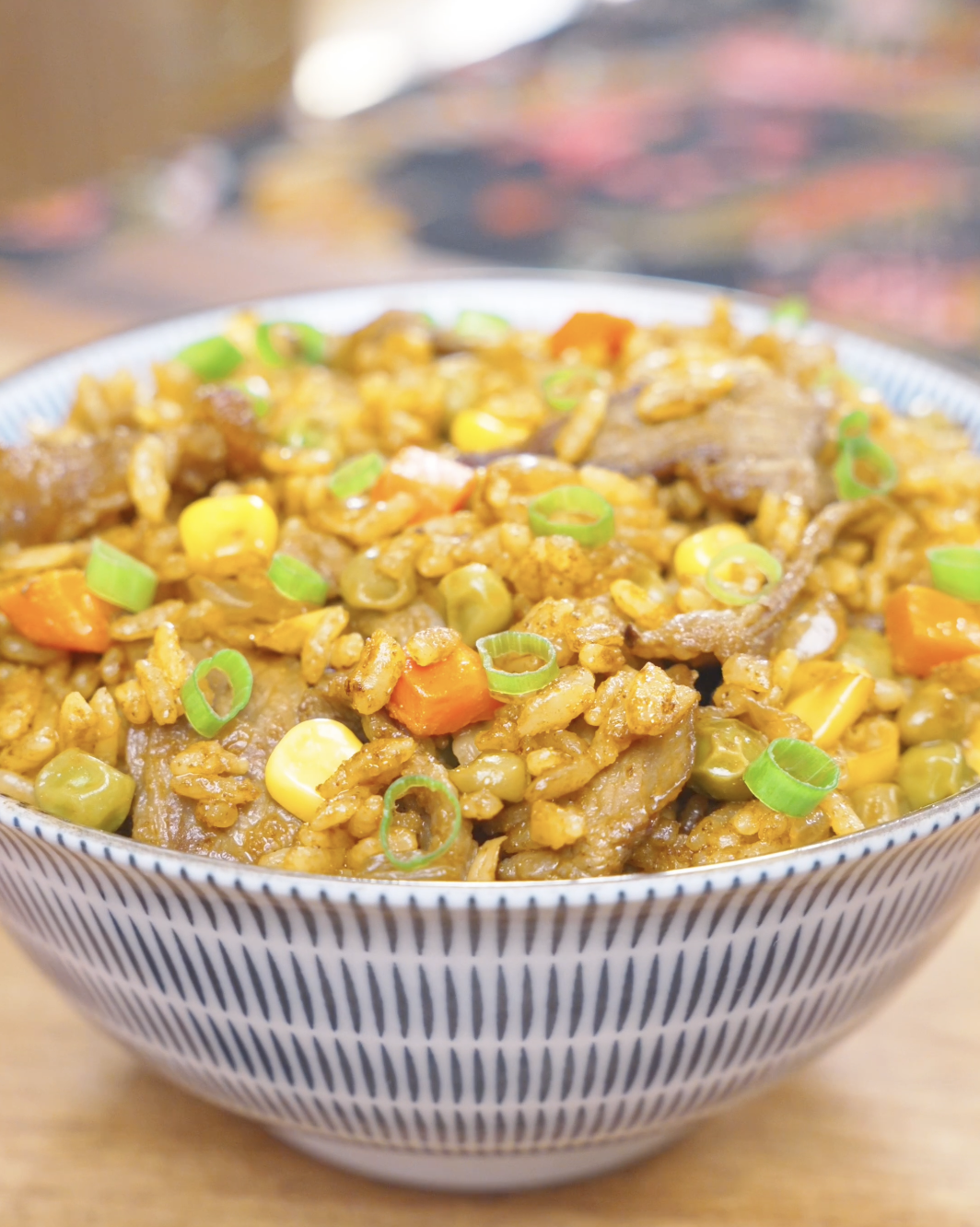
Curry Fried Rice Recipe
Equipment
Ingredients
- 8 oz thinly sliced beef
- 2 cups day-old cooked rice
- Neutral oil, for cooking
- 1/2 onion, finely diced
- 1 cup frozen mixed vegetables
- 3 cloves garlic, minced
- 1 tbsp grated ginger
For the Sauce
- 2 tbsp light soy sauce
- 1 tbsp Worcestershire sauce
- 1 tbsp curry powder
- 1 tsp sugar
- 2 tbsp ketchup
Optional Garnish
- Scallions
Instructions
- Finely dice the onion and set it aside. Have the frozen mixed vegetables and day-old rice ready to go.
- Heat a pan over medium-high heat with a bit of oil. Add the thinly sliced beef and cook until about 80% of the way through, then remove it from the pan and set aside.
- In the same pan, add the onion, garlic, and ginger and stir until fragrant. Add the mixed vegetables and cook until the moisture has evaporated.
- Return the beef to the pan along with the day-old rice, then add the light soy sauce, Worcestershire sauce, curry powder, sugar, and ketchup. Mix until the sauce has soaked into the rice grains and everything is evenly coated, then remove from the heat.
- Transfer to a bowl and optionally garnish with scallions.
Video
Notes
- Use cold, day-old rice. The grains are drier and separate more easily, giving you that classic fried rice texture instead of a mushy pile.
- Prep everything before you turn on the heat. This comes together fast and there’s no time to chop once the pan gets going.
- Cook the beef in batches if needed. Crowding the pan traps steam and prevents a deep, golden sear.
- Add the sauce last and toss quickly so the sugar doesn’t over-caramelize or burn.
Nutrition
Nutrition information is automatically calculated, so should only be used as an approximation.
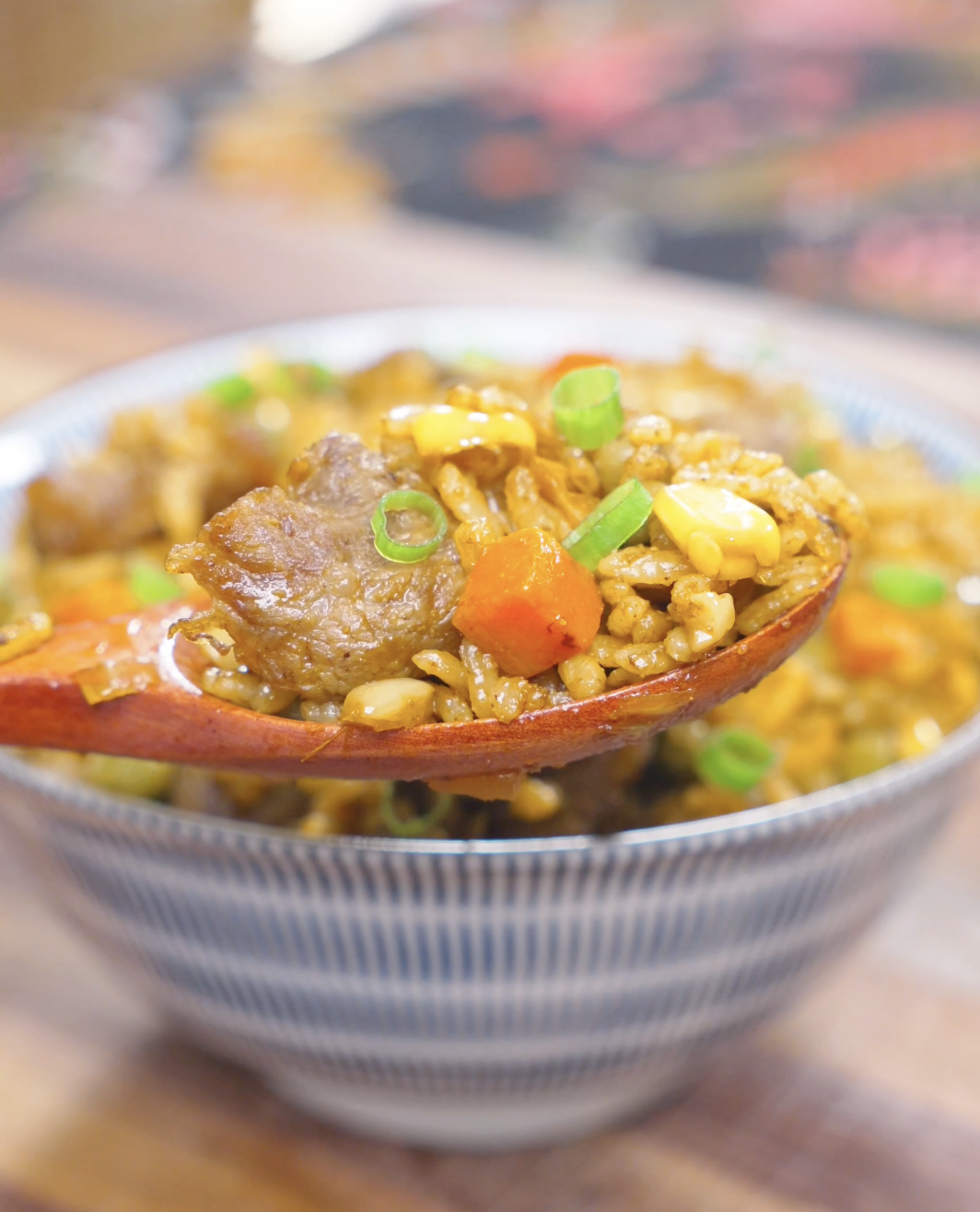
Add a little fusion fun to dinnertime with my Curry Fried Rice recipe featuring thin slices of beef, a smattering of colorful veggies, and fluffy rice in a sweet n’ savory, warmly spiced sauce. This one-pan wonder comes together in the time it takes to order takeout, but tastes like it simmered all day. Toasted curry powder and a splash of soy sauce give every bite that irresistible sweet-savory depth, while crisp-tender veggies and juicy beef keep things hearty and satisfying. Whether you’re using up leftover rice or starting from scratch, this dish is endlessly forgiving and endlessly craveable.
Why You’ll Crave Beef Curry Fried Rice
Because it hits every note you want in a weeknight meal—and then some. The beef is seared until deeply browned and tender, soaking up the warm curry spices without ever turning tough or chewy. Each grain of rice gets coated in that glossy, sweet-savory sauce instead of clumping together, so every forkful delivers the same perfect balance of flavor. The veggies stay crisp-tender rather than mushy, adding color, crunch, and freshness that plays off the richness of the curry. And the whole thing comes together in one pan, in less time than delivery would take!
Ingredients & Substitutions
- Thinly Sliced Beef — Sirloin or flank steak works great here since they’re tender when sliced thin against the grain. For easier slicing, pop the beef in the freezer for 15-20 minutes before cutting. No beef on hand? Thinly sliced chicken thigh or pork loin are both great swaps.
- Cooked Rice — Day-old, cold rice is ideal—the grains are drier and separate more easily, giving you that classic fried rice texture instead of a mushy pile. If you only have freshly cooked rice, spread it on a baking sheet to cool and dry out for 15-20 minutes before using.
- Neutral Oil — Vegetable, canola, or avocado oil all work well here since they can handle high heat without smoking or adding competing flavor. Avoid olive oil, as its lower smoke point and stronger taste aren’t the best fit for high-heat stir-frying.
- Onion — Yellow or white onion adds a mild sweetness as it cooks down. Shallots make a nice substitute if you want something a touch more delicate.
- Frozen Mixed Vegetables — A classic peas-carrots-corn blend keeps things simple and colorful, and using frozen means no extra chopping. Feel free to swap in fresh diced veggies (just cook them a bit longer first) or use whatever mix you have in the freezer.
- Garlic — Fresh minced garlic gives the best punch of flavor. In a pinch, ½ teaspoon of garlic powder per clove works as a substitute.
- Fresh Grated Ginger — Adds warmth and a little zing that balances the richness of the sauce. If fresh isn’t available, ½ teaspoon of ground ginger per tablespoon of fresh can work, though the flavor will be milder.
For the Sauce
- Light Soy Sauce — Brings the salty, savory base of the sauce. Regular soy sauce works too, just use slightly less since it’s often a bit stronger. For a gluten-free option, swap in tamari or coconut aminos.
- Worcestershire Sauce — Adds a tangy, umami depth that rounds out the sauce. If you don’t have it, a mix of fish sauce or soy sauce with a splash of rice vinegar makes a decent substitute.
- Curry Powder — The star of the dish. Use your favorite blend—mild, hot, or Japanese-style curry powder all work, just adjust to your spice preference.
- Granulated Sugar — Balances the salty and savory elements with a touch of sweetness. Brown sugar or honey can be swapped in for a slightly deeper flavor.
- Ketchup — Adds sweetness, tang, and a reddish hue to the sauce. Tomato paste mixed with a pinch of sugar can work in a pinch, though it’ll be less tangy.
Optional Garnish
- Scallions — Thinly sliced scallions add a fresh, oniony bite and a pop of color right before serving. Chopped cilantro or a sprinkle of sesame seeds also make great finishing touches.
This is just a short review of the ingredients; for the complete recipe, including quantities, scroll down to the recipe card 👇
How to Cook Rice for Fried Rice
The secret to great fried rice starts with the rice itself. The golden rule is: use cold, day-old rice. Freshly cooked rice is too soft and moist, which causes it to clump and turn mushy the moment it hits the hot pan. Cold rice, on the other hand, has had time to dry out and firm up, so the grains stay separate and get that perfect slightly chewy texture as they fry.
If you’re planning ahead, cook your rice the day before and store it in the fridge, uncovered or loosely covered, so any excess moisture can evaporate. When you’re ready to cook, break up any clumps with your hands or a fork before adding it to the pan.
No day-old rice on hand? No problem! Just cook your rice as usual, then spread it out in a thin layer on a baking sheet and let it cool and air-dry for 15-20 minutes (or pop it in the fridge for a quick chill). This mimics that dried-out texture and helps prevent steaming once it hits the pan.
One more tip: use a touch less water than you normally would when cooking the rice. Slightly firmer, less sticky rice fries up beautifully and soaks up all that curry sauce without turning gummy.
How to Make Yellow Curry Fried Rice
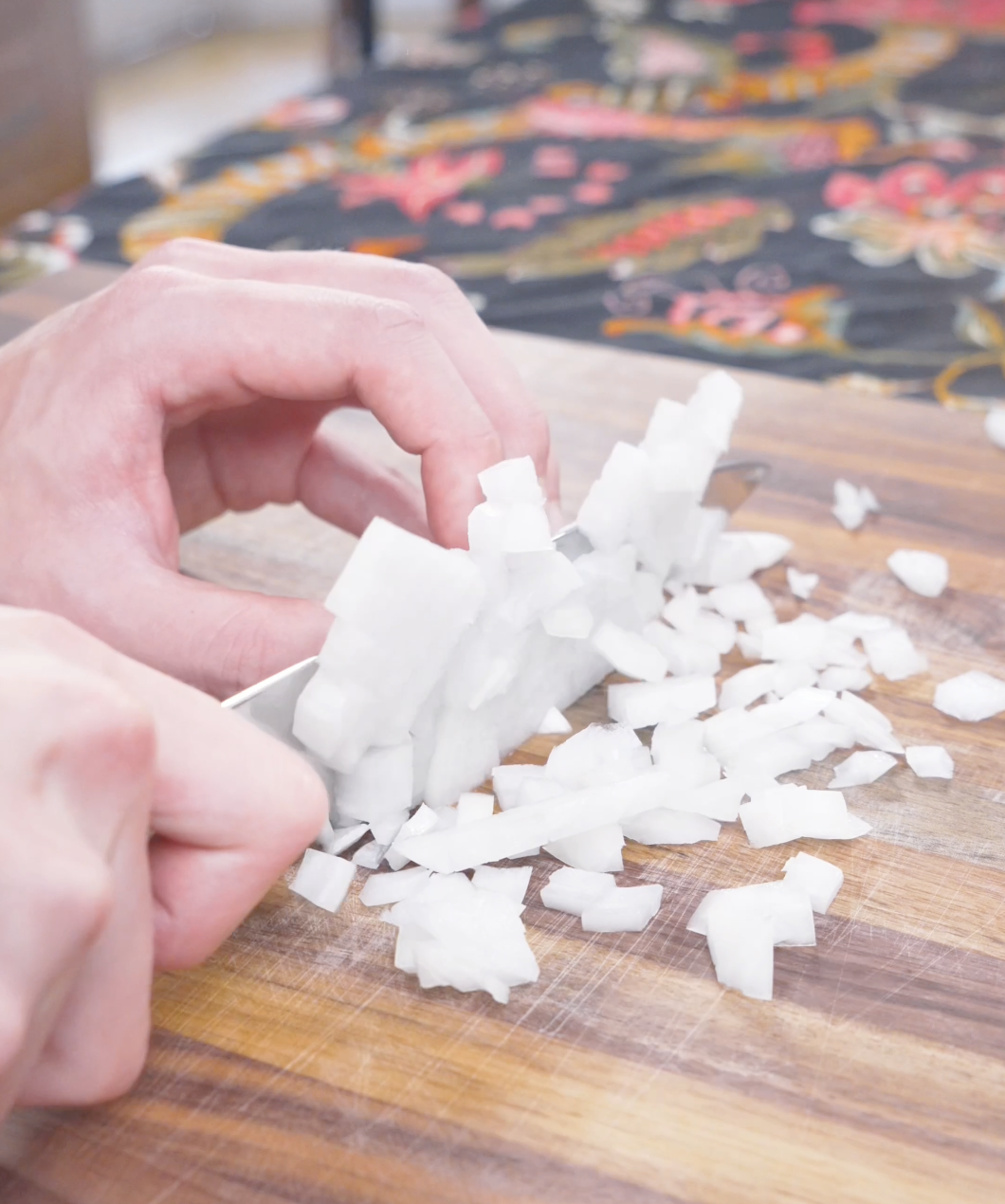
Finely dice the onion and set it aside. Have the frozen mixed vegetables and day-old rice ready to go.
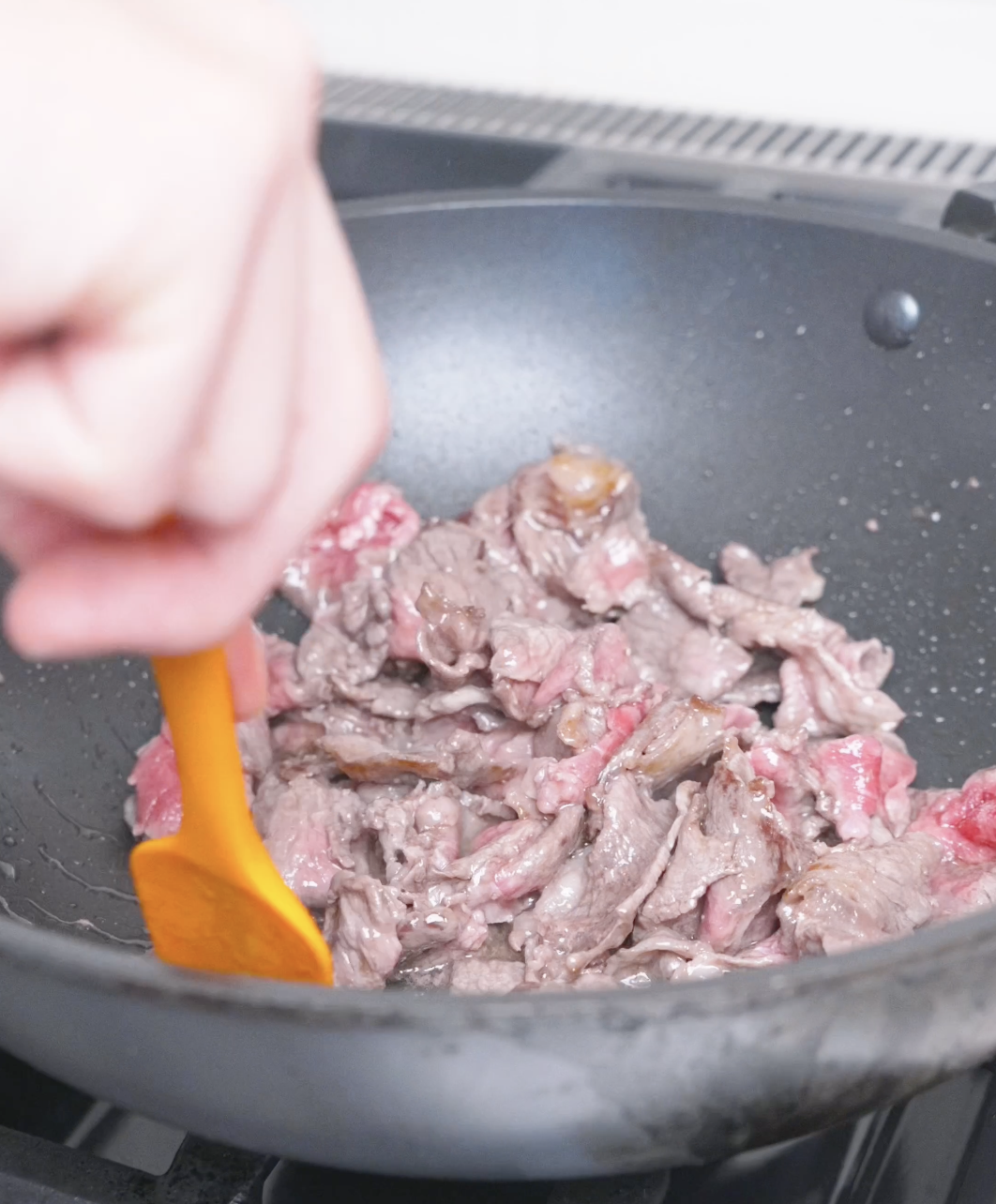
Heat a pan over medium-high heat with a bit of oil. Add the thinly sliced beef and cook until about 80% of the way through, then remove it from the pan and set aside.
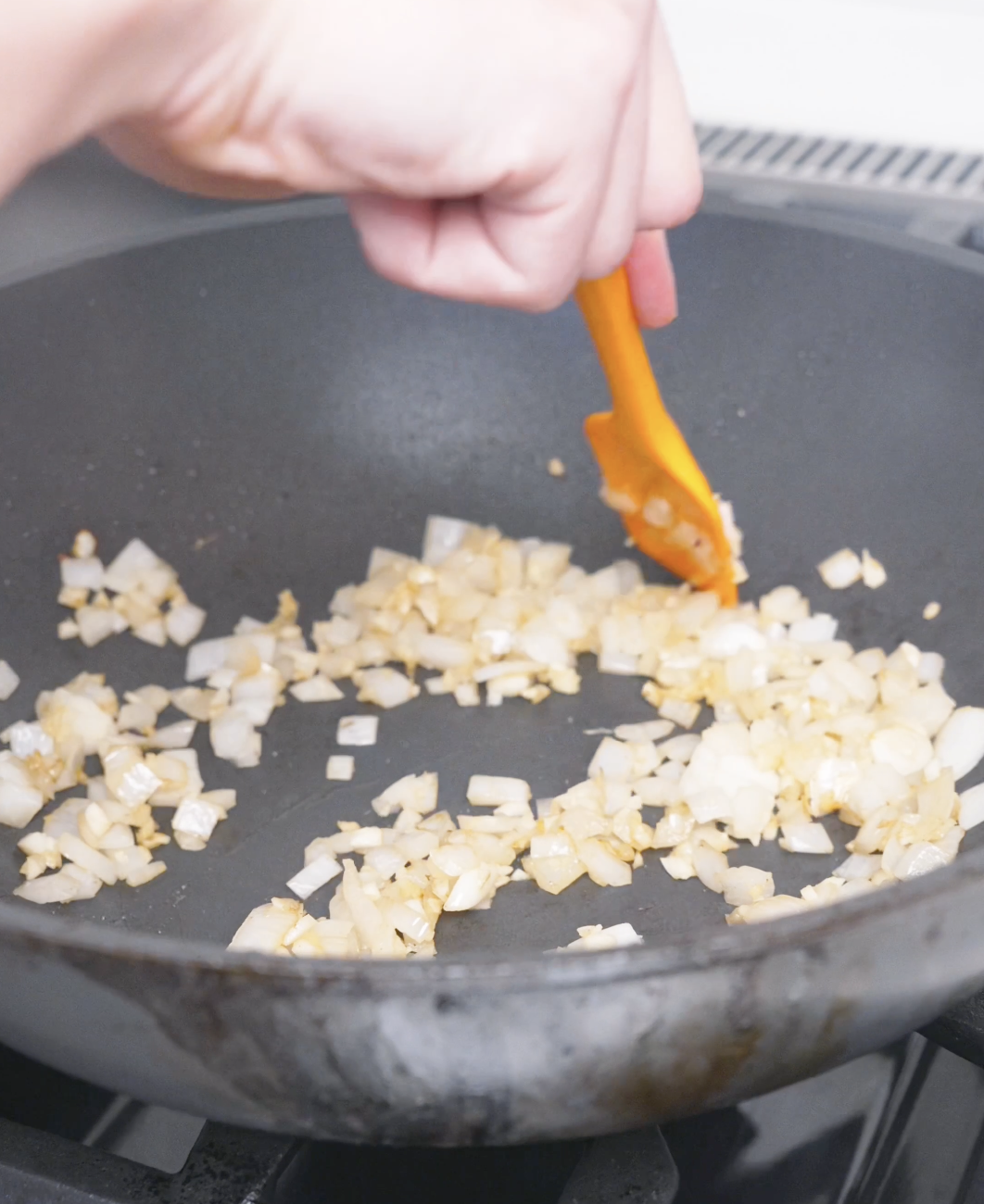
In the same pan, add the onion, garlic, and ginger and stir until fragrant. Add the mixed vegetables and cook until the moisture has evaporated.
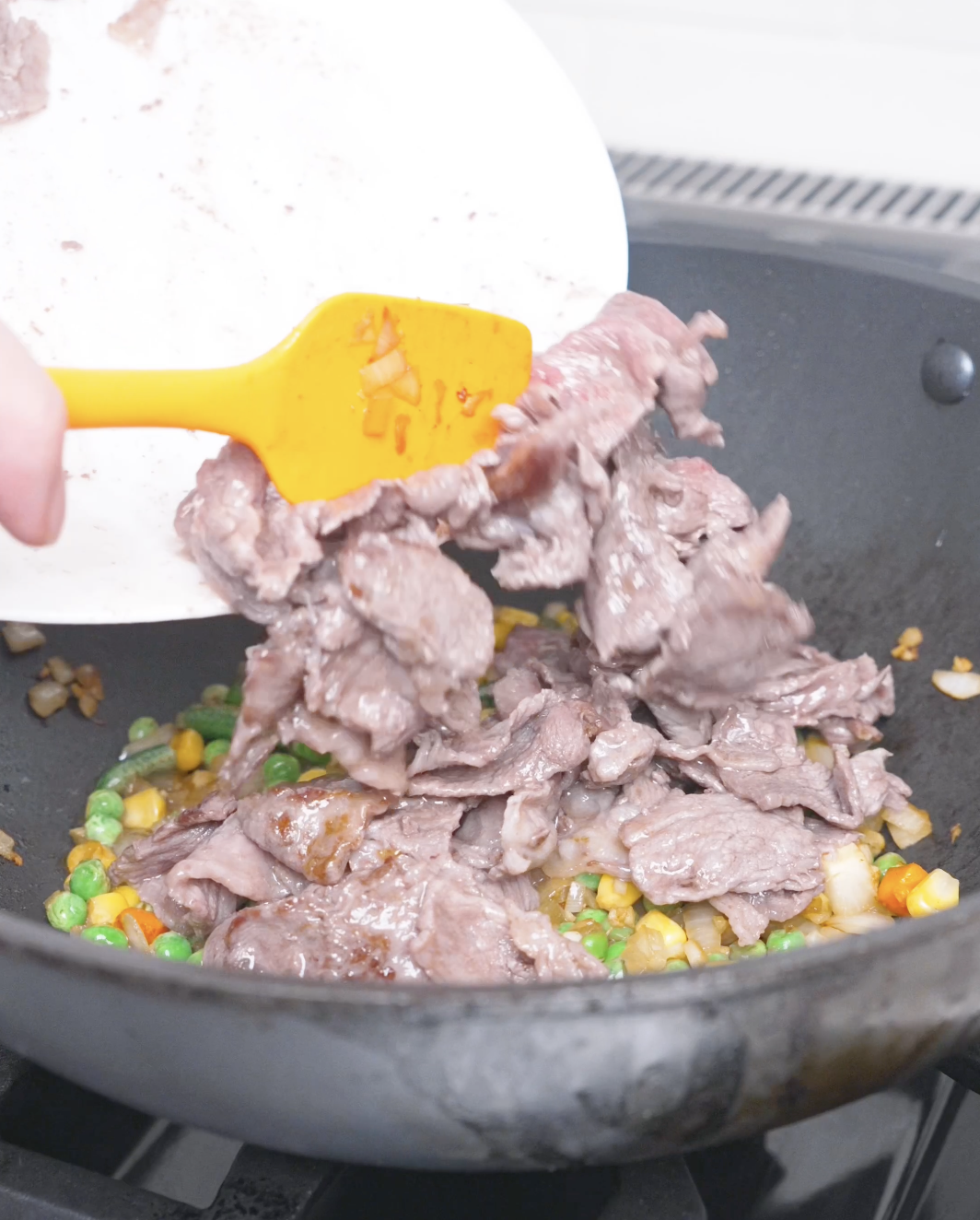
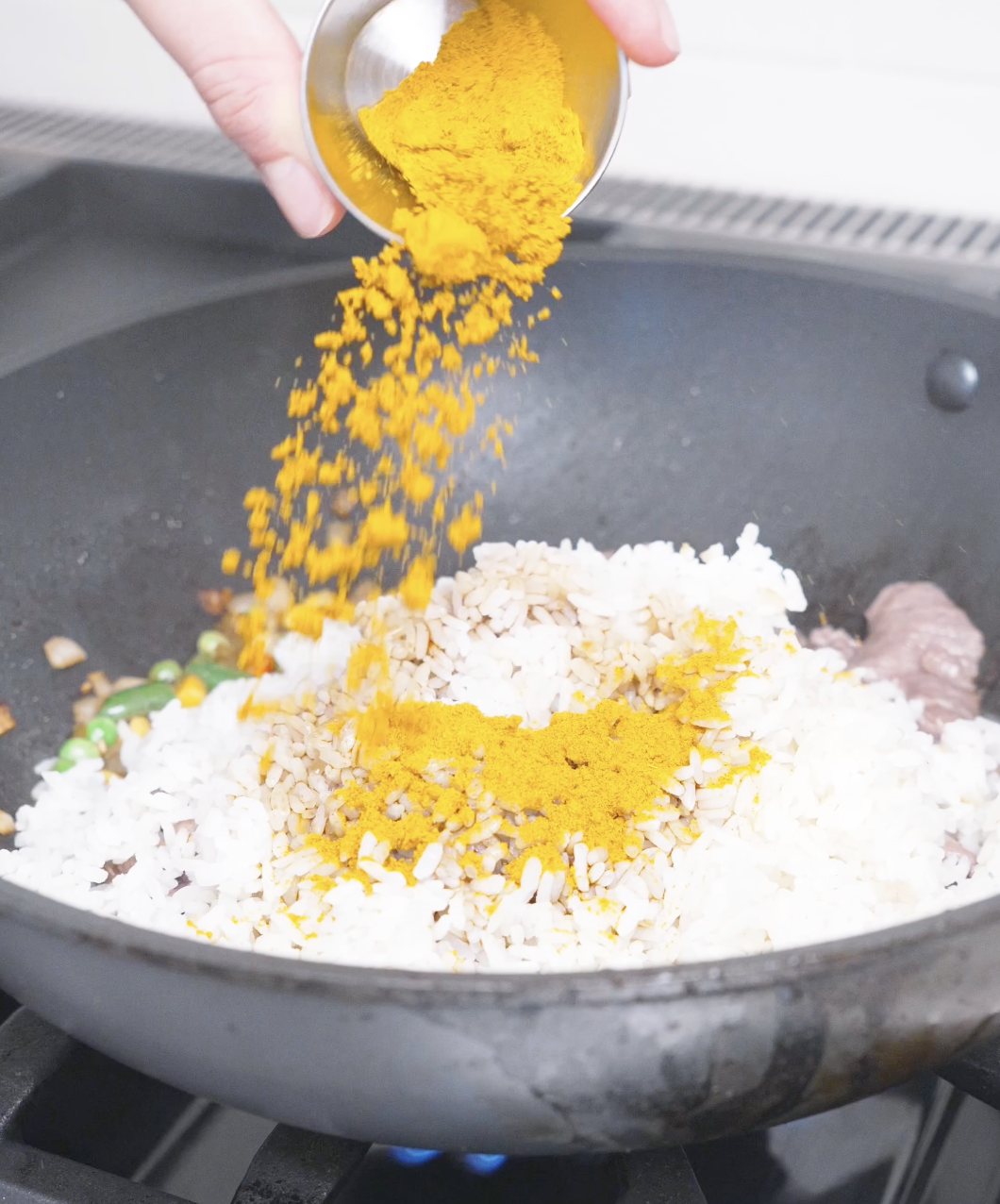
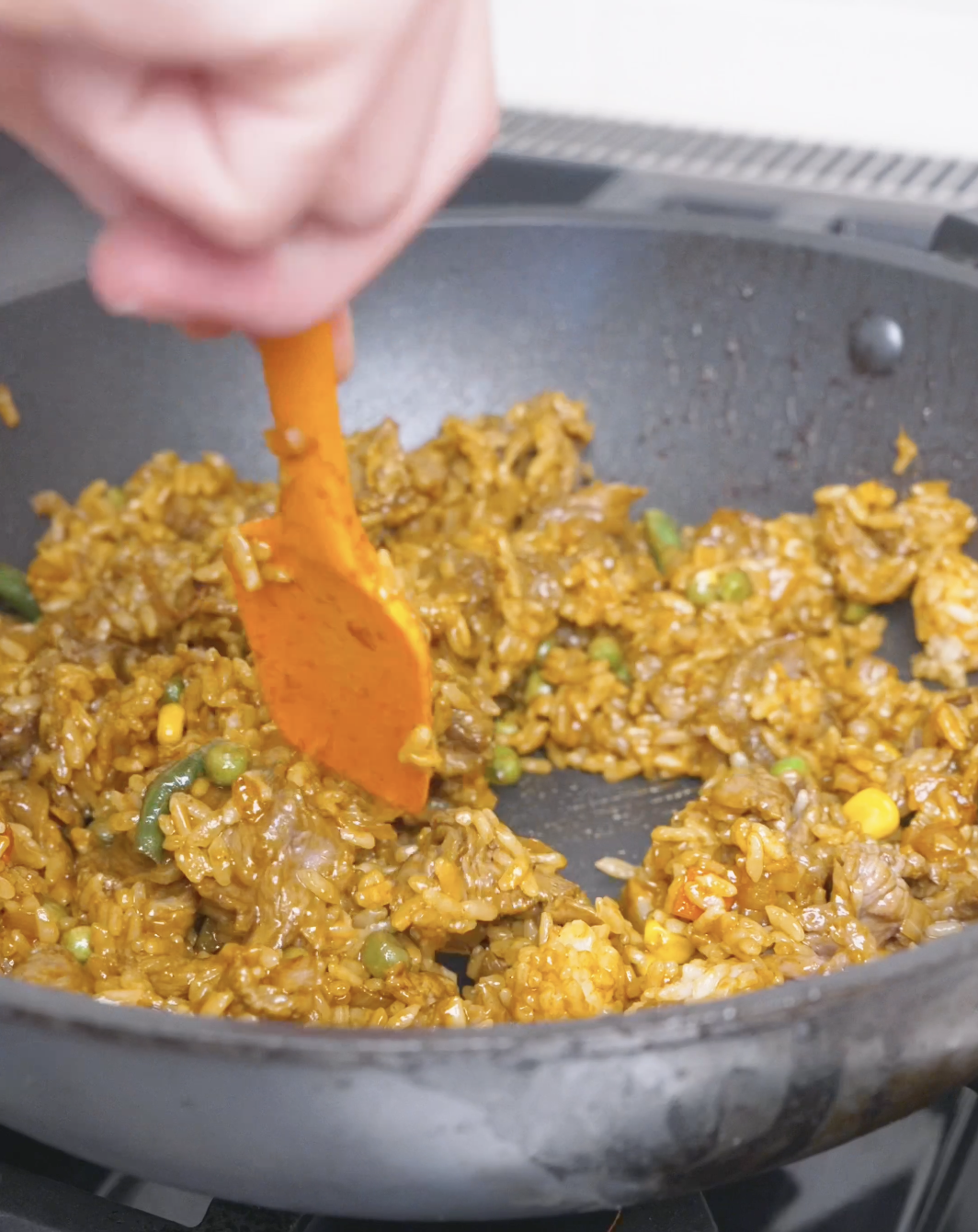
Return the beef to the pan along with the day-old rice, then add the light soy sauce, Worcestershire sauce, curry powder, sugar, and ketchup. Mix until the sauce has soaked into the rice grains and everything is evenly coated, then remove from the heat.
Transfer to a bowl and optionally garnish with scallions.
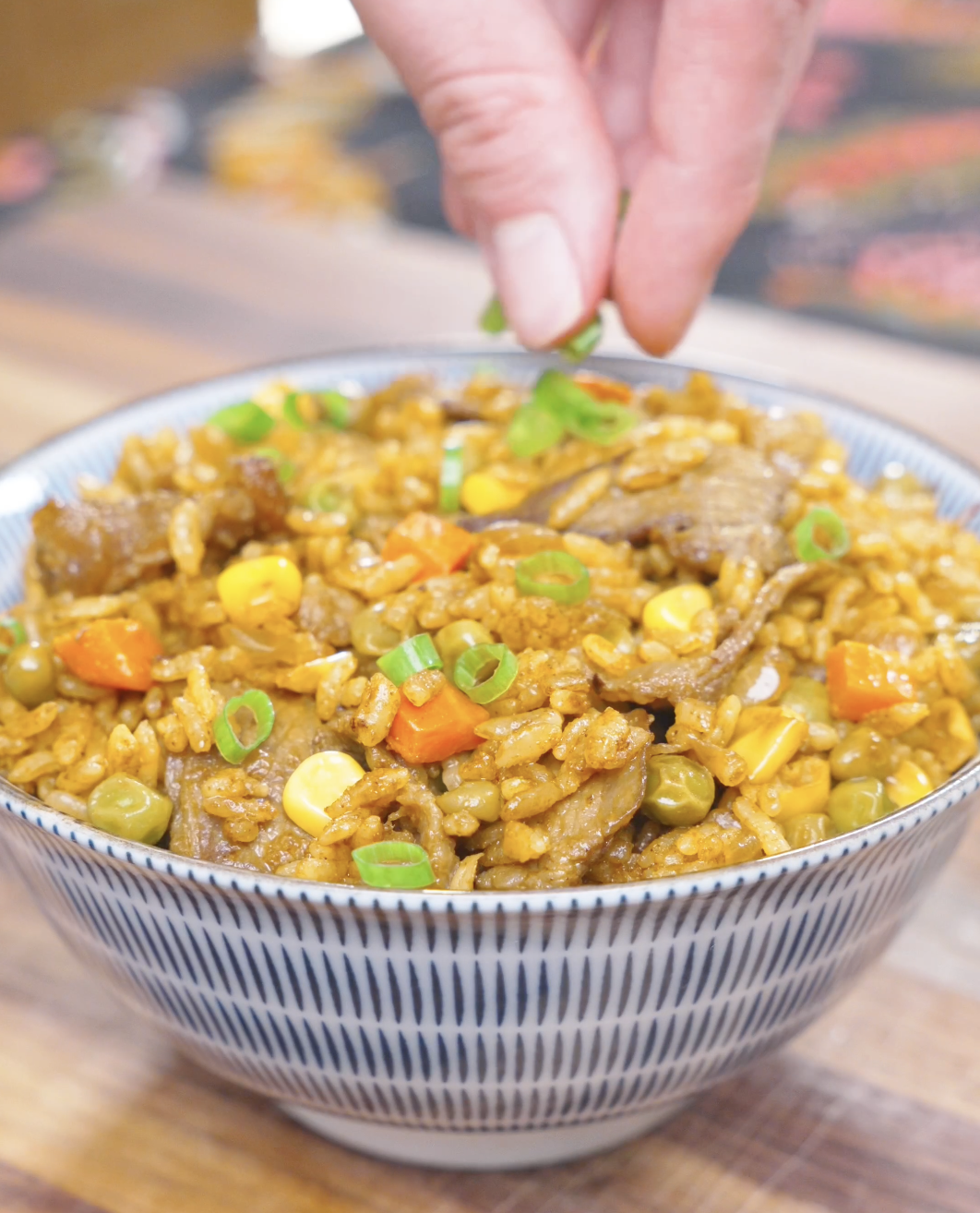
More of a visual learner? Check out my video recipe below. 👇
Optional Variations & Dietary Adaptations
- Swap the Protein — Not a beef fan? Thinly sliced chicken, pork, or shrimp all work beautifully in this recipe. Just adjust the cook time slightly since chicken and shrimp cook faster than beef. For a vegetarian version, cubed tofu or tempeh (pan-fried until golden) make a satisfying stand-in.
- Make it Vegan — Skip the meat altogether and load up on extra veggies, or add tofu for protein. Swap the Worcestershire sauce for a vegan version (many brands make one without anchovies).
- Gluten-Free — Swap the light soy sauce for tamari or a gluten-free soy sauce alternative, and make sure your Worcestershire sauce is labeled gluten-free, as some varieties contain wheat.
- Reduced Sugar — If you want a less sweet sauce, cut the granulated sugar in half or leave it out entirely. The ketchup and Worcestershire sauce will still bring plenty of natural sweetness and depth.
- Make it Spicy — Love spice? Add a pinch of red pepper flakes, a drizzle of chili oil, or a spoonful of sambal oelek along with hot curry powder for an extra kick.
- Boost the Veggies — Feel free to bulk up the vegetable content with fresh additions like bell peppers, snap peas, baby corn, edamame, or shredded cabbage for even more color, crunch, and nutrition.
- Low-Carb — Swap the cooked rice for cauliflower rice. Just be sure it’s well-dried before adding it to the pan, since cauliflower releases more moisture than regular rice.
- Add an egg — For extra richness, scramble an egg directly in the pan before adding the rice, or fry an egg sunny-side up to serve on top.
Expert Tips & Tricks
- Prep everything before you turn on the heat. Curry beef rice comes together fast, so have your beef sliced, veggies measured, garlic and ginger minced, and sauce whisked together before you start cooking. There’s no time to chop once the pan gets going.
- Cook in batches if needed. Don’t overcrowd the pan when searing the beef—if your skillet is on the smaller side, cook the beef in two batches. Crowding the pan traps steam and prevents that deep, golden sear that gives the beef its flavor.
- Use a hot pan and keep things moving. High heat is key to getting that classic fried rice texture and a little smoky depth (often called “wok hei”). Keep the rice and other ingredients moving in the pan so nothing sits too long and scorches.
- Break up rice clumps before cooking. Even cold, day-old rice can form clumps in the fridge. Use your hands to gently break the grains apart before adding the rice to the pan so it fries evenly instead of steaming in dense clusters.
- Add the sauce last. Pour the sauce in toward the end of cooking and toss everything together quickly. This keeps the flavors bright and prevents the sugar in the sauce from over-caramelizing or burning.
- Taste and adjust as you go. Curry powders vary a lot in strength and flavor between brands, so taste your sauce before adding it to the pan and adjust the sugar, soy sauce, or curry powder to your liking.
- Don’t skip the resting rice trick. If your rice seems too fresh or sticky, spreading it out to cool and dry—even for just 15 minutes—makes a noticeable difference in texture.
- Serve immediately. Fried rice is best enjoyed hot and fresh from the pan, when the rice is at its fluffiest and the veggies are still crisp-tender.
Serving Suggestions
Serve curry fried rice on its own as a satisfying one-bowl meal, or dress it up with a fried egg on top so the runny yolk mixes into the rice and adds extra richness to every bite.
If you want to round out the meal, pair it with something light and fresh to balance the warm, savory-sweet curry flavors, like a simple cucumber salad, quick pickled vegetables, or a light miso soup. Steamed or roasted broccoli, bok choy, or edamame also make great veggie-forward sides if you want to add more nutrients to the plate.
For a bigger spread, serve the fried rice alongside dumplings, spring rolls, or a stir-fried noodle dish like garlic sesame noodles for a fuller meal. Set out extra scallions, sesame seeds, chili oil, or lime wedges at the table so everyone can customize their bowl to taste.
Storage & Reheating
- Refrigeration: Store leftover curry fried rice in an airtight container in the refrigerator for up to 3-4 days.
- Freezing: Freeze in an airtight, freezer-safe container or bag for up to 2-3 months; for best texture, portion it out before freezing so you can thaw only what you need.
- Reheating: Reheat in a skillet over medium heat with a splash of water or oil to loosen the rice, stirring occasionally until warmed through; alternatively, microwave in short intervals, stirring between each, until heated evenly.
FAQs
Can you have curry with fried rice?
Yes, curry and fried rice go together like peas and carrots. In fact, this curry fried rice recipe already incorporates curry powder directly into the fried rice for that warm, savory-sweet flavor, but you can also serve fried rice as a side alongside a separate curry dish like Japanese beef curry or chicken katsu curry if you want more sauce and heartiness.
Which curry is used for fried rice?
Typically it’s curry powder (a Japanese-style curry powder is common, but you can use British/Indian curry powder or Jamaican curry powder) to give it that warm, savory-sweet flavor and golden color. Curry paste or sauce is generally reserved for other uses.
More Fried Rice Recipes
Craving more fried rice? Try my Garlic Fried Rice, Garlic Steak Fried Rice, or Japanese Beef Curry!