Galbi-Jim Recipe
Ingredients
- 1½ lb bone-in short ribs
- 1 large carrot, cut into wedges
- ½ Korean radish, cut into wedges
- 6 dried jujubes
- 2 cups water, for braising
For the Sauce
- ½ cup light soy sauce
- ¼ cup mirin
- 3 tbsp sugar
- 6 cloves garlic, minced
- 1 tbsp grated ginger
- 1 tsp black pepper
- 2 tbsp soju
Optional Garnish
- Sesame seeds
Instructions
- Place the short ribs in a bowl with water and soak for an hour to draw out the blood.
- While the beef soaks, chop the carrots into wedges and do the same to the radish.
- For the sauce, combine the light soy sauce, mirin, sugar, garlic, ginger, black pepper, and soju, and mix thoroughly.
- Drain the beef and give it one more rinse, then set aside.
- In a pot of boiling water, blanch the short ribs for a few minutes. Drain the boiling water and rinse the ribs one more time.
- In the same pot with no water, add the ribs along with the sauce and the 2 cups of water. Bring to a simmer, then cover and cook for about 20 minutes.
- Add the carrots and radish, give everything a mix, and cover again for an hour.
- After an hour, remove the lid and check that the meat is tender. Once it is, add the dried jujubes and put the lid back on for another 10 minutes before removing from the heat.
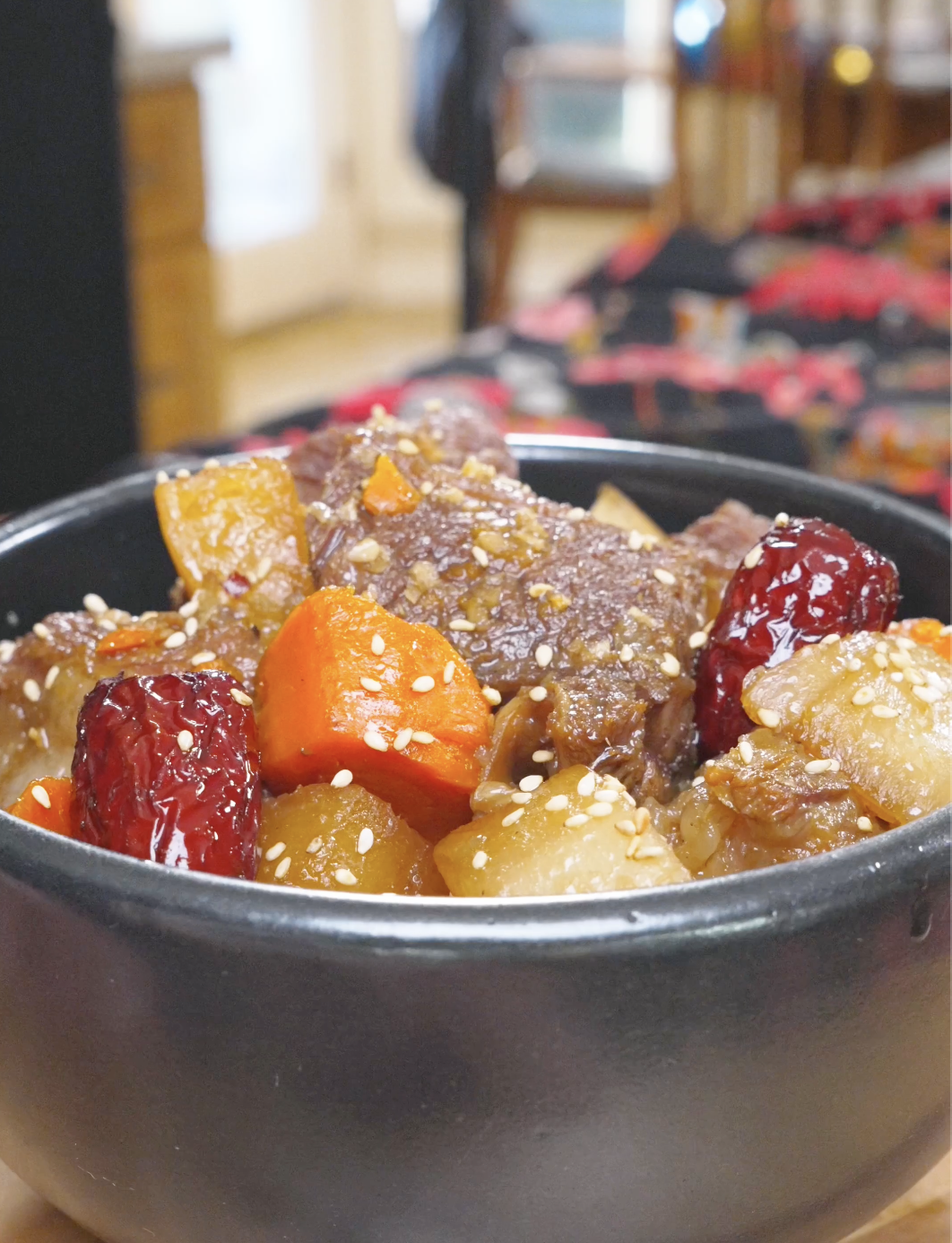
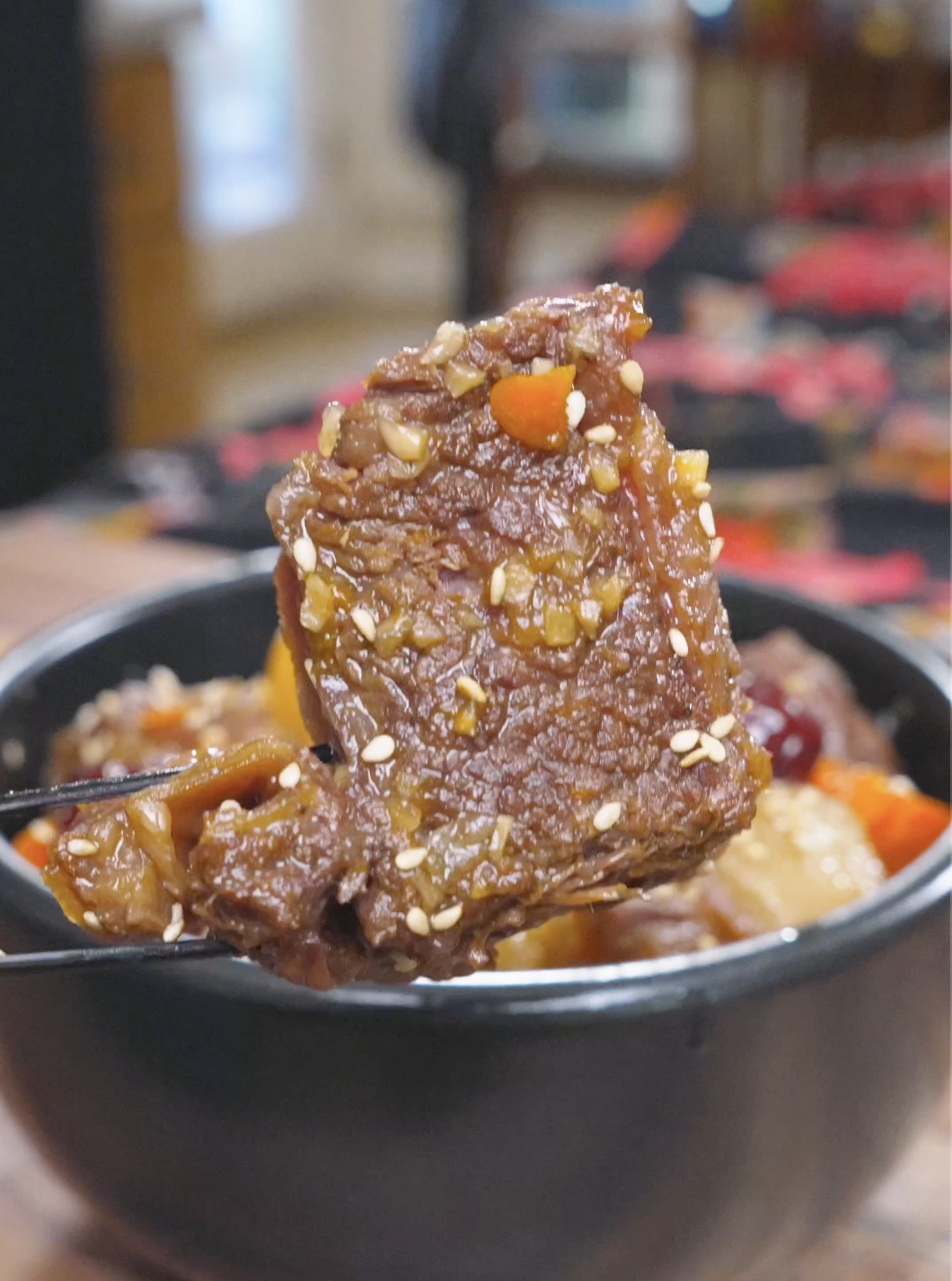
- Spoon the galbi-jim into a bowl. Optionally garnish with sesame seeds. But it’s your food, you eat it how you like.
Video
Notes
- Don’t skip the soak and blanch — they keep the braising liquid clean and savory instead of gamey.
- Keep it at a gentle simmer. Cranking the heat won’t speed up the connective tissue breaking down.
- Let it rest 10–15 minutes before serving so the sauce thickens slightly.
- Tastes even better the next day — make it ahead if you can.
- Prep time does not include the hour of soaking.
This Korean Galbi Jjim Recipe is one of my favorite cozy, comforting dishes. Think melt-in-your-mouth beef short ribs that practically fall off the bone after slow braising in a rich, savory-sweet sauce packed with soy sauce, garlic, ginger, and just enough sweetness from a hint of sugar to make every bite irresistible. Unlike its grilled cousin, galbi jjim takes things low and slow, letting the short ribs simmer away until they’re impossibly tender and the sauce reduces down into a glossy, deeply flavorful glaze that clings to every piece of meat and vegetable in the pot. It’s the kind of dish that fills your whole kitchen with the most incredible aroma while it cooks, making the wait almost as good as the first bite. Traditionally served as a special-occasion dish for Korean holidays and family gatherings, these braised Korean short ribs bring the same soul-warming, celebratory feeling to your table any night of the week—no special occasion required. This recipe is straightforward enough for a weeknight, especially since it only takes about 30 minutes of active prep work, yet impressive enough to serve when you really want to wow someone.
Love how hands-off a good braise can be? You’re not alone! Check out my Coca Cola braised chicken, red braised pork belly and soy braised pork belly recipes for your next no-fuss-high-reward meal!
Table of Contents
- Galbi-Jim Recipe
- Why You’ll Crave This Korean Braised Short Ribs Recipe
- Ingredients & Substitutions
- The Difference Between Galbi Jjim & Korean BBQ Short Ribs
- How to Make Korean Galbi Jjim
- Optional Variations & Dietary Adaptations
- Expert Tips & Tricks
- Serving Suggestions
- Storage & Reheating
- FAQs
- More Classic Korean Recipes
Why You’ll Crave This Korean Braised Short Ribs Recipe
What really makes this galbi jjim recipe worth the wait is how much flavor builds in layers throughout the process, starting with that hour-long soak that pulls out any excess blood from the bone-in short ribs so your final sauce stays clear and deeply savory. From there, a quick blanch rinses away any remaining impurities, setting you up for a braise that’s all about patience paying off. The ribs simmer low and slow in a sauce built from soy sauce, mirin, garlic, ginger, and just a splash of soju for a subtle depth only a little booze can bring, until the meat turns fork-tender and practically falls off the bone. Adding the carrots and radish partway through means they soak up all that saucy goodness while still holding their shape, turning into little flavor bombs in their own right. The dried jujubes tossed in near the end lend a natural, almost caramel-like sweetness that ties the whole dish together. Plus, with only ten ingredients doing all the heavy lifting, this braised Korean short rib recipe proves that you don’t need a long, complicated list to make something that tastes like it took way more effort than it did — just good technique, a little time, and a pot that’s doing all the hard work while you go about your day.
Ingredients & Substitutions
- Bone-In Short Ribs – The star of the show. Look for flanken-cut or English-cut bone-in short ribs with good marbling—the fat is what melts down into all the rich flavor during the braise. No bone-in on hand? Boneless short ribs will work in a pinch, just keep an eye on cook time since they may turn tender a bit faster.
- Carrot – Adds a subtle sweetness and a pop of color to balance out all that savory sauce. Regular carrots are perfect here, but if you want to get fancy, baby carrots or even parsnips can step in as a substitute.
- Korean Radish – This starchy, slightly sweet radish soaks up the braising liquid beautifully and turns almost custardy by the end. If you can’t find Korean radish (mu) at your local Asian grocery store, daikon radish is your best substitute. Just avoid regular red radishes, since they won’t hold up the same way.
- Dried Jujubes – These little dried Korean dates bring a natural sweetness and a lovely chewy texture once braised. If you can’t track them down, dried dates or even a handful of raisins can mimic that sweetness in a pinch.
- Water – Just your everyday braising liquid here. Make sure to start with filtered water for the clearest taste. If you want an extra flavor and protein boost, you can swap in beef bone broth.
For the Sauce
- Light Soy Sauce – This is your main savory, salty backbone of the sauce, and it’s lighter in color and saltiness compared to dark soy sauce. If needed, swap in tamari or Bragg’s liquid aminos for a gluten-free option.
- Mirin – This Japanese sweet rice wine adds a gentle sweetness and helps tenderize the meat. No mirin? A mix of rice vinegar and a touch of sugar works as a substitute in a pinch.
- Granulated Sugar – Just a little sweetness to round out the savory notes in the sauce. Brown sugar or even honey can swap in here if that’s what you’ve got on hand.
- Garlic – Because what’s a good Korean braise without garlic? Fresh minced garlic is best, but pre-minced jarred garlic works fine if you’re short on time.
- Grated Ginger – Adds warmth and a little zing that cuts through the richness of the short ribs. Ground ginger can work as a substitute, just use about a quarter of the amount since it’s more concentrated.
- Black Pepper – Just a touch to add a little background heat and depth. Freshly cracked is always best for flavor!
- Soju – This Korean rice liquor adds subtle depth and helps tenderize the meat while cooking off most (if not all) of the alcohol. If you don’t have soju, sake or even a dry white wine can step in as a substitute.
Optional Garnish
- Sesame Seeds – Purely for garnish, adding a little nutty crunch and visual appeal right before serving. Toasted sesame seeds are ideal, but even a sprinkle of chopped green onion works if you want a different finishing touch.
This is just a short review of the ingredients; for the complete recipe, including quantities, scroll down to the recipe card 👇
The Difference Between Galbi Jjim & Korean BBQ Short Ribs
While both dishes start with the same beloved cut of beef, galbi jjim and Korean BBQ short ribs are two completely different experiences. Korean BBQ short ribs, or grilled galbi, use thin, flanken-style cuts that get marinated and then cooked fast and hot over an open flame or grill, giving you irresistibly charred, caramelized edges in just a couple of minutes per side. Galbi jjim, on the other hand, uses thicker, bone-in short ribs that braise low and slow for hours until the meat turns completely fork-tender and practically falls off the bone. The texture alone sets them worlds apart: grilled galbi has a satisfying chew with smoky, charred notes, while galbi jjim is soft, rich, and stew-like, with a deeply savory sauce that soaks into every bite of meat and vegetable. Even the flavor profiles lean in different directions, since grilled galbi relies on a marinade that caramelizes over direct heat, while galbi jjim’s sauce slowly reduces and thickens as it braises, creating a glossy, concentrated glaze you just don’t get from grilling. At the end of the day, it really comes down to what kind of Korean beef short rib experience you’re craving—quick, smoky, and charred, or slow, cozy, and melt-in-your-mouth tender.
How to Make Korean Galbi Jjim
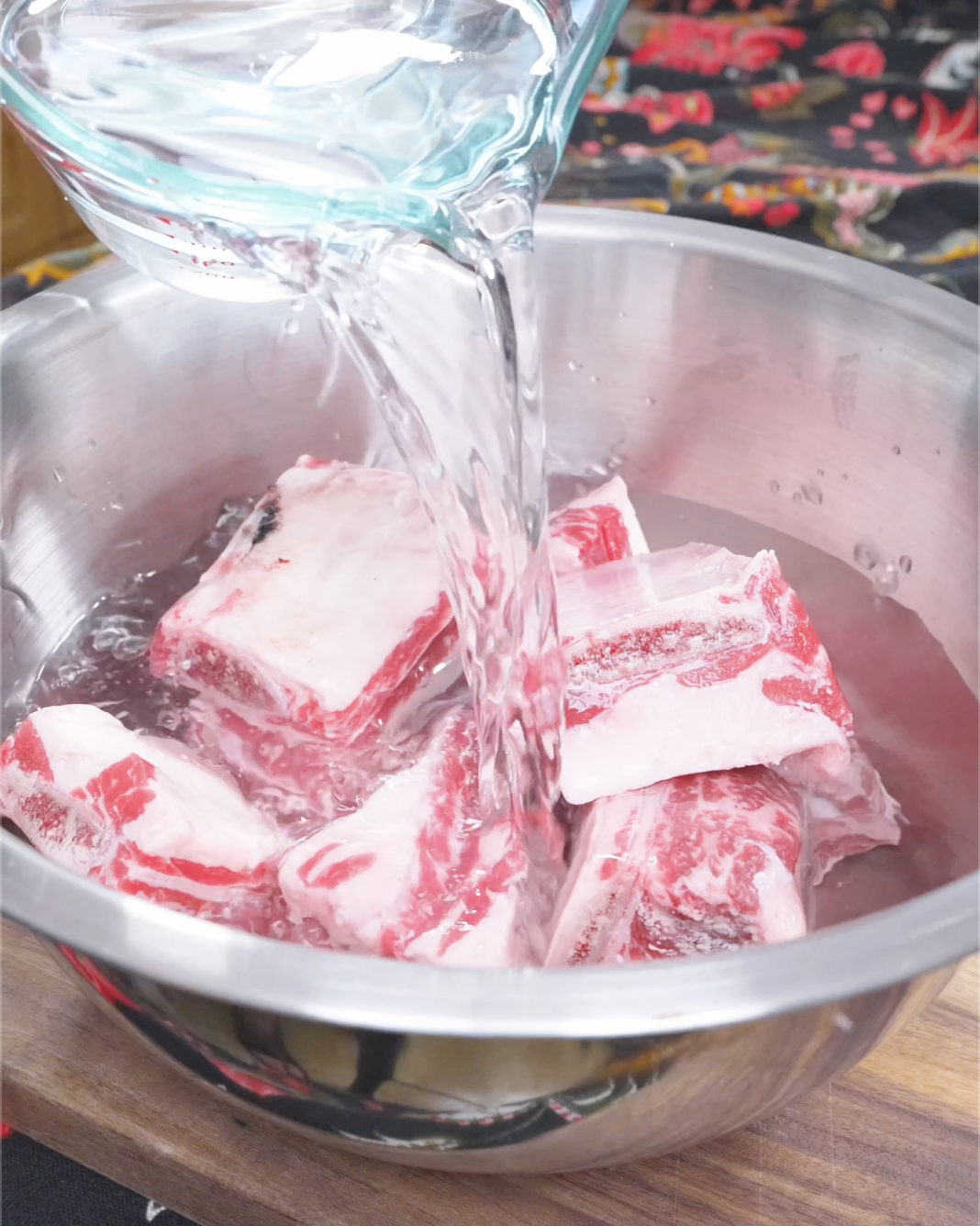
Place the short ribs in a bowl with water and soak for an hour to draw out the blood.
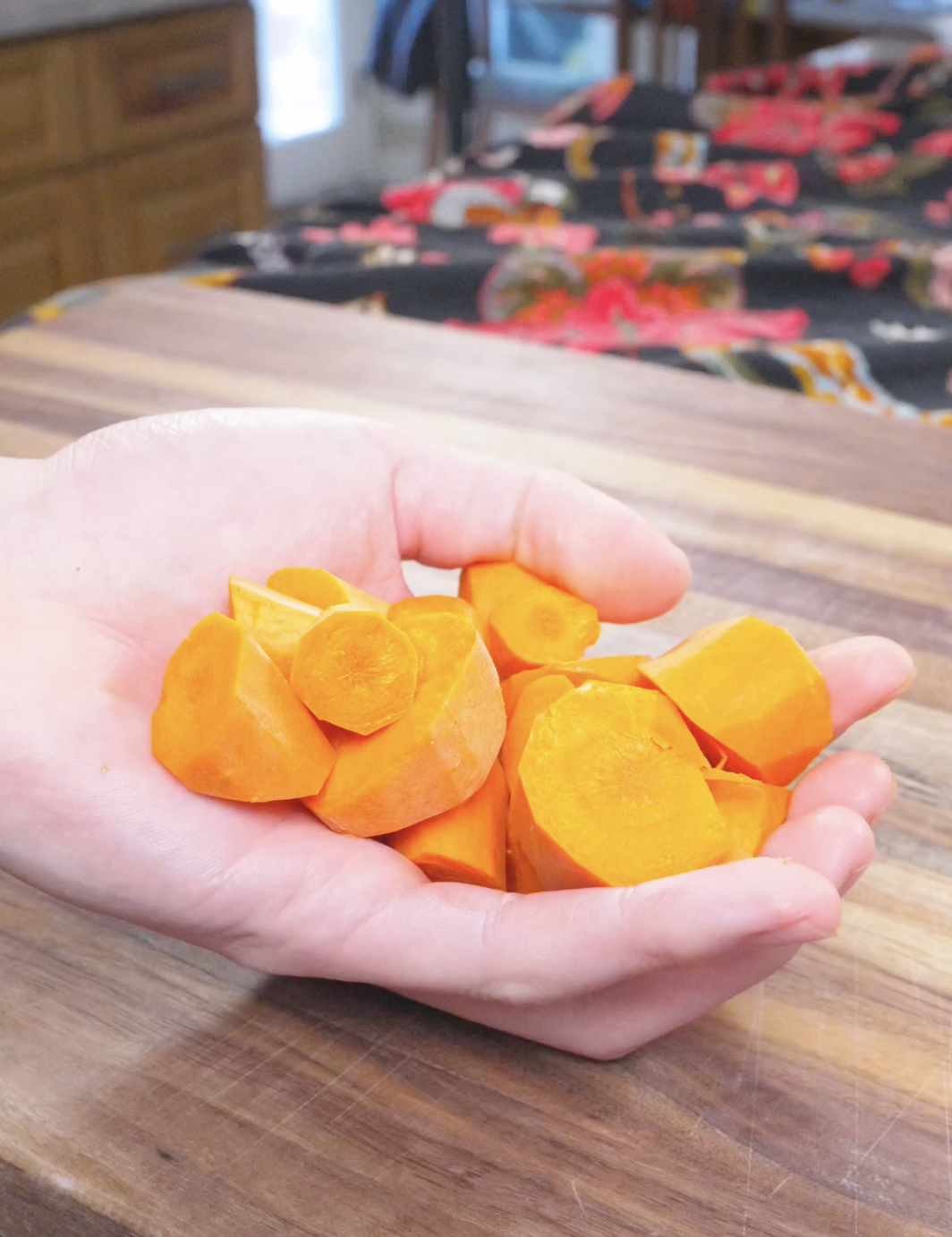
While the beef soaks, chop the carrots into wedges and do the same to the radish.
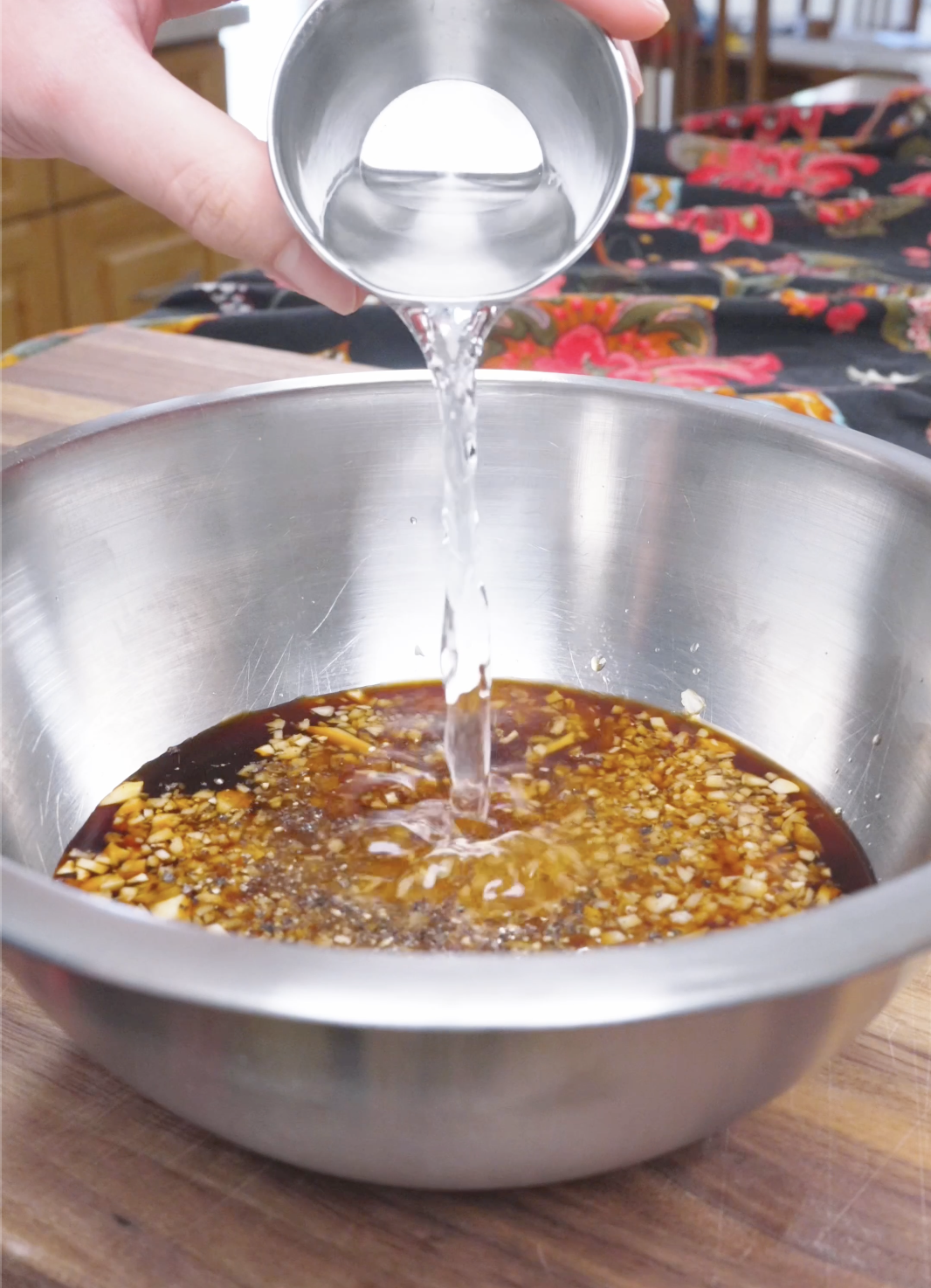
For the sauce, combine the light soy sauce, mirin, sugar, garlic, ginger, black pepper, and soju, and mix thoroughly.
Drain the beef and give it one more rinse, then set aside.
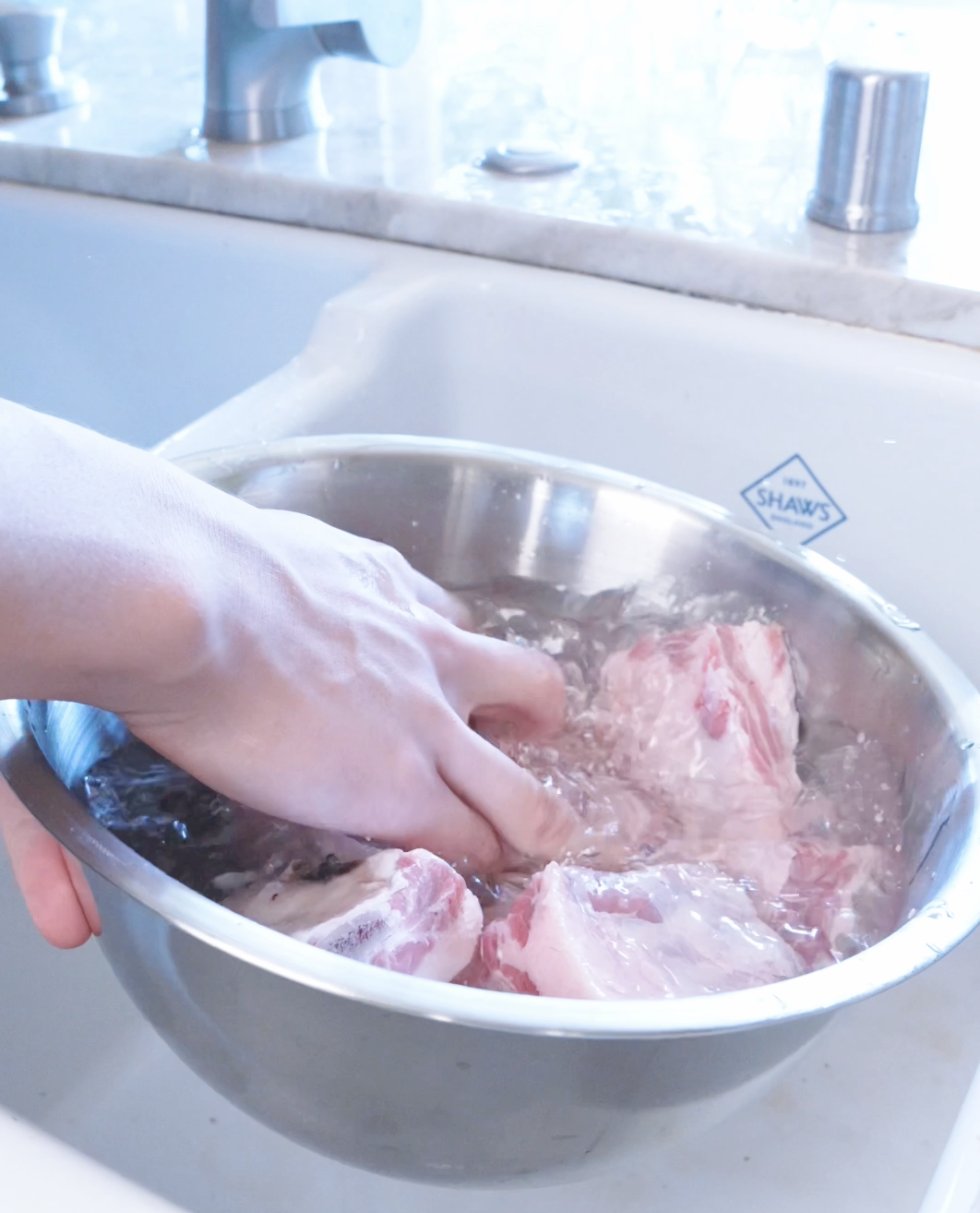
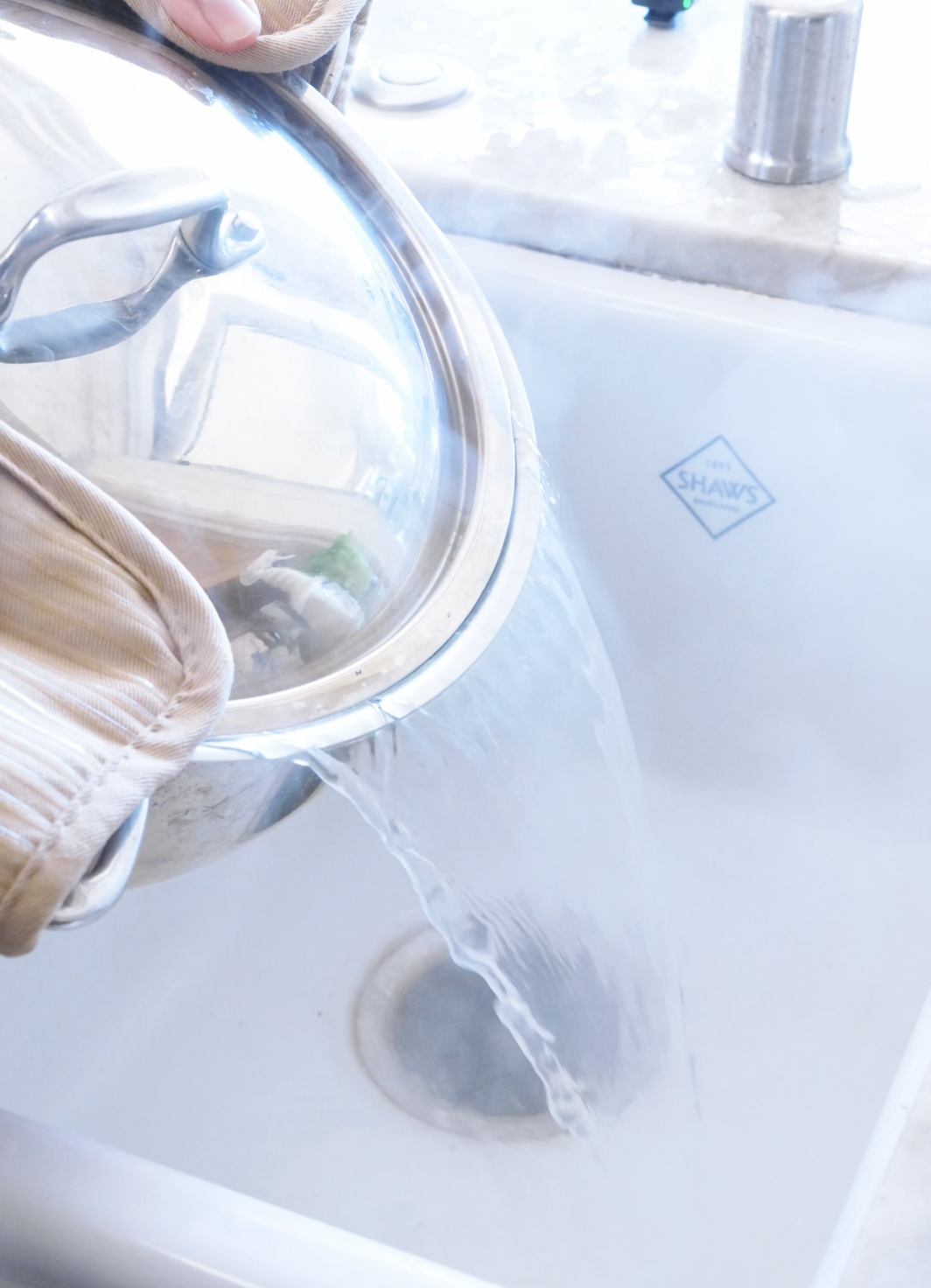
In a pot of boiling water, blanch the short ribs for a few minutes. Drain the boiling water and rinse the ribs one more time.
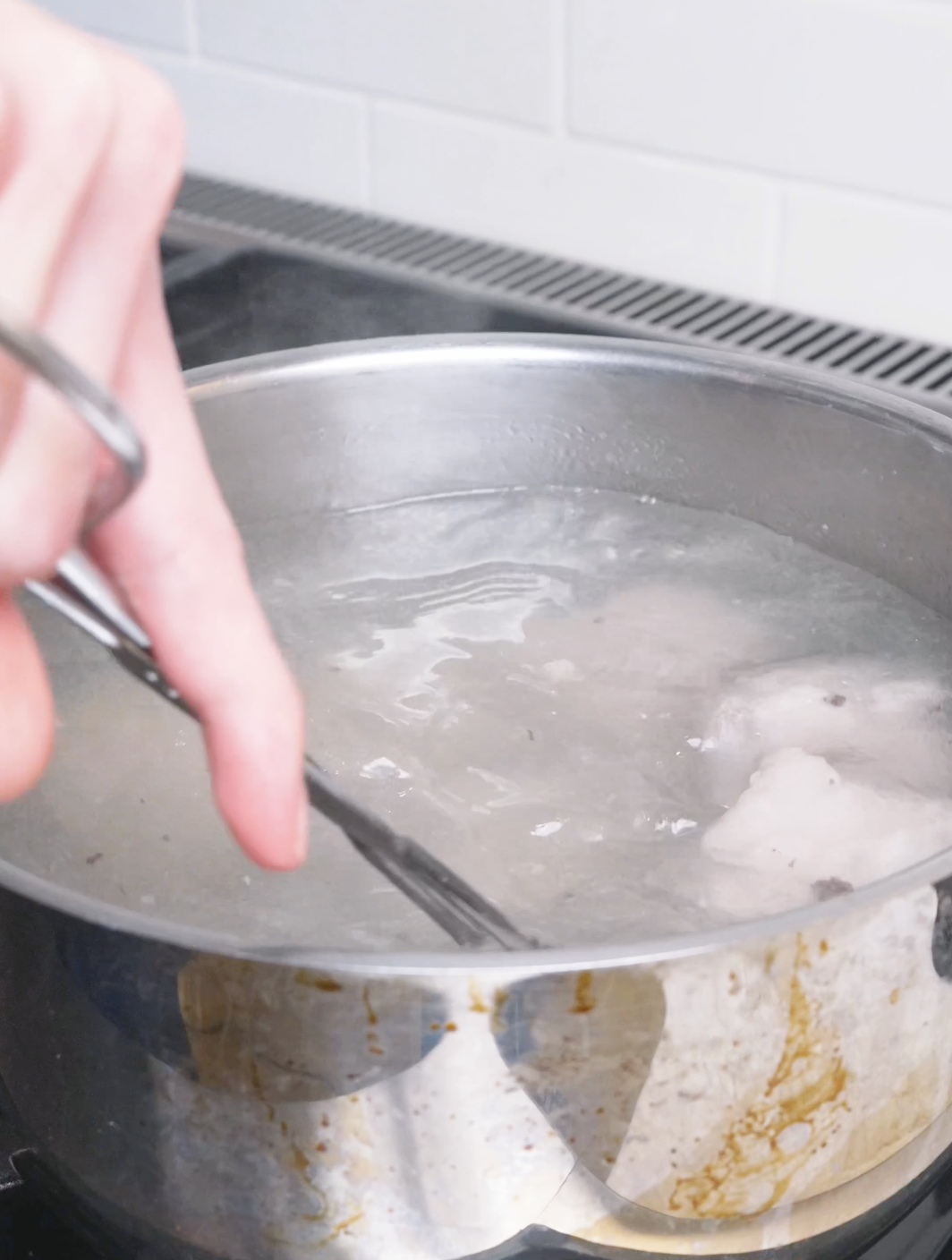
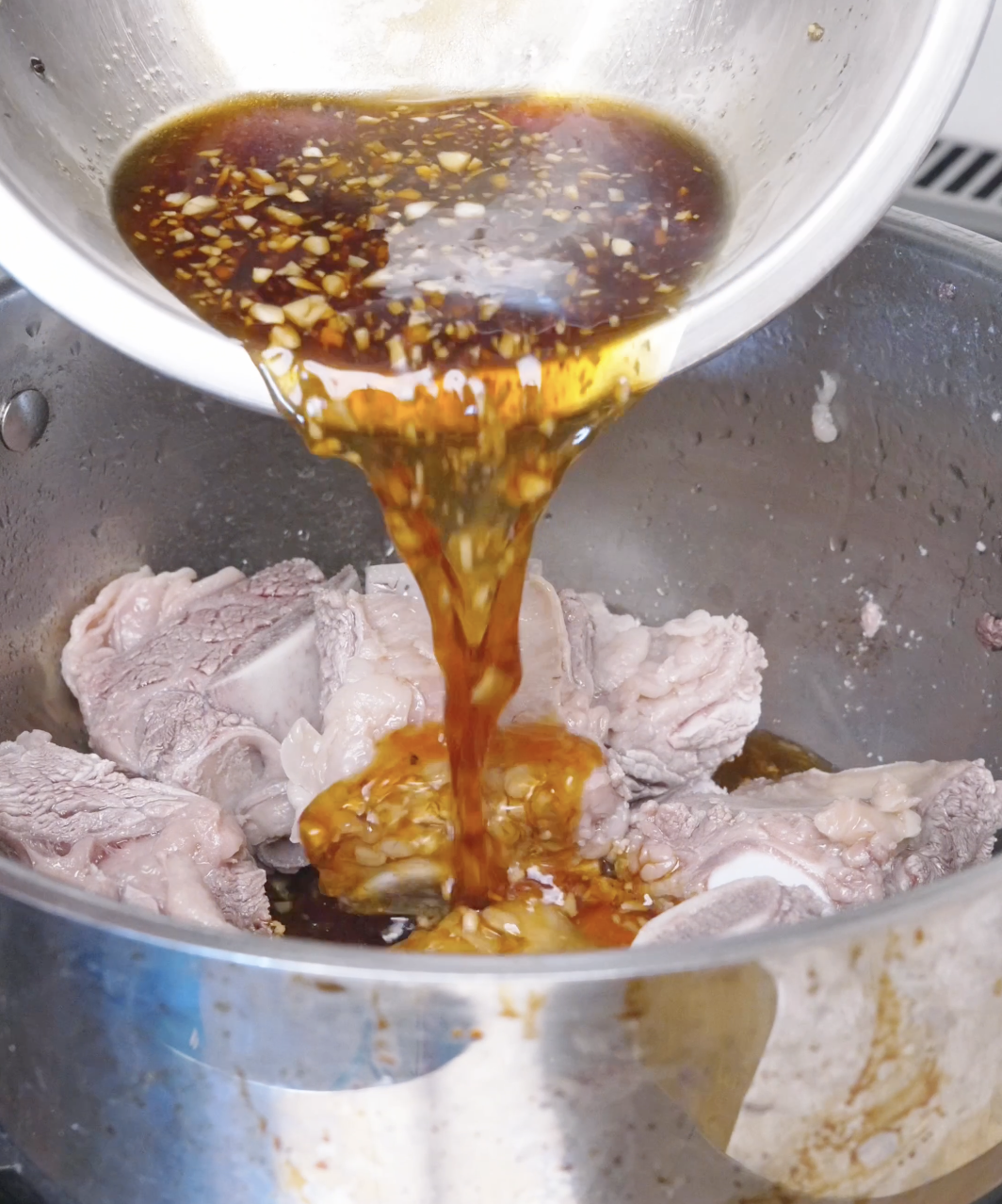
In the same pot with no water, add the ribs along with the sauce and the 2 cups of water. Bring to a simmer, then cover and cook for about 20 minutes.
Add the carrots and radish, give everything a mix, and cover again for an hour.
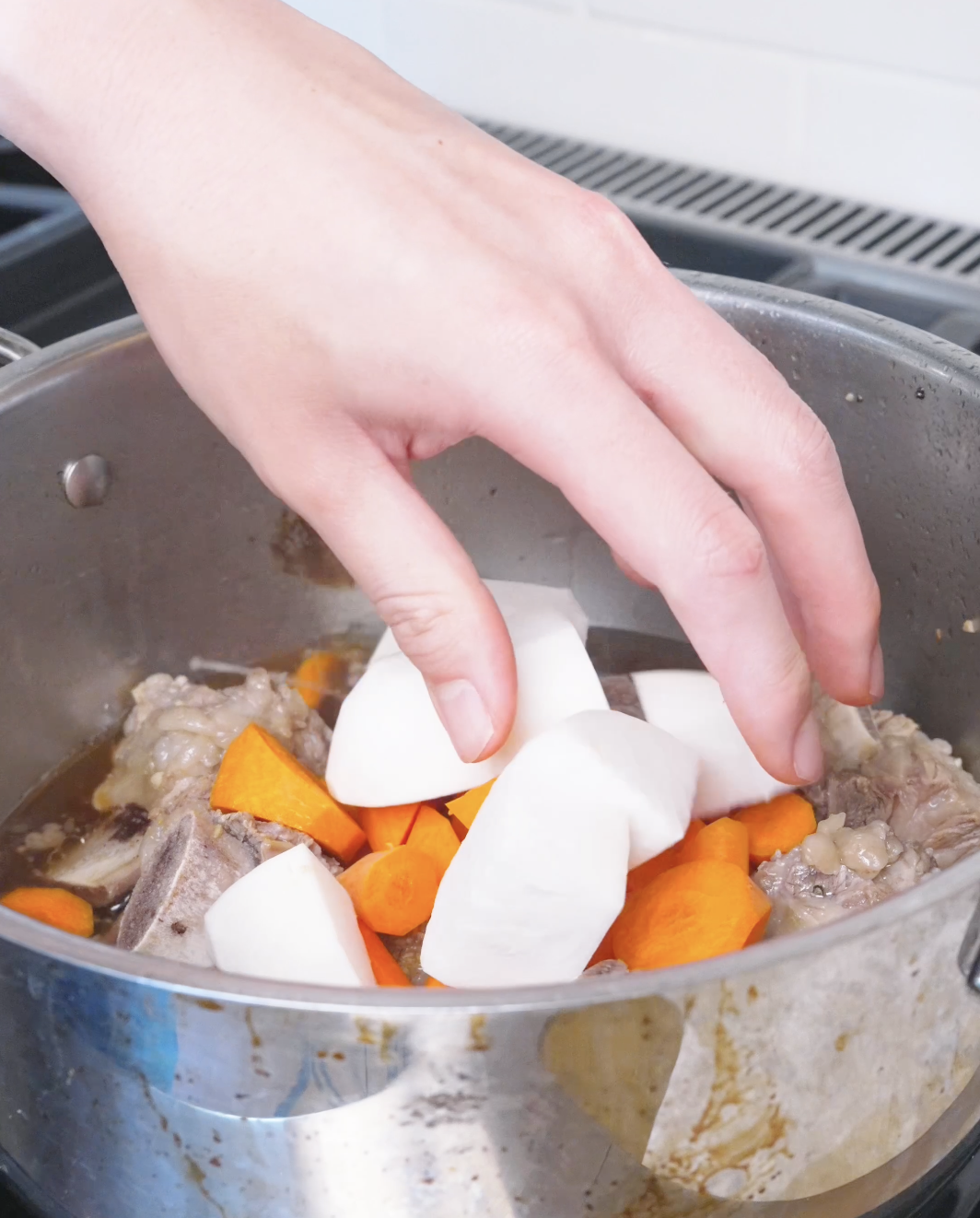
After an hour, remove the lid and check that the meat is tender. Once it is, add the dried jujubes and put the lid back on for another 10 minutes before removing from the heat.
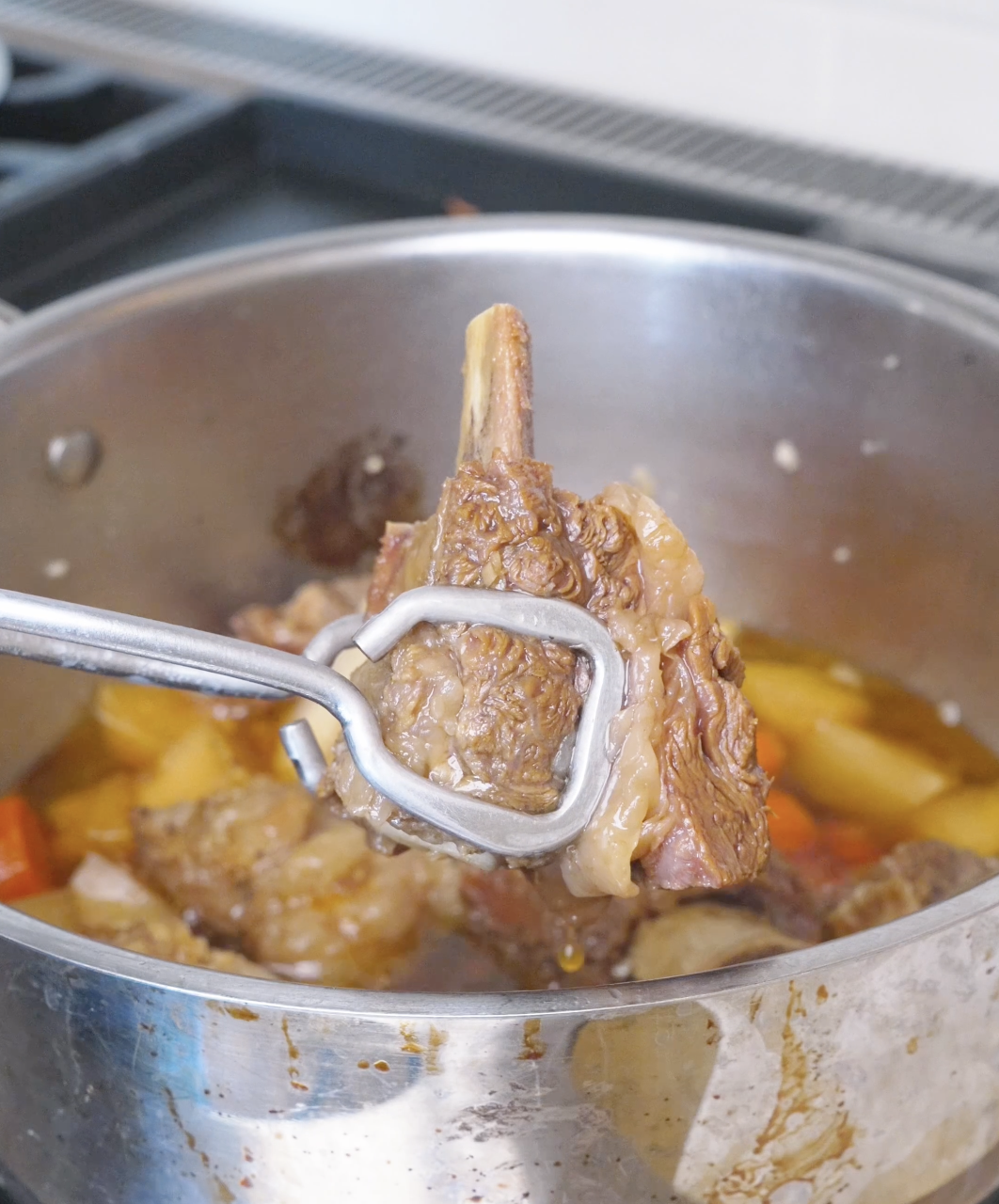
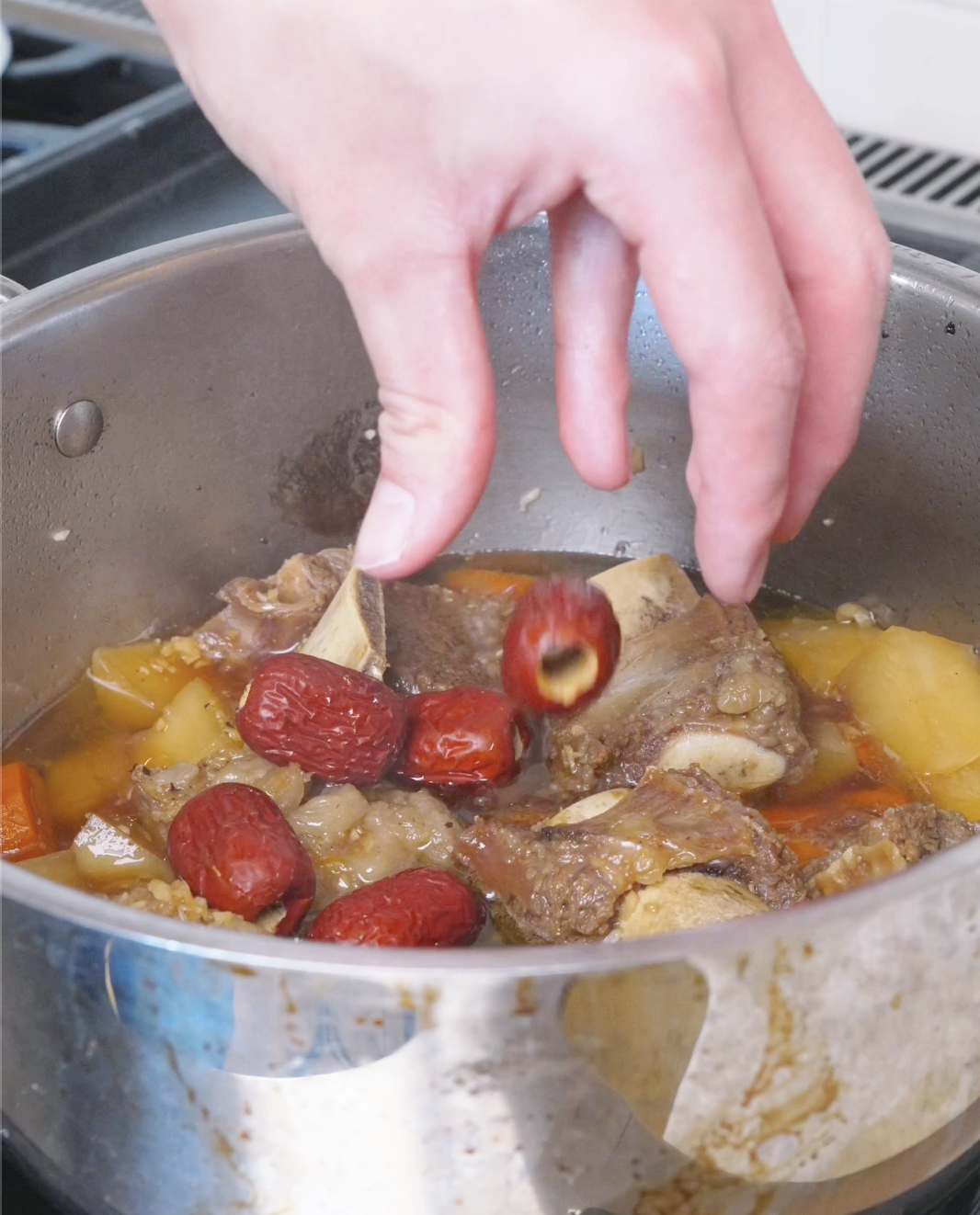
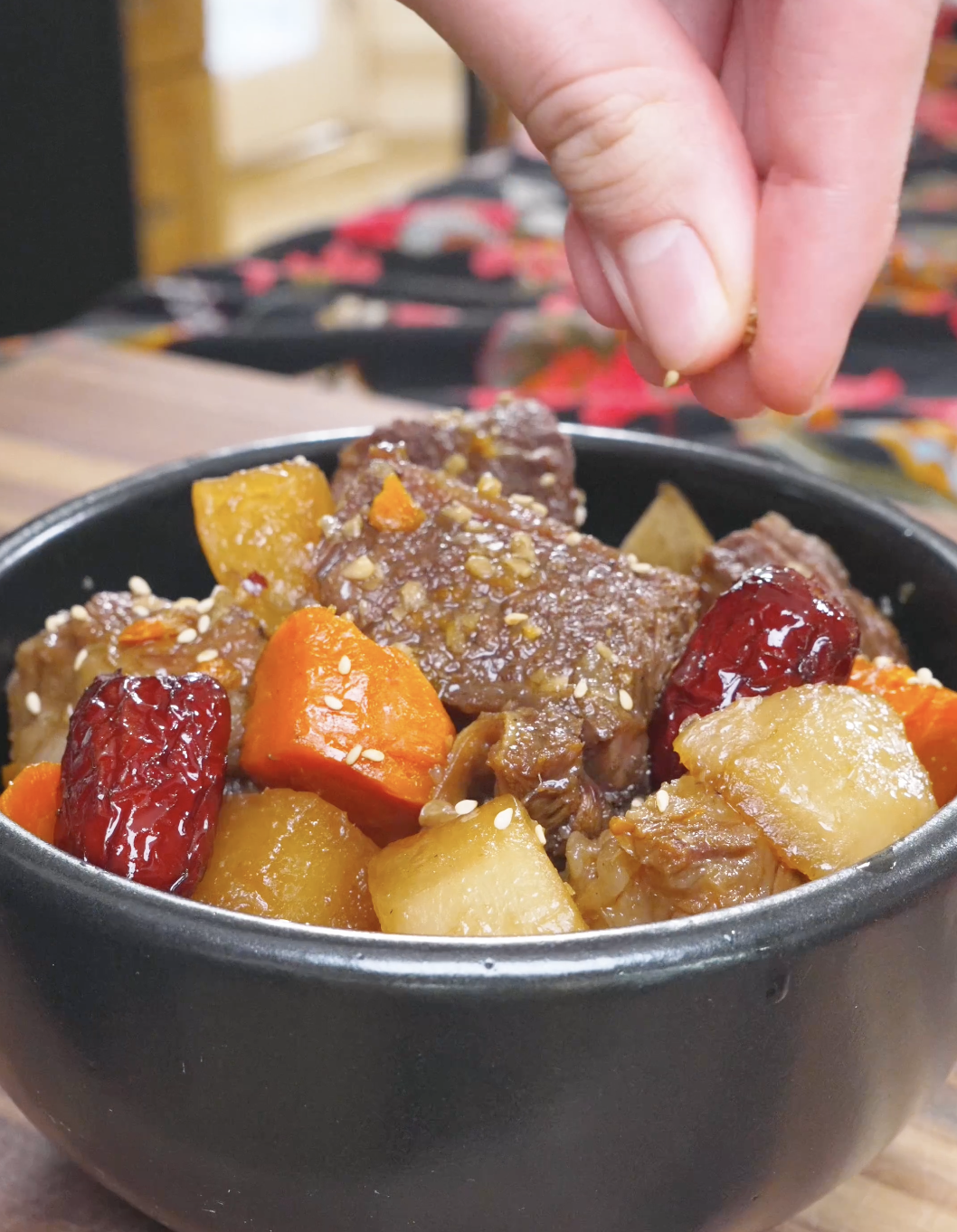
Spoon the galbi-jim into a bowl. Optionally garnish with sesame seeds. But it’s your food, you eat it how you like.
More of a visual learner? Check out my video recipe below. 👇
Optional Variations & Dietary Adaptations
- Add More Veggies – Feel free to bulk up the with extras like potatoes, mushrooms, or even sweet potatoes tossed in alongside the carrots and radish. They’ll soak up all that braising liquid and add even more heartiness to the dish.
- Spicy Galbi Jjim – If you like a little heat, toss in some sliced Korean chili peppers or a spoonful of gochujang into the sauce for a spicy twist on the classic. Don’t forget to add a few shakes of chili-packed gochugaru alongside the sesame seeds for garnish!
- Gluten-Free – Simply swap the light soy sauce for a gluten-free tamari or coconut aminos, and double-check your mirin and soju labels since some brands can contain gluten-derived ingredients.
- Alcohol-Free – Don’t like to have booze in the house? No problem at all! Replace the soju and mirin with non-alcoholic ginger beer or a mix of apple juice or white grape juice with a bit of rice vinegar to mimic their acidity and depth.
- Slow Cooker or Instant Pot Option – Short on stovetop time? Brown the ribs first, then transfer everything to a slow cooker on low for 6-7 hours, or pressure cook in an Instant Pot on high for about 35-40 minutes with a natural release for the same tender, fall-off-the-bone result.
Expert Tips & Tricks
- Blanch Your Short Ribs First. Don’t skip this step! Giving your short ribs a quick blanch in boiling water before braising helps remove excess blood and impurities, which means a cleaner-tasting broth and none of that gamey funk you sometimes get with beef.
- Score the Fat. Take a few extra seconds to score any thick pieces of fat on the short ribs before cooking. This helps render the fat more evenly and keeps the meat from curling up as it braises.
- Don’t Rush the Braise. Low and slow really is the name of the game here. Resist the urge to crank up the heat to speed things along, since a gentle simmer is what breaks down all that connective tissue and gives you that signature fall-off-the-bone texture.
- Taste and Adjust as You Go. Every batch of short ribs and every brand of soy sauce can vary slightly, so give your sauce a taste halfway through cooking and adjust with a little extra sugar, soy sauce, or water depending on how concentrated it’s tasting.
- Let It Rest. Once it’s done cooking, let the galbi jjim sit for about 10-15 minutes before serving. This gives the sauce time to thicken up slightly and the flavors time to settle in even more.
- Make It Ahead. Honestly, this dish tastes even better the next day once the flavors have had time to meld together overnight in the fridge, so don’t hesitate to make it a day in advance if you’re prepping for guests.
- Skim the Fat. If you want a cleaner, less greasy sauce, pop the pot in the fridge after cooking so the fat solidifies on top, making it super easy to skim off before reheating and serving.
Serving Suggestions
Galbi jjim is hearty enough to shine as the star of the table, but it truly comes alive when you build out a full spread around it. A bowl of fluffy steamed rice is practically non-negotiable here, since it’s perfect for soaking up all that rich, savory braising sauce.
For something a little different, these crispy roasted potatoes are a great way to add a crunchy, golden contrast. But then don’t forget to serve it with a warm piece of Korean garlic cheese bread that brings a fun, cheesy, garlicky bite and is perfect for soaking up every last drop of the sauce.
If you want to round things out with something a little more traditional, kimchi pancakes are always a crowd-pleaser, bringing a perfectly crispy, tangy element to balance out the richness of the short ribs. A simple side of veggie banchan, some quick-pickled cucumbers, or even a light salad with a sesame dressing can also help cut through the richness.
Storage & Reheating
- Refrigeration: Once your galbi jim has cooled to room temperature, transfer it to an airtight container and pop it in the fridge, where it’ll keep well for up to 4-5 days. Honestly, the flavors only get better the longer they sit, so don’t be surprised if day two tastes even richer than day one.
- Freezing: These Korean braised short ribs freeze beautifully, making it a great make-ahead option. Just let it cool completely, then transfer it (sauce and all) to a freezer-safe container or heavy-duty freezer bag, pressing out as much air as possible. It’ll keep well in the freezer for up to 3 months. When you’re ready to enjoy it, thaw it overnight in the fridge before reheating.
- Reheating on the Stovetop: For the best texture, reheat your galbi jjim gently in a pot over medium-low heat, adding a splash of water or broth if the sauce has thickened up too much in the fridge. Stir occasionally and let it warm through until it’s hot all the way to the center, about 8-10 minutes.
- Reheating in the Microwave: Short on time? Place your portion in a microwave-safe dish, cover loosely, and reheat in 1-2 minute intervals, stirring in between, until heated through. Adding a tablespoon or so of water beforehand can help keep the meat from drying out.
- A Quick Tip: If you’ve skimmed and saved any extra fat from the top of the sauce, hold off on reheating it with the rest of the dish. Instead, add it back in only if you’d like a richer, silkier sauce once everything else is warmed through.
FAQs
What’s the difference between galbi vs. bulgogi?
Both dishes share a similar sweet and savory marinade base, but the cut of meat and cooking method really set them apart. Galbi refers specifically to short ribs, typically grilled or braised with the bone still attached, and has a chewier, meatier texture thanks to the cut of beef used. Bulgogi, on the other hand, can be made from thin slices of marinated beef (usually sirloin or ribeye) that cook quickly and have a more tender, almost melt-in-your-mouth texture. You’ll also see variations like ground beef bulgogi, chicken bulgogi or spicy pork bulgogi.
Why is galbi jjim so expensive?
Galbi jim tends to carry a higher price tag at restaurants mainly because of the cost of good-quality short ribs, which are considered a premium cut of beef, along with the lengthy braising process required to get that tender, fall-off-the-bone texture. That said, making this Korean braised short ribs recipe at home is significantly less expensive than ordering it out, since you’re able to buy the short ribs directly and skip all the restaurant markup that comes with dining out.
Is galbi jjim healthy?
Galbi jjim is packed with protein and includes plenty of vegetables like carrots and radish that add fiber and nutrients, making it quite nutritious. That said, it does contain a fair amount of sugar and sodium from the soy sauce and sweeteners in the marinade, so if you’re watching your intake, making a low-sodium adaptation or enjoying it in moderation alongside plenty of veggies and rice is a great way to keep things balanced.
Is galbi jjim difficult to make?
Not at all! Galbi jjim is actually a fairly forgiving dish to make at home, even if it looks impressive on the table. The hardest part is really just being patient during the braising process, since the low and slow cooking is what breaks down the short ribs and gives you that signature tender texture. Beyond that, it’s mostly just a matter of mixing together a simple sauce and letting the pot do the work.
More Classic Korean Recipes
Craving more Korean food? Try my Korean BBQ Short Ribs, Korean Braised Chicken, or Korean Corn Cheese!