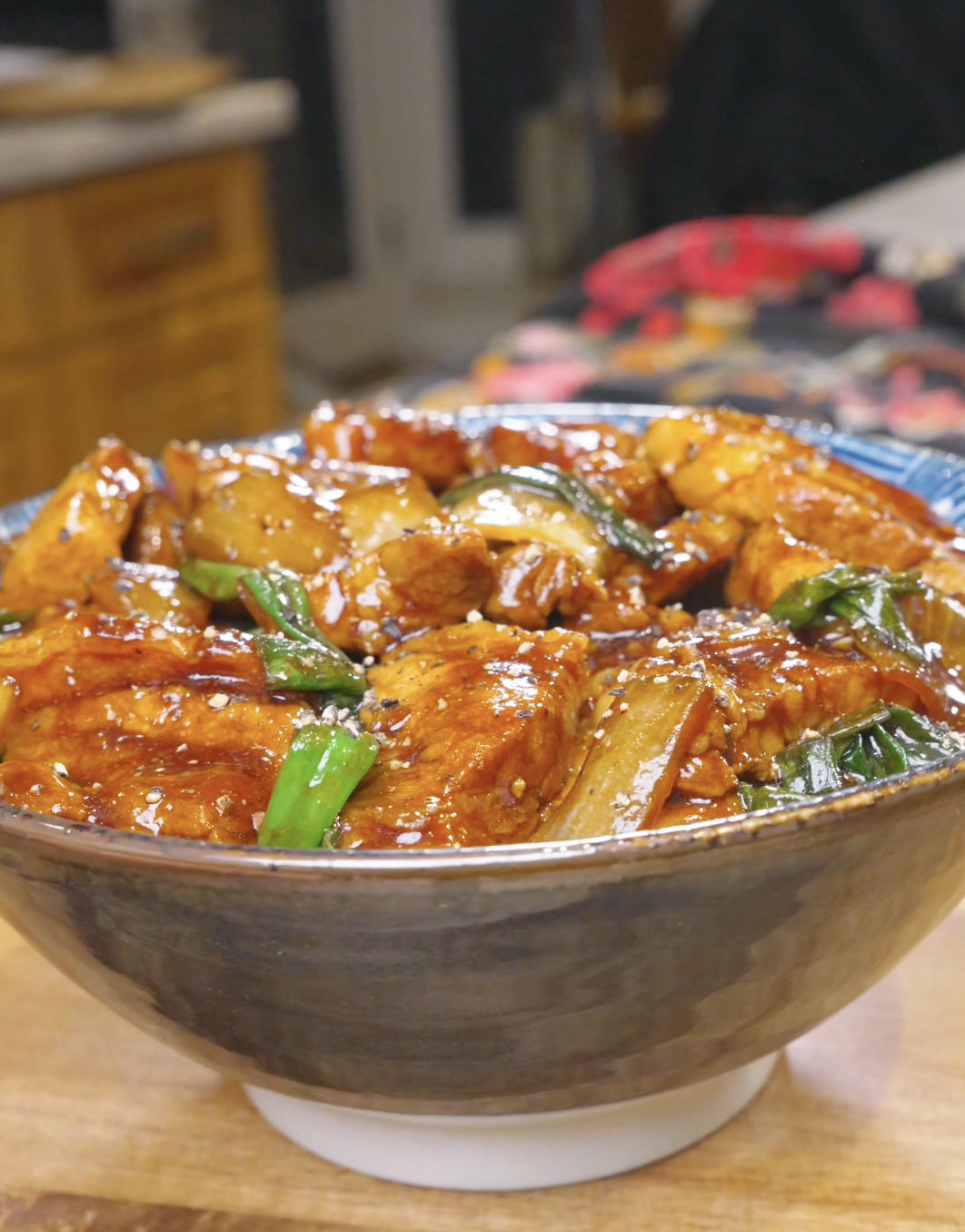
Black Pepper Pork Belly Recipe
Ingredients
- 1 lb pork belly, cubed
- 1 onion, cut into thick chunks
- 4 scallions, greens cut into one-inch pieces
- 3 cloves garlic, minced
For the Sauce
- 1 tbsp dark soy sauce
- 2 tbsp light soy sauce
- 1 tbsp oyster sauce
- 1 tbsp sugar
- 1 tsp sesame oil
- 2 tsp coarsely ground black pepper
- ⅓ cup water
For the Slurry
- 1 tsp cornstarch
- 1 tbsp cold water
Optional Garnish
- More black pepper
- Steamed rice
Instructions
- Cut the onions into thick chunks and cut the scallion greens into one-inch pieces.
- Place the cubed pork belly in a dry pan over medium heat and brown for a few minutes, letting the fat render out, then remove from the heat and set aside.
- Add the onions and minced garlic to the rendered fat and cook until fragrant.
- Return the pork to the pan along with the dark soy sauce, light soy sauce, oyster sauce, sugar, sesame oil, black pepper, and water. Bring to a simmer.
- Stir the cornstarch and cold water together and add the slurry along with the scallion greens. Remove from the heat once the greens are wilted and the sauce has thickened.
- Serve over a fresh bowl of rice. Optionally garnish with more black pepper. But it’s your food, you eat it how you like.
Video
Notes
- Don’t rush the rendering — low and slow at the start is what gives you crispy edges without burning.
- Give the pork room in the pan or it steams instead of searing.
- Add the slurry gradually, and only once the liquids are simmering, to avoid clumping.
- Use freshly cracked black pepper if you can, and add a touch extra right at the end.
- Let it rest a minute or two so the glaze sets.
This Black Pepper Pork Belly, a.k.a. Thịt Kho Tiêu is the kind of dish that’ll make your toes curl. Rich, fatty cubes of pork belly are seared until golden, then tossed in a glossy, peppery sauce that clings to every bite. It’s bold, a little punchy from freshly cracked black pepper, and balanced out with just enough sweetness and umami from the soy and oyster sauces to keep things deeply savory. The best part? It comes together in just 30 minutes with a handful of pantry staples, no marinating or fussing required. Spoon it generously over a hot bowl of steamed rice, let the sauce soak in, and you’ve got yourself a weeknight dinner that tastes like it took a lot more effort than it actually did.
Can’t get enough pork belly? Me neither! Check out my Vietnamese crispy pork belly, honey glazed pork belly and Asian braised pork belly recipes next!
Table of Contents
- Black Pepper Pork Belly Recipe
- Why You’ll Crave This Asian Pork Belly Recipe
- Ingredients & Substitutions
- Whole Peppercorn vs. Pre-Ground Pepper
- How to Make Black Pepper Pork Belly
- Optional Variations & Dietary Adaptations
- Expert Tips & Tricks
- Serving Suggestions
- Storage & Reheating
- FAQs
- More Asian Pork Belly Recipes
Why You’ll Crave This Asian Pork Belly Recipe
What really sets this dish apart is the texture contrast. Crispy, caramelized edges on the pork belly give way to tender, melt-in-your-mouth bites underneath, all wrapped up in a thick, glossy sauce that coats every piece perfectly. Rendering the fat directly from the pork belly means you’re building flavor from the very first step, so there’s no need for extra oil or complicated techniques to get restaurant-quality results. It’s also wonderfully simple: the ingredient list leans on things you likely already have tucked in your pantry. Plus, the whole process happens in a single pan, which means less cleanup and more time actually enjoying your meal. Whether you’re craving something quick after a long day or want a dish that feels special without the effort of a special-occasion recipe, this black pepper pork belly hits the sweet spot between comforting and crave-worthy.
Ingredients & Substitutions
- Pork Belly – The star of the show! Look for pork belly with good streaks of fat running through it. That’s what renders down and gives the dish its rich flavor and crispy edges.
- Onion – Yellow, white or red onion adds sweetness once it soaks up all that rendered pork fat. Shallots work beautifully too if you want something a little more delicate and aromatic.
- Scallions – These add a fresh, oniony bite and a pop of color at the end. If you’re out, a handful of chopped chives can step in, though you’ll want to add them at the very end since they’re more delicate.
- Garlic – Freshly minced is best for that punchy, fragrant base. In a pinch, jarred minced garlic works, just use a little extra since the flavor tends to be milder.
For the Sauce
- Dark Soy Sauce – This is what gives the dish its deep, almost mahogany color. It’s less salty than you’d think, more about color and a subtle molasses-like depth. If you can’t find it, a mix of regular soy sauce with a touch of molasses can mimic the color and richness.
- Light Soy Sauce – This is your main salty, savory backbone.
- Oyster Sauce – Adds a silky, savory-sweet depth that’s hard to replicate, but a vegetarian “stir-fry” sauce or mushroom-based oyster sauce works well too.
- Granulated Sugar – Just a touch to balance out all that salty, savory goodness. Brown sugar or even honey can sub in for a slightly deeper, more caramelly sweetness.
- Toasted Sesame Oil – A little goes a long way here, adding a nutty, toasty aroma right at the finish.
- Coarsely Ground Black Pepper – This is the namesake ingredient, so don’t be shy! Freshly cracked pepper gives the best texture and punch. Pre-ground pepper works too, just know you’ll lose some of that bold, peppery bite.
- Water – Low-sodium chicken broth can be swapped in if you want an extra layer of savoriness.
- Cornstarch Slurry – This is your thickening agent, turning the sauce glossy and clingy. Potato starch is a 1:1 swap for cornstarch.
Optional Garnish
- More Black Pepper – Because sometimes you just want that extra kick. Totally optional, totally up to your taste buds.
- Steamed Rice – The perfect vehicle for soaking up all that incredible sauce. Jasmine or white rice are classic, but brown rice or even cauliflower rice work if you’re looking for extra fiber or a lower-carb option.
This is just a short review of the ingredients; for the complete recipe, including quantities, scroll down to the recipe card 👇
Whole Peppercorn vs. Pre-Ground Pepper
When it comes to black pepper pork belly, the pepper is practically a main character, so it’s worth talking about which form you should reach for. Freshly cracked whole peppercorns are the way to go if you want that bold, slightly citrusy heat and coarse texture that really defines this dish.
Grinding them yourself right before cooking releases essential oils that give the pepper its full aromatic punch, something that simply fades over time once pepper is pre-ground and sitting in a jar. Pre-ground pepper isn’t a dealbreaker, though—it’ll still get you a tasty, peppery sauce, just a touch milder and less textured since it lacks that coarse, cracked bite.
If you only have pre-ground on hand, consider adding a little extra to compensate for the flavor that’s been lost over time. At the end of the day, coarsely cracked whole peppercorns are the gold standard here, but don’t let a lack of a pepper mill stop you from making this dish tonight.
How to Make Black Pepper Pork Belly
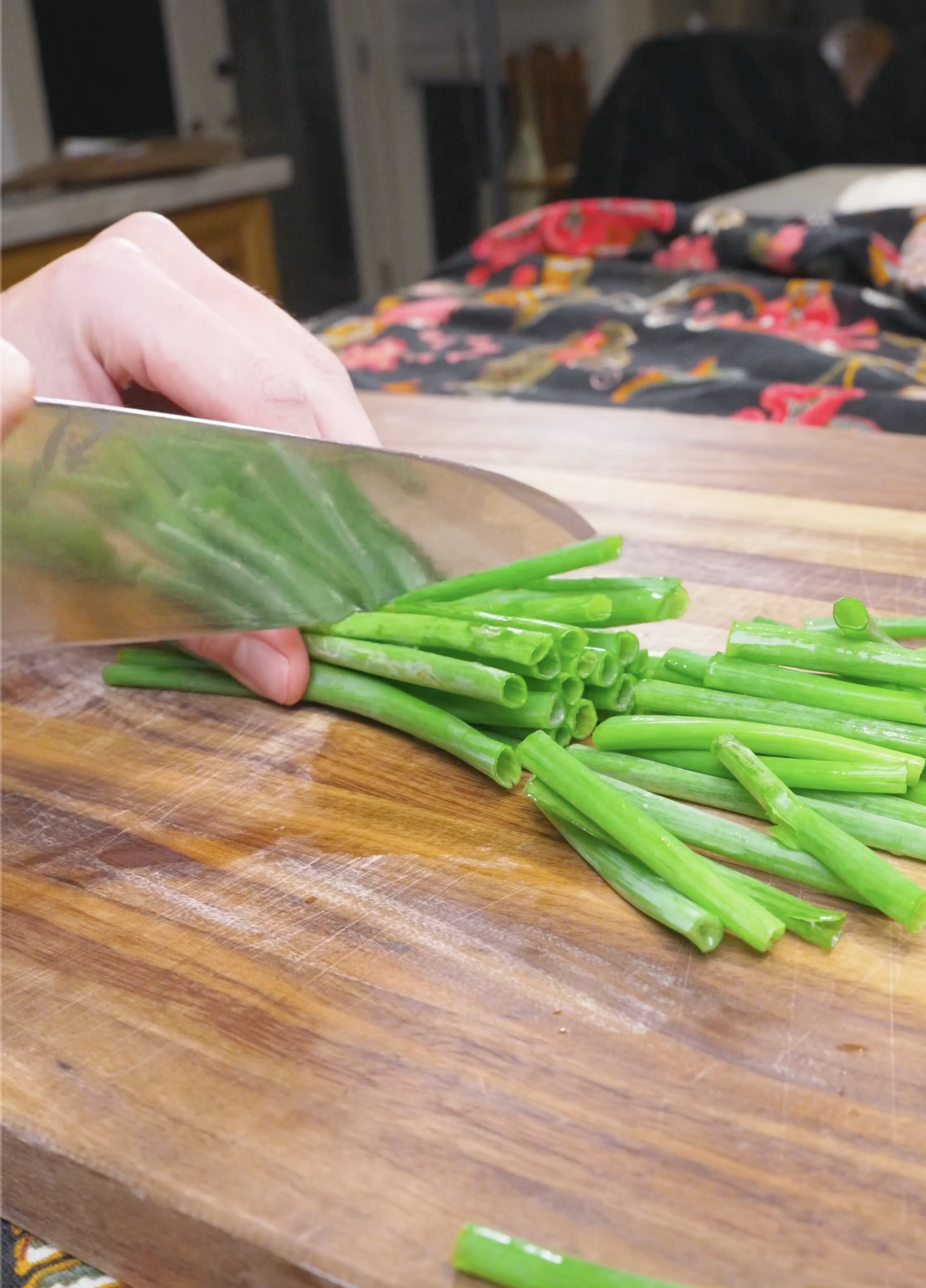
Cut the onions into thick chunks and cut the scallion greens into one-inch pieces.
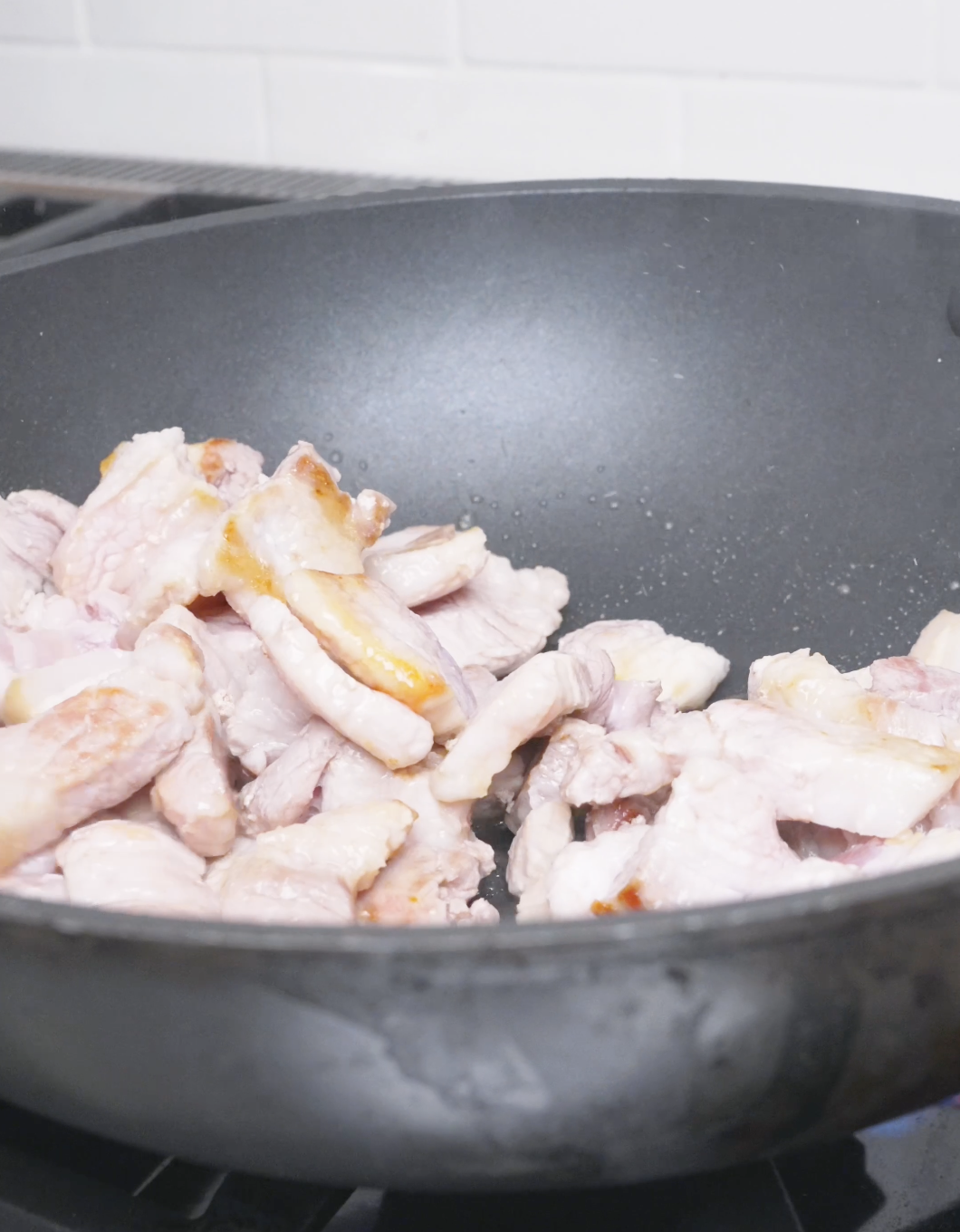
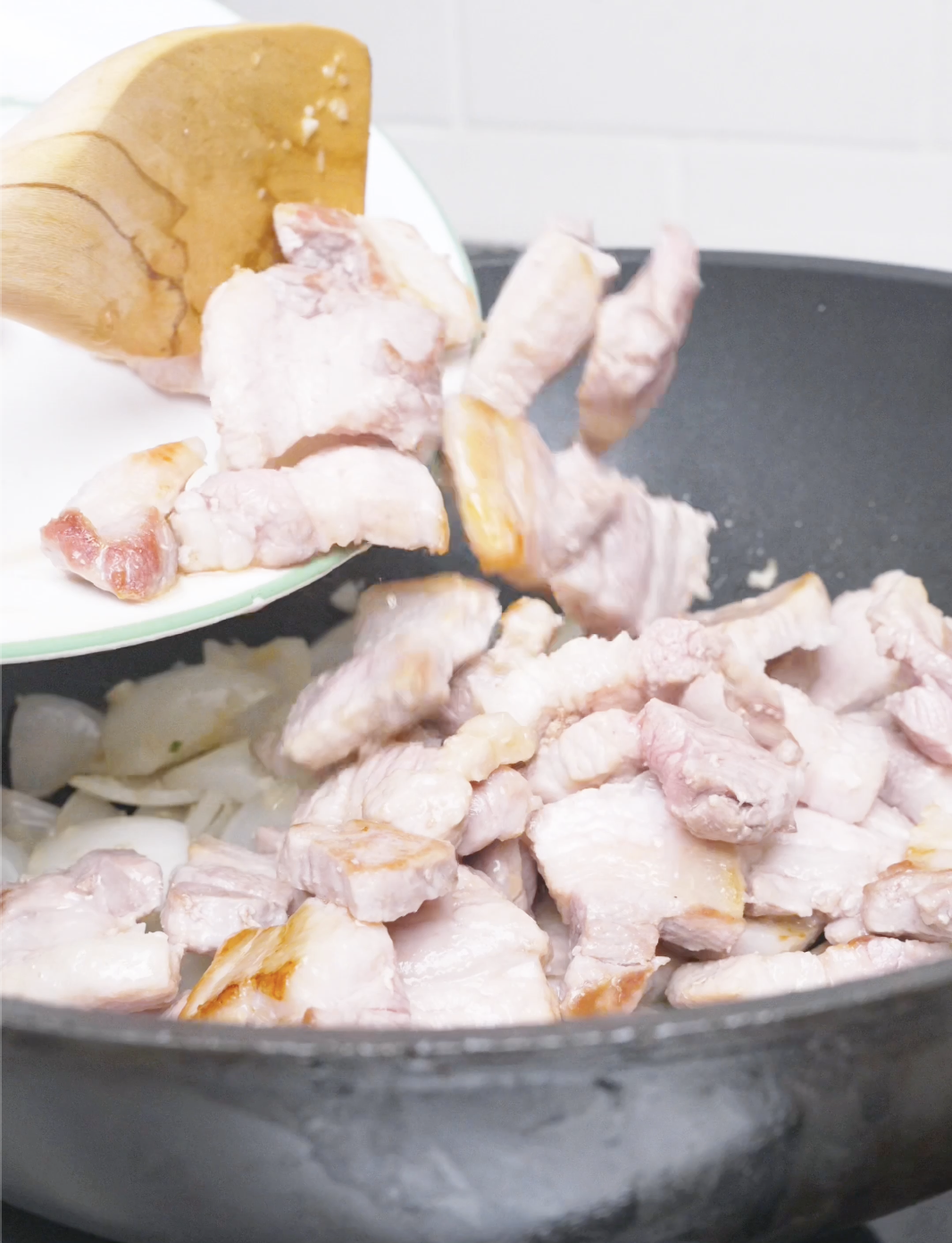
Place the cubed pork belly in a dry pan over medium heat and brown for a few minutes, letting the fat render out, then remove from the heat and set aside.
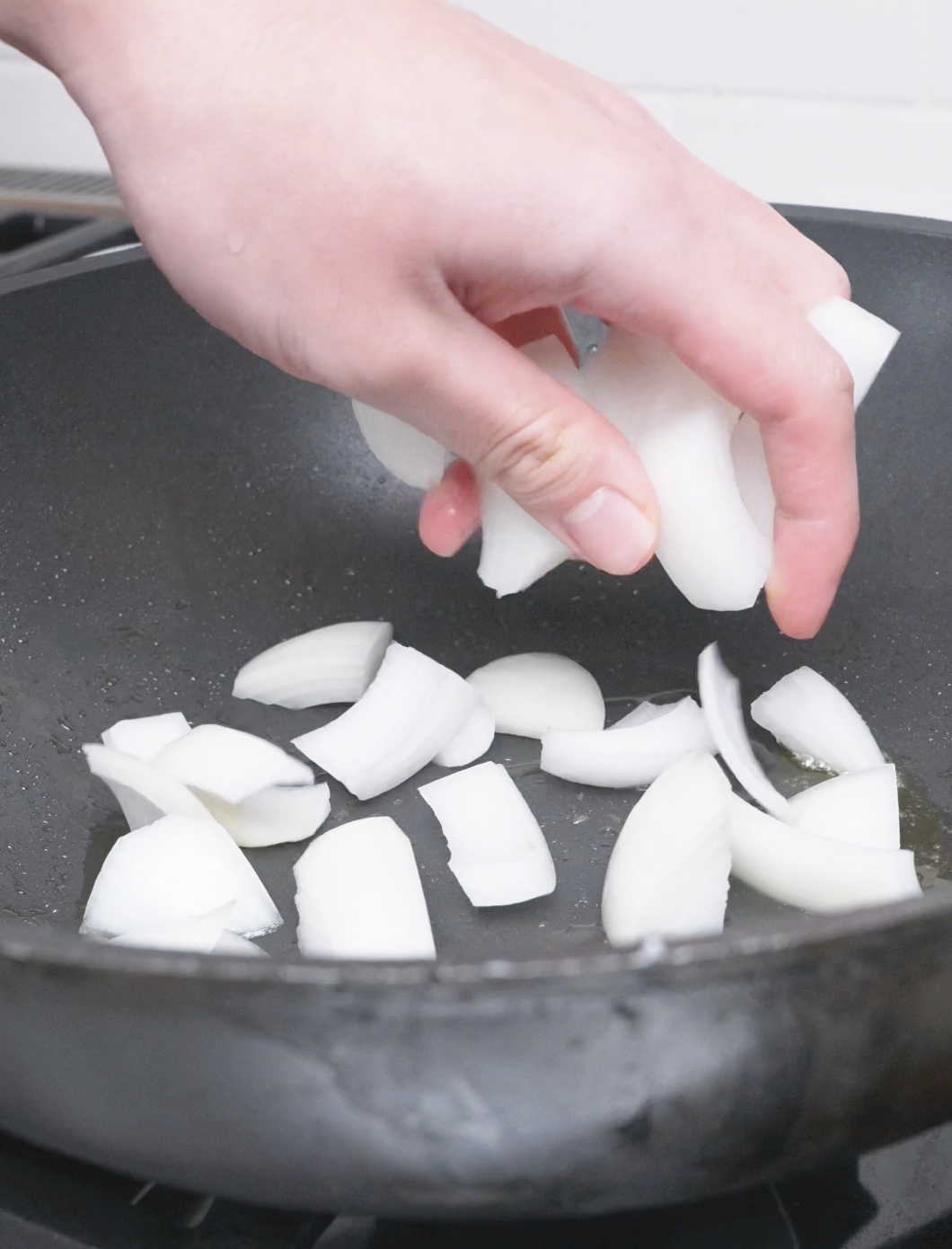
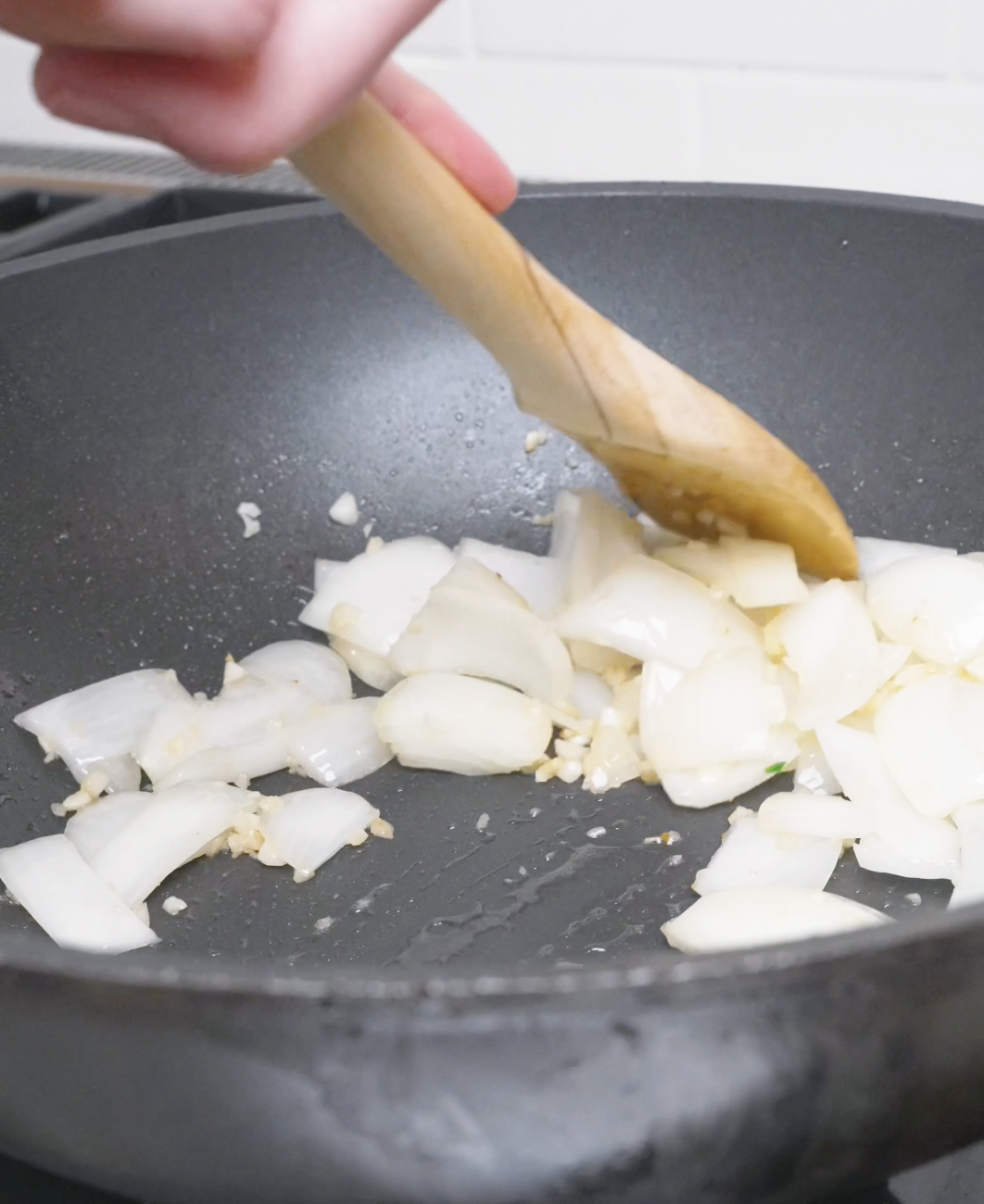
Add the onions and minced garlic to the rendered fat and cook until fragrant.
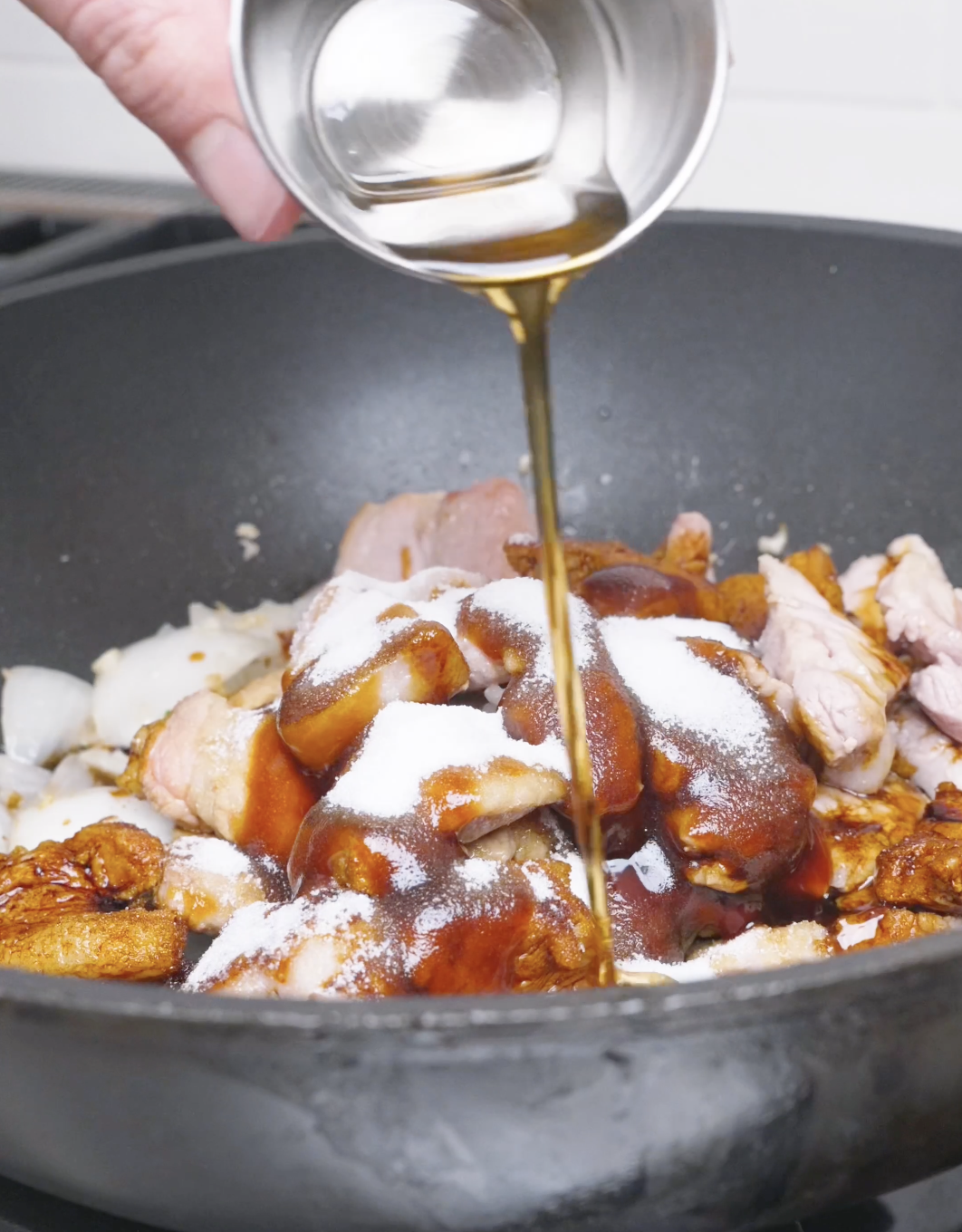
Return the pork to the pan along with the dark soy sauce, light soy sauce, oyster sauce, sugar, sesame oil, black pepper, and water. Bring to a simmer.
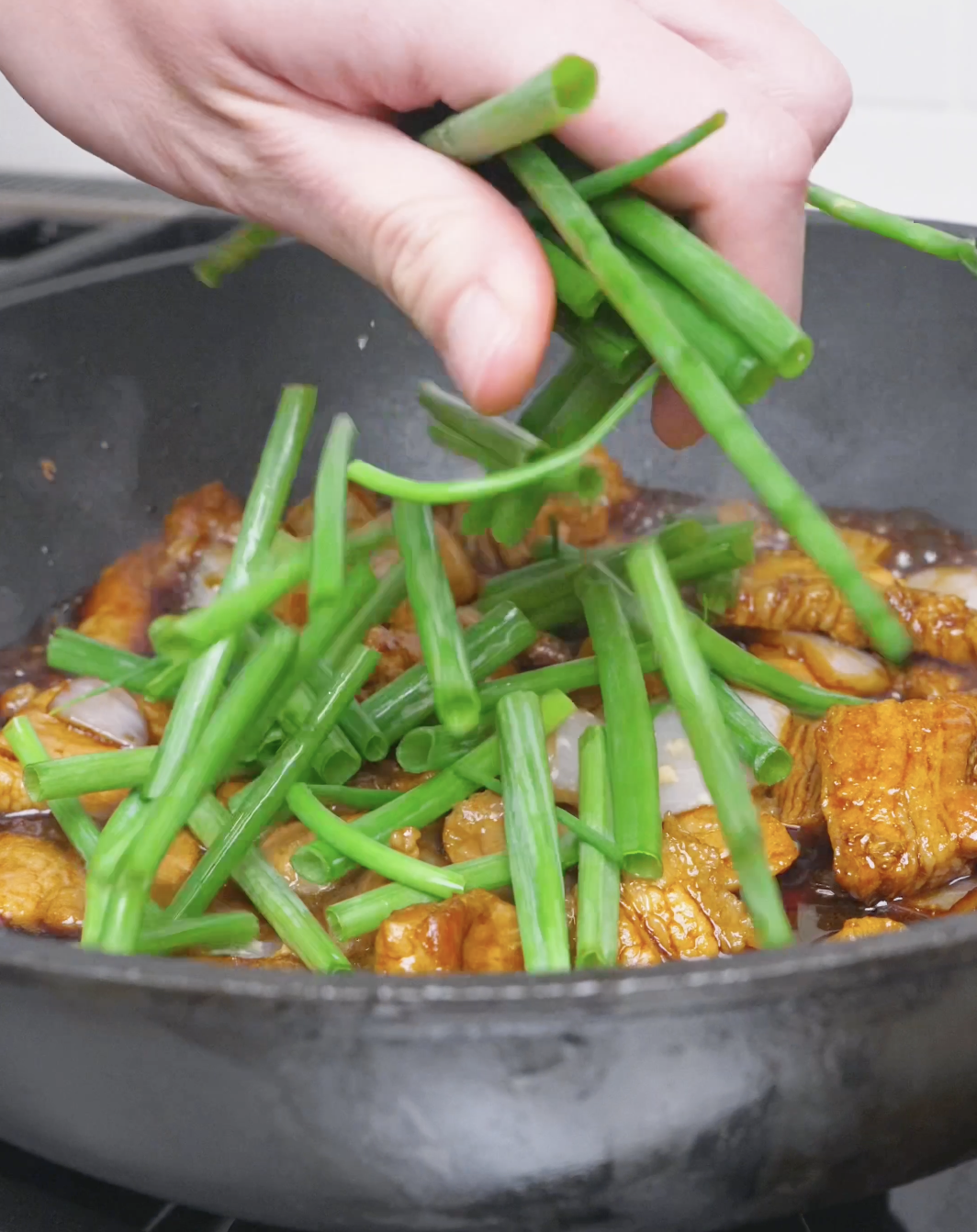
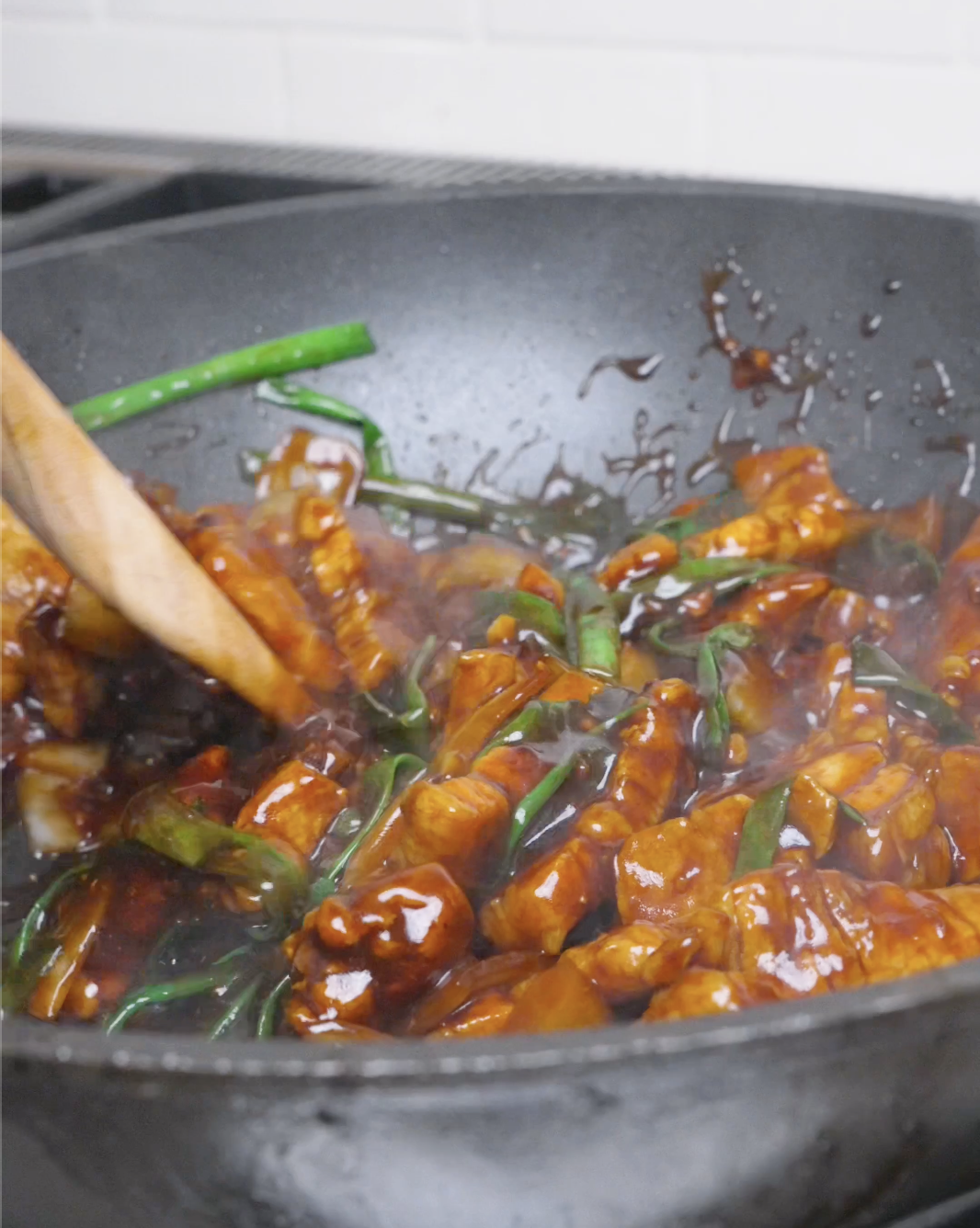
Stir the cornstarch and cold water together and add the slurry along with the scallion greens. Remove from the heat once the greens are wilted and the sauce has thickened.
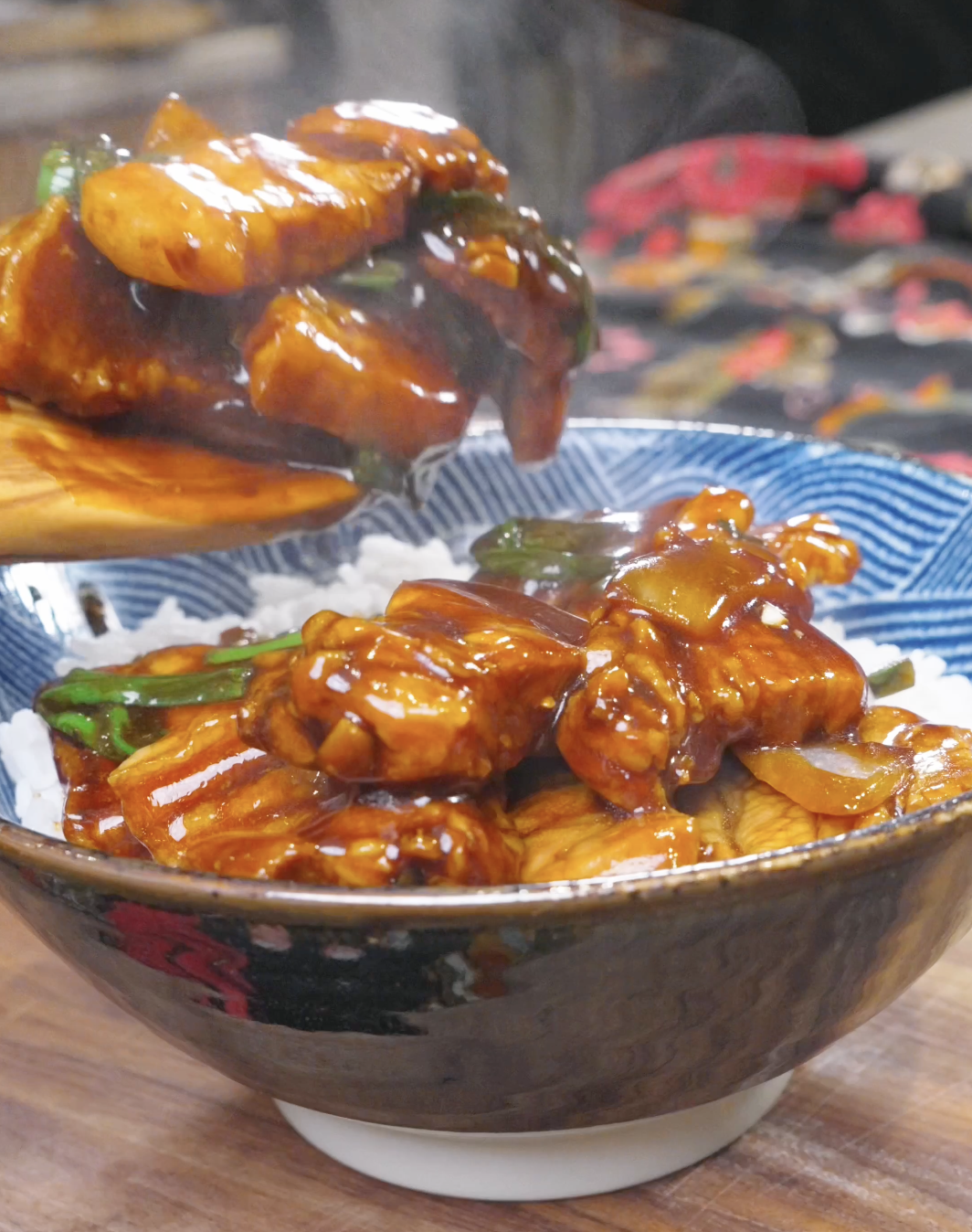
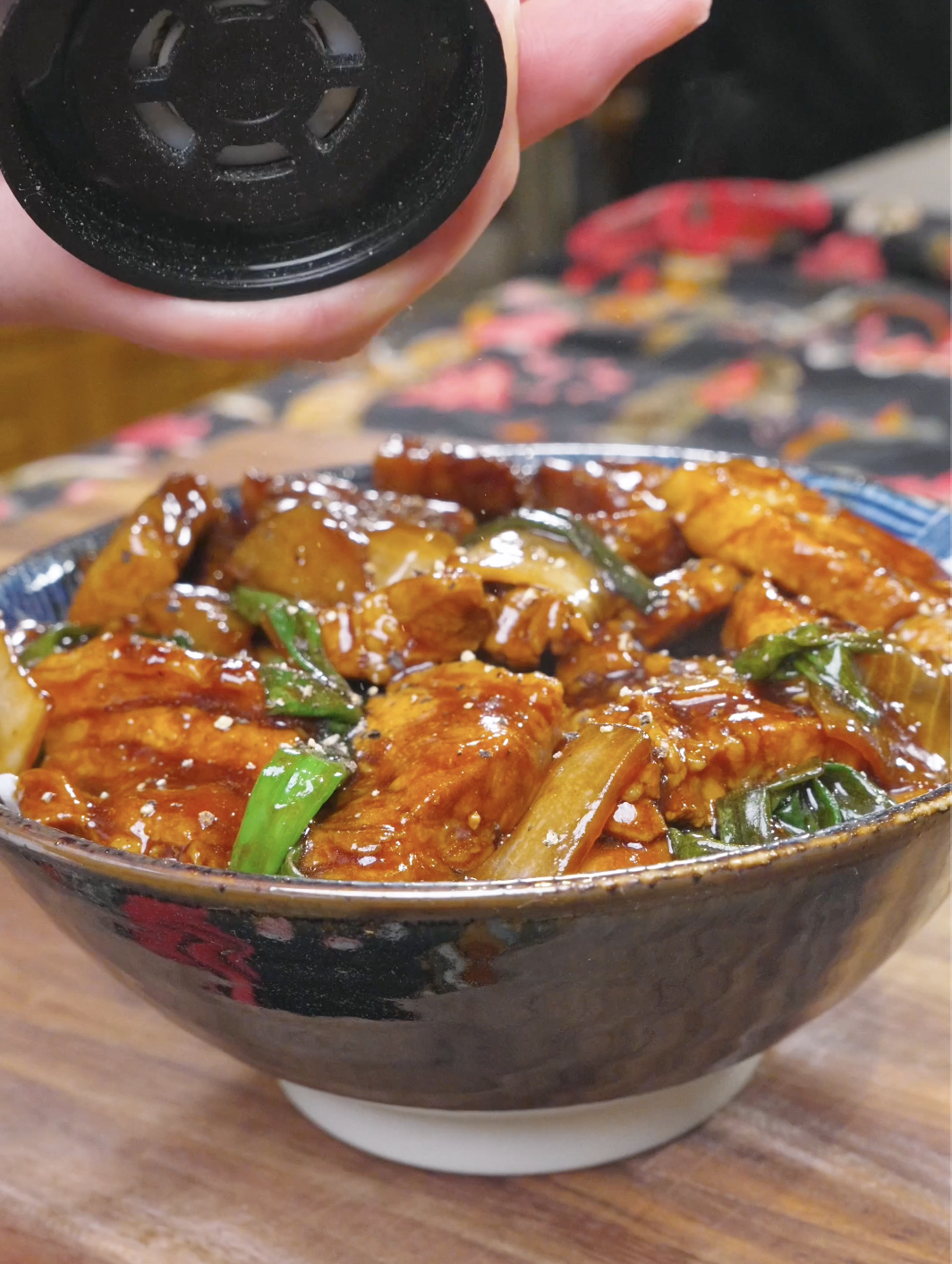
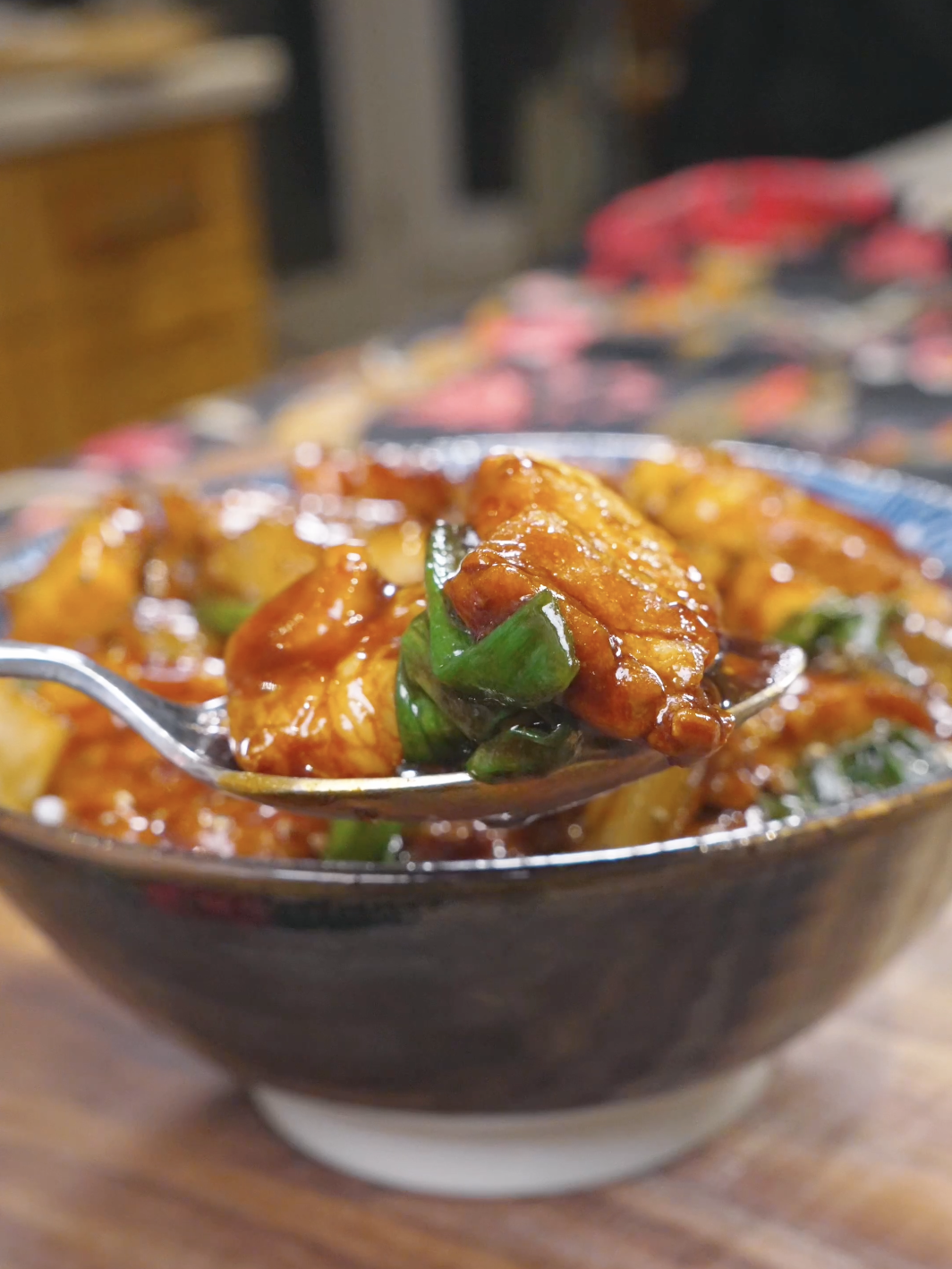
Serve over a fresh bowl of rice. Optionally garnish with more black pepper. But it’s your food, you eat it how you like.
More of a visual learner? Check out my video recipe below. 👇
Optional Variations & Dietary Adaptations
This Asian-style pork belly is pretty flexible, so don’t be afraid to make it your own depending on what you’re craving or what you’ve got on hand.
- Protein Swap – If you want to lighten things up a bit, try making my black pepper chicken or black pepper beef instead.
- Vegetarian/Vegan – Extra-firm tofu or king oyster mushrooms make excellent substitutes; just dust them in cornstarch and salt and pan-fry them until golden to mimic the crispy edges, and be sure to swap the oyster sauce for a mushroom-based or vegan stir-fry sauce.
- Gluten-Free – Swap in tamari for light soy sauce, coconut aminos for dark soy sauce and a gluten-free oyster sauce alternative.
- Reduced-Sodium – Low-sodium soy sauce works great here without sacrificing much flavor, since the black pepper and aromatics are doing a lot of the heavy lifting anyway.
- Extra Spicy – Toss in some sliced fresh chilies or a pinch of chili flakes alongside the garlic for a spicy kick that plays well with the pepper.
- Add Veggies – If you’re looking to bulk up the dish into more of a one-pan meal, feel free to toss in some quick-cooking vegetables like bell peppers, snap peas, or baby bok choy right at the end—they’ll soak up the sauce beautifully and add a nice crunch.
Expert Tips & Tricks
A few small tricks can take this Asian-style pork belly from good to absolutely crave-worthy:
- Don’t rush the rendering process. Letting the pork belly cook low and slow at the start gives the fat time to melt out properly, which is what gives you those irresistibly crispy edges without burning the exterior before the inside cooks through.
- Resist the urge to crowd the pan. If your pork belly pieces are too close together, they’ll steam instead of sear, and you’ll miss out on that beautiful caramelization.
- Add your cornstarch slurry gradually and only once the other liquids are simmering. Pouring it in too early or all at once can cause clumping instead of that silky, glossy finish you’re after.
- Taste as you go, especially before adding the full amount of sugar or soy sauce, since brands vary quite a bit in saltiness and sweetness.
- Try to use freshly cracked black pepper rather than pre-ground whenever possible, and don’t be shy about adding a touch extra right at the end for a fresh, aromatic finish.
- Let the pork belly rest for just a minute or two after cooking before serving—it helps the glaze set slightly and makes for a much more satisfying bite.
Serving Suggestions
This black pepper pork belly is rich, bold, and packed with flavor, so it pairs beautifully with something simple to help balance it out. Steamed jasmine rice is the classic choice, soaking up every last bit of that glossy sauce, but if you’re looking to switch things up, try serving it over a bed of garlic fried rice for an extra layer of texture and flavor, or alongside a batch of fluffy Korean garlic cheese bread for a fun, handheld twist.
To round out the meal, a crisp, refreshing side can go a long way toward cutting through the richness of the pork belly. A quick cucumber salad or tangy pickled vegetables adds brightness and crunch that plays really well against the deep, peppery sauce. If you’re feeding a crowd or want to turn this into more of a full spread, consider pairing it with a lighter vegetable dish like garlic sautéed greens or a comforting bowl of egg drop soup to round things out.
Storage & Reheating
- Refrigeration: Leftover black pepper pork belly keeps wonderfully, making it a great option for meal prep or next-day lunches. Once it has cooled to room temperature, transfer it to an airtight container and store it in the refrigerator for up to 3-4 days.
- Freezing: If you’d like to keep it longer, this dish also freezes well. Portion it into freezer-safe containers or bags and freeze for up to 2-3 months. Just be sure to let it cool completely before sealing it up, as trapping warm steam can lead to freezer burn or a soggy texture down the line. For frozen portions, it’s best to thaw the dish in the refrigerator overnight before reheating.
- Reheating (Stovetop): Add the pork belly to a skillet over medium heat with a splash of water or broth to loosen the sauce, and stir occasionally until warmed through, about 5-7 minutes.
- Reheating (Microwave): If you’re in a hurry, the microwave works fine too. Just heat in short 30-second bursts, stirring in between, to avoid overcooking the meat or making it rubbery.
- Note: However you choose to reheat it, a little extra sauce or a splash of water helps bring back that just-cooked texture and keeps the dish tasting just as good as the day you made it.
FAQs
What seasoning is best for pork belly?
Pork belly’s rich, fatty flavor pairs well with bold, cutting seasonings. Classics include salt and black pepper (simple but effective), garlic and ginger, soy sauce, five-spice powder, and a touch of sugar or honey for caramelization. Acidic or spicy elements—like chili, vinegar, or citrus—also help balance the richness. For more inspiration, hop down to the “More Asian Pork Belly Recipes” section!
Why do I feel weird after eating pork belly?
If symptoms are frequent or concerning, it’s worth checking with a doctor. That said, pork belly is very high in fat, so feeling sluggish, bloated, or nauseous afterward is often just your digestive system working harder to process it, especially if you ate a large portion. If you’re not feeling well after eating it, it could signal a sensitivity to fatty foods or a mild food intolerance.
More Asian Pork Belly Recipes
Craving more pork belly? Try my Red Braised Pork Belly, Deep Fried Pork Belly, or Vietnamese Crispy Pork Belly!