Black Pepper Chicken Udon Recipe
Equipment
Ingredients
- 16 oz chicken thighs, cubed
- 14 oz packaged udon noodles
- Neutral oil, for cooking
- 1/2 onion, roughly chopped
- 4 scallions, cut into half-inch pieces, whites and greens separated
- 3 cloves garlic, minced
For the Sauce:
- 1 tbsp dark soy sauce
- 2 tbsp light soy sauce
- 1 tbsp oyster sauce
- 1 tbsp sugar
- 1 tsp sesame oil
- 1 1/2 tsp coarsely ground black pepper
Optional Garnish:
- Black pepper
Instructions
- Roughly chop the onion and cut the scallions into half-inch pieces, keeping the whites and greens separate.
- Heat a pan over medium-high heat with a bit of oil. Add the cubed chicken thighs and brown, cooking until about 80% of the way through, then remove from the pan and set aside.
- In the same pan, add the onion, scallion whites, and garlic. Cook until softened and fragrant.
- Return the chicken to the pan along with the udon, then season with the dark soy sauce, light soy sauce, oyster sauce, sugar, sesame oil, and black pepper. Toss until the noodles separate and the sauce slightly thickens and coats everything.
- Add the scallion greens and toss just until wilted.
- Transfer to a bowl and optionally garnish with more black pepper.
Video
Notes
- Loosen the udon before it hits the pan. A quick rinse under hot water separates the strands so they heat through evenly instead of clumping.
- Crack your pepper fresh and don’t be shy. Black pepper is the star here, so coarsely cracked whole peppercorns deliver far more aroma than pre-ground.
- Have everything prepped before you turn on the heat. Stir-fries move fast, and once the noodles hit the pan there’s no time to chop.
- Keep the heat high and keep things moving for that slightly smoky wok hei flavor without overcooking the chicken.
Nutrition
Nutrition information is automatically calculated, so should only be used as an approximation.
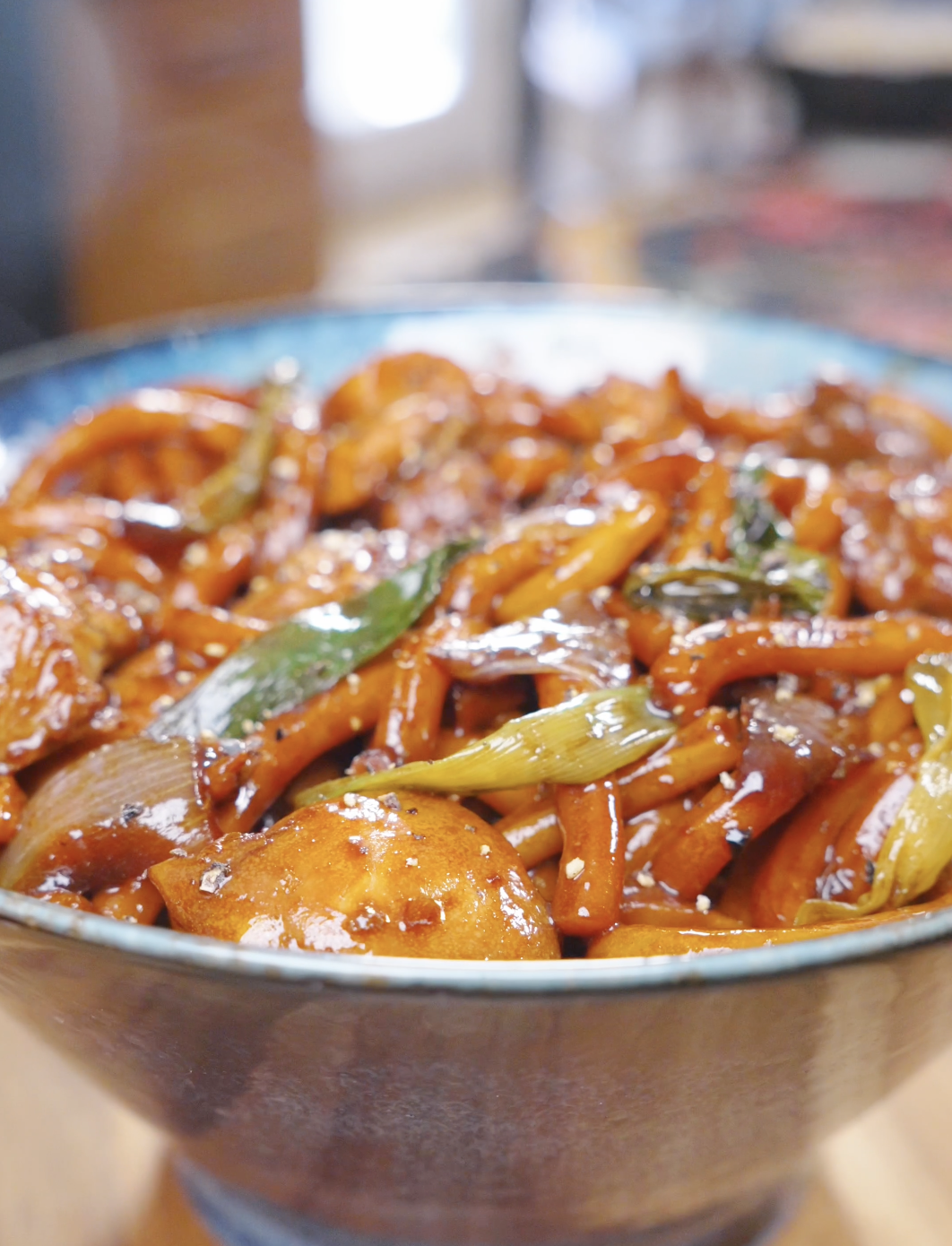
Next time you’re craving a salty, spicy, slurpable bowl of comfort, look no further than my Chinese Black Pepper Chicken Udon Noodles! Juicy chicken thighs, a smattering of alliums and thick, bouncy wheat noodles are coated in a deliciously fiery umami sauce that comes together in just 20 minutes from start to finish using just one pan. The black pepper sauce is bold without being overwhelming—savory, a little sweet, and packed with just enough heat to wake up your tongue without sending you running for a glass of milk. This easy noodle dish the kind of meal that feels like a restaurant-quality takeout order, minus the wait (and the delivery fee). Whether you’re cooking for a quick weeknight dinner or meal-prepping for the week ahead, this spicy chicken udon recipe is guaranteed to earn a permanent spot in your rotation!
Table of Contents
- Black Pepper Chicken Udon Recipe
- Why You’ll Crave Stir Fried Black Pepper Chicken Udon Noodles
- Ingredients & Substitutions
- A Primer On Black Peppercorns
- How to Make Black Pepper Chicken Udon Stir Fry
- Optional Variations & Dietary Adaptations
- Expert Tips & Tricks
- Serving Suggestions
- Storage & Reheating
- FAQs
- More Chinese Black Pepper Recipes
- More Chicken Stir Fry Recipes
Why You’ll Crave Stir Fried Black Pepper Chicken Udon Noodles
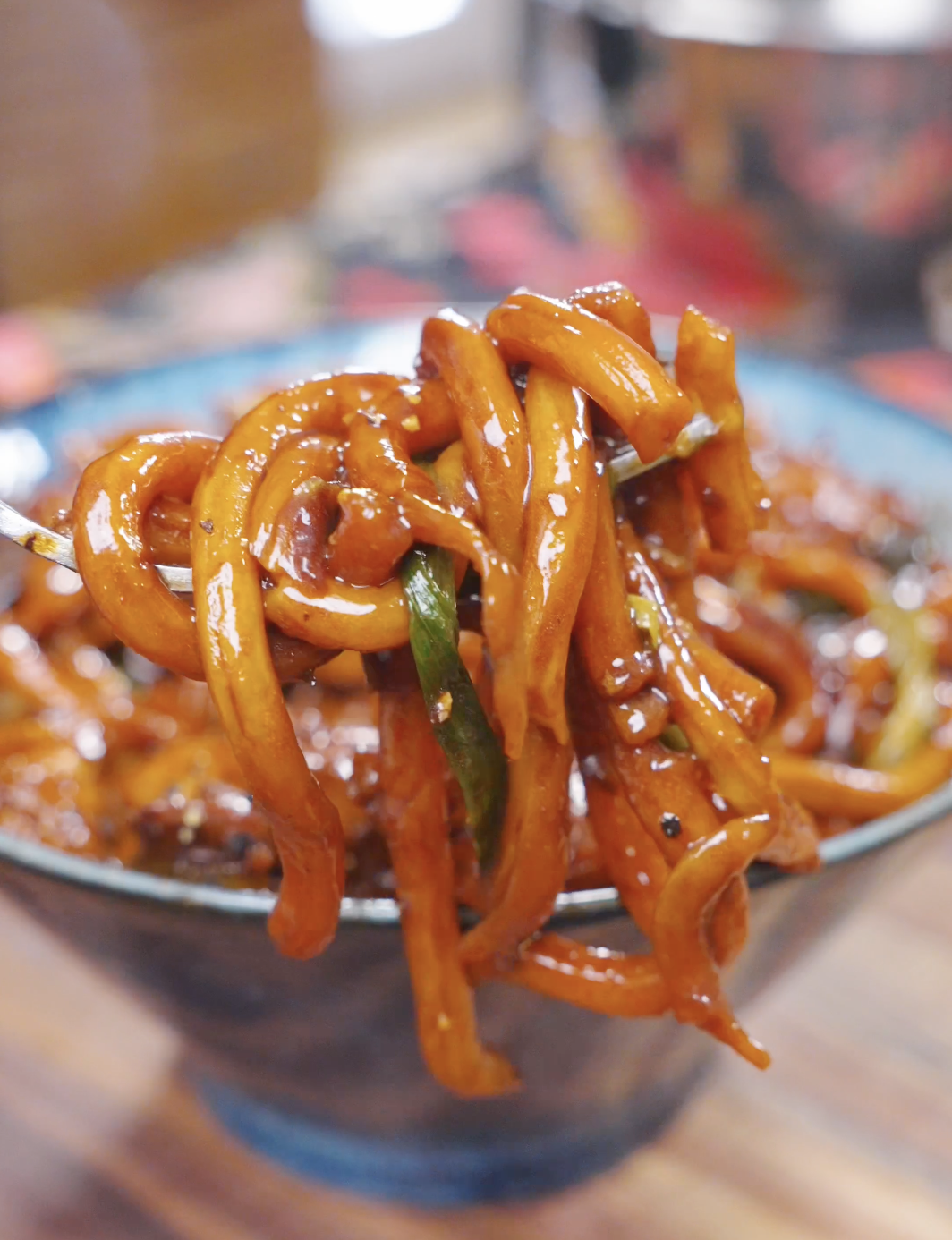
This easy noodle dish is fast, but it tastes like it simmered all day. Between the caramelized alliums and the deeply savory black pepper sauce clinging to every noodle and tidbit of meat, it delivers layers of flavor that belie its short cooking time. The texture contrast alone is addictive: tender, juicy chicken thighs, slick and chewy udon, and just-crisp vegetables all play off each other in a way that keeps every bite interesting. Then there’s the black pepper kick, which is truly craveable. Unlike a one-note spicy dish, freshly cracked black pepper brings a warm, almost smoky heat that builds slowly—its the kind of flavor you’ll find yourself thinking about the next day. Black pepper chicken udon also scratches the takeout itch without the wait or high cost. If you love ordering Chinese food, this recipe nails that same effect using pantry staples you probably already have. And since everything cooks together in one pan, you get maximum flavor payoff for minimal effort, making it ideal for busy weeknights when you still want something that feels special!
Ingredients & Substitutions
- Chicken Thighs — Boneless, skinless thighs stay juicy and flavorful, but boneless chicken breast works too if that’s what you have on hand. Just be careful not to overcook it since it dries out faster!
- Packaged Udon Noodles — I like the vacuum-sealed, pre-cooked kind that goes straight into the pan without boiling first (such a time-saver!). If you can only find the dried or frozen variety, just cook according to the package instructions before adding them in.
- Neutral Oil — Vegetable, canola, or avocado oil all work great here. You just want something with a high smoke point that won’t compete with the other flavors.
- Onion — Yellow, red or white onion adds a nice sweetness once caramelized, but shallots would also be delicious if you want something a little more delicate.
- Scallions — These add a fresh, mild oniony bite and a pop of color. In a pinch, a bit more yellow onion can sub in, though you’ll miss some of the fresh, slightly grassy finish.
- Garlic — Fresh is best for a punchy, aromatic flavor, but jarred minced garlic works fine if you’re short on time.
For the Sauce
- Dark Soy Sauce — This is what gives the noodles their deep color and slight sweetness. If you can’t find it, regular soy sauce plus a touch of molasses works in a pinch.
- Light Soy Sauce — Regular all-purpose soy sauce brings the salty, savory base of the sauce.
- Oyster Sauce — Adds richness and umami depth. Vegetarian “stir-fry sauce” or mushroom-based oyster sauce works well if you need a substitute.
- Granulated Sugar — Just a touch to balance out the salty and savory notes. Brown sugar can be swapped in for a slightly deeper caramel flavor (great if you don’t have dark soy sauce).
- Toasted Sesame Oil — A little goes a long way in adding that nutty, fragrant finish. Don’t skip this—it really ties the sauce together!
- Coarsely Ground Black Pepper — The star of the show! Freshly cracked pepper gives the best bold, aromatic heat, so skip the pre-ground stuff if you can. Feel free to adjust the amount up or down depending on your spice tolerance.
This is just a short review of the ingredients; for the complete recipe, including quantities, scroll down to the recipe card 👇
A Primer On Black Peppercorns
Not all pepper is created equal, and understanding a few key varieties will help you get the most flavor out of this dish.
- Malabar is the standard black pepper you’ll find in most grocery stores. It’s reliable, spicy, and pungent, but fairly one-dimensional compared to other varieties.
- Tellicherry is essentially a premium upgrade of Malabar. The berries are left on the vine longer, growing larger and developing a bolder, more complex flavor with subtle fruity, almost citrusy notes underneath the heat. Because of their higher oil content, Tellicherry peppercorns deliver a warmth that builds slowly rather than hitting all at once, which is exactly the kind of lingering heat you want coating noodles rather than a sharp, fleeting bite.
- Sarawak, grown in Malaysian Borneo, sits on the opposite end of the spectrum. It offers a lighter profile, mildly spicy with hints of fruit and floral notes, making it better suited for delicate dishes like seafood or cream sauces rather than something that needs to stand up to bold, savory flavors.
- Sichuan peppercorns are actually a completely different plant altogether. They’re not true pepper at all, but the dried husk of the prickly ash tree. Rather than straightforward heat, they’re known for producing a tingly, numbing sensation on the tongue (called “mala” in Chinese cooking) alongside a citrusy, slightly floral aroma. They’re a defining flavor in many Sichuan dishes, but they bring a very different sensory experience than black pepper—one that’s more about tingle and fragrance than direct spice.
So which should you use here? Tellicherry is the best choice for Chinese black pepper dishes like black pepper chicken and black pepper beef. Since black pepper is the star seasoning rather than a background note, you want peppercorns robust enough to actually taste once cracked coarsely and stirred through the sauce. Sichuan peppercorns, while delicious, would shift the entire flavor profile toward something more numbing and aromatic rather than the bold, straightforward peppery punch this dish is going for. If you’re a spice adventurer, a small pinch of cracked Sichuan peppercorns alongside the black pepper could be a fun variation, but don’t swap one for the other entirely.
How to Make Black Pepper Chicken Udon Stir Fry
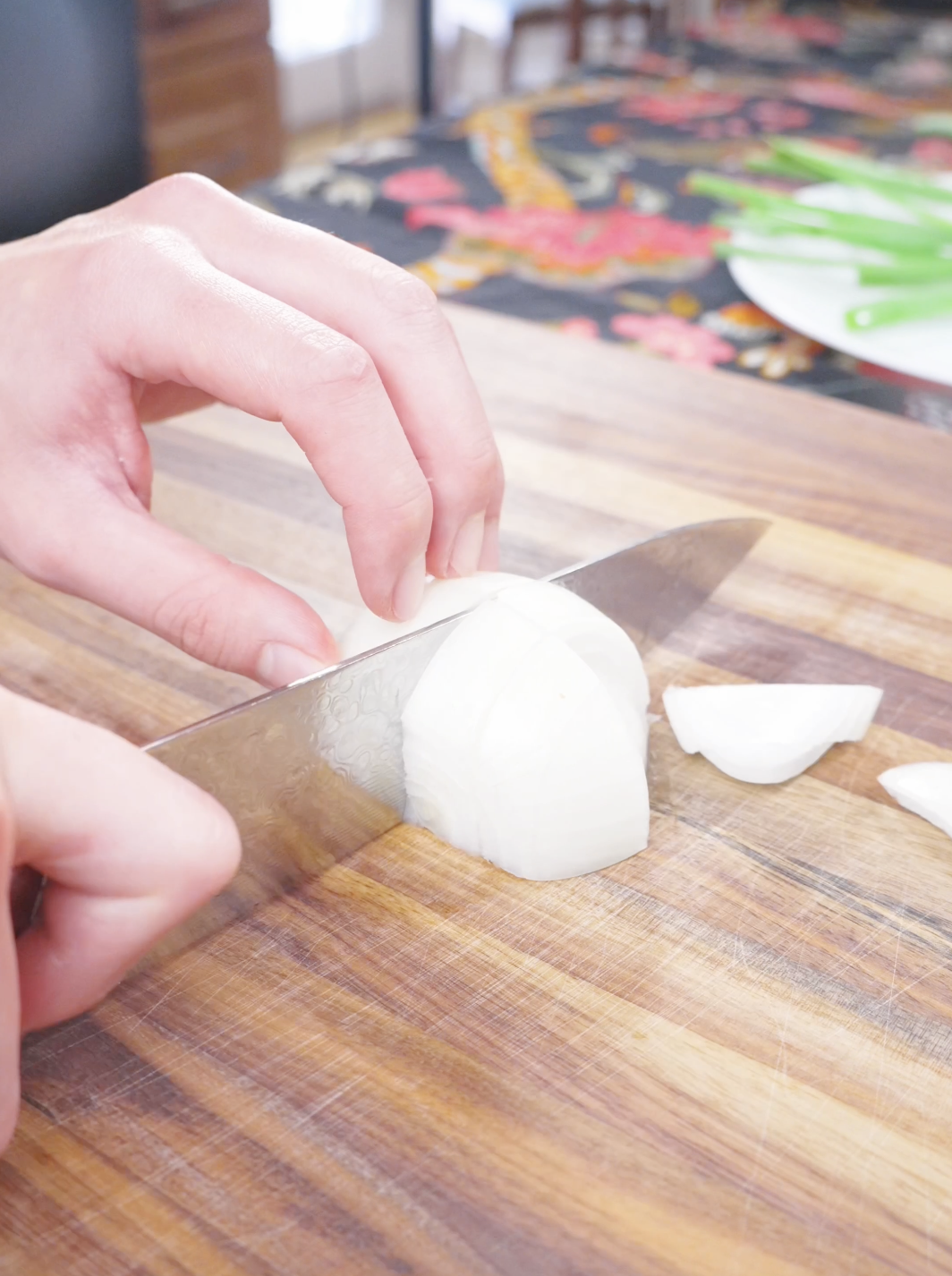
Roughly chop the onion and cut the scallions into half-inch pieces, keeping the whites and greens separate.
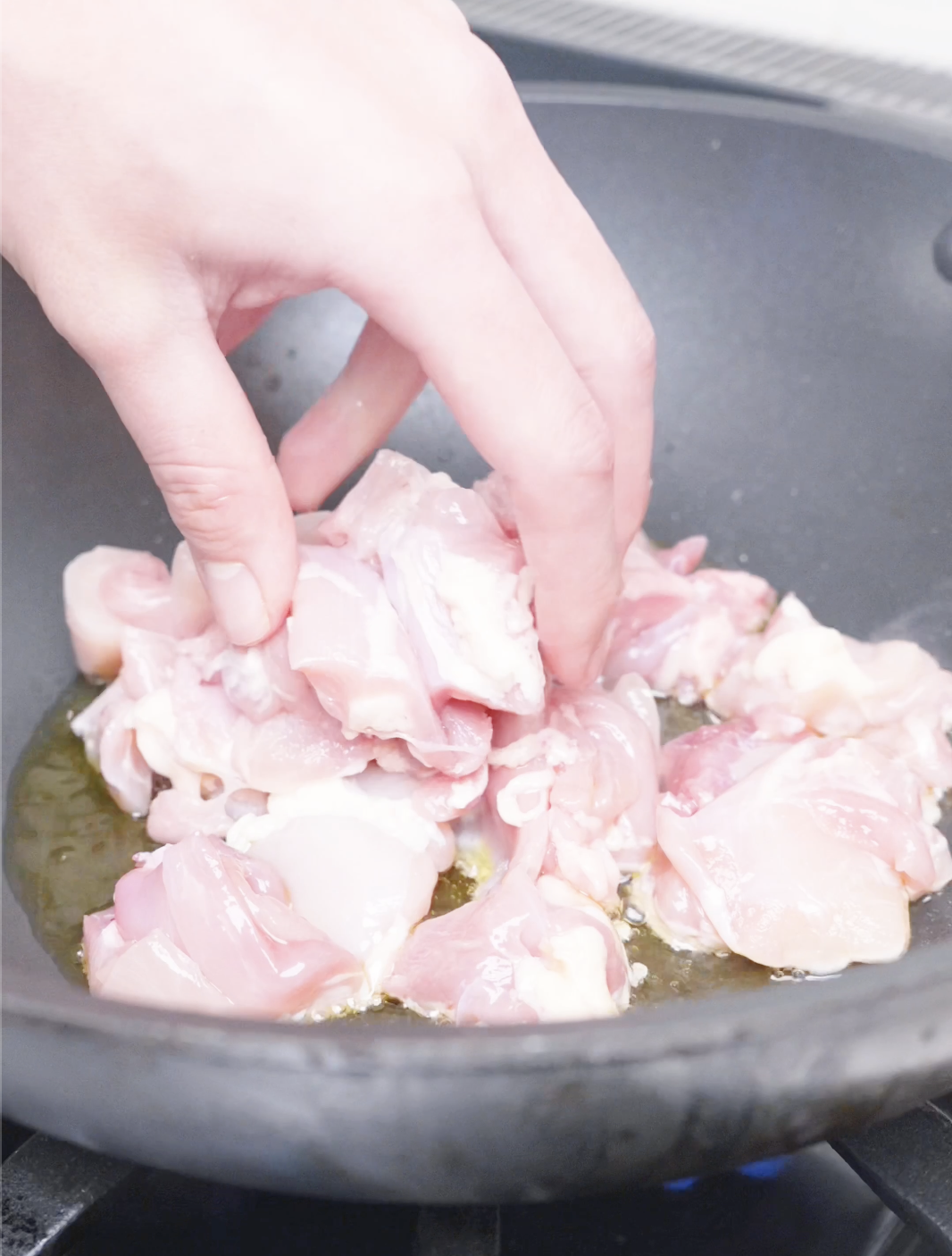
Heat a pan over medium-high heat with a bit of oil. Add the cubed chicken thighs and brown, cooking until about 80% of the way through, then remove from the pan and set aside.
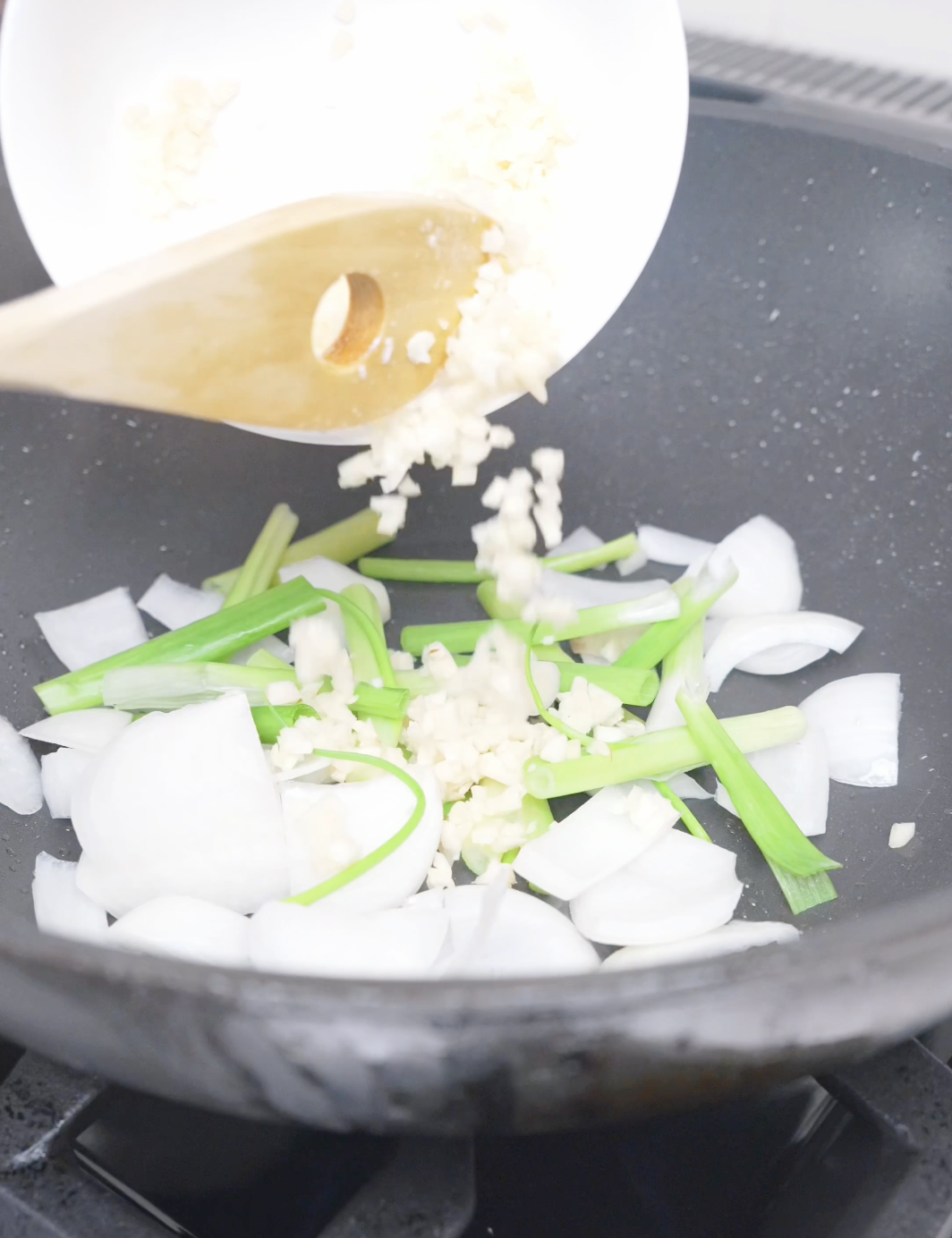
In the same pan, add the onion, scallion whites, and garlic. Cook until softened and fragrant.
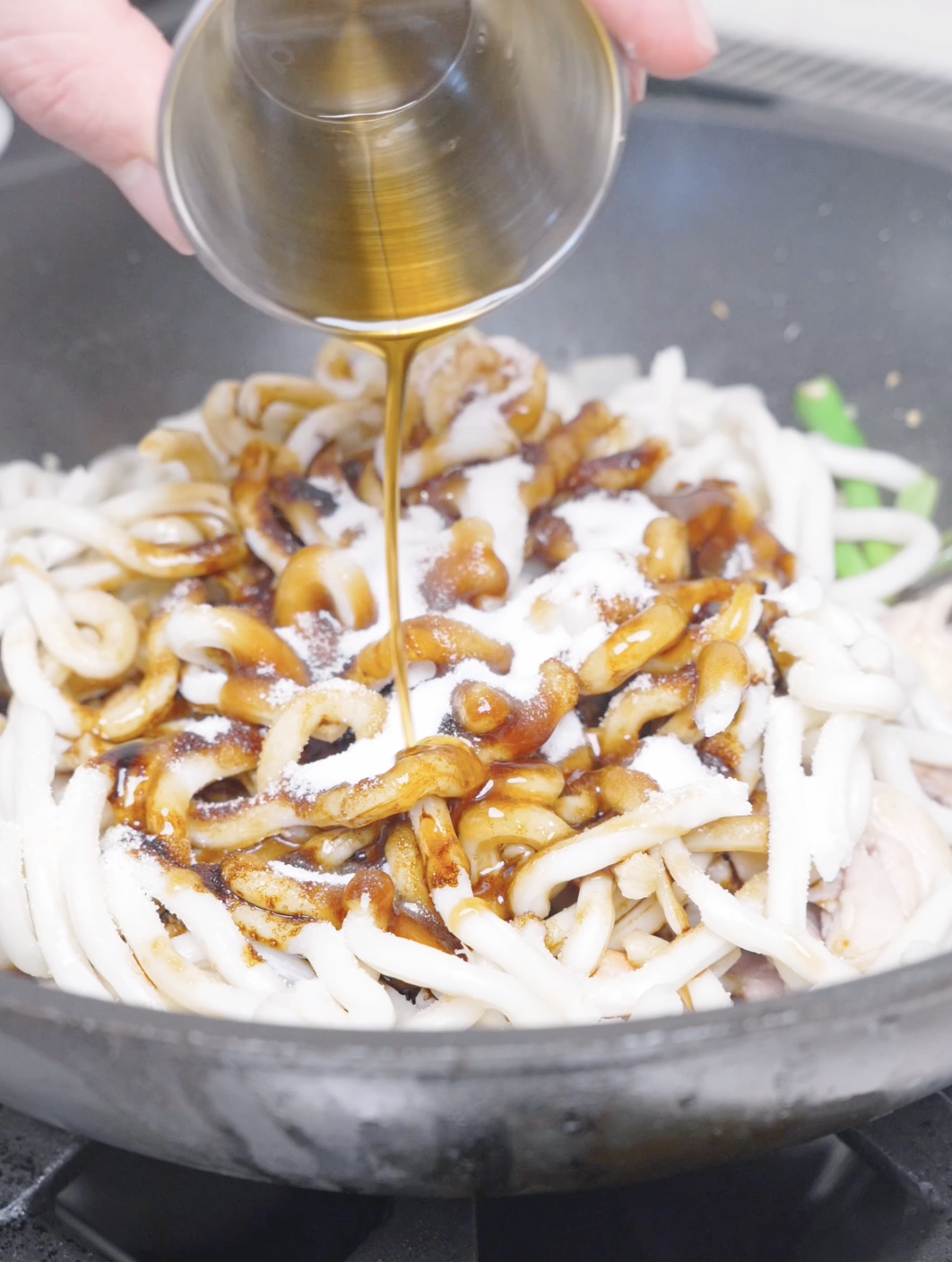
Return the chicken to the pan along with the udon, then season with the dark soy sauce, light soy sauce, oyster sauce, sugar, sesame oil, and black pepper. Toss until the noodles separate and the sauce slightly thickens and coats everything.
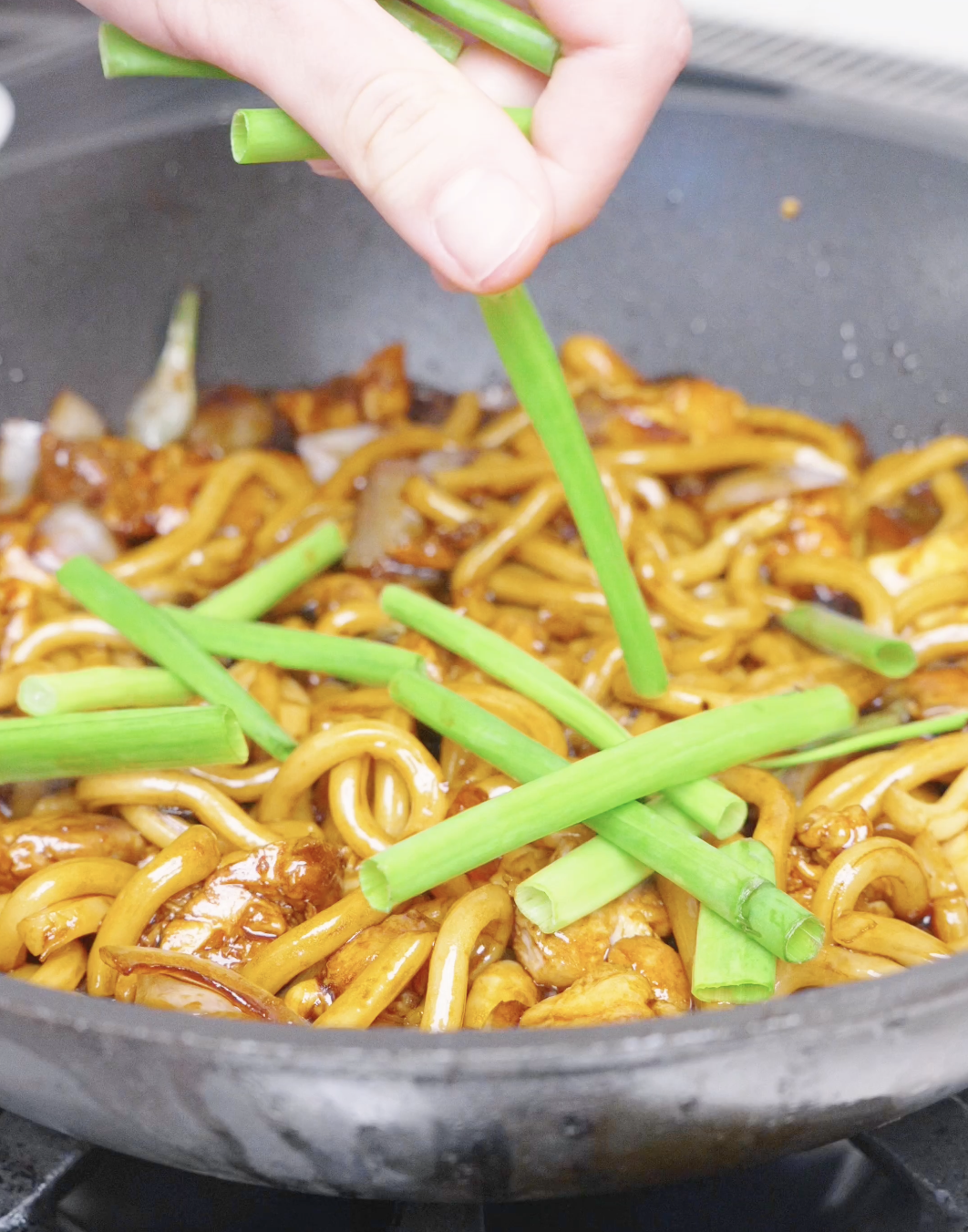
Add the scallion greens and toss just until wilted.
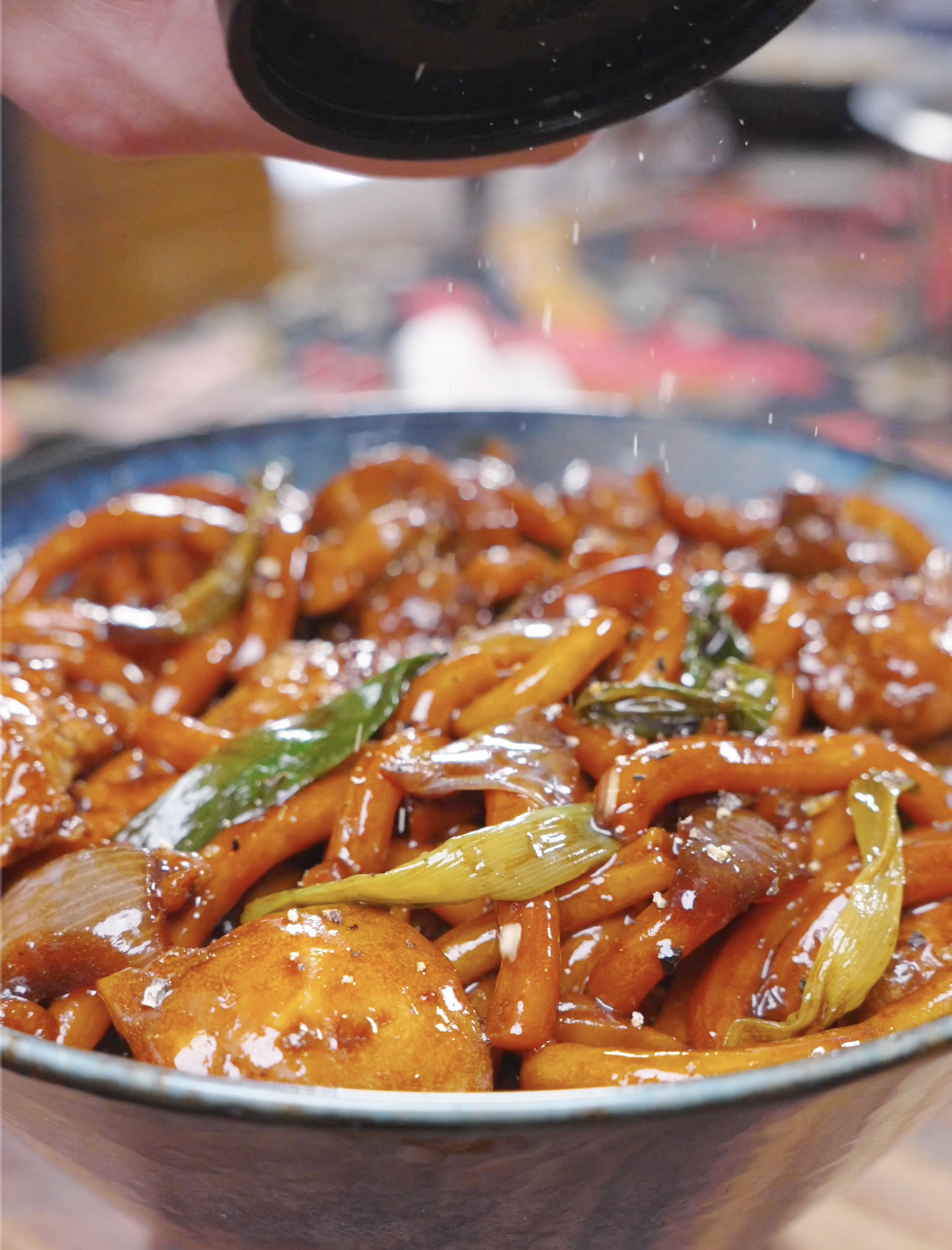
Transfer to a bowl and optionally garnish with more black pepper.
More of a visual learner? Check out my video recipe below. 👇
Optional Variations & Dietary Adaptations
- Swap the Protein — Black pepper beef udon can be made with thinly sliced beef, or swap in shrimp or tofu in place of chicken thighs. Just adjust cooking times accordingly, since shrimp and thin beef slices cook much faster and can go rubbery or tough if left in the pan too long.
- Bulk with Veggies — Feel free to toss in bell peppers, snap peas, baby bok choy, or mushrooms for extra color, crunch, and nutrients. Just add heartier vegetables earlier in the cooking process and quicker-cooking ones (like snap peas) toward the end so everything finishes at the same time.
- Vegetarian/Vegan — Swap the chicken for extra-firm tofu or your favorite plant-based protein, and use a mushroom-based oyster sauce and vegetarian stir-fry sauce in place of the traditional versions to keep that umami depth intact.
- Extra Spicy — If you love a spicier kick, add sliced fresh chilies, a spoonful of chili crisp, or a dash of white pepper alongside the black pepper for extra warmth.
- Gluten-Free — Look for gluten-free udon (often made from rice or a rice-wheat blend) and swap in coconut aminos for the dark soy sauce and tamari or Bragg’s liquid aminos, for the light soy sauce.
Expert Tips & Tricks
- Don’t skip the marinating step. Even 15-20 minutes lets the soy sauce tenderize the chicken and help the sauce cling better once it hits the pan. If you’re short on time, even 5 minutes is better than none.
- Cook in batches if needed. Avoid overcrowding the pan when searing the chicken. Too much at once causes steaming instead of browning, and that beautiful caramelized sear is where a lot of the flavor comes from.
- Have everything prepped before you turn on the heat. Stir-fries move fast, and once the noodles hit the pan there’s no time to be chopping scallions or measuring sauce. Get your mise en place fully ready first.
- Loosen refrigerated udon before cooking. Packaged udon noodles are often clumped together straight out of the fridge—a quick soak in warm water or a rinse under hot tap water for a minute makes them separate easily and heat through faster in the pan.
- Use a well-seasoned wok or nonstick pan. High heat is key to a good stir-fry, and a well-seasoned surface helps prevent sticking without needing excess oil.
- Crack your pepper fresh, and don’t be shy with it. Since black pepper is the star of this dish, pre-ground pepper just won’t deliver the same punch. Coarsely crack whole peppercorns right before cooking for maximum aroma and flavor.
- Taste and adjust the sauce before tossing in the noodles. Sauces can vary depending on the specific brands you use, so give it a quick taste and tweak the balance of salty, sweet, and peppery before it all comes together.
- Keep the heat high and keep things moving. A true stir-fry benefits from constant motion and high heat to get that slightly charred, smoky flavor (sometimes called “wok hei”) without overcooking anything.
Serving Suggestions
Black pepper sauce chicken udon is hearty enough to stand on its own, so simply divide it into bowls and serve immediately while the noodles are hot and the sauce is glossy. If you’re feeling extra hungry, a fried egg with a runny yolk on top turns this into an even heartier, more indulgent meal—just let the yolk break and mix into the noodles as you eat.
If you want to round things out, a quick cucumber salad or light rice-vinegar slaw helps cut through the richness, while a simple miso or egg drop soup on the side adds warmth without competing with the bold pepper flavor. A few finishing touches like scallions, toasted sesame seeds, or a drizzle of chili crisp add color and another layer of flavor right before serving.
If you’re feeding a crowd or want a more complete spread, pair it with other Asian-inspired dishes like potstickers, spring rolls, or a quick stir-fried green vegetable such as bok choy or Chinese broccoli. My Teriyaki Stir Fried Udon and Garlic Sesame Noodles are also great additions to a noodle-forward spread.
Storage & Reheating
- Refrigerating: Let leftovers cool to room temperature before transferring them to an airtight container, then refrigerate for up to 3-4 days. If you’ve made a big batch, storing the sauce separately from the noodles can help prevent them from getting too soft, though it’s not essential if you’re short on time or containers.
- Freezing: This dish can be frozen, but note that the noodle texture will soften somewhat upon thawing. If freezing, store in a freezer-safe container for up to 2 months, and thaw overnight in the fridge before reheating.
- Reheating (Stovetop): This is the best method for preserving texture. Add the noodles to a hot pan or wok with a splash of water or broth (about a tablespoon or two), and stir frequently over medium heat until warmed through, about 3-4 minutes. The added liquid loosens the sauce, which thickens as it sits, and helps revive the noodles without drying them out.
- Reheating (Microwave): Place noodles in a microwave-safe bowl, add a splash of water, cover loosely, and heat in 30-second intervals, stirring in between, until hot throughout—usually 1-2 minutes total.
- Pro Tip: Avoid overheating, as the chicken can dry out and toughen if reheated too aggressively. Gentle, even heat with a bit of added moisture is the key to keeping black pepper udon tasting just as good as day one.
FAQs
Is udon healthy or unhealthy?
Udon itself is fairly neutral. It’s made mainly from wheat flour, water, and salt, so it’s a source of carbohydrates without much fat, fiber, or micronutrients. It’s not “unhealthy” on its own, but it’s also not particularly nutrient-dense compared to whole-grain noodles.
Is black pepper chicken healthy?
Black pepper chicken can be considered reasonably healthy, especially since we’re not deep-frying it. That alone removes a lot of added fat and calories compared to typical takeout versions! With chicken as a lean protein source, some vegetables in the mix, and a stir-fry or sauté method using modest oil, it fits well into a balanced diet. That said, it depends on a few factors: the amount of oil and sauce used (soy sauce and similar condiments can be high in sodium), how much sugar is in the sauce, and the ratio of chicken/veggies to noodles or rice. If you’re mindful of portion sizes and don’t overdo the sauce, it’s a solid, protein-rich option.
What are some vegetables that can be used in a stir fry with noodles?
Good stir-fry vegetable options include bell peppers, broccoli, carrots, snap peas or snow peas, bok choy, mushrooms (shiitake, cremini, or button), cabbage, onions, zucchini, bean sprouts, green beans, and baby corn. A good approach is to mix textures and colors: something crunchy like peppers or snap peas, something that absorbs flavor like mushrooms or zucchini, and something with volume like cabbage or bok choy. Just add harder vegetables like carrots and broccoli first, since they take longer to cook, and softer ones like bean sprouts or zucchini toward the end to avoid overcooking.
More Chinese Black Pepper Recipes
Love that peppery bite? Try my Black Pepper Beef or Garlic Steak Stir Fry next!
More Chicken Stir Fry Recipes
Craving more chicken? Try my Chicken and Broccoli, Teriyaki Chicken, or Chicken Bibimbap!